

Surprisingly, the average American spends nearly two years of their life deciding what to wear.
Better closet organization could help reclaim that time.
This concise guide shows how to get professional closet organization results at home.
It covers assessment, layout design, categorization, tools, vertical optimization, maintenance, DIY hacks, and when to hire help.
Readers will find practical closet ideas and explanations of systems used by brands like California Closets and The Container Store’s Elfa system.
Both custom and modular approaches can deliver professional outcomes depending on budget and space.
The guide suits those with small reach-in closets and larger walk-ins.
It offers decluttering tips, storage solutions, and custom organization strategies.
For best results, follow these steps: assess your space, design a layout, sort items, install systems, and maintain them.
Understanding the Importance of Closet Organization
An orderly closet saves time and smooths daily routines. When items are visible and grouped, decision-making speeds up.
Closet organization helps you pick outfits faster, reduces morning stress, and makes trip packing more efficient.
Proper storage protects clothes and extends their life. Hanging, folding, and using breathable containers prevent stretching and snags.
Use cedar blocks or lavender sachets to keep pests away. Tiered hangers and adjustable shelving increase space without costly remodels.
Organized spaces help cut unnecessary spending. When you find clothes easily, you avoid buying duplicates.
For sellers, tidy closets can raise a home’s perceived value. These financial benefits add up over time.
Clutter affects more than just space. Studies link messy rooms to higher cortisol and more stress.
Too many items increase mental load and decision fatigue. This hurts focus and productivity.
Simple decluttering supports mental clarity and daily habits. Keeping the closet tidy encourages other rooms’ upkeep.
Small tasks like sorting seasonal clothes or using clear bins make organization feel achievable.
Practical steps show real results. Regular decluttering combined with smart storage reduces stress and saves time.
Good closet solutions turn your space into a calm, efficient area.
Assessing Your Current Closet Situation
A clear-eyed closet organization assessment sets the stage for lasting order. Start by deciding whether to empty the space or photograph it. For those with small closets, photos show layout limits and door swing issues without removing everything.
Measure width, depth, and ceiling height. Note any obstructions like vents or electrical panels. Track how the closet is used by noting items in daily routines.
Inventorying Your Wardrobe
Create clear categories: tops, bottoms, outerwear, dresses, activewear, sleepwear, accessories, and shoes. Use a simple spreadsheet or apps like Sortly and Closet+ to count items and reveal problem spots.
Count and document each category. Note the condition, fit, and frequency of use. Photograph key pieces to help with outfit planning and make decluttering easier.
Identifying Items to Keep or Donate
Use practical criteria: fit, condition, frequency of use, emotional value, duplicates, and season. Sort items into three piles: Keep, Donate/Sell, and Recycle/Trash. Commit to removing donation items within a week to avoid clutter rebound.
Choose donation partners like Goodwill or The Salvation Army for general items. For higher-value items, try Poshmark, ThredUp, Depop, TheRealReal, or local consignment boutiques. Programs like H&M’s garment recycling accept worn textiles that are unusable.
| Step | Action | Benefit |
|---|---|---|
| Baseline | Empty or photograph closet | Visualizes space limits for those who need to organize small closet areas |
| Measure | Record dimensions and obstructions | Prevents errors when choosing storage systems |
| Inventory | Categorize and count items; note wear and use | Identifies overstocked categories to target during closet decluttering |
| Decision | Sort into Keep, Donate/Sell, Recycle/Trash | Creates a clear action plan and reduces indecision |
| Disposition | Choose donation, resale, or recycling route | Maximizes value and limits landfill waste |
Designing a Closet Layout That Works for You
Designing an efficient closet starts with clear zones and simple sightlines. Allocate spaces for everyday wear, work attire, and formal pieces. Also include shoes and accessories areas to keep things organized.
Keep frequently used zones at eye level. Place seldom-used items on high or low shelves. This setup improves daily flow and cuts down time spent searching for clothes.
Choosing the Right Closet System
Start by comparing modular options with custom solutions. Brands like Elfa and IKEA PAX offer flexibility and quick installation at a lower cost. These systems suit renters and DIYers who want adjustable shelves and double-hang sections.
For a tailored look, consider companies like California Closets, Closets By Design, or a local woodworker. Custom closets provide exact-fit units, built-in lighting, premium finishes, and special features like pull-out shoe racks and tie drawers.
Built-ins maximize space but increase costs. Freestanding armoires or dressers remain useful for short-term needs.
Tailoring Storage Solutions to Your Needs
Match your storage layout to daily routines. Professionals with suits need long-hang space and breathable storage. Parents benefit from low shelves and labeled bins for kids. Athletes want ventilated shoe cubbies and hooks for gear.
These solutions speed up retrieval and keep items in good condition.
Accessibility is important for all ages. Add pull-down rods, adjustable shelves, and low drawers for mobility needs. Thoughtful lighting improves usability; LED strips and motion sensors brighten dark closets and protect fabrics from heat.
Choose matte or textured finishes that hide dust and wear better than high-gloss surfaces.
Budget planning keeps projects realistic. Prices range from DIY modular ($100–$1,000), to semi-custom ($1,000–$5,000), to fully custom ($5,000+). Adjustable parts help future-proof the closet as your wardrobe and seasons change.
Categorizing Your Clothing and Accessories
A clear sorting plan turns closet chaos into calm. Start by separating items into seasonal and year-round groups.
Then refine by color and style. These steps make closet organization ideas easier to use.
They also cut the time needed to dress each day.
Seasonal versus Year-Round Clothing
Rotate garments on a predictable schedule. Store out-of-season coats, bulky sweaters, and boots in labeled bins or vacuum bags.
Keep those bins on high shelves or under-bed storage. A small seasonal capsule of transitional pieces should stay accessible for sudden weather changes.
Consider climate when planning swaps. In temperate U.S. regions, two seasonal swaps per year work well.
In very hot or cold areas, keep extra totes offsite or in a garage closet to save space. Before storing, clean items and mend damage.
Use breathable containers for wool and silk. Avoid long-term plastic without acid-free tissue.
Organizing by Color and Style
Arrange clothing within each category by color from light to dark or in rainbow order. This visual method speeds selection.
It gives a cohesive look that supports closet decluttering. Group by occasion and fabric after color sorting.
Put casual, work, and formal sections next to one another. Separate knits from woven fabrics to protect shapes.
Use matching hangers like velvet slimlines for most pieces. Use wooden hangers for heavy coats to improve sightlines and save space.
Tips for Accessory Arrangement
Keep jewelry neat with a shallow drawer fitted with compartments or a wall-mounted organizer to prevent tangles.
Felt-lined trays protect delicate pieces and make small items easy to find.
Store belts and ties on a vertical rack, carousel, or door-mounted hooks. Hang frequently used crossbody bags on hooks.
Place structured handbags upright on shelves with stuffing to keep shape. Use dust bags for long-term protection.
Shoes stay usable when stored by function. Use shoe racks, cubbies, or clear boxes so pairs remain visible.
Place everyday shoes at ankle level for quick access. Keep seasonal or dress shoes on higher shelves.
Utilizing Organizational Tools and Products
A clear plan makes choosing closet storage solutions easier. Small changes in hardware and containers create big gains in space, visibility, and daily ease.
The right mix of shelving, hangers, and drawer systems keeps items accessible and neat.
Shelving and Bins
Open shelving offers quick sightlines for folded items and shoes. Closed bins hide clutter and protect seasonal pieces from dust.
Use melamine or laminate shelves for durability in higher-humidity areas. Clear plastic bins help with instant identification.
Woven baskets add texture and work well for bulky sweaters. Keep a consistent labeling system with printable tags or writable labels.
This speeds up finding items in your closet.
Hangers and Hooks
Velvet slim hangers maximize horizontal space and stop garments from slipping. Wooden hangers suit coats and suits where structure matters.
Cascading hangers stack multiple items vertically to boost capacity. Install adhesive hooks on doors or screw-in hooks on walls for robes, bags, and scarves.
Over-the-door hooks are renter-friendly. Specialty hangers for ties, belts, and pants save time and space in closet organization.
Drawer Dividers and Boxes
Adjustable drawer dividers keep socks, underwear, and jewelry from mixing. Bamboo dividers bring a warm look. Acrylic dividers give a clean, modern feel.
Labeled boxes work best for swimwear, workout gear, and off-season items. Clear-front shoe boxes and stackable acrylic boxes maintain visibility.
Rotate and clean organizers regularly. Launder fabric inserts to prevent odors.
| Item | Best Use | Material Suggestion | Quick Tip |
|---|---|---|---|
| Shelves | Folded clothes, bins, shoes | Melamine or laminate | Mix open and closed units for balance |
| Bins & Baskets | Seasonal items, bulky knits | Clear plastic, woven wicker | Label each bin consistently |
| Hangers | Hanging garments, suits, coats | Velvet, wood, metal cascading | Use slim velvet to save space |
| Hooks | Bags, scarves, robes | Adhesive or metal screw-in | Over-the-door hooks for rentals |
| Drawer Dividers | Small items, accessories | Bamboo, acrylic, fabric | Adjust sizes to fit contents |
| Clear Boxes | Shoes, seasonal footwear | Stackable acrylic or plastic | Use labels on front for quick ID |
Maximizing Vertical Space in Your Closet
Making the most of vertical height can transform a cramped wardrobe into a practical storage area. Small closets benefit most from upward thinking. This increases storage without changing the closet’s footprint.
Simple changes can help anyone organize small closet spaces more effectively.
Installing additional shelves
Adjustable shelving systems, such as Elfa or ClosetMaid tracks, let you change heights as needs shift. For folded clothes, leave about 12–15 inches between shelves. Shoes fit well with 10–12 inches of clearance.
Higher shelves work best for boxes and seasonal bins. When installing, anchor shelves to studs if they will hold heavy loads. Use toggle anchors rated for drywall if you don’t have studs.
Floating-shelf brackets list their load ratings. Choose one that can hold the weight of stacked items safely.
Using hooks for bags and accessories
Hooks mounted vertically use wall height near the entrance for daily bags and hats. Heavy-duty coat hooks hold handbags well. Adhesive hooks work best for renters.
Pegboards and slatwall panels create modular zones. These zones keep accessories visible and tidy. Pull-down closet rods add hanging capacity in tall closets.
Counterbalanced rods bring high hanging within easy reach. These rods fit many custom closet systems. Slatwall or pegboard setups allow seasonal swaps of hooks, shelves, and baskets.
They keep items organized and easy to find.
- Plan shelf spacing: folded clothes 12–15 in; shoes 10–12 in; top shelves for bins.
- Choose adjustable systems for future reconfiguration.
- Use studs or heavy-duty anchors for safety.
- Mount hooks vertically for daily-access items.
- Consider pull-down rods for high hanging space.
Maintenance Tips for Keeping Your Closet Organized
Consistent care keeps a closet tidy and useful. Small routines prevent major pileups.
This section gives practical steps for weekly, monthly, and seasonal upkeep. It also shares simple habits to make closet upkeep easy.
Regular tidying makes a big difference. A 10–15 minute weekly pass returns items to their spots, zips up hangers, and clears the floor.
A deeper monthly review of 30–60 minutes focuses on problem zones like lower shelves and overfull drawers.
Adopt a one-in-one-out rule to control clutter growth. When a new shirt or shoes arrive, remove an older item.
Put removed items in one of three bins: donate, sell, or repair. Keep a donation bag ready for quick drop-offs.
Track what you wear. Add pieces not worn in six months to a donate or sell bin, adjusting for seasons.
This habit supports ongoing decluttering and reduces decision fatigue each morning.
Twice-yearly swaps align the closet with weather and lifestyle changes. Perform spring and fall rotations while checking stored items for damage, pests, or odors.
Launder garments before putting them back to avoid surprises.
Use seasonal reviews to tweak your closet setup. Change shelf heights, hang arrangements, and containers to fit current needs.
Small layout changes keep daily use efficient and help long-term organization.
Refresh your inventory during each seasonal check. Update lists or apps with what remains in storage and remove unused items.
Clear records speed up future decluttering and make it smarter.
Preventative care extends your closet system’s life. Replace broken hangers, fix labels, and tighten hardware promptly.
Small repairs keep routines smooth and help prevent clutter from coming back.
Build sustainable habits using reminders and tools. Set calendar alerts for seasonal maintenance and use checklists or apps to track tasks.
For shared closets, agree on zones and labels to keep everyone organized and aligned.
| Task | Frequency | Time Needed | Goal |
|---|---|---|---|
| Quick tidy and return items | Weekly | 10–15 minutes | Maintain daily order |
| Spot review and problem fixes | Monthly | 30–60 minutes | Address trouble zones |
| Seasonal swap and inspection | Twice yearly | 2–4 hours | Rotate clothing; check for damage |
| Donation drop-off | Monthly | 15–30 minutes | Keep closet clutter-free |
| Repair and replacement | As needed | Varies | Preserve system function |
DIY Closet Organization Hacks
Small, smart projects can turn a messy closet into a calm, useful space. This section offers hands-on, affordable strategies that anyone can try. Ideas focus on practical materials from stores like Target, Ikea, and Walmart, keeping durability and safety key.
Budget-Friendly Solutions
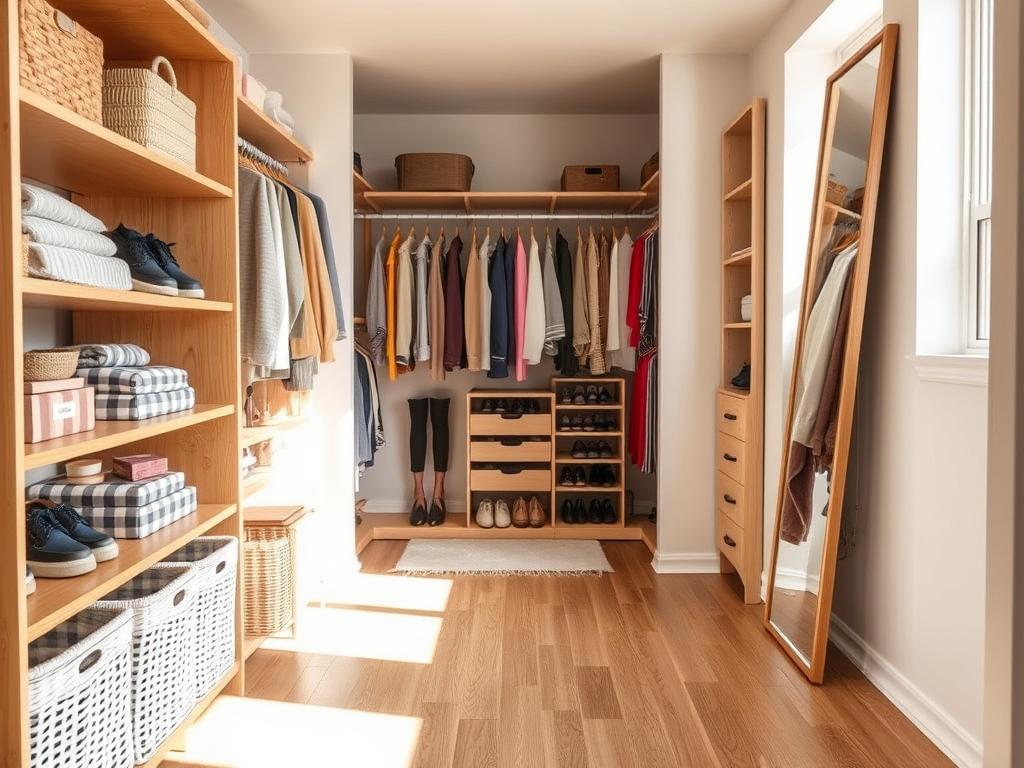
Start by shopping at thrift and discount stores. Baskets, bins, and budget-friendly hangers from Target, Walmart, or Ikea create a neat, unified look. Thrift shops often have unique bins and baskets that look new with a fresh coat of spray paint.
Use cheap hardware for easy upgrades. Tension rods add a second hanging level without drilling holes. Wire shelving can be spray-painted for a clean look while staying light and cheap.
Try upcycling to save money. Shoeboxes wrapped in pretty paper make tidy drawer dividers. Command hooks suit renters and hold belts, scarves, and light bags well.
Follow simple plans for real savings. Installing a second hanging rod needs basic tools and one afternoon. Building a shoe cubby from plywood and paint gives a custom fit for less than prebuilt units.
Creative Repurposing Ideas
Look beyond closet products. Kitchen aisle utensil trays hold jewelry, socks, and small things well. They fit in drawers and keep items easy to see.
A leaning ladder stores scarves, jeans, or sweaters instantly. It adds vertical interest and keeps items easy to reach. Pegboards inside doors create a system for necklaces, hats, and belts.
Tension curtain rods can work as shelf dividers. Place a short rod across a shelf to separate handbags. They also hold folded linens upright and neat.
Make DIY decorative labels for a neat finish. Printable labels or simple label makers create a uniform, professional look. This helps keep the closet organized.
Keep safety and lasting quality in mind. Strengthen lightweight DIY shelves if heavy items go on them. Secure freestanding units to walls to stop tipping. Seal reclaimed wood to protect it from pests and wear.
Quick wins give big visual impact. Swap mismatched hangers for one style. Fold sweaters the same way. Clear clutter from top shelves. These small steps make the closet look neat and easier to keep organized.
When to Seek Professional Help
Many people reach a point where DIY efforts no longer clear the clutter or create lasting order. Persistent mess despite repeated tidying, limited time or mobility, large wardrobes with specialty items, or shared closets with competing needs are clear signs that a professional closet organizer can help.
Sellers preparing a home for the market benefit from expert staging and efficient closet organization systems. These make spaces more appealing to buyers.
When deciding to hire an organizer, consider complexity and results. A pro can handle full overhauls and coordinate donations. They also manage resale listings and source storage products.
A professional organizer provides a plan that fits your household’s rhythm and budget. For built-in solutions, consult local custom closet vendors such as California Closets or ClosetMaid. This helps compare warranties, timelines, and installation quality.
Choosing the right organizer starts with credentials and proof of work. Look for members of the National Association of Productivity & Organizing Professionals (NAPO) or a Certified Professional Organizer (CPO). Request before-and-after photos, client references, and case studies focused on closet projects.
Ask about service scope, flat-rate packages versus hourly fees, and if the organizer handles procurement and donation drop-offs.
A typical professional engagement includes an initial consultation, sorting, and decluttering. It also covers a design proposal, product procurement, installation, and a brief training on upkeep.
Many homeowners find a hybrid approach—DIY plus a professional consultation—balances cost and results. Ultimately, weigh need, budget, and desired return on investment. Quality professional closet organization often saves time, reduces stress, and can boost resale appeal.