

Nearly 70% of Americans say their closets feel cluttered. Most waste more space than they realize. This guide offers practical closet layout ideas for a tidy, efficient wardrobe.
The goal is to increase usable storage and improve accessibility. It also aims to reduce clutter and protect clothing. The guide helps speed up daily dressing.
Readers will learn how to get results like more hanging space, smarter shelf use, and quicker outfit selection.
This guide helps busy professionals, families, apartment dwellers, and homeowners planning closet renovations. It also supports DIYers working on small closet designs. It combines quick optimization hacks with full renovation ideas to suit your budget and needs.
Topics include layout basics and key measurements. It covers walk-in and reach-in closets, vertical and corner optimization, and multi-level hanging rods. You will also find advice on baskets, dividers, lighting, seasonal rotation, DIY tactics, when to hire a professional, and trends like smart technology and sustainable materials.
Expect a mix of low-cost fixes and tradeoffs between price and convenience. The guide offers clear steps for maximizing closet space, whether large or small.
Understanding Closet Layout Basics
A smart closet begins with simple principles that guide every decision. Clear zones, consistent hangers, and thoughtful shelving save time each morning. These closet layout ideas build a foundation for efficient storage and a calmer bedroom.
The importance of closet organization goes beyond neatness. Group items by type—pants, skirts, coats—and place daily pieces at eye level. This setup makes mornings faster and reduces duplicate purchases by showing what you have.
Neat closets protect fabrics from wrinkles and damage, extending clothes’ life and supporting a polished appearance.
There are mental benefits tied to an orderly closet. Less clutter lowers stress and speeds routines. Real estate professionals list organized closets as a selling point.
A well-kept wardrobe makes a strong impression on buyers and renters.
Foundational closet tips include using matching hangers, creating zones for everyday and special items, and placing frequent pieces within reach. Small bins and labels hold accessories. These strategies speed retrieval and keep visual order.
Importance of Closet Organization
Start by assessing what you use most. Place daily wear at shoulder height and store shoes or boxes on lower shelves. Group like items to simplify outfit choices and maintain a tidy system.
Good organization prevents overbuying by revealing wardrobe gaps or excesses. Consistent hangers support uniform spacing and reduce garment distortion.
Zoning helps create predictable places for scarves, belts, and seasonal clothing. These measures quicken inventory checks and daily decisions.
Key Measurements for Closets
Measure the space before planning. Record closet width, depth, ceiling height, door swing clearance, and usable wall space. Note obstructions such as baseboards, vents, outlets, and light fixtures.
A scaled sketch or mobile app can help show how shelves, rods, and drawers will fit.
| Item | Standard Dimension | Design Note |
|---|---|---|
| Reach-in depth | 24 inches | Allows hangers to clear a door and keeps garments accessible |
| Walk-in aisle | 36 inches minimum; 42–48 preferred | Wider aisles improve circulation and allow drawers to open |
| Single hanging rod height | 66–68 inches for long garments | Measure coats and dresses on hangers to confirm |
| Double-hang spacing | Requires 80–84 inches ceiling height | Two tiers work best when ceiling height permits |
| Shelf spacing for shoes | 6–12 inches depending on shoe type | Measure boots and boxes to set correct clearances |
Measure garment lengths while hanging to choose rod heights that avoid dragging. Record shoe heights and box sizes to plan shelving that fits items well.
Factor in door swing and clearance so drawers and organizers work without obstruction. Plan around obstacles and uneven walls by noting them on the sketch.
Address HVAC vents and electrical outlets early to keep the design functional and safe. Accurate measurements reduce surprises during installation and ensure the layout fits real needs.
Types of Closet Layouts
Choosing the right closet layout shapes how a room functions. This section outlines three common approaches. It also offers practical ideas for different needs, budgets, and footprints.
Walk-in Closets
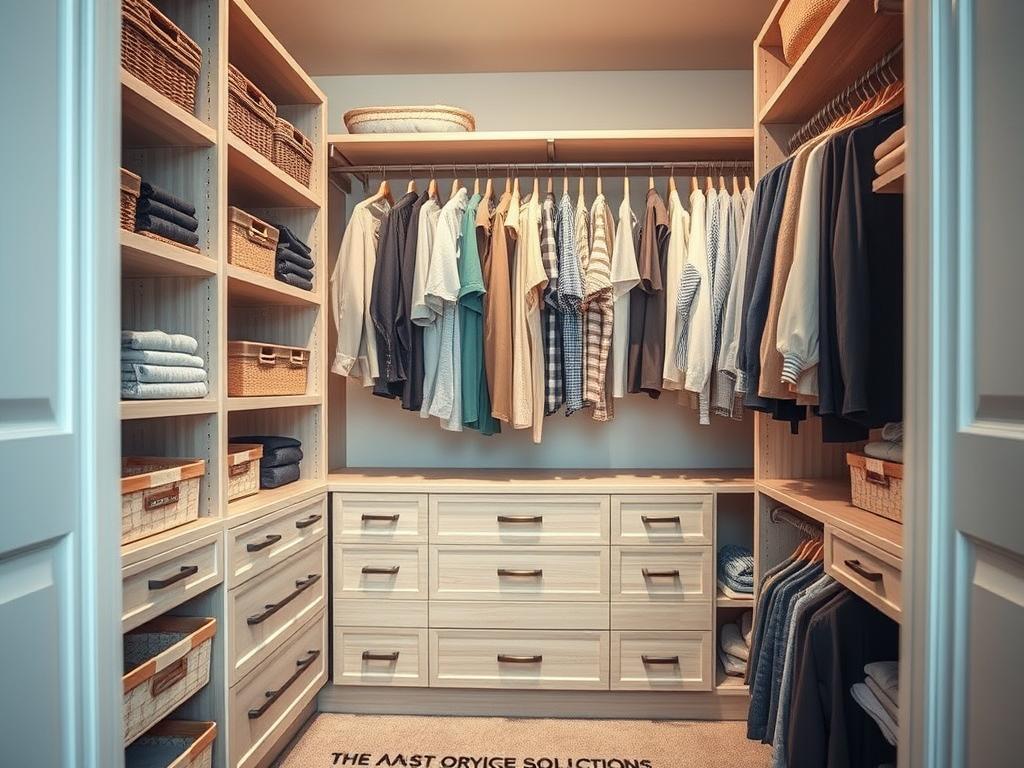
Walk-in closets come in many layouts: perimeter shelving with a center island, L-shaped, U-shaped, and galley. Each plan offers more storage and space for islands, seating, or mirrors. They suit primary bedrooms, shared closets for couples, or dressing areas.
When planning, zone items by hanging, folded, shoes, and accessories. Clear paths allow doors and drawers to open freely. Built-in drawers, shoe cubbies, jewelry trays, valet rods, and seating make the space functional.
California Closets and The Container Store’s Elfa offer ready systems and custom options for walk-in setups.
Reach-in Closets
Reach-in closets are shallow, usually 24–30 inches deep. They often use a single or double rod with a shelf above. Though depth limits storage, smart shelving and vertical accessories create creative solutions.
Layout ideas include a single long rod with a high shelf. Another option is a double-hang setup for shirts and pants. Modular units divide shoes and folded items into zones.
Cost-effective upgrades add shallow shelving, hanging organizers, over-the-door racks, and slimline hangers. These options boost capacity and improve access.
Custom Built-ins
Custom built-ins mimic cabinetry with tailored shelving, drawers, pullouts, and hardware. They fit exact dimensions and style choices. These systems use odd angles and niche spaces well and offer high-end finishes with integrated lighting.
Benefits include using every inch efficiently, with special racks for ties, belts, and glove inserts. Custom designs suit irregular spaces, luxury renovations, or long-term home plans.
Options range from local cabinetry shops to national providers and semi-custom systems like IKEA PAX. These balance budget with personalization.
Utilizing Vertical Space in Closets
Maximizing vertical space turns a cramped closet into an efficient storage area. Simple changes help store seasonal items up high. Daily clothes stay within easy reach.
Thoughtful planning improves closet space and offers practical wardrobe storage solutions for any home.
Adding Shelves for Optimal Storage
Use the full height from floor to ceiling by adding multiple shelves. Place seldom-used boxes and luggage on the top shelf. Keep everyday items at eye level for easy access.
Use recommended shelf spacing: 10–12 inches for folded shirts, 12–15 inches for sweaters, and 8–10 inches for shoes. Adjustable shelves allow for seasonal changes and shifting needs.
Choose materials based on budget and durability. MDF and melamine resist scratches and cost less. Plywood is strong and mid-priced. Solid wood looks premium but costs more. Ventilated wire shelves reduce dust and are lightweight.
Improve reach with labeled bins on high shelves and a sturdy step stool. For tall closets, install pull-down rods from brands like Rev-A-Shelf to keep items accessible and safe.
Installing Hooks and Racks
Hooks and racks turn walls and doors into functional storage for bags, belts, scarves, hats, robes, and often-used items. This frees shelf space and keeps accessories visible.
Choose hook types wisely. Adhesive hooks like Command by 3M work well for renters. Screw-in hooks hold heavier items. Over-the-door hooks and valet bars offer quick access.
Use specialty racks for small items such as belt and tie racks, scarf organizers, bag hangers, and swing-out pant racks. Umbra offers stylish hooks. The Container Store stocks strong hardware made for closets.
Consider weight and safety. Anchor heavy hooks into studs or use proper wall anchors. Check door hinge strength before adding items to over-the-door racks to avoid damage.
Incorporating Multi-level Hanging Rods
Smart closet layout ideas often start by rethinking vertical real estate. Adding multi-level hanging rods turns one wall span into many storage zones. This helps maximize space and keeps garments tidy and accessible.
Double or triple hanging rods increase hanging space without needing more room. Shirts, skirts, and folded pants fit on stacked tiers. A long-hang section protects delicate dresses and coats from wrinkling.
The right hardware is important. Telescoping rods work for flexible setups. Fixed double-rod brackets offer a sturdy, low-cost solution. Pull-down rod systems from brands like Bestar and Rev-A-Shelf use high spaces well. Costs range from budget brackets to expensive pull-down models. Installation difficulty depends on type and wall material.
Benefits of Adjustable Rods
Adjustable rods let you change spacing as your wardrobe shifts. Tiers can lower for winter coats or rise for kids’ clothes. This flexibility supports long-term closet organization and space for accessories.
Prevent creasing by leaving enough space between tiers. Measure garment lengths before setting rod heights. Combining long-rail space with stacked rods balances care and capacity.
Creative Hanging Solutions
Slim velvet, cascading, and multi-tier pant hangers save space and free up shelves. Specialized hangers like skirt clamps, trouser bars, and tie hangers keep items sorted and visible.
Rotating garment racks and tension-pole systems suit temporary or rental spaces. They are easy to install and remove, supporting short-term closet organization needs.
For planning, mix heights within one run. Use double-hang for shirts and pants on one side. Place single-hang for dresses on the other. Add shelves or drawers beneath. This vertical zoning makes the most of every inch.
Maximizing Corner Space in Closets
Corners often turn into wasted space in closets. Thoughtful corner solutions change awkward angles into useful storage. This helps with shoes, bags, and folded items.
Built-in pieces combined with rotating organizers improve access. They also support better closet space use.
Choose corner shelving ideas that match the room’s flow. Triangular fixed shelves fit tight angles well for shoes.
Adjustable corner shelving towers change as needs change. Diagonal cabinets create a smooth run from one wall to another.
This design gives a clean look and predictable storage depths.
The right depth matters. Aim for 12–16 inches to hold most shoes and folded garments.
Wider shelves store boxes or bulky sweaters. For tall boots, use lower corner space or add a partial-height cabinet.
These keep items upright and easy to see.
Corner Shelves and Units
Prebuilt corner units from IKEA or ClosetMaid suit budgets and simple installs. Custom carpentry gives a seamless finish and adds integrated lighting.
Use durable materials like plywood or MDF. These have painted finishes for long life and easy cleaning.
Install fixed triangular shelves where structure is key. Place adjustable towers in family closets that shift with seasons.
Consider a custom diagonal cabinet for continuous sight lines and hidden storage.
Rotating Closet Organizers
Rotating carousels and lazy susans improve visibility in deep corners. They work well for accessories, shoes, and small folded items.
Rotation uses vertical space, not deep static shelves. This helps optimize closet space.
Look for rotating shoe towers, carousel tie and belt racks, or Rev-A-Shelf products. These offer reliable hardware.
Motorized rotating systems fit luxury closets where convenience matters most.
Watch load limits and balance. Keep heavier items on lower tiers for stability.
Check manufacturer weight ratings and test smooth operation after installation to ensure long-term use.
Choosing the Right Storage Solutions
An efficient closet depends on smart choices. Selecting storage that fits items and space makes daily routines faster.
This section covers practical options that work with common closet layout ideas and wardrobe storage solutions.
The first step is grouping items by use. Small accessories, seasonal scarves, workout gear, kids’ toys, and linens need containers that keep them visible and tidy.
Using uniform containers reduces visual clutter and creates a cleaner shelf line. Clear options help with quick retrieval.
Labeled opaque bins deliver a streamlined look when visibility is not needed.
Baskets and bins play a central role in organizing small or irregular items. Woven seagrass or rattan baskets add a decorative touch.
Plastic stackable bins resist moisture and handle heavy loads. Fabric cubes, such as IKEA SKUBB, offer breathable, lightweight storage.
For durability and modularity, The Container Store brand options pair well with custom shelving systems.
Sizing matters. Use uniform bin sizes for stacked shelving stability.
Reserve larger bins for bulky blankets and linens. Smaller bins work well for belts, gloves, and chargers.
Use adhesive labels, a Dymo labeler, or chalkboard tags to keep contents clear and changeable.
Clear bins or transparent fronts help with fast visual checks.
Drawer dividers and organizers transform deep drawers into efficient zones. They separate socks, underwear, jewelry, and small electronics.
Adjustable inserts adapt to changing needs. Bamboo organizers suit a natural aesthetic. Felt trays protect jewelry.
Stacked modular inserts create multi-level layouts inside deep drawers.
Measure drawer interior dimensions before buying inserts. Shallow drawers better serve accessories.
Deep drawers should hold sweaters and bulky items. Brands like Yamazaki offer minimalist, space-saving designs.
The Container Store’s InterDesign and Elfa systems provide flexible configurations. IKEA SKUBB remains a budget-friendly choice for soft organizers.
| Storage Type | Best Use | Material Examples | Brands to Consider |
|---|---|---|---|
| Baskets and Bins | Seasonal scarves, toys, linens, bulk items | Woven seagrass, rattan, plastic, fabric cubes | IKEA SKUBB, The Container Store clear bins |
| Clear Stackable Bins | Visibility for accessories and electronics | Durable plastic, transparent | The Container Store, Sterilite |
| Fabric Cubes | Lightweight seasonal items and folded clothes | Breathable fabric, collapsible | IKEA SKUBB, Target Threshold |
| Bamboo Drawer Dividers | Socks, underwear, ties | Bamboo, wood | Yamazaki, The Container Store |
| Felt Trays & Jewelry Inserts | Protect jewelry and small valuables | Felt, padded fabric | InterDesign, The Container Store |
| Stacked Modular Inserts | Multi-level drawer use for chargers and tech | Plastic, wood, composite | The Container Store Elfa, customizable kits |
Pair these storage solutions with broader closet organization tips. Combine baskets and bins with drawer dividers to create zones by activity or season.
This approach supports tidy shelves and a clear visual flow. Thoughtful selection enhances closet layouts and improves wardrobe storage solutions.
Lighting Considerations for Closets
Good lighting can change a closet from cluttered to calm. It helps find outfits easily and protects fabrics. It also adds value during closet renovation ideas.
Benefits of LED Lighting
LED lighting saves energy and lasts a long time, reducing the need for replacements. LEDs produce less heat, protecting wool, silk, and sensitive fabrics.
Color temperature affects how clothes appear. A warm 2700K–3000K works well for bedroom-adjacent closets. For accurate colors, choose 3500K–4100K with a CRI of 90 or higher.
Common LED options include strip lights under shelves and puck lights for specific areas. Recessed fixtures work for walk-ins. Motion-sensor LED bars fit both walk-in and reach-in closets. Battery-operated or rechargeable lights from brands like Mr. Beams are good for rentals.
Placement of Light Fixtures
An overhead center fixture lights most closet layouts well. Adding LED strips under shelves brightens lower levels and removes dark corners.
Vertical lights on side panels reduce shadows on hanging clothes. Inside-drawer lighting adds a premium feel for accessories and folded clothes.
Place motion sensors near doors or shelves to turn lights on when entering. Position sensors carefully to avoid false triggers from hallway traffic.
For hardwired lights, follow local electrical codes and hire a licensed electrician. Use low-voltage transformers and fire-rated fixtures for safety.
Mirrored panels increase light and make spaces feel bigger. Frosted diffusers reduce glare and protect shiny garments during closet staging.
Seasonal Closet Arrangements
Smart seasonal closet arrangements keep daily dressing simple and protect garments year-round. A short, repeatable routine helps with storing off-season clothing and rotating wardrobe essentials. Small changes free prime space and speed up outfit choices.
Storing off-season clothing starts with cleaning and packing. Launder or dry-clean pieces before storage to stop stains from setting. Use vacuum-seal bags for bulky items like down coats. For leather and suede, use breathable garment bags to avoid mold and cracking.
Delicate fabrics like silk benefit from acid-free tissue and cotton storage covers. For long-term protection, use climate-controlled storage only if containers are moisture-proof. Add silica gel packets to control humidity. Use cedar blocks or lavender sachets to deter pests. Follow instructions when using mothballs.
A simple inventory list saves time. Note contents and location in an app or spreadsheet. Label boxes and shelves clearly so you can find items during swaps.
Rotating wardrobe essentials begins with assessment. Identify what was worn last season. Mend or donate items that did not get regular use. Clean everything before storing to preserve fabric quality.
Use a clear rotation method. Place current-season pieces at eye level and front of shelves. Move stored items to top shelves, under-bed bins, or external containers. Open bins make quick swaps easier. Color-code storage tags by season to reduce decision time.
Adopt a capsule wardrobe approach to limit the number of pieces that need rotation. Choose versatile items that mix well. Rotate supporting pieces as needed. Schedule swaps twice a year, such as at spring and fall, to align with daylight saving changes.
| Task | Recommended Storage | Material Notes |
|---|---|---|
| Bulky coats and down | Vacuum-seal bags or breathable bins | Compress to save space; avoid long-term compression for down more than six months |
| Leather and suede | Breathable garment bags, high shelf | Avoid plastic covers; condition leather before storage |
| Silk and delicates | Acid-free tissue in cotton storage boxes | Use breathable packaging to prevent yellowing |
| Shoes | Clear boxes or under-bed shoe bins | Insert shoe trees for leather; avoid stacking to keep shape |
| Frequent-rotation items | Open bins at eye level or front baskets | Color-code tags and keep a short capsule collection for essentials |
DIY Closet Layout Ideas
This section gives hands-on tips for improving closet function without spending too much money. Readers learn quick hacks, upcycling moves, basic tool use, and renter-friendly tricks. These ideas fit most budgets and make daily routines easier.
Simple Hacks to Enhance Storage
Switch to slimline non-slip hangers to free rail space and keep garments neat. Adding a second rod doubles hanging capacity with just a drill and a level.
Adhesive hooks on doors hold belts, scarves, and jewelry without making permanent holes. Tension rods work well for scarves and shoes; they install fast and remove cleanly.
Vintage crates make attractive shoe cubbies when stacked. Dresser drawers repurposed as under-shelf bins add hidden storage under folded clothes.
Mount a pegboard for adjustable accessory storage that changes as needs do. Basic tools include a drill, level, stud finder, tape measure, and screwdriver.
Anchor shelves to studs when possible for safety and durability.
Affordable Solutions for Small Spaces
Use vertical shelf stacks to use height in tiny closets. Back-of-door shoe organizers and under-shelf baskets reclaim wasted zones.
Slim rolling carts slide into narrow gaps for folded items and small accessories. Three-tier hangers multiply hanging space for shirts and pants without lowering function.
Cost-effective systems include IKEA PAX and KOMPLEMENT and ClosetMaid wire units. Wall brackets and shelves from Home Depot or Lowe’s allow staged upgrades at modest cost.
Rental-friendly options include tension-rod shelves and over-the-door organizers that avoid wall damage. Renters should check lease rules before drilling or installing permanent hardware.
Budgets vary: hangers and hooks cost $10–$50. Modular shelving runs $50–$500. Full DIY refits range from $200–$1,500 depending on materials and project size.
Professional Closet Design Services
When a closet has odd angles or shared access, homeowners often benefit from professional help. A trained designer turns awkward layouts into practical storage and blends lighting with electrical plans. They also target solutions that boost the home’s resale value.
Many clients choose a designer for high-end custom finishes or systems for specialty collections like handbags or fine shoes.
The cost is key when deciding to hire someone. Designers may charge by the hour, a flat fee, or a percentage of installation costs. Paying for expertise can reduce wasted space and avoid costly DIY renovation mistakes.
Custom closet design raises the home’s long-term value but needs an upfront investment.
When to Consider Hiring a Designer
Irregular closet shapes and built-in trim work create a strong need for outside help. Shared closets and multi-user spaces require careful planning to avoid storage conflicts. A designer is also useful for integrated lighting, hidden power for charging, or specialty hardware.
Professionals with credentials like Certified Closet Designer or those working with brands like California Closets and The Container Store’s Closet Factory provide trusted expertise. Local cabinetmakers and carpenters deliver custom designs for unique materials or joinery.
What to Expect from a Consultation
An initial consultation usually starts with site measurements and a wardrobe audit. The designer will ask about daily routines and must-have features, such as shoe shelves or jewelry drawers. Clients should bring photos of their current contents and a budget to guide choices.
Designers present several closet layout ideas, often with 3D renderings and material samples. The presentation covers timeline estimates, pricing, and hardware and lighting options. Some firms offer virtual consultations and digital plans for remote clients.
Deliverables include detailed plans, a written estimate, and recommended materials. Installation schedules and warranty terms are confirmed before work begins. After installation, a short follow-up period helps adjust shelf heights or rod positions to fine-tune the finished closet.
| Consultation Step | What It Covers | Client Action |
|---|---|---|
| Site Visit & Measurements | Accurate dimensions, electrical needs, and structural notes | Provide access and photos of current contents |
| Needs Assessment | Wardrobe audit, lifestyle review, and must-have list | List priority items like shoe racks or jewelry drawers |
| Design Options | Multiple closet layout ideas with 3D renderings and samples | Review layouts, choose finishes, and set budget |
| Estimate & Timeline | Detailed pricing, payment structure, and project schedule | Approve estimate and confirm installation dates |
| Installation & Follow-up | Professional installation, warranty information, and tweak period | Test functionality and request any post-install adjustments |
Trends in Closet Designs
Modern closet ideas mix sustainability with smart tech to offer both function and style. Homeowners pick materials that reduce waste and improve daily use. This change shows interest in long-lasting design and better garment care.
Eco-friendly and Sustainable Materials
More people want eco-friendly materials like FSC-certified wood, formaldehyde-free MDF, bamboo, and reclaimed lumber. Low-VOC finishes and water-based stains keep indoor air quality healthy. Accessories match too: organic cotton bags, recycled-plastic bins, and wicker baskets complement strong shelving.
Designers focus on modular shelves and drawers that can be rearranged, not thrown away. Homeowners can donate these parts to places like Habitat for Humanity ReStore. This helps extend product life and lowers environmental impact.
Smart Technology Integration
Smart closet technology is now useful, not just a novelty. Motion-activated LED lights and Bluetooth scenes improve light and mood. Built-in dehumidifiers and humidity sensors protect delicate clothes. App-enabled inventory systems and smart rods track outfit use to ease planning.
Hardware upgrades include motorized lifts, smart mirrors with lighting and previews, and Alexa/Google Home voice control. These inventions lead to personalized, data-driven closet care and energy-smart garment management.