

Nearly 55% of U.S. renters live in units under 800 square feet. Many still want stylish, livable homes. This shows why multifunctional furniture is very important today.
This short guide helps apartment dwellers, tiny-home owners, and first-time buyers. It also serves those using multi-use rooms. It focuses on space-saving furniture that blends form and function.
The guide covers practical choices for studio apartments, guest rooms, and home offices. Readers learn to maximize usable space without losing comfort or style.
Readers will find clear sections on definitions and benefits. It includes specific types like sofa beds, storage ottomans, and expandable dining tables.
Selection criteria such as materials and sizing are explained. The article reviews trusted brands. It also offers decorating and space-optimization strategies to make small rooms feel larger.
The emphasis is on multifunctional furniture and related terms. These include space-saving furniture, functional home furnishings, and versatile furniture. This helps people find dual-purpose, convertible, and modular options that fit their space, budget, and style needs.
Understanding Multifunctional Furniture
Multifunctional furniture blends smart design with practical needs. It helps small homes adapt to new activities without crowding floors.
Readers will learn what makes these pieces useful and why they matter for modern living.
Definition and Features
Multifunctional furniture refers to pieces that perform two or more roles. Examples include sofas that convert into beds or coffee tables with hidden storage.
Designers focus on fold-away parts, hidden compartments, modular components, adjustable heights, and frames that convert.
Integrated lighting and multi-surface finishes are also common features. Ergonomics and durability influence many designs.
Examples include modular sofas that change into sectionals or beds, Murphy beds with desks, and nesting tables that expand space.
Benefits for Small Spaces
Dual-purpose furniture maximizes floor area by replacing several items with one versatile piece.
A living room can quickly turn into a guest bedroom or home office with minimal effort.
Convertible furniture also cuts clutter with built-in storage like ottomans with compartments and beds with drawers.
This reduces the need for extra cabinets and keeps surfaces clear.
Innovative furniture offers financial and environmental benefits. Fewer pieces save money.
Long-lasting, adaptable designs reduce waste and support sustainable living.
| Feature | Benefit | Common Example |
|---|---|---|
| Fold-away mechanisms | Frees floor space when not in use | Wall-mounted Murphy bed |
| Hidden compartments | Reduces visible clutter | Storage ottoman |
| Modular components | Adapts to changing room needs | Sectional sofa with reconfigurable pieces |
| Adjustable heights | Improves ergonomics for multiple tasks | Height-adjustable desks that double as dining tables |
| Convertible frames | Transforms use quickly | Sofa beds and convertible daybeds |
| Integrated lighting | Enhances function without extra fixtures | Desks built into bed units |
Types of Multifunctional Furniture
Small homes need smart furniture choices. Multifunctional pieces turn small rooms into flexible living spaces. Here is a look at key types used in studios, guest rooms, and small apartments.
Sofa Beds
Sofa beds combine seating and sleeping in one piece. They work well in studios and spare rooms. A good sofa bed serves as a couch by day and a bed by night.
Designs include pull-out mattresses, futons, click-clack frames, and daybeds with trundles. Mattresses can be innerspring, memory foam, or hybrid. Memory foam offers pressure relief; innerspring provides firmer bounce.
When buying, check frame strength, mattress thickness, and recovery features. These affect the bed’s durability and ease of use.
Storage Ottomans
Storage ottomans work as seats, footrests, and hidden storage. They hold blankets, toys, and media gear while serving daily uses. Lift-top and hinged lids are common features.
Some ottomans have tray tops that double as coffee tables. Modular ottoman sets can be rearranged for different needs. Materials range from leather to performance fabrics.
Check load capacity, hinge quality, and inside finish for long-lasting use. These traits make ottomans practical and versatile.
Expandable Dining Tables
Expandable dining tables adjust to fit more people. Drop-leaf tops, butterfly leaf systems, and extending tracks let a small table grow when needed. This fits small kitchens and dining areas well.
The leaf’s material and hinge quality affect durability and ease of use. Solid wood or engineered veneers resist wear. Smooth track systems reduce effort when expanding.
An expandable table is a key piece for modular furniture in compact homes.
Sofa Beds: Comfort Meets Versatility
Sofa beds are practical for small homes and apartments. They combine seating and sleeping in one piece. This helps save space without losing comfort or style.
Different Styles of Sofa Beds
Pull-out models have a traditional frame and mattress. They offer sturdier support and better mattress options. However, they are heavier and need room to open.
Futon or click-clack designs are lightweight and budget-friendly. They fold easily and fit small rooms. Their thinner mattresses are less comfortable for nightly use.
Daybeds with trundles give two separate sleeping surfaces. They are great for guests and children. But they take more floor space when both beds are out.
Sleeper sectionals and modular sofa beds have flexible seating and larger beds. They suit shared living rooms and adaptable layouts. They cost more and need more space when opened.
Choosing the Right Sofa Bed
Measure the room with the bed open. Consider doorways, stairs, and clearance around it. This avoids surprises when you receive your sofa bed.
Try mattresses in person if you can. Innerspring and memory foam improve sleep quality. Check thickness and firmness based on how often you will use it.
Look at frame construction. Kiln-dried hardwood, steel, and high-density webbing last longer. A strong frame supports nightly use and cuts down squeaks.
Think about upholstery for wear and cleaning. Stain-resistant fabric and removable covers ease upkeep. Choose a finish that fits your room’s style.
Decide if function or looks matter more. Daily sleepers need better mattresses and frames. Occasional uses can prefer style and compact design.
Care and Maintenance Tips
Check mechanisms regularly for loose bolts or wear. Lubricate metal parts as the manufacturer advises. This keeps pull-out systems working smoothly.
Rotate cushions and mattresses to spread out wear. Vacuum fabric and clean spills quickly by fabric care rules. This keeps your sofa bed looking good.
Use mattress protectors to cut stains and allergens. It helps your mattress last longer and stay guest-ready.
Follow care instructions from trusted stores like IKEA, West Elm, and Wayfair. This keeps warranties valid and function good for years.
| Style | Benefits | Drawbacks | Best For |
|---|---|---|---|
| Pull-out | Supportive frame, mattress options | Heavy, needs clearance | Frequent guests, nightly use |
| Futon / Click-clack | Lightweight, budget-friendly | Thinner mattress, less comfort long-term | Studios, occasional sleepers |
| Daybed with Trundle | Separate mattresses, good for kids | Uses more floor space when both beds out | Guest rooms, children’s rooms |
| Sleeper Sectional / Modular | Configurable seating, multiple sleeping areas | Higher cost, larger footprint when used as bed | Shared living rooms, flexible layouts |
Storage Solutions in Multifunctional Furniture
Smart storage turns small rooms into calm and useful spaces. Dual-purpose furniture combines storage with seating or sleeping. It reduces clutter and keeps essentials close.
The following explains practical options and what to look for when selecting furniture for everyday use.
Hidden storage in ottomans
Storage ottomans hide linens, magazines, and electronics. They also provide extra seating. A tray on top changes them into a coffee table for drinks and snacks.
Cube ottomans, tufted storage benches, and modular systems offer different styles and sizes.
Check construction before buying. Hinged lids with safety stays or gas lifts stop sudden closures.
Verify load limits if used for seating. Removable liners help cleaning and make fabric last longer.
Shelving units with desks
Integrated shelving and desks save floor space. They combine work areas with storage for books, office supplies, and décor.
Wall-mounted fold-down desks, or Murphy desks, clear space when not used. Ladder shelves with built-in desks create vertical workstations to keep items tidy.
IKEA systems like BEKANT and LINNMON work well with wall storage. Wayfair has modular furniture mixing shelves and work surfaces.
Plan for cable management. Check desk height and chair space for comfort. Add task lighting for better work conditions.
Beds with built-in drawers
Platform beds with under-bed drawers, captain’s beds, and ottoman-lift frames increase bedroom storage without extra furniture.
These beds store seasonal clothes, extra bedding, or bulky items that do not fit in closets.
Focus on drawer construction. Full-extension slides and soft-close hardware improve use and durability.
Check weight limits for drawers and lifts. Match drawer size and depth to bed size. Twin and full beds fit folded clothes, while queen beds hold bulkier items.
Choosing modular furniture makes room changes easier over time. Dual-purpose furniture and good storage ottomans build a neat, flexible home.
Furniture with quality build and practical features gives value every day in use.
Importance of Space Optimization
Efficient use of a small room starts with clear goals. Choosing the right furniture makes a studio or one-bedroom feel open and functional.
Opt for space-saving and multifunctional furniture. This sets the tone for every layout decision you make.
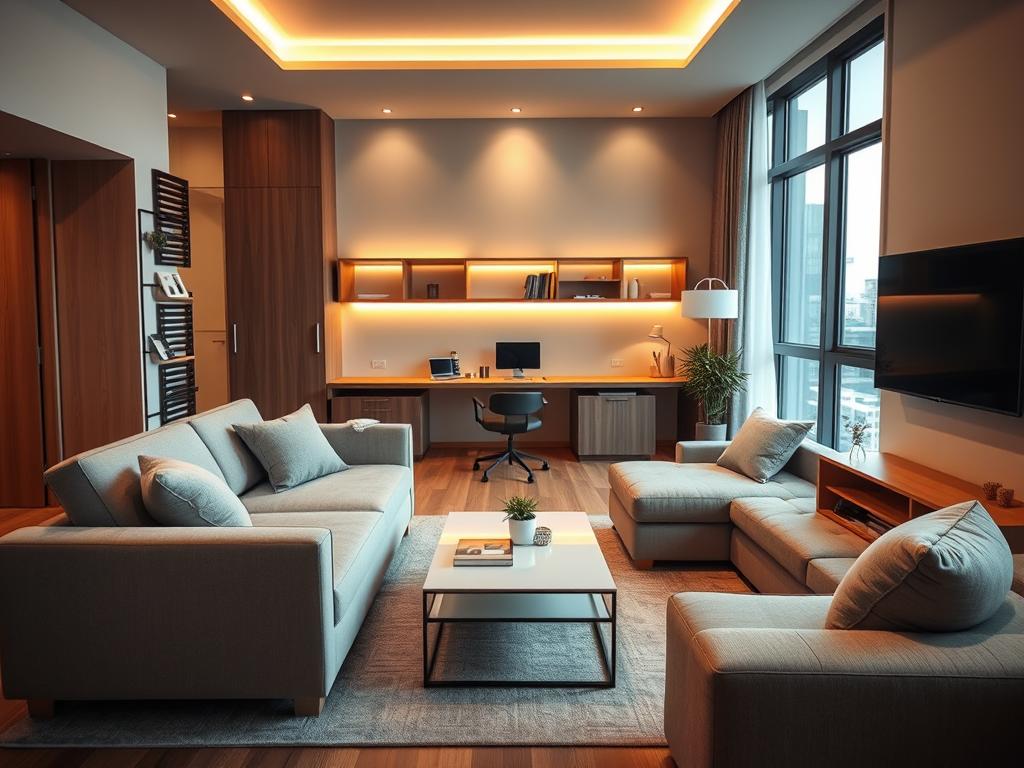
Visual Illusion of Space
Light paint colors and reflective surfaces open sightlines. They boost perceived room volume and make spaces feel bigger.
Mirrors placed opposite windows increase daylight and add depth to the room. Low-profile sofas and beds on legs reveal floor space, creating airier sightlines.
Transparent materials like glass or acrylic keep sightlines clear. Vertical storage draws eyes upward and uses wall height without crowding floors.
Furniture scaled to the room avoids overwhelming patterns and keeps balance in the space.
Decluttering Techniques
Frequent purge cycles reduce clutter buildup. Seasonal sweeps prevent accumulation of unused items in your home.
Use storage ottomans, beds with drawers, and labeled bins to hide essentials and keep surfaces clear.
Assign a defined “home” for items like keys, mail, and chargers. This stops clutter from spreading.
Digital decluttering removes paper piles. Scan or shred old documents to reduce mess.
Donate, resell, or recycle items that no longer serve a purpose to keep your space tidy.
Creating a Functional Layout
Measure the room and sketch zones for sleeping, working, and dining before moving furniture. Plan wisely.
Keep circulation paths around 24–30 inches wide to allow easy movement in the room.
Place a sofa bed where it opens without blocking doors or walkways to maintain flow.
Shelving units can act as room dividers and provide storage. They separate spaces without closing them off.
Choose innovative furniture that serves multiple needs. Use online room planners or tape floors to test arrangements before moving heavy items.
Choosing the Right Materials
Picking the right materials for multifunctional furniture affects its lifespan, look, and daily use. This guide compares common options. It highlights choices that fit function and style.
Wood vs. Metal
Hardwoods like oak and maple offer warmth and strong support for high-wear pieces like bed frames. They hold up well to weight. Also, they can be refinished if scratched.
Engineered woods such as plywood and MDF help lower costs. They work well for shelving or panels. Quality varies, so check core and edges before buying.
Steel and aluminum frames have slim profiles and strong support for convertible furniture. Metal hardware often lasts longer in folding parts. It provides durability for moving features.
Maintenance differs between materials. Wood needs careful cleaning and sometimes refinishing. Metal can chip but is easier to wipe down. It’s also lighter for moving.
Upholstery Options
Natural fibers like cotton and linen feel soft and breathe well. They may stain easily and can fade without protective finishes.
Performance fabrics and polyester blends resist stains and wear. Brands like Sunbrella are common for daily-use pieces. They are smart for sofas that convert to beds.
Leather and high-quality faux leather offer a clean look and easy care. Real leather develops patina. Faux leather cleans easier, which helps pet owners.
Look for removable covers, zippers, and machine-washable fabrics. Antimicrobial or pet-friendly finishes add convenience for families and rentals.
Sustainability Considerations
Choose sustainably sourced wood with FSC certification and low-VOC finishes to reduce indoor pollution. These choices matter for long-term use.
Manufacturers use recycled metals, reclaimed wood, and modular designs. These allow repairs or part replacement, extending product life and cutting waste.
Sustainable materials cost more upfront, but often mean fewer replacements and less environmental harm. Durable, repairable furniture supports both budget and planet.
Decorating Around Multifunctional Furniture
Designing a small room that does many jobs calls for smart choices.
Start with a simple plan that links color, texture, and layout so multifunctional furniture looks intentional and not crowded.
Color Schemes for Small Spaces
Light, neutral palettes make rooms feel larger and brighter.
Whites, soft grays, and warm beiges work well with versatile furniture and help sightlines flow across zones.
Use darker tones or saturated hues as accents to define activity areas.
A deep blue wall behind a sofa bed or a charcoal rug under a dining console creates focus without shrinking the room.
Monochromatic schemes unify multi-use areas.
Matching furniture finishes and wall paint gives a calm backdrop for functional home furnishings to stand out.
Metallic accents add dimension while staying visually light.
Brushed brass handles or a slim chrome lamp can elevate the look of stylish space-efficient furniture.
Accessorizing Without Clutter
Limit accessories to purposeful pieces.
A single statement rug and two cushions maintain comfort and curb visual noise around multifunctional furniture.
Choose multifunctional accessories that double as storage, such as trays on ottomans or woven baskets.
These items keep surfaces clear and preserve usability.
Display items vertically to free floor space.
Wall hooks, slim shelving, and gallery-style art anchor the eye without adding clutter.
Keep removable surfaces free of permanent decor.
A storage ottoman should be usable at a moment’s notice, so use a tray that can be lifted when needed.
Tips for Cohesive Design
Balance textures and scale to create harmony.
Pair smooth tabletops with soft textiles to soften edges and make versatile furniture feel inviting.
Align furniture styles across the room.
If the room favors mid-century silhouettes, carry that language through upholstery, legs, and hardware for a unified look.
Maintain a consistent finish on metal and wood details.
Matching drawer pulls and lamp bases help varied pieces read as a coordinated set of functional home furnishings.
Layer lighting to support different uses.
Combine ambient ceiling light with task lamps and a single accent fixture to create depth without overcrowding surfaces.
Popular Brands for Multifunctional Furniture
Shoppers in the United States can choose brands that balance price, design, and selection. Availability, warranties, and prices vary by model. Buyers should compare dimensions, assembly needs, and return policies before purchase.
IKEA offers modular, flat-pack solutions ideal for small spaces and tight budgets. Models like BRIMNES storage beds, FRIHETEN sofa bed, and NORDEN extendable table show practical design. IKEA furniture is easy to find, with widely available parts and new pieces arriving often.
Durability differs across IKEA lines. Buyers must check product dimensions and assembly instructions carefully to avoid issues.
West Elm focuses on style with functional furniture for modern homes. The brand offers sleeper sofas, storage beds, and modular seating with mid-century and contemporary designs. West Elm furniture suits buyers who value premium upholstery and refined finishes.
Prices are higher due to material quality and extra services like in-store consultations or white-glove delivery.
Wayfair serves as a wide marketplace with many manufacturers. It offers ottomans with storage, convertible sofas, and extendable tables for various budgets. Customers benefit from strong reviews, filtering tools, and frequent sales.
Quality can vary between sellers. Reading reviews and checking return policies helps lower risks when buying on Wayfair.
Compare these brands by price, build quality, and services offered. For small spaces, match product details to your room size and needs. This helps you pick the best multifunctional furniture.
Shopping Tips for Multifunctional Furniture
Choosing multifunctional furniture for a small space needs planning and clear priorities. This short guide offers practical shopping tips you can use now.
Measuring Your Space
Start by measuring the room’s length and width with a tape measure. Also, note doorway widths, elevator or stairwell limits, and ceiling height.
Measure clearances for furniture when it is stored and when it’s in use, such as a sofa bed when open. Check seat height, depth, and extended lengths shown by the manufacturer.
Mark furniture footprints on the floor using painter’s tape or try a digital room planner. Take photos of the room to compare size and style when shopping.
Prioritizing Functionality
Make a ranked list of must-have functions: sleeping, storage, dining, workspace, or seating. Pick pieces that cover your top needs first to avoid trade-offs later.
Try out mechanisms in-store when you can. Read customer reviews about durability and ease of use. Look for modular systems that let you change the setup as your needs evolve.
Budgeting for Quality
Balance upfront price with how long the furniture will last. Investing in a solid frame, reliable parts, and tough fabrics often saves money over time.
Use budget tiers to guide your choices: economical options like IKEA and entry-level Wayfair, mid-range finds such as West Elm outlet pieces, then premium custom or designer modular systems.
Watch for sales, floor models, and gently used listings on Facebook Marketplace or Craigslist. Check warranty and return policies before you buy.
| Step | Action | Why It Matters |
|---|---|---|
| 1 | Measure room, doorways, ceiling and clearances | Ensures furniture fits and operates without obstruction |
| 2 | Mark layouts with tape or use a digital planner | Visualizes scale and traffic flow before buying |
| 3 | List and rank required functions | Helps prioritize purchases that meet essential needs |
| 4 | Test mechanisms, read real-user reviews | Reveals durability and real-world ease of use |
| 5 | Choose a budget tier and hunt for deals | Balances cost with long-term value and quality |
| 6 | Check manufacturer dimensions thoroughly | Prevents surprises with depth, seat height and extended length |
| 7 | Consider modular or expandable designs | Adds flexibility as lifestyle needs shift |
Conclusion: Making the Most of Your Space
Multifunctional furniture unlocks smarter living in small homes. It uses space efficiently and adds flexibility to daily routines. It often saves money and resources compared to single-use pieces.
Combining convertible seating, storage ottomans, and beds with drawers creates a layered approach. This method feels intentional and calm in your home.
Practical choices matter. Measure carefully, pick durable materials, and choose reliable mechanisms. Prioritize the functions that matter most to you.
Coordinate finishes and colors to keep visual flow. Balance larger multifunctional pieces with minimalist furniture accents. This avoids clutter and preserves sightlines.
Mindful ownership keeps a home nimble. Fewer, higher-quality functional items outshine many single-purpose pieces. Regular decluttering and deliberate decorating also help.
Periodic reassessment of furniture needs sustains an adaptable layout as life changes. To start, measure one problem area.
Pick one multifunctional swap, such as a sofa bed or storage ottoman. Test it for 30 days. This small experiment shows how space-saving furniture reshapes rooms and routines.