

Nearly 40% of U.S. renters say lack of storage is their top frustration. Most homes waste vertical real estate that could solve this problem.
This guide explains how to use wall space for storage. It covers practical wall storage methods and where to apply them around the house.
Wall storage means mounting or placing shelves, cabinets, hooks, pegboards, baskets, and multifunctional furniture on or against walls. This frees floor space and improves organization.
Key benefits include saving space, better organization, and a neater look. The article covers types of solutions, creative shelving, baskets, and bins.
It also explains vertical strategies, DIY wall storage projects, and multitasking pieces like foldaway desks and Murphy beds.
Common use cases include small apartments, entryways, kitchens, bathrooms, home offices, garages, and kids’ rooms.
Readers get actionable tips, materials and mounting advice, budget-friendly options, and styling ideas for small space and creative wall storage solutions.
Expect clear steps and safety notes for installation. Affordable wall storage options will help anyone create effective, attractive storage on vertical surfaces.
Introduction to Wall Storage Ideas
Walls are often wasted space in homes and apartments. Treating vertical surfaces as functional space can make rooms more organized and efficient.
This introduction shares practical wall storage ideas. It sets the stage for creative solutions that fit many budgets and styles.
Common materials include plywood, MDF, solid wood, metal brackets, floating shelf hardware, and pegboards made from hardboard or metal.
Retail options from Ikea, The Home Depot, and Wayfair let you mix ready-made parts with custom pieces.
IKEA Ekby brackets and affordable crates can provide budget-friendly results that still look polished and neat.
Basic structural checks prevent damage and keep installations safe. Use a stud finder to locate wall framing and pick toggle bolts for hollow drywall.
Match anchors to the expected load. Anchors have weight limits that vary by type and wall material.
For heavy cabinets or older homes with lath-and-plaster walls, hiring a professional is a wise choice for safety.
Installation safety means using proper fasteners and spreading loads across multiple attachment points. Keep spacing consistent for stability.
Childproofing is important in family rooms. Securing tall units to studs and using anti-tip straps reduce risks and protect children.
Wall storage ideas range from simple hooks and floating shelves to full custom cabinetry. They can fit small studios or large kitchens.
Unique ideas include staggered shelving, integrated lighting, and mixed-material displays that also serve as decor.
Budget options include DIY builds with reclaimed crates or mid-range systems bought at national retailers. High-end custom carpentry maximizes every inch of wall space.
The key is matching materials, hardware, and installation methods to the intended load and style.
Benefits of Utilizing Wall Space
Using wall space for storage turns unused vertical areas into practical solutions. This frees up floors and helps reduce clutter. It also improves accessibility and makes rooms feel larger.
When done with style, wall storage can boost a home’s resale appeal. Thoughtful wall storage blends function with design. This delivers everyday convenience.
Maximizing Small Areas
Vertical systems in studios keep furniture and foot traffic unobstructed. Floor-to-ceiling shelves store media, decor, and bins without using up floor space. Narrow floating shelves work well in hallways for keys and mail.
Wall-mounted racks in kitchens replace bulky counter items. This makes meal prep smoother. For best results, use full-height shelving up to the ceiling. Leave a small gap for crown molding.
Place heavier items on lower shelves. Stash seasonal or seldom-used items high above. These rules create safer, efficient small space storage that feels intentional.
Enhancing Room Aesthetics
Wall storage can double as decor through coordinated shelves and woven baskets. Mixing textures like wood, metal, and fibers creates visual interest. Balance and symmetry give a polished look to formal spaces.
Asymmetry adds energy in casual rooms when paired with color coordination. Brands such as West Elm offer modern shelving for contemporary interiors. Pottery Barn supplies classic cabinetry for timeless appeal.
Target carries affordable baskets and accents to refine wall storage without overspending. Exploring unique wall storage ideas helps homeowners tailor solutions. Thoughtful placement and design turn storage into a feature that enhances form and function throughout the home.
Types of Wall Storage Solutions
Choosing the right wall system depends on the room, budget, and function. This section outlines major categories. It shows when each makes sense for living rooms, kitchens, bathrooms, entryways, and garages.
Readers will learn the pros and cons of shelving units, wall-mounted cabinets, and hooks or pegboards. This helps match style and storage needs.
Shelving Units
Shelving offers visible storage to keep essentials within reach. Open shelving, floating shelves, and modular systems suit different tastes and weights. IKEA options like IVAR and KALLAX or The Container Store’s Elfa show modular flexibility for renters and homeowners.
Material choice affects capacity and appearance. Solid wood carries heavy items and ages well. MDF fits a tight budget but sags under weight. Metal brackets support books or ceramics.
Tempered glass works well for displays in living rooms and bathrooms. Shelving suits kitchens for dishes, living rooms for décor and books, and bathrooms for toiletries. It fits styles from rustic pine to sleek metal and ranks high among affordable wall storage.
Wall-Mounted Cabinets
Wall-mounted cabinets provide concealed storage and cleaner lines. They protect items from dust and create a tidy look in kitchens, laundry rooms, and bathrooms. Options include shallow cabinets, medicine cabinets, and custom built-ins.
Depth and door swing matter. Shallow cabinets suit narrow hallways and small bathrooms. Larger cabinets need clearance and may need professional installation for safety and alignment.
A well-chosen cabinet can raise a room’s function without crowding the footprint. They work well when homeowners want hidden storage and a polished look. They pair with open shelving to balance display and concealment, giving creative wall storage solutions for various budgets.
Hooks and Pegboards
Hooks and pegboards deliver high versatility for coats, bags, keys, and tools. Metal hooks handle heavy coats. Decorative hooks in brass or matte black add curb appeal to entryways and mudrooms.
Pegboards and slatwall systems create modular tool and craft zones. Hardboard pegboards stay budget-friendly. Perforated metal pegboards offer durability in garages and workshops. Accessory hooks, bins, and shelves make these systems very adaptable.
Good placements include entryways for daily gear, kitchens for utensils, and garages for power tools. Hooks and pegboards form some of the most affordable wall storage options. They allow quick reconfiguration as needs change.
Creative Shelving Ideas
Creative shelving turns plain walls into stylish and useful storage. These ideas help use odd corners well.
They add interest to walls and boost storage without taking up floor space.
Floating Shelves
Floating shelves hide brackets for a clean, modern look. Brands like Crate & Barrel and Wayfair offer many finishes to match décor.
Fasten shelves into studs or use strong anchors when holding books or ceramics. Mix heights and widths to create rhythm and easy access.
Style shelves with books and decorative items. Keep negative space consistent and rotate displays seasonally to refresh rooms without extra furniture.
This supports unique wall storage and keeps the space neat and organized.
Corner Shelves
Corners usually go unused. Triangular floating shelves, ladder-style units, or built-in cabinets can transform these spaces into storage spots.
Check shelf depth and weight limits before placing heavy items. Bridging two walls creates continuous storage in small rooms or bathrooms.
Corner shelves suit plants, small kitchen appliances, or stacked books for a cozy reading spot. These ideas rank high among creative and unique wall storage options.
Bookcase Walls
Floor-to-ceiling bookcases add storage and bold style. Choose from IKEA BILLY for budgets or custom millwork for finer finishes.
Pick solid backs for strong support or open backs for lighter rooms. Add LED strips to highlight collections and consider rolling ladders for tall shelves.
Modular bookcases let you change layouts over time. They improve long-term wall storage and make a striking room feature.
| Feature | Best Use | Pros | Cons |
|---|---|---|---|
| Floating Shelves | Decor displays, light books | Minimal look, easy install, flexible styling | Weight limits, careful anchoring required |
| Corner Shelves | Plants, small appliances, nooks | Utilizes wasted space, creates cozy spots | Limited depth, tricky for large items |
| Bookcase Walls | Extensive storage, library-style rooms | High capacity, customizable, dramatic impact | Higher cost, installation complexity |
Incorporating Baskets and Bins
Baskets and bins soften hard shelving lines. They create hidden spots for everyday clutter. They help keep wall storage organized by grouping similar items together.
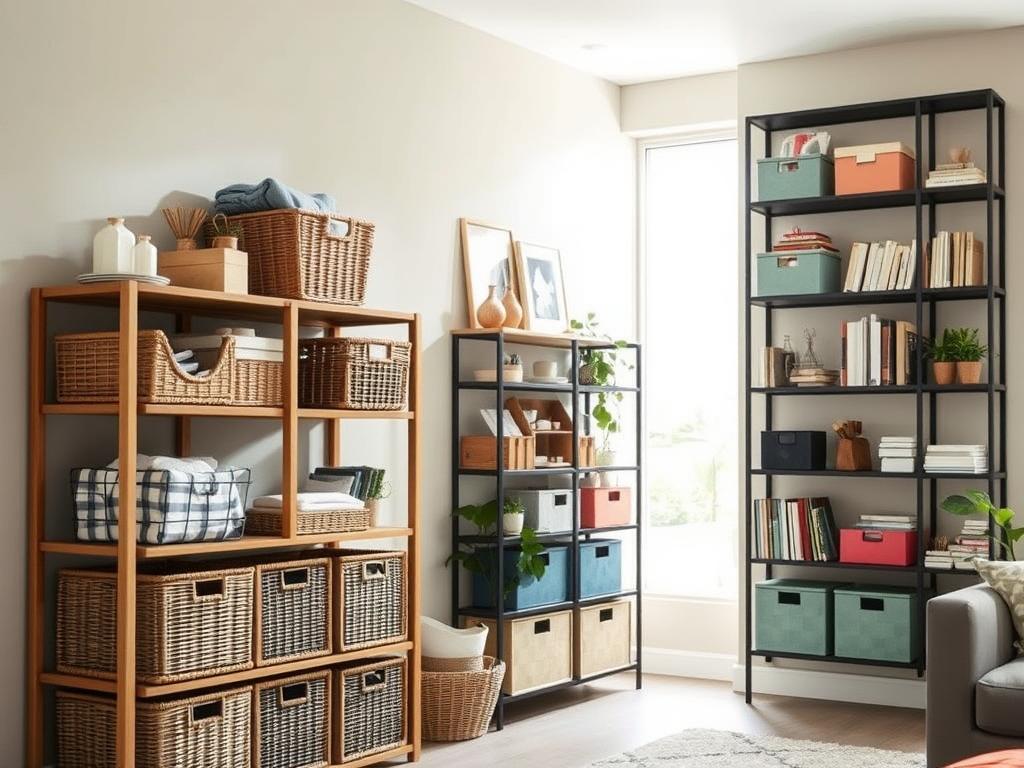
Stylish storage options
Materials matter when choosing storage to fit a room’s style. Wicker and seagrass add warmth and texture. Wire baskets give an industrial look for garages or mudrooms.
Canvas bins fit neatly on closet shelves. Decorative plastic tubs are good for laundry rooms and basements.
Retailers like The Container Store, Target, and HomeGoods offer many sizes and styles. Buying from them makes it easier to find affordable wall storage that matches.
Sizing, labeling, and aesthetics
Measure shelf depth before buying baskets. Choose baskets with a small gap at the front for easy removal. Use chalkboard tags or printed labels for quick ID.
Labeling speeds up daily routines and improves wall storage organization. Match basket colors to the room’s palette for a neat look. Neutral woven textures suit living rooms, nurseries, and hallways well.
Using a consistent material or color builds unity among your wall storage ideas.
Organization tips
Group like items together: crafts, linens, and seasonal gear each get their own baskets. Clear bins in garages and pantries allow quick visual checks of contents. This helps keep wall storage organized efficiently.
Set up zones on shelving. Place everyday items at eye level, heavy items lower, and décor or seasonal pieces higher. Rotate seasonal contents at each season’s start to keep things fresh.
Keep order with regular, brief checks. Declutter often and use shelf liners to protect fragile or slippery items. These steps extend basket life and improve wall storage options over time.
Utilizing Vertical Space
Reaching up instead of out is key for small-space living. Vertical strategies expand capacity and keep the floor clear. We focus on practical installs, safety, and visual zoning to make wall storage useful and attractive.
Tall storage solutions
Floor-to-ceiling shelves use wall height fully in pantries and laundry closets. Tall narrow cabinets fit beside entryways or beds with limited depth. Ladder shelves offer flexible tiers without bulky built-in units.
Stackable wall-mounted modules let users add or remove sections as needs change. Secure tall units to studs with anti-tip hardware for safety. Anchor freestanding cabinets and bolt shelving where possible.
When using ladders, place them away from high-traffic paths to prevent accidents. Common uses include pantry walls for canned goods, slim bookcases beside beds, and stacked laundry nook storage. These options add volume while preserving walking space.
Dividers for zones
Vertical dividers create clear zones on a single wall. Slatwall panels, open shelving, and narrow partitions separate a mail center, key hooks, and a charging station near entryways.
Visual cues help too. A painted vertical stripe or contrasting wallpaper highlights storage areas. Different shelf materials, like wood and metal, add texture and mark distinct zones.
List essential items for each zone: work (laptop, notepads, chargers); kids’ school gear (backpacks, lunchboxes); and pet supplies (leashes, treats). Mount frequently used items at shoulder height. Place heavier objects below waist level for safe access.
These wall storage ideas make vertical organizing a reliable strategy for tight homes. Thoughtful placement and secure installation turn tall systems and dividers into lasting, useful features.
DIY Wall Storage Projects
DIY approaches let readers craft solutions that fit their rooms and budgets. Projects range from simple floating shelves to upcycling old furniture. The focus is on safety, reliable mounting, and matching finishes.
Crafting your own shelves
Start with simple builds that offer big impact. Floating shelves with hidden brackets create a clean look. Plank shelves with industrial pipe brackets suit modern or rustic rooms.
Staggered box shelves from plywood form gallery-style displays. They also store books and décor effectively.
Essential tools include a drill, stud finder, level, screws, anchors, and sanding supplies. Good lumber choices are pine or poplar. Use stain or paint and add a protective polyurethane coat.
Measure and mark stud locations carefully. Pre-drill holes and use a level when mounting shelves. Allow finishes to fully cure before loading them.
Readers will find tutorials on Family Handyman, Bob Vila, and This Old House helpful. These guides offer best practices and important safety tips. Following them reduces mistakes and rework.
Upcycling old furniture
Upcycling turns thrifted finds into unique storage. An old wooden ladder makes tiered shelves for towels or plants. Cabinet doors can attach to walls as small hanging cupboards.
Vintage crates stack into staggered cubbies for shoes, toys, or kitchen items. Prep work is important. Strip old finishes when needed and reinforce weak joints.
Use French cleats or keyhole brackets for secure hanging. These fittings keep heavy pieces stable and safe on drywall or plaster.
Budget shoppers should check Habitat for Humanity ReStore, Craigslist, Facebook Marketplace, and local thrift stores for materials. Combining reclaimed pieces with simple hardware gives affordable storage that looks custom and polished.
A table below shows three starter projects, estimated costs, and key materials. This helps readers pick their first build easily.
| Project | Estimated Cost | Key Materials |
|---|---|---|
| Floating shelf (single) | $20–$60 | Pine board, concealed brackets, screws, paint or stain |
| Plank shelf with pipe brackets | $30–$90 | Wood plank, black iron pipe fittings, anchors, finish |
| Stacked crate cubbies | $10–$50 | Vintage crates, French cleats, sandpaper, protective finish |
These projects show creative wall storage ideas while keeping costs low. They work well for renters and homeowners wanting tailored results. Clear steps, basic tools, and thrifted finds lead to personalized solutions that maximize wall space.
Smart Use of Wall Hooks
Wall hooks are simple and cheap wall storage ideas. They work well in almost any room. You can use them for many tasks, from decoration to heavy lifting.
Small hooks keep keys and scarves neat. Larger hooks can hold bikes or ladders. Renters can pick hooks that do not damage walls.
Types of Wall Hooks
Decorative single hooks made of brass, bronze, or ceramic add style and store daily items. Multi-hook rails hold coats, bags, and hats. Adhesive hooks like 3M Command hang light things without damage.
Heavy-duty hooks from Home Depot and Lowe’s hold bikes and ladders when placed on studs. Specialty hooks add extra uses. Kitchen pot racks and magnetic strips save counter space.
Towel hooks with shelves provide a ledge for toiletries. Brands like Sugatsune offer strong, well-made hardware for lasting use.
Placement Strategies
In entryways, install hooks at two heights for both adults and children. Add a lower shelf or basket to hold shoes or small bags. This setup keeps wall storage neat and helps get ready faster.
In kitchens, put hooks near prep areas for pots, utensils, and mugs. Mount a rail under cabinets for mugs without using counter space. Magnetic strips keep knives visible and easy to reach.
Bathrooms need hooks that resist moisture and allow towels to dry well. Pick stainless or coated hooks to prevent rust. In garages and workshops, arrange hooks by how you work.
Put heavy items near studs and often used tools at eye level for quick access. Renters can use removable adhesive hooks and rails for more space without wall damage. These ideas help renters change their spaces without harm.
Achieving a Minimalist Look
The minimalist style for wall storage means clean lines and few visible items. It uses matched materials to create harmony. This look suits apartments and modern homes that want calm, neat walls. Essentials stay easy to reach in this style.
Built-in cabinets with push-to-open doors hide clutter with a smooth surface. Flush shelves and recessed niches make flat, tidy walls. Furniture with built-in storage, like beds with headboard shelves, adds function quietly. These ideas help small spaces stay both practical and stylish.
Streamlined Solutions
Choose wall panels that hide cables and devices to keep the space looking neat. Hidden compartments and recessed drawers store electronics out of sight. Pick products from brands like Muuto, Herman Miller, and IKEA for clean design. They offer a balance of style and usefulness to support minimalist goals.
Choosing the Right Colors
Match storage units to wall color for a smooth, seamless look. Soft neutrals like white, gray, or beige help rooms feel bigger and less cluttered. Add subtle touches using matte black hardware or natural wood for warmth without overpowering.
Use matte or eggshell finishes on walls to hide flaws. Semi-gloss works well on trim where cleaning is needed. Keep often-used items reachable despite the simple design. Small labels or discreet handles make things easy to find and keep the minimalist style.
| Feature | Benefit | Best Use |
|---|---|---|
| Push-to-open cabinets | Eliminates visible hardware for a sleek face | Entryways, living rooms, media walls |
| Recessed niches | Provides hidden storage without protrusion | Bathrooms, kitchens, behind seating |
| Flush-mounted shelving | Blends into walls to reduce visual clutter | Display small decor, books, daily items |
| Integrated furniture storage | Maximizes function in limited footprints | Bedrooms, studios, compact living areas |
| Wall panels for cables | Conceals electronics for a cleaner look | Home offices, entertainment centers |
Multitasking Wall Solutions
Multifunctional wall-mounted furniture can change studios, guest rooms, and home offices. These pieces mix storage with function to free floor space. They keep essentials close and support many daily activities.
Murphy Beds and Desks
Wall beds fold vertically into cabinetry and save valuable space. They work well with shelving or closets for all-in-one storage. Brands like Resource Furniture, Murphy Bed Depot, and IKEA offer models with shelving, lighting, and closets to save space.
Fold-down desks mount on the wall and have compartments for papers, laptops, and supplies. These desks fit small apartments and create efficient home offices without crowding rooms. Professional installation is best for Murphy beds. The wall must have studs and strong support to be safe.
Foldable Furniture
Drop-leaf tables, foldaway chairs, and wall tables fold away when not used. These pieces keep floors clear and offer work or dining surfaces when needed. Some include storage pockets or shelves for chargers, placemats, or utensils.
Compact Living brands and IKEA’s NORBERG wall-mounted drop-leaf table balance style and function. A good idea is a multi-use wall in a studio with a fold-down desk, storage cubbies, and a Murphy bed. This setup gives flexible living, smart organization, and many wall storage ideas for small spaces.
When planning, combine creative wall storage with strong mounting and clear zones for sleeping, working, and dining. Good planning turns small wall storage into a simple, user-friendly design that adapts to different needs.
Conclusion and Final Thoughts on Wall Storage
Walls offer valuable storage space. Shelving, cabinets, hooks, baskets, and vertical strategies help keep rooms neat and useful. These ideas help fit more items into smaller areas while keeping them easy to reach.
Start by checking wall strength and stud placement. Choose storage based on each room’s purpose. Balance looks with how well the storage works.
Always mount items securely and know load limits before hanging heavy cabinets or Murphy-style furniture. Mix budget options like IKEA or Target with durable, high-quality pieces where needed. Keep a consistent look, label zones, and declutter often.
Try measuring one wall today. Pick a storage solution and test it using temporary hooks or shelves. This helps you decide before installing permanently.