

Americans own an average of 300,000 items in their homes over a lifetime. This number shows how quickly clutter can build up.
This guide shares practical methods for clutter-free storage. It helps homes feel calmer and more functional.
The focus is on tidy storage and organized solutions that work in real rooms, not just showrooms.
Readers will find clear tips for deciding what to keep and how to use space better. The article also explains which items belong in donation or long-term storage.
It covers room-specific ideas, creative techniques, seasonal strategies, technology tools, DIY projects, and how to manage emotional clutter.
Following these steps creates more living space and reduces stress. It also makes cleaning easier and helps find belongings faster.
The tone is informational and uses a third-person voice. It offers realistic, long-term storage tips and minimalist ideas for everyday life in the United States.
Understanding Clutter-Free Storage
Clutter-free storage means keeping belongings accessible but out of sight. It uses systems focused on function and simplicity. Every item has a purpose, from daily essentials to seasonal gear.
Professional organizers recommend grouping like items. They also suggest sorting by how often items are used. This makes spaces look calmer and work harder.
Definition of Clutter-Free Storage
Clutter-free storage is about intentional placement. Items are stored where they are easy to reach and visible when needed.
It uses uniform containers to reduce visual noise. This method uses vertical spaces, under-bed areas, and hidden nooks. These spots help maximize square footage in your home.
Clear bins and labels are favored. They help homeowners know what they have without emptying boxes.
Benefits of a Clutter-Free Environment
Organized storage makes homes easier to clean and faster to maintain. Families spend less time hunting for things and more time on routines like getting ready.
Tidy spaces can lower stress and improve focus. This supports better mental wellbeing.
Clutter-free living also saves money. People buy fewer duplicates and keep belongings longer. They can avoid paying for extra storage units.
Retailers and organizing groups say systematic storage boosts home usability. It also raises the home’s perceived value during resale.
Assessing Your Storage Needs
A clear plan helps a household declutter and organize with purpose.
Start with a quick room-by-room scan to note problem areas and storage gaps.
Make a short inventory and a simple floor sketch to see where tidy home storage can fit existing layouts.
Identifying Items to Keep or Donate
Sort possessions by category: clothing, kitchenware, paperwork, sentimental items, and tools.
Use the three-box method—keep, donate or sell, recycle or trash—to help make decisions faster.
Apply clear criteria: frequency of use, condition, emotional value, and replacement cost.
If something has not been used in 12 months, put it in the donate or sell box.
Exceptions include seasonal items or those with strong sentimental value.
For high-value items, document serial numbers and receipts and consider insurance rather than hoarding them.
Choose donation channels that fit item types, such as Goodwill, Salvation Army, shelters, or Buy Nothing groups.
Use Freecycle or scheduled donation pick-up services for bulky items to support sustainable disposal and reduce waste.
Evaluating Available Space in Your Home
Measure usable storage in closets, under beds, the garage, attic, pantry, and vertical wall areas.
Record height, width, and depth so volume needs become clear.
Map everyday items near living zones and seasonal items to less-accessible areas.
Consider structural limits: shelf load ratings, basement humidity, and attic pest risks.
Climate control affects storage choices for textiles, paper, and electronics.
Sketch a simple floor plan and create an inventory list to visualize zones and spot clutter-free storage opportunities.
Compare volumes for seasonal versus daily use to decide on rotating systems or permanent spots.
Small changes, like shifting furniture to open access to under-bed space, can improve flow and unlock more storage.
Use practical storage tips to match solutions to measured needs and household routines.
Smart Storage Solutions for Every Room
A few targeted upgrades can turn small rooms into calm, functional spaces. Focus on space-saving storage that fits daily habits. This keeps visual clutter low and makes homes feel larger.
Small moves add up when families use organized storage solutions throughout the home.
Kitchen: Maximizing Cabinets and Pantries
Install pull-out shelves and lazy Susans to use deep cabinets efficiently. Vertical shelf risers double stacked storage for plates and containers. Door-mounted racks hold spices and lids, freeing shelf space.
Use uniform airtight containers from brands like OXO or Rubbermaid for dry goods. Clear containers create a tidy look and extend shelf life. Group items by zone such as prep, baking, and snacks.
Keep most-used items at eye level for quick access. Pantries benefit from adjustable shelving and stackable bins. Shelf liners protect surfaces and labels help avoid duplicate purchases.
Clear bins maintain clutter-free storage and speed meal prep.
Living Room: Multi-Functional Furniture Ideas
Choose furniture that doubles as storage. Storage ottomans, lift-top coffee tables, and media consoles hide daily items. Bookcases with baskets store toys and magazines neatly.
Wall-mounted cabinets and built-in shelves free floor space and keep sightlines clean. Decorative boxes hide remotes and chargers while cord management tames electronic clutter.
These storage ideas support a calm, inviting living area. Opt for pieces with clean lines and integrated storage to keep the room warm and functional.
Bedroom: Utilizing Under-Bed Storage
Under-bed drawers on low-profile rollers make seasonal swaps easy. Vacuum-seal bags compact bulky bedding for off-season storage. Platform beds with built-in compartments combine sleep surface and storage.
Use breathable containers to prevent moisture and mildew. Label boxes for fast retrieval. Closet organizers like double hang rods, shelf dividers, and shoe racks reduce floor clutter.
Keep nightly essentials within reach and store seldom-used items out of sight. This supports clutter-free storage and fosters restful sleep.
Creative Organization Techniques
Small changes can turn clutter-free storage into a useful habit. This section shows simple ways to increase capacity and speed retrieval. These tips help keep spaces neat and work well in any room.
The Power of Vertical Storage
Vertical shelving, wall pegboards, over-door organizers, and tall cabinets add storage without using more floor space. Adjustable systems like IKEA Elvarli or ClosetMaid allow you to set shelf heights to fit bins and seasonal items.
Ceiling bike racks and pot racks clear floor space in living areas and laundry rooms. Proper anchoring and balanced weight stop accidents on high shelves. These methods work well in garages, small apartments, and tight laundry spaces.
Using Clear Bins for Visibility
Clear containers from Sterilite or IRIS USA make it easy to see what is inside. Being able to see contents helps avoid buying duplicates and improves inventory control.
Pick sizes that fit your shelf depth and stack well. Containers with the same size hold shelves steady and fit modular or cube shelves. Clear bins are great for seasonal storage, toys, crafts, and pantry extras.
Labeling for Easy Identification
Consistent labeling reduces decision fatigue and speeds up finding items. Use printed labels, Brother P-touch makers, chalkboard tags, or color codes. Labels should show contents and storage dates for seasonal or long-term goods.
When stacking containers, put labels on the front and top to keep them visible. Use labels with simple inventory lists or photos for attics and basements. This keeps your storage organized and easy to maintain.
Seasonal Storage Strategies
Preparing for changing seasons keeps a home tidy. It also prevents damage to stored items. A short plan covering clothing, gear, and decorations makes shifts quick and stress-free.
Preparing for Seasonal Items
Sort seasonal clothing, sports gear, holiday decorations, and gardening tools before packing. Clean and dry each item to avoid mildew and rust. Place seldom-used items in high attic or garage spots if climate and pests are controlled.
Use vacuum-seal bags for off-season clothing to save space and block moisture. Add silica gel packets or DampRid in enclosed containers. Clear, labeled totes make items easy to find and keep storage clutter free.
Store fragile ornaments in compartmentalized boxes or plastic ornament holders to prevent breakage. Keep frequently used items in bins near entryways or closets. Include a toolkit and hardware bag for hooks, nails, and extension cords to ease redecorating.
Rotating Decor Throughout the Year
Create a simple rotation system with a “current season” display box and an “archive” box for stored décor. Photograph complex displays before taking them apart. This helps with easy reassembly next season.
Label bulky decor bins and group items by room to speed swaps. This approach keeps living spaces fresh and reduces extra clutter. It works well with minimalist storage ideas by limiting displayed items.
Combine labeled clear bins with space-saving solutions like shelving risers or under-bed containers. These tactics support clutter-free storage and help homes adapt to seasonal needs.
Utilizing Technology for Clutter Management
Technology has changed how people protect, track, and access their belongings. Smart tools offer practical options for clutter-free storage. They make organized storage solutions easier to keep up.
Small devices and apps work together to streamline routines. They support more efficient storage solutions.
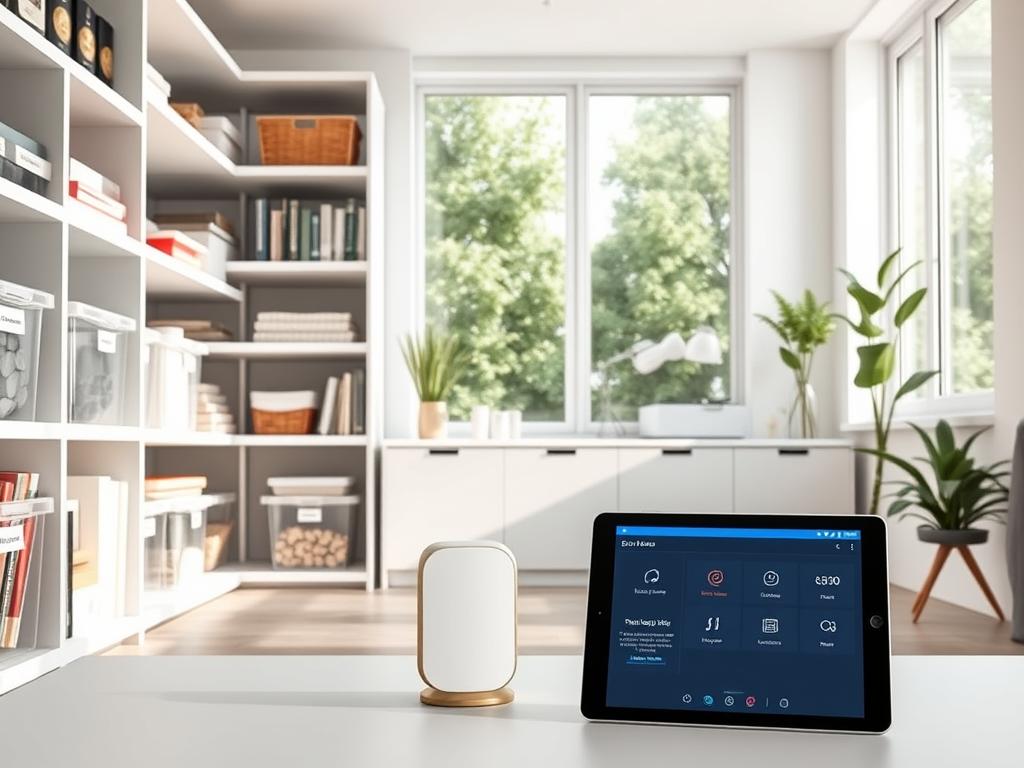
Smart Home Devices for Storage Monitoring
Temperature and humidity monitors from brands like Govee and SensorPush alert users when conditions threaten items in basements, attics, or storage units.
These alerts help prevent mold, warping, and other damage that can ruin stored goods.
Smart locks and security cameras give remote control over off-site storage units. Brands like Ring, Arlo, and smart lock systems let owners check access logs and live feeds. This reduces theft risk and adds peace of mind for seasonal gear and sentimental items.
Smart home hubs like Amazon Alexa and Google Home sync with calendars and reminders. Users can set prompts for seasonal rotations, inventory checks, or donation runs.
NFC-enabled smart labels link a physical box to a phone. This gives quick access to digital records and item histories.
Apps for Inventory Management
Inventory apps such as Sortly, HomeZada, and Encircle let homeowners catalog belongings with photos, purchase dates, and exact locations.
These records speed insurance claims, ease downsizing decisions, and cut search time across rooms and storage zones.
Best practices include regular backups, consistent naming conventions, and updates after major decluttering or acquisitions.
Many apps support barcode scanning and cloud sync. This lets family members share updates from different devices and improves household workflows.
When paired with smart devices, inventory apps enable a proactive approach to organized storage. Users gain a clear record of what they own, where it is, and when it needs attention.
This creates a strong path to clutter-free storage and efficient storage solutions.
DIY Storage Projects
Practical DIY storage projects turn unused nooks into tidy zones. They mix craftsmanship with function to save space. Small upgrades cut clutter without major expense.
Custom shelving gives you flexibility. Measure the area and note stud locations. Plan shelf depth to fit your bins or baskets.
Choose material like pine, plywood, or metal brackets for strength and finish. Seal wood in humid spots to stop warping. Test load capacity before storing heavy items.
Tools and hardware
- Stud finder, level and drill for secure installation
- Shelf brackets, anchors and appropriate screws
- Sandpaper, stain or paint for durable finishes
Common projects include garage wall systems, built-in alcove shelves, pantry organizers, and floating shelves. Home Depot and Lowe’s offer cut-to-size lumber and staff help. Adjust shelf heights to fit containers and save space.
Repurposed solutions
Upcycling cuts costs and wastes less. Wooden crates become rustic shelves. Vintage suitcases store linens in a stylish way.
A worn ladder can become a towel or blanket display. This boosts minimalist storage while adding character.
IKEA units like KALLAX or BESTA fit custom needs. Add bins, drawers, or doors for tailored, affordable storage. Use Mason jars to organize small craft items.
Tension rods make neat shoe and scarf storage without drilling. Sustainable habits include buying secondhand and refinishing instead of replacing.
Choosing long-lasting finishes helps promote clutter-free storage habits over time. These choices support space-saving storage solutions well.
The Importance of Regular Decluttering
Keeping a home orderly takes small, steady work. Regular sessions stop items from piling up and help keep storage manageable.
Short weekly efforts work well with seasonal deep-cleans to refresh closets, entryways, and the garage.
Establishing a Decluttering Routine
Set aside 15–30 minutes each week for focused tasks. Use calendar reminders and checklists to rotate zones like entryway, kitchen, bedroom, closets, and garage.
This keeps each area from becoming overwhelming. Adopt practical rules such as one-in, one-out for non-consumables. Process donation items immediately so they don’t return.
Share a schedule with family members and assign zones to build accountability.
Tips for Maintaining Organization
Return items to their spots after use and do a quick weekly tidy to maintain a neat home. Keep a donate box or bag in a closet to gather items between donation runs.
Review storage every quarter. Swap or replace damaged containers and update labels so clear bins and visible systems stop items from getting forgotten.
Track habits that cause clutter, like impulse buying and duplicates. Use a 30-day wait rule before keeping nonessential purchases.
These tips make it easier to declutter and stay organized. Small, repeatable habits lead to lasting clutter-free storage and a calmer home.
Choosing the Right Storage Containers
Picking the right containers makes clutter-free storage easier to maintain. The right mix of materials and sizes supports efficient solutions.
Long-term organization depends on choosing containers that suit your needs. This approach saves space and time.
Types of Storage Bins and Boxes
Clear plastic totes from brands like Sterilite and IRIS let you see contents at a glance. Lidded plastic bins stack neatly and resist moisture.
This makes them perfect for attics and basements. Fabric bins look good on open shelves and allow airflow.
Cardboard archival boxes preserve paperwork if stored dry and labeled. Metal or wooden crates add a decorative touch in living rooms and entryways.
Specialty containers solve niche problems. Vacuum-seal bags compress blankets and winter coats. Drawer dividers sort socks and small tools.
Spice racks and small subdividers improve kitchen access for jars and utensils. Match container sizes to shelving and use modular measurements.
Stackable containers with secure lids maximize vertical space. Choosing consistent dimensions creates neat, efficient storage solutions.
Eco-Friendly Storage Solutions
Choosing recycled or sustainably sourced containers reduces waste. Recycled plastic bins and bamboo organizers offer durability with a lower footprint.
Thrift stores often carry secondhand storage pieces that are both affordable and unique. Minimizing single-use plastics helps the planet.
Washable fabric bins and wooden crates can replace disposable options. Cardboard boxes make good short-term solutions when labeled and kept dry.
Look for brands that share material sourcing and certifications to avoid frequent replacements. At end of life, recycle plastic bins where accepted.
Donate usable containers to extend their usefulness. Cardboard can be recycled or composted to lower environmental impact.
- Match container type to the stored item for long-term preservation.
- Choose modular sizes to maximize shelf and closet space.
- Prioritize recycled materials and durable brands to cut waste.
- Use specialty containers for textiles, small items, and kitchen tools.
- Label containers and review them periodically as part of storage organization tips.
Establishing Zones for Storage
Creating clear zones helps a household stay orderly. It also reduces the time spent searching for items.
This approach assigns a purpose to each area. Examples include an entryway drop zone, kitchen prep zone, home office zone, kids’ play zone, and seasonal storage zone.
Using consistent storage organization tips for each area builds reliable habits. It makes routines easier to follow.
Creating designated areas in your home
Place zones near related activities. Keep shoes and coats by the door. Set a mail sorting station close to the entry.
Position pantry overflow near the kitchen prep zone. These placements cut steps and reduce clutter moving across rooms.
Use visual cues and containment to show where things belong. Baskets, trays, small cabinets, and labeled bins act as boundaries.
Consistent organized storage solutions speed up retrieval. They make it simpler for every family member to follow the system.
Map zones on a simple floor plan. A drawn layout shows where to add storage and overlaps.
Mapping reveals chances to add space-saving storage. Examples include under-bench cubbies or vertical shelving. These do not disrupt room flow.
Benefits of clearly defined zones
Clearly defined zones cut the time spent locating items. They reduce clutter crossing between activities.
Morning routines become faster when essentials are in a single, predictable spot. Cleaning and maintenance gain structure because each zone has distinct tasks.
Zones support minimalist storage by setting item limits per area. This boundary discourages accumulation and encourages regular editing.
Professional organizers and cleaning services find it easier when zones are labeled and consistent.
Periodic evaluation keeps zones aligned with changing needs. Reassess when hobbies shift, children grow, or seasons change.
Small adjustments preserve benefits of clutter free storage. They reinforce storage solutions and reveal new space-saving storage options as needs evolve.
Handling Emotional Clutter
Emotional clutter grows when items are kept for feelings instead of their use. Tackling this helps create a more practical home. It also supports tidy home storage that lasts.
A calm, step-by-step approach eases decision making. This keeps the process grounded and less overwhelming.
Recognizing sentimental attachments starts with honest observation. People keep items due to anxiety, long stories, or obligation. Simple reflective questions help clear that confusion.
Recognizing Sentimental Attachments
Ask these questions: Does it spark joy? Has it been used or seen recently? Is it a duplicate of something else?
If answers lean toward “no,” the object may be kept by habit more than value. Separate truly meaningful keepsakes from habitual items.
Photograph objects and write short notes to preserve stories. This helps keep memories without holding everything physically. It supports clutter free storage effectively.
Strategies for Letting Go of Unused Items
Start with gradual methods. The box method places items out of sight for a set time and then reassesses.
Photograph items before donation to keep the memory while freeing space. Giving meaningful pieces to family gives objects new life.
Set firm limits, like one memory box per person. Create a ritual for release—write a note or hold a family reminiscence session. These steps help people declutter with care.
Seek help when attachment feels overwhelming. Therapy or coaching can guide emotional processing. For valuable items, use consignment stores or estate services.
Turn special textiles into functional keepsakes. For example, quilts made from old t-shirts blend memory with utility and minimalist storage ideas.
Below is a practical comparison to help choose an approach that matches emotional readiness and storage goals.
| Approach | Best For | Immediate Benefit | Supports |
|---|---|---|---|
| Box Method | Unsure decision makers | Creates breathing room without permanent loss | Declutter and organize, tidy home storage |
| Photograph & Donate | Those who value memory over object | Preserves story, frees physical space | Clutter free storage, minimalist storage ideas |
| Family Reminiscence Session | Distributing heirlooms | Respects relationships and assigns meaning | Declutter and organize, tidy home storage |
| Consignment or Estate Sale | Valuable items with market worth | Recovers financial value while reducing clutter | Clutter free storage, tidy home storage |
| Therapy or Coaching | Severe attachment or grief | Emotional support for lasting change | Declutter and organize, long-term wellbeing |
| Repurpose into Keepsakes | Textiles or small sentimental pieces | Keeps memories functional and compact | Minimalist storage ideas, clutter free storage |
Professional Help for Clutter Issues
When clutter feels impossible to manage, hiring a professional organizer can speed the path to clutter-free storage. They help especially with overwhelming piles, hoarding tendencies, or tight sale timelines.
Professionals also assist with downsizing projects and chronic disorganization that disrupt daily life. Homeowners should look for certified experts through the National Association of Productivity & Organizing Professionals (NAPO). Checking local firms with strong client reviews is also wise.
Before hiring, evaluate candidates for experience in your specific needs like paper management or estate cleanouts. Ask for clear scope-of-work proposals, multiple estimates, and references. Knowing costs up front helps families choose options that fit their budgets.
Typical services start with an initial consultation and walk-through assessment. The professional creates a plan prioritizing tasks and leads hands-on declutter sessions. Many also arrange storage products and custom shelving installation.
They teach simple maintenance routines to keep spaces neat. Clients should expect respectful, nonjudgmental support and before-and-after documentation. Follow-up coaching is available if needed.
To get the most from sessions, set realistic goals and gather important documents. Be open to donation or disposal recommendations. This approach ensures lasting, practical results and organized storage solutions.