

More than 55% of renters in U.S. cities have kitchens smaller than 100 square feet. This makes clever storage a daily necessity, not a luxury.
This guide offers practical, renter-friendly kitchen storage tips for small apartments.
It is made for studio and one-bedroom residents, tiny-home dwellers, and anyone needing small kitchen storage solutions without big renovations.
Readers will find small kitchen storage hacks and clear steps to maximize space.
The article covers organizational techniques, hardware like shelves and hooks, and product picks such as rolling carts and compact appliances.
It also includes furniture ideas that double as storage.
The main goals are to increase usable storage, keep the kitchen tidy, and preserve a clean look.
Most suggestions are removable or nonpermanent, making them great for renters and those who want flexible setups.
Later sections focus on tactics for cabinets, walls, appliances, and furniture.
Readers can quickly apply kitchen organization ideas to fit their space and budget.
Understanding the Challenge of Small Kitchen Storage
Small kitchens have clear limits. They have few cabinets, narrow countertops, no pantry, and awkward corners. These issues affect daily choices between prep areas and storage.
Assessing your kitchen first helps you understand these challenges before choosing solutions.
Many people make the problem worse by buying duplicate gadgets and keeping specialty tools on the counter. These habits reduce free space. Simple behavior changes free up room for essentials.
A kitchen needs to hold food, cookware, utensils, cleaning supplies, small appliances, and prep zones. When space shrinks, you must prioritize what stays in reach. This focus helps make storage choices and keeps workflow efficient.
Apartments often limit permanent changes. They set weight limits and restrict drilling or mounting. Tenant-safe options include tension rods, 3M Command adhesive hooks, and freestanding racks. These choices save space without breaking lease rules.
Use this checklist to take stock: count shelves and cabinets, measure vertical space, note dead corners, check appliance sizes, and sort items by use frequency. This list guides storage choices while fitting building rules.
| Assessment Step | What to Measure | Why It Matters |
|---|---|---|
| Cabinets and Shelves | Number, depth, adjustable shelves | Reveals true storage capacity and where add-ons will fit |
| Vertical Clearance | Distance to ceiling, space above fridge | Shows opportunity for tall shelving or overhead racks |
| Dead Corners | Cabinet angles, under-counter voids | Highlights spots for lazy Susans or corner pull-outs |
| Appliance Footprints | Width, depth, and cord location | Determines what can be stacked, stored, or swapped |
| Item Priority | Daily, weekly, rarely used items | Guides placement so frequently used tools stay accessible |
Creative Solutions for Maximizing Vertical Space
Making the most of vertical small kitchen storage turns walls and empty air into practical places. Small apartments gain both function and style when owners think upward.
The tips below focus on low-cost installs, renter-friendly fixes, and durable choices from familiar brands.
Installing Shelves Above Counters
Floating shelves and bracketed shelving add storage without eating floor area. Pine or maple boards with metal brackets pair well with white laminate countertops common in rented kitchens.
IKEA, The Home Depot, and Wayfair stock ready-to-install options for different budgets.
Place shelves 12–18 inches above the countertop to keep the workspace clear. Use the lower shelf for everyday mugs and spices.
Reserve the higher shelf for decorative items or things used less often.
For renters, select wall anchors rated for the shelf load or adhesive-supported shelving for light items. Check manufacturer weight limits before loading shelves to avoid accidents.
Utilizing Vertical Cabinets
Tall, narrow cabinets and pantry-style units fit narrow gaps beside a fridge or between counters. These slim profiles are ideal for bottles, baking sheets, and cutting boards.
Adjustable shelving and shelf risers let users stack plates and mugs more efficiently. IKEA’s BOAXEL systems and HEMNES add-ons work well in apartments where modular solutions matter.
Hanging Pot Racks and Hooks
Ceiling-mounted racks and wall rails keep pans within reach while freeing cabinet space. Wall-mounted rails with heavy-duty S-hooks create an attractive display.
These rails make cookware easy to grab during prep. Choose durable options such as wrought-iron rails or products from OXO for long-term use.
Install rails into studs or use toggle bolts for secure support. Renters can use over-the-cabinet hooks or no-drill rail systems to avoid permanent changes.
| Solution | Best For | Typical Materials | Installation Tip |
|---|---|---|---|
| Floating shelves above counters | Display items, spices, everyday dishes | Pine, maple, white laminate, metal brackets | Use wall anchors rated for load; space 12–18 inches above counters |
| Tall narrow cabinets | Bottles, baking sheets, cutting boards | Engineered wood, laminate finishes | Choose adjustable shelves and risers to use full height |
| Wall-mounted pot rails | Frequently used pots and pans | Wrought iron, stainless steel, heavy-duty hooks | Attach to studs or use toggle bolts; consider over-cabinet hooks for renters |
| Adhesive-supported shelving | Light items in rental units | Plastic or lightweight metal with adhesive backing | Follow weight guidelines; avoid heavy cookware |
Multi-Functional Furniture for Small Kitchens
Small kitchens benefit most from furniture that serves more than one purpose. Choosing pieces that combine work surface and storage helps reduce clutter. This method keeps style while adding extra capacity and tidiness.
Careful planning makes these choices work well. Think about traffic flow and how the piece will be used daily.
Focus on space-saving solutions that add utility but stay compact in small kitchens.
Choosing a Kitchen Island with Storage
A compact island adds prep space and hidden storage through cabinets, shelves, and drawers. For small kitchens, choose islands 24–30 inches deep to keep sightlines open.
Keep aisles at least 36 inches wide when possible for easy movement. Look for built-in features like wine racks, towel bars, open cubbies for baskets, and lockable casters for easy mobility.
IKEA, Target, and Home Depot offer budget and mid-range models that balance cost and function. When budget allows, custom cabinetry provides tailored storage and matching finishes for your kitchen.
Using a Rolling Cart for Flexibility
Rolling carts serve as movable prep stations, bar carts, or extra pantry space. They offer smart storage by shifting where you need it most in a small kitchen.
Choose materials to suit your home: stainless steel for durability or wood for warmth. Select features like locking casters, drawers, drop-leaf extensions, and towel racks to add utility.
Organize the cart by function: top shelf for prep and small appliances, middle for cooking tools, and bottom for bulk items. Carts are rental-friendly and can be stored away when not in use.
| Piece | Best Use | Key Features | Recommended Source |
|---|---|---|---|
| Compact Kitchen Island | Prep area and concealed storage | 24–30″ depth, drawers, open cubbies, wine rack | IKEA, Home Depot, Custom Cabinetry |
| Rolling Cart | Mobile prep station or extra pantry | Locking casters, drop-leaf, drawers, towel bar | Target, Wayfair, local makers |
| Console Table with Shelves | Extra counter space and display storage | Open shelving, narrow depth, basket-ready cubbies | Crate & Barrel, IKEA, thrift finds |
| Bench with Hidden Compartment | Seating plus discreet storage | Lift-top seat, compact footprint, cushion options | West Elm, Wayfair, local upholstery |
Clever Cabinet Organization Techniques
Small kitchens need smart solutions. Clever cabinet organization turns wasted corners and deep cabinets into tidy, usable space.
These tips pair well with ready-made small kitchen storage containers and simple hacks to make cooking smoother.
Corner cabinets hide many lost items. Round or kidney-shaped Lazy Susans bring those items forward. Spices, cans, and small cookware stay visible.
Wood, plastic, and metal models fit different styles and budgets. Brands like Rev-A-Shelf and Simple Trending make durable trays that rotate smoothly.
Choose a Lazy Susan sized for your cabinet. Double-tiered trays stack spices and jars without crowding your space. Keep weight low to protect the mechanism and avoid sagging.
Lazy Susans for Corner Cabinets
Install a Lazy Susan by testing the fit and clearance first. Mounting hardware must avoid internal obstructions like reinforced backs.
Renters should pick a freestanding kit that requires no permanent changes. Homeowners get better stability with secure-mount units.
Use small kitchen storage containers to group similar items on the Lazy Susan. Clear spice jars, slim oil bottles, and stacked canisters reduce clutter and speed meal prep.
Label lids for quick scans while cooking.
Pull-Out Shelves and Drawers
Pull-out shelves let you reach the back of lower cabinets without bending or upheaving stacks. They come as roll-out trays, full-extension drawer systems, and soft-close options.
Blum and other hardware brands offer heavy-duty slides for frequent use. When retrofitting, compare weight ratings carefully.
Store heavy cookware like cast-iron pans on pull-outs rated for higher loads. Add drawer dividers to keep lids, baking sheets, and pans organized and easy to grab.
Snap-in DIY kits suit renters, while licensed handymen can ensure secure, long-lasting installation.
| Solution | Best Use | Materials / Brands | Weight Notes |
|---|---|---|---|
| Single-tier Lazy Susan | Spices, small jars, oils | Wood, plastic; Rev-A-Shelf, Simple Trending | Light items only |
| Double-tier Lazy Susan | Stacked spices, small canisters | Metal or reinforced plastic; brand kits available | Moderate weight; avoid heavy pots |
| Roll-out tray | Pan organization, canned goods | Wood or laminate trays with metal slides | Check slide rating for heavy loads |
| Full-extension drawer | Heavy cookware, bakeware | Blum, heavy-duty soft-close systems | High weight capacity recommended |
| Snap-in DIY kit | Renters needing quick upgrades | Plastic or lightweight metal kits | Best for light to moderate items |
Using Wall Space Efficiently
Small kitchens gain by using walls as active storage. Well-placed systems free counters and keep essentials nearby. This makes cooking more pleasant. The ideas below focus on easy installs and renter-friendly options. They help use wall space without clutter.
Magnetic strips offer a clean, sanitary way to store knives and metal tools. A stainless steel or bamboo-backed magnetic strip from Wüsthof, OXO, or IKEA holds blades and metal utensils. This keeps items visible and dry. Install strips a few inches above the prep surface to avoid grease buildup. This placement also makes cleaning simple. Mount strips out of children’s reach. Choose a strong-magnet model for heavier knives. Small spice tins with magnetic bottoms fit well on these strips. They create compact, accessible seasoning storage.
Pegboards turn a blank wall into a flexible station for pots, pans, and baskets. Metal systems like Wall Control or painted pegboards from The Container Store and Lowe’s let users rearrange hooks and shelves easily. Group like items together. Place most-used tools in the center. Add small buckets or shelves for spices and utensils. This keeps the layout tidy.
Renter-friendly versions include freestanding pegboard panels and removable adhesive hooks. These mimic pegboard function without drilling permanent holes. Such solutions let people use wall space easily. Using a mix of pegboard baskets, S-hooks, and small shelves adds versatility. They support many creative small kitchen storage ideas.
Below is a quick comparison to help choose the best option for your kitchen size and lifestyle.
| Feature | Magnetic Strip | Metal Pegboard | Removable Hooks / Panels |
|---|---|---|---|
| Best use | Knives, metal utensils, spice tins | Heavy pans, multiple tools, modular layout | Temporary setups, renter-friendly arrangements |
| Durability | High with stainless or bamboo backing | Very high; supports heavy items | Moderate; depends on adhesive strength |
| Installation | Simple wall mount a few inches above counter | Requires anchors or stud mounting | No drilling; peel-and-stick or freestanding |
| Aesthetic options | Minimalist stainless or warm bamboo | Industrial metal or painted wood finishes | Customizable with hooks and baskets |
| Cost range | Affordable to mid-range | Mid-range to higher cost | Low to mid-range |
| How it helps small kitchens | Frees counter space while keeping tools handy | Maximizes vertical storage and organization | Enables flexible, creative small kitchen storage ideas |
Smart Storage in Small Kitchen Appliances
The right appliances can make tight spaces work well. This section shows choices and habits to keep counters clear. It also helps find room for everyday tools.
It covers compact models, stacking tips, and storage options like small kitchen storage containers.
Compact appliances that save space
Slim dishwashers, counter-depth refrigerators, and microwave-convection combos fit narrow spaces without losing function.
Brands like Breville, Cuisinart, Panasonic, and GE Profile offer reliable compact appliances for apartment kitchens.
Choose toaster-oven alternatives to full-size ovens when baking needs are small.
Pick multifunctional devices to reduce clutter. An Instant Pot or air fryer-convection oven can replace several single-use units.
Measure cabinet and countertop space before you buy. Store seldom-used items in labeled small kitchen storage containers.
Consider offsite or seasonal storage for bulky appliances.
Stacking appliances for efficiency
Stacking can free valuable counter space if done safely. Use sturdy, flat surfaces and follow manufacturer rules.
For washer/dryer combos, use approved stacking kits in utility closets when possible.
Place a microwave on a toaster-oven shelf that allows good airflow and easy access.
Open or dedicated shelving works well for stacked small appliances while keeping them ventilated.
Never stack heat-generating devices directly unless the maker says it is safe. Follow warranty and ventilation rules to avoid damage.
A checklist helps avoid mistakes: measure clearance, check electrical and ventilation needs, use approved stacking tools, and store rarely used items in small kitchen storage containers to keep counters tidy.
Creative Use of Under-Sink Storage
Under the sink often becomes a clutter zone in small kitchens. Thoughtful under-sink storage ideas turn that awkward space into a tidy, functional area.
Simple changes cut time spent searching and protect supplies from leaks.
Grouping items and creating zones makes maintenance easier. Use labeled containers so everyone can find what they need fast.
Keep chemicals separate from food items. Secure hazardous products with childproof locks if needed.
Baskets and Bins for Cleaning Supplies
Group sprays, sponges, brushes, and trash bags in baskets or bins for quick access. Choose plastic, metal, or woven bins from stores like The Container Store, Target, or IKEA.
Add waterproof liners to guard against drips. Place tall bottles at the back and everyday items in front.
A small caddy or handled basket makes it easy to carry supplies to the sink or bathroom. Use clear labels or color-coded tags to speed retrieval.
Sliding Drawers for Easy Access
Sliding drawers make shallow or awkward areas around plumbing usable. Low-profile slide-out units fit around pipes and create tiers for sponges, soap, and scrubbers.
Look for adjustable under-sink organizers from Simplehuman or Rev-A-Shelf. These account for the P-trap and disposal clearance.
Measure first, choose anti-slip liners, and pick hardware rated for smooth operation.
- Measure clearance around the P-trap and disposal before buying.
- Pick low-profile slides and anti-slip liners to keep items in place.
- Combine baskets with slide-outs to maximize both grouping and access.
These small kitchen storage hacks help keep essentials visible and reachable. Properly planned under-sink systems reduce bending and speed tasks.
They help keep the kitchen running smoothly.
Incorporating Open Shelving in Design
Open shelving transforms compact kitchens by offering visible, easy-to-reach storage that feels airy. This approach suits renters and owners who want open shelving small kitchen storage that doubles as display and function.
Proper placement above sinks or counters keeps everyday items within reach and frees counter space for prep work.
Advantages of Open Shelving
Open shelving visually expands a small kitchen by removing heavy cabinet doors. It grants immediate access to dishes, glassware, and frequently used spices, which speeds cooking and cleanup.
Using open shelving small kitchen storage encourages intentional minimalism; homeowners keep only what they use often.
Trade-offs include dust and the need for steady styling. Open shelves suit items used daily rather than long-term food storage. For safety, choose solid materials and mount shelves to studs or use rated anchors for heavier loads.
Place shelves where items will be grabbed most to avoid extra reaching and clutter.
Styling Tips for Open Shelves
Group items by color or function to make small kitchen storage shelves look organized. Uniform jars, such as Ball Mason jars with clear labels, create a clean pantry appearance.
Brands like OXO offer airtight containers that pair well with open displays.
Use coordinated dishware sets or woven baskets to hide small clutter while keeping the shelf aesthetic tidy. Keep everyday mugs, plates, and frequently used oils or spices on open shelves to blend practicality with design.
Balance open shelving with closed cabinets to hide overflow and less attractive items.
Maintain shelves with a simple routine: weekly dusting and a monthly inventory check to remove unused items. This keeps creative small kitchen storage ideas functional and attractive over time.
| Feature | Best Use | Materials & Load |
|---|---|---|
| Open wooden shelves | Plates, bowls, cookbooks | Solid wood, anchor to studs, supports 30–50 lbs per linear foot |
| Floating metal shelves | Spice jars, small appliances | Steel brackets, rated anchors, holds 40–60 lbs |
| Glass shelves | Glassware, decorative items | Toughened glass, anchored hardware, moderate load (15–25 lbs) |
| Woven baskets on shelves | Utensils, linens, snacks | Lightweight, distributes weight, ideal for irregular items |
The Importance of Decluttering Regularly
The small kitchen benefits most from steady upkeep. Regular decluttering helps keep surfaces clear and reduces stress.
It also supports maximizing storage so daily tasks feel easier in a small kitchen.
Start with a simple routine anyone can follow. Empty one drawer or cabinet at a time.
Sort items into keep, donate, and discard piles. Use a one-year rule for occasional items: if not used in a year, consider donating.
Identifying Unused Items
Focus on duplicates, specialty bakeware, and expired pantry goods. These take up prime space and block small kitchen storage hacks.
Take smartphone photos of shelves and create a short inventory. This helps avoid buying duplicates later.
Donate usable goods to Goodwill, The Salvation Army, or local centers. Recycle broken items responsibly at municipal centers.
For hazardous waste, use designated drop-off sites to protect plumbing and the environment.
Organizing for Frequent Use
Adopt a zone approach that groups items by activity: prep, cooking, baking, and cleaning.
Place everyday dishes and utensils near the dishwasher or sink so unloading takes seconds. Keep cutting boards and knives close to prep areas for smoother work.
Use clear containers and labels for dry goods to speed identification and reduce pantry clutter.
Pantry systems and stackable containers create more usable space. They help maximize storage in a small kitchen.
Small habits make a big difference. Return items to their assigned place after use.
Schedule short quarterly sessions to maintain order. These small kitchen storage hacks turn chaos into efficiency.
| Step | Action | Why It Helps |
|---|---|---|
| 1 | Empty one area, sort into keep/donate/discard | Prevents overwhelm and targets problem zones quickly |
| 2 | Apply the one-year use rule and photograph items | Stops accumulation of duplicates and clarifies ownership |
| 3 | Zone items by activity and place frequently used items in reach | Speeds meal prep and improves daily flow |
| 4 | Use clear containers, labels, and pantry organizers | Boosts visibility and supports maximizing storage in a small kitchen |
| 5 | Donate to Goodwill or The Salvation Army; recycle broken items | Keeps usable items in circulation and reduces waste |
| 6 | Schedule quarterly mini-decluttering sessions | Maintains progress and reinforces small kitchen storage hacks |
Innovative Storage Solutions for Cooking Utensils
The right mix of drawer systems and container setups turns clutter into calm. Small kitchens benefit from clear rules: place daily items within arm’s reach. Keep odd tools grouped together, and select pieces that match the room’s scale.
These moves improve workflow and create utensil storage small kitchen owners can trust.
Adjustable drawer dividers and bamboo organizers create tidy zones for spatulas, whisks, spoons, and measuring tools. Brands like OXO and Joseph Joseph offer bamboo or BPA-free plastic options with non-slip bases. These help hold items firmly in place.
Shallow drawers work best for flat tools. Place frequently used utensils closest to the cooktop. Group measuring spoons and cups together for faster prep.
To expand capacity, add foam inserts or low risers for multi-level storage of small gadgets. This keeps flat items visible and makes room for whisks or peelers underneath.
A simple layout tip: dedicate one drawer to heat-safe tools and another to prep instruments. This avoids cross-use confusion.
Countertop and hanging containers provide a flexible alternative when drawer space is limited. Ceramic crocks, stainless steel canisters, or slim wall-mounted cups keep essentials handy. Matching containers reduce visual clutter and create a cohesive look with small kitchen storage containers.
Magnetic strips and hanging rails free up drawer space by holding spatulas, ladles, and tongs. A rail fitted with small buckets or wall-mounted cups works well for commonly used pieces. Choose dishwasher-safe containers and empty sticky items often to stay sanitary and prevent buildup.
Below is a quick comparison to help choose the best approach based on kitchen size, frequency of use, and budget.
| Solution | Best For | Materials/Brands | Pros | Cons |
|---|---|---|---|---|
| Adjustable Drawer Dividers | Shallow to medium drawers | OXO, Joseph Joseph, bamboo | Custom zones, non-slip bases, neat appearance | Needs correct sizing, limited for tall tools |
| Bamboo Inserts with Risers | Organized multi-level storage | Bamboo, foam risers | Natural look, eco-friendly, stackable | Costlier than plastic, can warp if wet |
| Ceramic Crocks & Canisters | Frequently used utensils on counters | Ceramic, stainless steel | Easy access, decorative, durable | Takes counter space, heavy when full |
| Magnetic Strips & Hanging Rails | Maximizing wall space | Magnetized steel, wall-mounted rails | Frees drawers, quick access, slim profile | Needs wall clearance, not ideal for fragile items |
| Slim Wall-Mounted Cups | Small counters and narrow gaps | Stainless steel, plastic | Space-saving, matches decor, reduces clutter | Requires installation, limited capacity |
Combining drawer organizers with small kitchen storage containers offers a practical way to store utensils smartly in small spaces. The goal is simple: keep tools visible, clean, and within reach. This way, cooking stays efficient and enjoyable.
Utilizing Furniture for Additional Storage
Maximizing storage in a tight kitchen means thinking beyond cabinets. Thoughtful furniture choices turn seating and surfaces into practical storage.
This approach offers furniture storage small kitchen owners can depend on every day.
Ottomans and benches with hidden compartments
Choose an entryway or dining bench with a lift-up seat to stash linens and placemats. You can also store seasonal serveware in these compartments.
Retailers like IKEA, Wayfair, and Overstock have compact storage benches made for small apartments.
Place a bench under a breakfast bar or against a wall to add seating. This adds seating without taking up floor space.
Pick pieces with moisture-resistant interiors if items will sit near the sink or stove.
Using stools as storage solutions
Stools with hollow interiors or built-in shelves serve as seating and storage for napkins, spice tins, or small pans.
Stackable storage stools help when guests arrive and tuck away when not needed.
Consider stools with removable tops or lightweight hollow designs for portability and quick movement.
Check weight capacity and seat height to ensure safe, comfortable use. This is important if stools double as seats at fold-down tables or wall-mounted drop-leafs.
- Blend utility and style by matching finishes to kitchen decor.
- Measure clearance before buying: a snug fit prevents awkward gaps.
- Use labeled bins inside furniture to keep items organized and accessible.
These creative small kitchen storage ideas turn ordinary furniture into smart, space-saving solutions.
They work especially well in small apartment kitchens.
Implementing Seasonal and Rotational Storage
Small kitchens do well with a clear plan for seasonal kitchen storage and rotating kitchen items. A simple routine frees countertop and cabinet space. This makes cooking easier and boosts overall efficiency when maximizing storage.
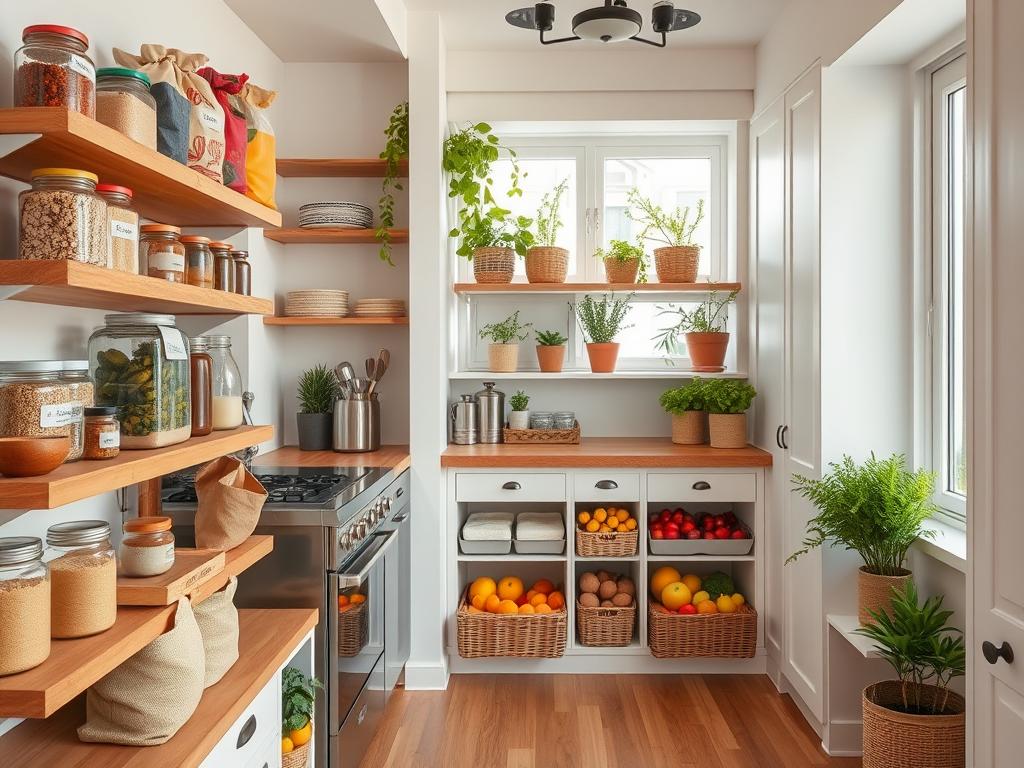
Store Away Off-Season Items
Store holiday cookware, large stockpots, and seasonal baking items where they do not compete with everyday tools. Under-bed bins, closet shelves, or rented storage lockers work well for bulky items.
Label each container with its contents and season to speed up retrieval. Use vacuum-seal bags for linens and compressible items to save space. Avoid attics and garages with extreme temperatures or humidity when storing wooden or metal items.
Protect cast-iron cookware with a light coat of oil. Place silica packs in boxes to reduce moisture risk.
Rotating Usage of Specialty Items
Create a rotation system for specialty appliances like an ice cream maker or a large slow cooker. Keep a visible inventory list on the fridge or in a notes app. This way, no one forgets what is stored away.
Designate a single shelf or box as the “specialty” spot for items moving in and out. Consolidate accessories in labeled bins so parts stay together when an appliance returns to the kitchen.
Regular rotation reduces visible clutter. It also keeps prime storage areas free for frequently used items.
Small steps—seasonal swaps, clear labeling, and a single rotation shelf—help homeowners balance convenience with space. This plan supports long-term goals for maximizing storage in small kitchens.
Budget-Friendly Small Kitchen Storage Hacks
Small kitchens need smart, low-cost fixes to keep counters clear and essentials easy to find. Combining thrift store finds with simple DIY work helps create practical spots for utensils, spices, and cleaning supplies. These budget storage methods reuse sturdy items and add renter-friendly pieces that look polished and last long.
Thrift Store Finds for Unique Storage
Stores like Goodwill, Salvation Army, and Habitat for Humanity ReStores offer vintage crates, wooden boxes, and glass jars to organize kitchens well. An old spice rack works great flat on the wall to hold small bottles. Wine crates make good under-shelf baskets, while ceramic pitchers become durable utensil holders after washing.
Cleaning and repainting these thrifted pieces helps them match your kitchen’s colors. Always choose food-safe containers for storing edibles. Thrift store ideas save money and reduce waste in your kitchen.
DIY Storage Solutions to Consider
Simple DIY projects can greatly improve storage space. A tension rod under the sink holds spray bottles neatly. A narrow plywood shelf fits between the fridge and counter, creating extra room. A pegboard turned magnetic spice wall keeps jars visible and tidy.
You just need basic materials: plywood, L-brackets, screws, nails, a drill, and removable 3M hooks for renter-friendly mounting. Reinforce shelves that bear weight, seal wood near sinks, and respect weight limits for safety. Use used wood by painting and sealing it. Buy bulk dry-food containers at stores like Costco or Sam’s Club.
Upcycle cardboard with contact paper to make useful drawer dividers. These small kitchen storage hacks combine thrift finds and DIY projects to create durable, attractive storage solutions. They keep costs low while improving function, sustainability, and style in small kitchens across the US.