

Nearly 30% of household food goes unused each year because items get lost or forgotten. Pantry labeling is a simple fix. It can help many families reduce food waste.
This short guide shows how pantry labeling transforms pantry and kitchen organization into easy steps. It helps readers access ingredients faster and keep storage consistent. This leads to less food waste during a pantry makeover.
Readers will learn what to label and the best tools, like label makers and printable labels. The guide offers design tips, such as font size, color coding, and adding expiration dates. It also covers where to place labels, building inventory, and using technology like apps and QR codes.
The guide suggests involving children, seasonal labeling, and keeping labels updated over time. Common problems like expired items, duplicate purchases, and hard-to-find spices are discussed. Pantry labeling costs little but greatly improves kitchen organization and meal prep speed.
Continue with the full guide for step-by-step advice. It offers options for all budgets and styles, including DIY printables and custom labels. Label maker systems are also covered to fit different needs.
The Importance of Pantry Labeling
Clear pantry labeling turns clutter into a system that supports daily tasks. When items have visible spots, organizing the pantry feels natural.
This simple change improves storage, speeds cooking, and brings order to your home.
Enhancing Organization and Efficiency
Labels save time spent searching for ingredients. A quick look shows where to find flour, rice, or baking soda.
This reduces meal prep time and makes restocking easier.
Professional organizers use the “everything in its place” rule. Labels give products a specific home, so they return to the same spot after use.
Consistent placement keeps pantry storage neat and supports home organization.
Reducing Food Waste
Labeling tracks contents and food ages. Marking purchase or best-by dates encourages using older items first.
This habit prevents food from spoiling in the back of the pantry.
Visible dates and labels help spot items nearing expiration. People waste less and spend less replacing food.
Effective pantry organization leads to real savings over time.
Promoting Meal Planning
A labeled pantry makes weekly planning and grocery trips easier. Staples become easy to identify, so inventory is fast and accurate.
Labels reveal gaps to prevent duplicate purchases. They also help assign shopping or prep tasks to family members.
This leads to calmer meal prep and better home organization habits.
Types of Pantry Items That Need Labels
A clear labeling plan keeps pantry storage neat and reduces time spent searching for ingredients. Using consistent pantry labels makes organization easy for everyone in the household.
Custom labels add clarity for special diets and preferred portion sizes.
Dry Goods and Cereals
Items like rice, pasta, oats, flour, and cereal work best in airtight containers with simple labels. The labels should show product name, weight or volume, and date opened to track freshness.
Moving goods from original packaging into clear, resealable jars improves visibility. This helps organize the pantry faster and reduces pests.
Spices and Seasonings
Small jars and tins need clear, short labels for quick reading. Include the spice name and, if useful, origin or grade like smoked paprika or kosher salt.
Using legible fonts and placing labels consistently speeds up meal preparation. Adding purchase or opened dates helps monitor the spice’s potency and fits with custom labels.
Canned and Jarred Foods
Store-bought cans and jars may not need extra labels. But if contents are moved to storage containers, labels are needed.
Labels should list the product and expiration or best-by date. Mark the lid or side of opened jars with the date to prevent waste and keep pantry rotation accurate.
Snacks and Baking Supplies
Snack items like chips, granola bars, and chocolate chips should have labels showing flavor or type, portion size, and use-by date. This keeps grab-and-go choices clear.
Bulk baking supplies like baking powder, baking soda, and flour benefit from notes about sifted vs. unsifted and gluten-free status. These details reduce baking errors and improve organization.
All sections should include allergy and dietary tags when needed. Notes such as contains nuts, gluten-free, and vegan improve safety and quick decisions in the pantry.
| Item Category | Key Label Elements | Best Container | Notes for Custom Labels |
|---|---|---|---|
| Dry Goods & Cereals | Product name, weight/volume, date opened | Clear airtight canister | Include sifted/unsifted or whole grain indicators |
| Spices & Seasonings | Name, origin/grade, purchase/opened date | Small glass jars with removable lids | Use legible font and uniform placement for quick ID |
| Canned & Jarred Foods | Product name, best-by or expiration date | Original can or decanted clear jar | Label lids of opened jars with date opened |
| Snacks & Baking Supplies | Flavor/type, portion size, use-by date | Resealable bags or labeled bins | Mark allergens and dietary info like gluten-free |
Choosing the Right Labeling Materials
Picking durable materials helps pantry labels stay readable and stick well. Use a mix of printed and DIY labels to fit your budget and lifestyle.
Here are practical tips and comparisons for common materials and containers.
Pre-Made Labels vs. DIY Labels
Pre-made and custom labels from Avery or online sellers look polished and last long. They fit standard templates and work well with label makers like Brother P-touch or Dymo for consistent results.
DIY options include printable sticker paper, washi tape with handwritten text, and chalkboard labels. These cost less and are easy to change with pantry items.
DIY labels are great for renters or anyone who swaps containers often.
Waterproof and Smudge-Proof Options
Choose vinyl, laminated labels, or waterproof sticker paper for spots prone to spills or moisture. Such materials resist smudging and handle regular cleaning well.
For home printing, use pigment-based inks or laminate labels to prevent ink from running. Some label makers offer water-resistant tape that works well on glass and plastic containers.
Use of Clear Containers for Visibility
Clear glass or BPA-free plastic containers from brands like OXO or Rubbermaid Brilliance help you see contents quickly. Labels placed on the front make identification faster.
For stackable storage, place labels horizontally on the side or vertically on the front edge based on shelf layout. Opaque bins and woven baskets work well with shelf-edge pantry labels, letting you know what’s inside without opening them.
Label Design: Tips for Clarity
Good label design helps you organize your pantry quickly. Clear labels let you find flour, spices, or snacks fast. Following some key design rules keeps labels practical and durable.
Font Size and Readability
Use a clean sans-serif font like Helvetica or Arial for easy reading. For small jars, choose 14–18 pt font to read from a few feet away. For shelf or bin labels, use 24–36 pt for visibility across the pantry.
Dark text on a light background gives the best contrast. Avoid fancy scripts that are hard to read quickly.
Color Coding for Easy Identification
Assign colors by category to find items faster: red for baking, green for grains, yellow for snacks, and blue for spices. Color coding can also show dietary needs like gluten-free or dairy-free.
Keep a legend or master key inside the pantry door. This helps everyone use the same color system. Use matching colored labels or borders for a neat look.
Including Expiration Dates on Labels
Write purchase, opened, and expiration dates using MM/DD/YYYY to avoid confusion. For bulk transfers, note the date the product was moved into a container along with the original expiration date.
Choose erasable chalkboard or whiteboard labels when dates will change often.
These tips improve pantry labeling and organization. Clear designs cut search time and help reduce food waste by showing dates clearly.
Where to Place Labels in the Pantry
Proper placement of pantry labels makes daily use simple and keeps pantry organization consistent. Small adjustments to sightlines and container orientation cut search time and reduce clutter.
The tips below guide where to put labels for quick retrieval and lasting order.
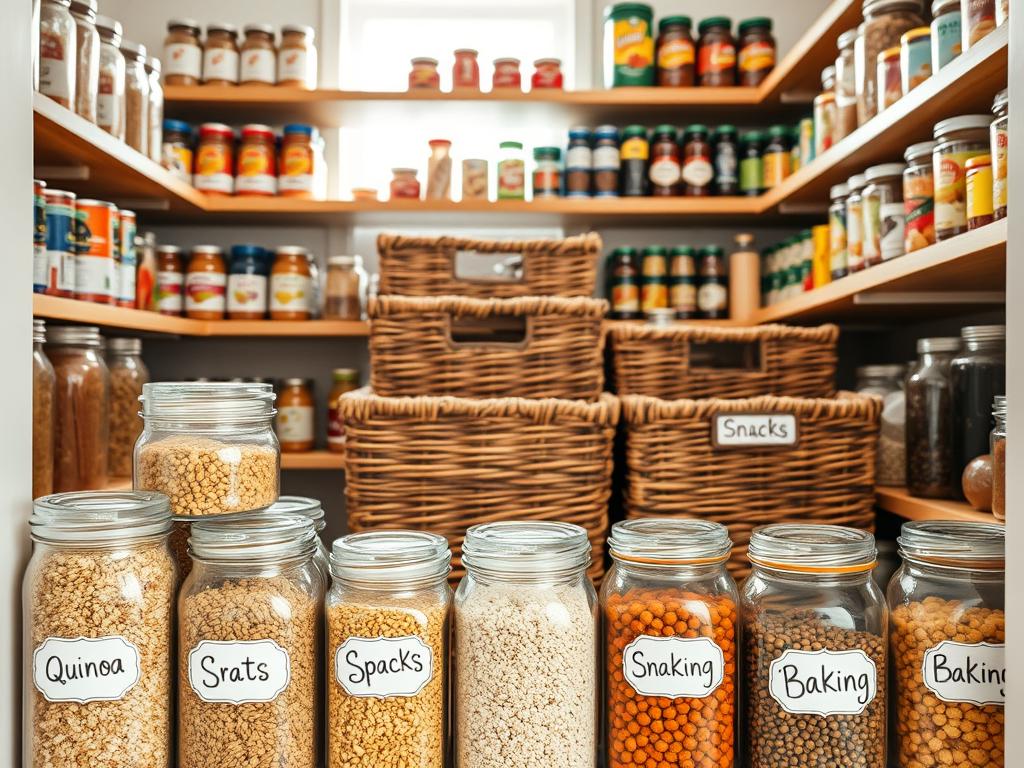
Placement Techniques for Easy Retrieval
Place labels at eye level when possible so frequently used items are instantly visible. For lower or higher shelves, use a consistent front-edge position.
This way, family members know where to look. On stacked containers, attach labels to the front face rather than the lid.
This keeps information visible when boxes or tubs are stacked. For deep shelves, use forward-facing bins with labels on the front edge.
Items pull out easily without digging.
Labeling Shelves vs. Individual Containers
Labeling whole shelf zones works well for broad pantry storage categories like baking, snacks, or canned goods. Zone labels reduce the need to relabel each item when contents change.
Labeling individual containers offers precise identification for spices, bulk flours, or mixes.
A hybrid method blends both approaches: zone labels for general sections and container labels for specific ingredients. This suits shared pantries and families rotating restocking duties.
Labeling Door Spaces for Additional Items
The pantry door is prime real estate for secondary storage. Use pocket organizers, over-the-door spice racks, or hanging baskets with clear labels for snacks, condiments, and reusable bags.
Choose hardware that pairs well with labeled containers. Adhesive hooks work for lightweight items, while over-the-door racks hold bottles and jars.
Magnetic strips secure metal tins and pair well with label maker tags for neat visuals.
| Placement Area | Best Use | Label Position | Recommended Hardware |
|---|---|---|---|
| Eye-level shelves | Everyday staples | Center front edge | Shelf labels, adhesive strips |
| High/low shelves | Bulk or seasonal items | Front edge with large font | Removable adhesive, shelf risers |
| Stacked containers | Flours, grains, snacks | Front face of container | Label maker tape, writable stickers |
| Deep shelves | Long-storage items | Front of pull-out bin | Pull-out bins, clear storage boxes |
| Pantry door | Condiments, small items | Pocket or rack pockets | Over-the-door racks, adhesive hooks, magnetic strips |
Creating a Comprehensive Inventory
A clear inventory changes pantry chaos into a simple, easy-to-use system. Start by quickly noting staples, perishables, and odd items. A concise list helps organize your pantry better and guides any makeover plans.
Choose a tracking method that suits your daily habits. Low-tech options keep the list visible. Digital tools offer more flexibility and sync across devices. Both help improve pantry storage when used often.
Types of Inventory Lists to Consider
Paper checklists are great for those who like tactile systems. A printed list taped inside the pantry door keeps essentials easy to find. Family members can quickly mark items during cooking.
Spreadsheets such as Google Sheets or Excel allow sorting, filtering, and quantity calculations. They make spotting duplicates and creating shopping lists simple. Spreadsheets suit households desiring control over categories and counts.
Dedicated apps like AnyList or Out of Milk sync across phones and link with grocery lists. These apps send reminders and scan barcodes to add items fast. They work best for families wanting automation and cloud backups.
| Method | Strengths | Limitations |
|---|---|---|
| Paper Checklist | Visible, simple, low cost | No sync, can be lost or damaged |
| Spreadsheet (Google Sheets/Excel) | Sortable, filterable, customizable | Requires some setup and device access |
| Pantry Apps (AnyList, Out of Milk) | Syncing, barcode support, reminders | Depends on internet and app learning curve |
Keeping Track of Expiration Dates
Record expiration dates in spreadsheets or apps so they stay visible. Write dates on container labels to avoid guessing. Focus on highly perishable items during checks.
Review items biweekly or monthly to catch those expiring soon. Use the FIFO method—first-in, first-out—to rotate stock and cut waste. This helps with pantry use and meal planning.
Updating Labels Regularly
Update labels when refilling, switching items, or changing dates. Have blank labels, a label maker, and permanent markers ready. These small tools save time during pantry makeovers.
Set reminders each season to audit labels and inventory fully. Regular updates keep everything clear and support long-term pantry organization. Consistent care keeps storage working well and prevents forgotten items.
Using Technology in Pantry Labeling
Technology speeds up pantry labeling and makes it more accurate. It helps organize the pantry better. The right tools save time tracking items and planning shopping trips.
Smartphone Apps for Organization
Apps like AnyList, Out of Milk, Pantry Check, and Cooklist let users scan barcodes. They help build and track inventory easily. These apps create shopping lists and sync data with household members.
They also set reminders for expiration dates. This helps keep pantry storage accurate. It also reduces buying duplicates.
Smart Labels that Sync with Inventory
Bluetooth label printers from Brother or Epson link items to cloud records. Smart labels update quantities when scanned. They adjust inventory automatically.
This reduces manual updates. It supports large pantries or tech-savvy homes.
QR Codes for Additional Product Information
QR codes on labels can link to recipes, allergy info, or purchase dates. Code generators connect these to Google Drive or Airtable. Proper print size and clarity help mobile scanning work well.
| Tool | Primary Benefit | Best For | Notes |
|---|---|---|---|
| AnyList | Shared lists and recipe integration | Families who cook together | Easy sync, good for pantry organization |
| Out of Milk | Simple inventory and shopping lists | Basic pantry storage needs | Barcode scanning, lightweight interface |
| Pantry Check | Expiration tracking and inventory | Larger pantries and meal planners | Good for detailed pantry labeling |
| Cooklist | Recipe suggestions from inventory | Home cooks who need meal ideas | Links pantry storage to meal planning |
| Brother/Epson Bluetooth Printers | Durable smart label printing | Users wanting professional labels | Works with label maker apps and NFC |
| NFC Tags & QR Codes | Quick access to cloud records | Tech-savvy organizers | Requires setup but boosts accuracy |
Labeling Techniques for Kids’ Involvement
Getting children involved in pantry labeling helps them build skills and supports home organization. Simple, visual tasks boost recognition and pride. Older kids can design labels or use a label maker with help.
Young children match picture labels to containers to learn names and where items belong.
Engaging Children in the Labeling Process
Give age-appropriate duties to keep kids interested. Preschoolers sort snacks by pictures. Kindergarteners match words to images. Tweens write label text and choose fonts.
Use clear visuals and short words to tie reading practice to kitchen organization.
Encouraging Responsibility through Participation
Assign simple chores like restocking the snack shelf or checking cereal levels. Pair labeled zones with a chore chart. This approach helps kids learn ownership.
Tracking tasks teaches pantry labeling and inventory basics without overwhelming them.
Fun Labeling Activities with Kids
Turn label making into a craft project. Design custom pantry labels using stickers, colored paper, or laminated printouts. Color-code snacks for access rules—green for anytime, yellow for occasional treats.
Create a scavenger hunt to practice finding items using pantry labels.
Keep safety in mind. Use age-appropriate scissors, non-toxic markers, and supervise label makers. Small steps build lasting habits and make kitchen organization a family effort.
Seasonal Labeling Strategies
Seasonal shifts require a fresh way to label and organize your pantry. Short-term changes help find holiday ingredients quickly. They also protect organic produce and keep storage neat during busy months.
Adapting labels for holiday items
Create removable tags for holiday ingredients like pumpkin spice blends and cranberry sauce. Use separate labeled bins for seasonal baking kits and holiday décor. This keeps these items easy to find only when needed.
Place bins at eye level for quick access during baking marathons. Label each bin with dates and a short contents list. This helps family members find items without guessing.
Organic storage during seasonal changes
Add the harvest date and storage instructions on fresh seasonal produce containers. For example: apples — refrigerate — use within 4 weeks. This supports food safety and reduces waste.
Label home-canned goods with the canning date and recipe name. Rotate jars so the oldest ones are used first. Clear, consistent labels keep pantry storage organized and help with seasonal makeovers.
Temporary labels for seasonal ingredients
Removable labels are best for short-term pantry changes. Options like washi tape, chalkboard stickers, or static cling labels leave no residue. They are simple to update.
Keep a master list of seasonal staples in a labeled folder or digital note. Archive past labels and dates to ease planning for next year. After the season, return permanent labels to their original state to maintain long-term pantry organization.
| Seasonal Need | Best Label Type | Placement | Benefit |
|---|---|---|---|
| Holiday baking kits | Removable bin labels (washi tape) | Eye-level shelf or dedicated bin | Quick access during holidays; no permanent residue |
| Fresh seasonal produce | Permanent label with harvest date | Refrigerator drawer or clear container | Improved rotation; less spoilage in pantry storage |
| Home-canned goods | Waterproof label with canning date and recipe | Pantry shelf with oldest-forward rotation | Food safety and clear inventory for pantry organization |
| Short-term pantry swaps | Chalkboard stickers or static cling | Container lid or front of jar | Easy updates during a pantry makeover or seasonal event |
Maintaining Your Pantry Labels Over Time
Keeping pantry labels current helps preserve pantry organization. It also makes pantry maintenance manageable. A short routine prevents confusion and wasted food.
Small, regular checks stop small problems from becoming big ones.
Cleaning and refreshing labels is simple. Use a damp microfiber cloth and mild soap for vinyl or laminated labels. Avoid abrasive pads or strong solvents that strip printed text.
For removable labels, wipe the container surface free of grease and dust before applying a fresh label. This ensures good adhesion.
Label wear and tear shows as fading, peeling, or smudging. This often happens due to humidity and frequent handling.
Inspect labels monthly or quarterly. Replace those that fail. Keep spare sticker sheets or a label maker cartridge on hand so replacements are quick.
Durable materials like waterproof labels work best for high-traffic shelves.
To maintain pantry organization over time, schedule short pantry audits. Confirm labels match contents and check expiration dates.
Keep a master inventory list and a small labeling kit—labels, marker, wipes, and tape—inside or near the pantry.
This makes upkeep fast and consistent. It supports long-term pantry maintenance.