

Nearly 30% of U.S. households waste food because of poor storage. This wastes time and money. Smart pantry work can fix this problem.
This guide shows how to maximize pantry space. It also helps improve kitchen flow with practical, low-cost steps.
Maximizing pantry space helps reduce food waste and saves money. It also speeds up meal prep and creates a calmer kitchen.
The tips cover assessing layout, purging unwanted items, using clear containers, and using vertical and corner space well.
Whether readers have a reach-in closet pantry, a walk-in, cabinet-style storage, or a tiny cupboard, many ideas apply. They can adapt shelving, containers, and labeling to their size and shelving system.
Expect a mix of quick pantry organization hacks and durable storage solutions. This includes product suggestions like shelving systems, clear bins, and lazy Susans.
These changes can be applied right away for better results.
Assessing Your Current Pantry Layout
Before installing new racks or organizers, first assess your pantry. Empty a shelf or clear a section to see what you have stored. Take notes, use a camera, and mark trouble spots with masking tape.
This initial check helps you plan pantry organization ideas that fit your real needs. It makes the process easier and more effective.
Identify Unused Areas
Look for overlooked spaces that could hold more items. Tops of shelves, inside cabinet doors, and sides of pantry walls often hide usable room. Gaps above canned goods and under low shelves work well for small bins or risers.
List each unused area and note its size. Use photos to compare options later. Spotting these zones is key for small pantry organization where every inch counts.
Evaluate Shelf Height and Depth
Measure shelf heights and depth to see if spacing suits stored items. A tape measure shows if shelves are under- or over-spaced. Standard spacing works well: 10–12″ for canned goods, 6–8″ for spices or snacks, and 12–18″ for cereal boxes or small appliances.
Use masking tape to mark new positions while testing layouts. Record measurements and ideas with a camera and notepad. These tools help you decide on adjustable shelving, shallow spice racks, or modular pantry shelving to maximize space.
Purging Unwanted Items
Purging is the first step after checking your pantry. It removes expired, duplicate, and rarely used items. This makes the space more usable.
This step helps with future decluttering tasks. It saves time and reduces waste later on.
Check Expiration Dates
Work shelf by shelf. Group items by type like canned goods, baking ingredients, and snacks. Look closely at the labels.
Throw out anything past its use by date. Remember, best by means quality, while use by means safety for perishables.
Toss open items that are stale or spoiled. Combine partial packages into clear containers to save space. This reduces clutter quickly.
Donate Non-Perishables
Find unopened, unexpired foods to donate. Check nearby food banks, Goodwill, or church pantries for their rules. Most take shelf-stable items.
Create a donation box for duplicates and slow movers in good shape. Label it and set a drop-off date. This clears shelves for important goods.
Handle opened or questionable items carefully. Compost edible scraps like peels and stale bread if allowed. Follow local rules for other waste.
After purging, you have clear space for containers and shelf changes. Accurate inventory becomes easier. This supports lasting pantry order and shopping lists.
| Task | Action | Benefit |
|---|---|---|
| Check dates | Sort by category, inspect use by vs. best by | Removes unsafe items, reduces food waste |
| Consolidate duplicates | Combine partial packages into clear containers | Frees shelf depth, helps maximize pantry space |
| Donate | Gather unopened, non-expired products; contact local banks | Supports the community, clears clutter |
| Dispose safely | Compost where allowed, follow municipal rules | Environmentally sound disposal, keeps pests away |
| Prepare for next steps | Create space for clear bins and inventory | Smooth transition to pantry organization hacks and lasting order |
Organizing with Clear Containers
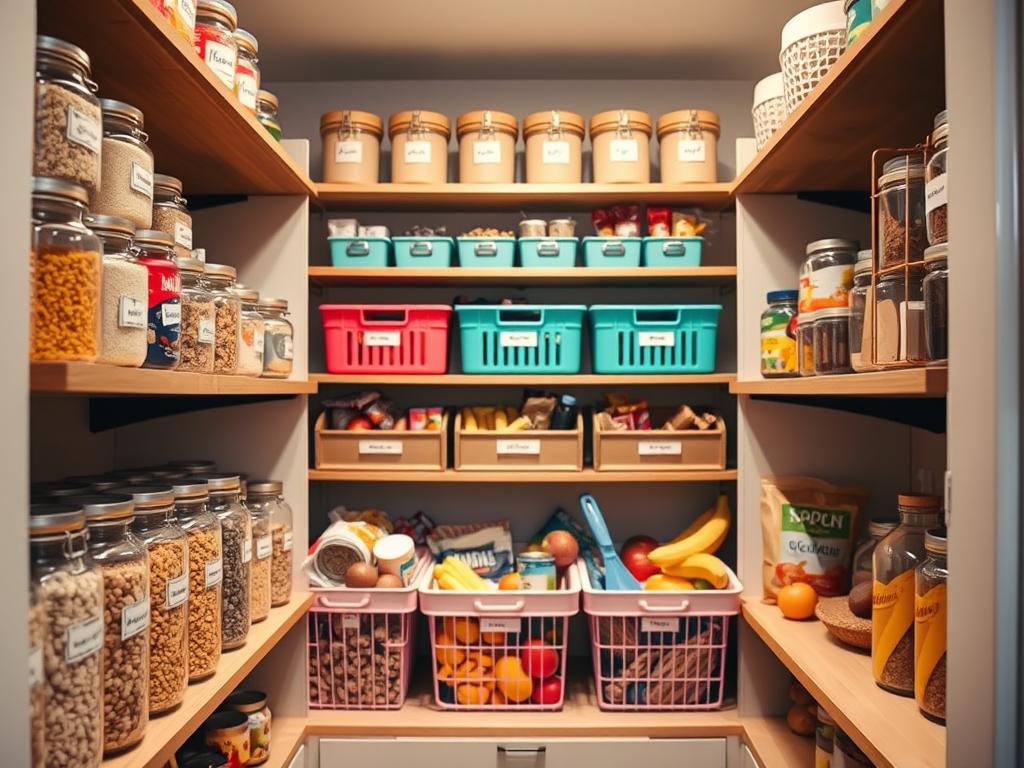
Clear containers turn a cluttered pantry into a clean, efficient space. They make contents easy to see. This speeds meal prep and prevents food waste.
Using uniform containers creates straight lines that stack neatly. This frees up room on every shelf. When sealed well, clear containers keep pests out and extend shelf life.
Benefits of Clear Storage
Seeing contents reduces time spent hunting for ingredients. It helps rotate goods so older items get used first. Standard shapes allow tighter stacking and better shelf use.
Airtight containers protect grains and flours from pests and keep them fresh longer.
Recommended Container Types
Choose containers based on what they will hold and where they are placed. Airtight plastic containers like OXO Good Grips and Rubbermaid Brilliance work well for cereals, flours, and grains. Glass jars from Weck or Ball suit bulk staples and long-term storage. They resist staining and handle heat.
BPA-free stackable bins and modular containers from IKEA or Rubbermaid work well for snacks, baking supplies, and small packets. Dispenser containers for pasta and cereal reduce spills and help with portion control. Small clear canisters or spice jars with shaker lids keep spices and baking powder neat.
For best results, pick uniform widths for stacking. Use shallow containers on upper shelves or deep drawers. Transfer goods from original packaging into clear containers to save space.
Label lids and fronts with the date opened and contents. Use a measuring funnel to move grains without mess. Mixing premium brands with budget-friendly picks from Target, Walmart, or Amazon Basics balances durability and cost.
Clear containers fit easily with shelving systems and pantry organization techniques. This helps maximize usable space.
Utilizing Vertical Space
Vertical space often maximizes pantry space without expanding its footprint. Empty headroom becomes useful storage with shelves, risers, or hanging systems. Vertical upgrades change how much the pantry holds and how fast items are found.
Install Additional Shelving
Adjustable metal or wood shelving fits many budgets and storage needs. Retailers like Home Depot, Lowe’s, IKEA, and The Container Store offer pantry shelving systems, brackets, and plug-in shelf extenders. These install with basic tools.
Measure shelf height and clearance before buying. Use adjustable tracks to hold tall cereal boxes and short spice jars on the same wall. Add deeper or removable shelves for bulky appliances and large items.
When mounting, pick anchors rated for the load. Place heavier items on lower shelves to protect drywall and ease strain on brackets.
Use Stackable Bins
Stackable wire or plastic bins from brands like mDesign and Sterilite make canned goods, produce, and snacks easier to see and reach. Bins let people stack vertically and keep used items accessible.
Shelf risers create two-tiered zones for plates, small appliances, or canned food. Door-mounted organizers and over-the-shelf hooks add storage without drilling into studs. These help small pantry organization in rented homes.
Check weight limits on risers and bins. Keep the lowest shelves for glass jars and heavy bags to keep the system safe and stable.
These vertical strategies pair well with other pantry hacks. Together, adjustable shelving systems and stackable bins increase storage, making small pantry organization efficient.
Incorporating Labels for Easy Access
Clear labeling makes a pantry easy to use for everyone in the household. It helps you find items faster and keeps things organized. Labels also make inventory checks and shopping lists easier to manage.
When paired with clear storage, labels help save pantry space. They also speed up meal preparation by making items easy to identify.
Choosing labeling methods
Printed labels from a Brother P-touch or other label makers give a neat, consistent look. They suit long-term pantry organization. Chalkboard labels work well for items you change often.
Washi tape with a permanent marker is a low-cost temporary option. Pre-printed adhesive labels help if you have many identical containers.
Digital labeling adds more detail. QR codes or a linked spreadsheet let families track quantities and opened dates through an app. This method helps avoid buying duplicates.
Durability is important in food prep areas. Waterproof, oil-resistant labels stay clear near stoves. Removable adhesive protects surfaces and leaves no residue in rental homes.
Benefits of clear labels
Labels speed up meal prep by clearly showing contents and expiration dates. They encourage first-in, first-out use by marking dates on items. This reduces waste and maximizes pantry space.
Visible labels help everyone follow the same system at home. When shelves are labeled by category, misplacement drops and inventory stays accurate.
Place labels on both the container front and lid, especially for stacked items. Use group labels on shelves to make restocking and shopping easier.
Good labeling works well with clear containers and an inventory. This creates an organized pantry that saves time and cuts waste.
Implementing a System for Regular Maintenance
Keeping a pantry orderly needs a steady plan. A simple maintenance system stops clutter from coming back. It also keeps the pantry well organized.
Short, regular checks help maximize pantry space. They also keep items easy to reach and find.
Setting a Regular Cleaning Schedule
Set a schedule that fits your family’s life. Do quick weekly checks, monthly spot cleans, and deep cleans every few months. This routine keeps pantry organization working well.
Use a short checklist for each cleaning time. Weekly checks include wiping spills and checking low-stock items. Monthly cleaning adds shelf wiping and pest inspection.
Deep cleans empty shelves and sanitize surfaces. Update the pantry inventory during these deep cleans.
- Weekly: wipe shelves, sweep floor, note low-stock items.
- Monthly: inspect containers for pests, check expiration dates, reorganize mis-shelved items.
- Every 3–6 months: deep clean, full inventory, discard expired goods, reorganize zones.
Keep cleaning tools ready for each session. Use microfiber cloths, mild detergent, food-safe disinfectant, and a small handheld vacuum. Spare trash or recycling bags help make cleaning easier.
Tips for Keeping Things Organized
Organize pantry zones by item types. Make areas for snacks, baking supplies, breakfast foods, and canned goods. This setup makes it easier for everyone to find things.
Use clear containers with labels to save restocking time. Follow a “one in, one out” rule for duplicate items. Post simple instructions on the pantry door to guide refilling and placement.
Track your inventory with simple tools. A whiteboard or phone app can note low-stock items during the week. This helps link pantry care to your shopping list.
Protect food by storing it in airtight containers. Keep the pantry dry and clean spills right away. Check for pests regularly to keep food safe and the pantry organized.
| Task | Frequency | Tools Needed | Purpose |
|---|---|---|---|
| Quick check | Weekly | Microfiber cloth, notepad | Spot spills, note low-stock items |
| Spot clean & rotate | Monthly | Handheld vacuum, food-safe disinfectant | Inspect pests, rotate near-expiry goods |
| Deep clean & inventory | Every 3–6 months | Trash bags, detergent, full inventory list | Sanitize shelves, update shopping list |
| Label and restock review | Ongoing | Labels, marker, clear containers | Ensure consistent placement and refill routine |
Selecting Multi-Functional Storage Solutions
Multi-functional storage includes baskets, bins, and containers that serve for storage, transport, and display. These items adapt as needs change. They support pantry storage solutions and offer simple pantry organization hacks.
Multi-use baskets have many practical benefits. They can hold produce, bulk goods, or act as grab-and-go lunch kits. A woven basket from IKEA or a wire basket from Target hides clutter and adds texture.
Pros of multi-use baskets
- Flexibility: move baskets between pantry and fridge for seasonal needs or meal prep.
- Aesthetics: woven and wire options create a tidy look without extra labels.
- Efficiency: fewer specialty containers reduce cost and ease upkeep.
Examples of versatile container types
- Collapsible fabric bins for seasonal goods or paper product overflow.
- Wire baskets with handles that slide out from deep shelves.
- Clear stackable modular bins from brands like OXO or mDesign for quick category swaps.
- Over-the-door shoe-style organizers repurposed for snack packets or utensils.
Choose sizes that fit shelf depths and pick breathable materials for produce. Prioritize stackable designs to maximize vertical space. These pantry hacks work well with shelving systems even in small spaces.
A short comparison helps when selecting items.
| Type | Best Use | Key Benefit |
|---|---|---|
| Collapsible fabric bin | Seasonal storage, bulky items | Saves space when not in use |
| Wire basket with handle | High shelves, deep drawers | Easy retrieval and airflow |
| Clear stackable bin | Dry goods, snack categories | Visibility and modularity |
| Over-the-door organizer | Small items, packets, utensils | Utilizes hidden door space |
Maximizing Corner and Deep Spaces
Corners and deep shelves often hide items, causing waste and poor use of storage. Simple changes can turn these tricky spots into useful spaces. This helps homeowners use pantry space better and improve daily routines.
Lazy Susans bring items forward so nothing stays forgotten at the back. Full-turntable units give 360-degree access for oils and condiments. Half-moon shelf lazy Susans fit in corner cabinets and free up triangular spaces.
Non-slip options keep glass and small bottles steady while they rotate. The Container Store, Amazon, and local kitchenware stores carry materials like wood, plastic, and metal. Putting often-used jars and bottles on a lazy Susan keeps them reachable and reduces spills.
Lazy Susans for Easy Access
Choose a size that fits your shelf depth. Also, pick a weight rating that matches stored items. Use one turntable for oils and vinegars and another for spice jars.
This setup helps pantry organization by making used items visible and within reach. Non-slip pads, removable tiers, and modular designs fit different needs. Compact models work on shallow shelves, while heavy-duty ones fit deep, stacked areas.
Using Tiered Organizers
Tiered organizers create visible rows so back items aren’t hidden. Risers and step shelves show cans, spices, and jars clearly. This method maximizes pantry space by layering storage in depth.
Adjustable tiered shelves fit different heights and goods. Pan dividers hold baking sheets and trays upright. Sliding organizers let you pull contents forward from deep drawers.
Clear pull-out bins bring rear items forward without reaching. Grouping items by use—daily in front, occasional in back—boosts inventory control and cuts spoilage.
| Solution | Best For | Materials | Benefit |
|---|---|---|---|
| Full-turntable Lazy Susan | Oils, condiments, small bottles | Plastic, metal, wood | 360° access, easy reach |
| Half-moon Shelf Lazy Susan | Corner cabinets, triangular spaces | Plastic, metal | Fits corners, maximizes corner depth |
| Non-slip Turntable | Glass jars, slippery bottles | Rubber, plastic | Prevents shifting, safer access |
| Adjustable Tiered Shelf | Spices, canned goods, jars | Metal, plastic | Improves visibility, makes inventory easier |
| Pan and Tray Dividers | Baking sheets, cutting boards | Metal, wood | Vertical storage saves shelf depth |
| Clear Pull-Out Bins | Deep shelves and drawers | Clear plastic | Brings items forward, reduces waste |
These pantry shelves and organizers help cut food waste and support pantry decluttering tips. When you see items clearly, you can manage stock better. This also helps you rotate goods and make the most of pantry space over time.
Seasonal Pantry Rotation
Seasonal pantry rotation means reorganizing pantry contents to match changing cooking habits, holidays, and bulk buys. It keeps staples within reach and clears out seasonal packaging. It also makes space for holiday baking or summer grilling supplies.
Schedule a rotation at least twice a year, in spring and fall. You can also align it with major shopping cycles like the holiday season. During each rotation, deep clean shelves, check staples, and note items to replace or donate.
Importance of seasonal cleaning
Seasonal cleaning creates space for seasonal goods and reduces clutter from one-off packaging. It stops items from expiring and helps maximize pantry space. Reassess shelf assignments for better storage.
Storing seasonal items properly
Use labeled, stackable bins for holiday baking mixes, sprinkles, and canned pumpkin. Put these bins on higher shelves when not in use to free up everyday zones.
For bulk seasonal buys like canning jars or large flour bags, keep a dedicated upper shelf or clear, labeled containers. Store temperature-sensitive goods in climate-stable kitchen areas, not in garages or basements that face extreme changes.
When rotating, bring frequently used staples forward and move seasonal items to the back. Update the pantry inventory and shopping list after each rotation, so the family knows what to buy and use first.
| Task | Frequency | Tools | Benefit |
|---|---|---|---|
| Deep clean and check expiration dates | Twice yearly | Microfiber cloth, mild cleaner | Reduces waste and keeps pantry sanitary |
| Reassign shelf zones | Every rotation | Labeled bins, clear containers | Helps maximize pantry space and ease access |
| Move seasonal items to upper shelves | Seasonal | Stackable bins, labels | Frees daily use space and prevents clutter |
| Update inventory and shopping list | After each rotation | Paper list or digital app | Improves meal planning and reduces duplicate buys |
| Check climate for storage | Annually or when seasons change | Thermometer, relocation plan | Protects temperature-sensitive items |
Using pantry decluttering tips and organization hacks during seasonal rotation keeps the space efficient year-round. Small, regular swaps maintain order and help households maximize pantry space. This also reduces stress during peak cooking times.
Creating a Shopping List System
Establishing a clear shopping-list system keeps pantry organization practical and long-lasting. It helps prevent overbuying and fills gaps efficiently. This supports meal planning to keep the space useful.
When combined with pantry storage solutions and tidy containers, a working list helps maximize pantry space. It also supports maintaining small pantry organization.
Benefits of a Pantry Inventory
A pantry inventory gives real-time awareness of stock levels. This reduces duplicates and prevents expired items. It also helps plan meals using what’s on hand.
Using an inventory cuts waste and saves money. For families buying in bulk or with limited shelving, the inventory keeps small pantry organization consistent. It also improves overall pantry storage solutions.
How to Maintain Your List
Simple manual systems work well for upkeep. A dry-erase board or paper list on the pantry door invites everyone to add items as they run low. Digital options like Google Keep, AnyList, OurGroceries, and shared spreadsheets allow multiple users to update lists and link recipes.
Inventory best practices include logging item name, quantity, date opened, and expiration. Update these details during weekly or monthly checks. Households with larger inventories can use barcode-scanning apps to automate tracking.
Linking the list to pantry zones and labeled containers makes shopping faster and reduces returns. A maintained shopping-list system ties together assessment, purging, containerization, shelving, and routine maintenance. This helps families sustainably maximize pantry space with smarter pantry organization ideas.