

Surprisingly, up to 30% of household food waste comes from pantry items spoiled or attacked by pests. This avoidable loss affects both budgets and time.
This short guide helps homeowners and renters across the United States learn practical pantry organization and food storage tips. These tips maximize freshness, reduce waste, prevent pests, and improve accessibility.
It explains who will benefit: busy families, single households, and those with limited kitchen space. The guide covers clear steps for kitchen pantry organization. Topics include why proper storage matters, choosing the right containers, ideal pantry conditions, organizing systems, routine maintenance, handling bulk buys, and sustainable options.
Readers can expect measurable results: longer shelf life for grains and pasta, fewer spoiled items and pests, and faster meal prep thanks to an organized pantry.
Best practices in this guide rely on USDA and FDA food safety guidance. It also cites the National Center for Home Food Preservation and trusted kitchen brands like OXO and Rubbermaid. These sources provide reliable, practical food storage solutions.
Understanding the Importance of Proper Dry Food Storage
Proper dry food storage keeps staples fresh, safe, and ready for meals. People who store dry food pantry items with care protect flavor, texture, and nutrition in rice, flour, beans, and cereals.
Good food storage solutions make weekly planning easier and cut waste by preventing spoiled or forgotten products.
Benefits of Properly Stored Dry Foods
When pantry organization tips are used, items remain visible and accessible. That visibility speeds meal prep and saves money by reducing tossed food. Proper storage preserves taste and texture so dishes use ingredients that perform as expected.
Organized shelves help people track supplies and plan shopping. Using airtight or pest-resistant containers limits exposure to air and bugs. Those choices form practical food storage solutions for home kitchens.
Impact on Food Shelf Life
Shelf life varies by product and storage. White rice and sugar can last for years when kept dry and cool. Brown rice lasts about 6–12 months due to natural oils that go rancid faster.
General expectations: dried pasta keeps 1–2 years unopened, dried beans keep 2–3 years for best quality. Factors that shorten life include moisture, heat, oxygen, light, and pests. Controlling those factors extends usable life.
| Dry Food | Typical Best-Quality Shelf Life | Key Storage Tip |
|---|---|---|
| White rice | Indefinite to several years | Store in airtight, cool, dry container away from light |
| Brown rice | 6–12 months | Use oxygen absorbers or refrigerate in sealed jar |
| Dried pasta | 1–2 years unopened | Keep in sealed container; avoid humidity |
| Dried beans | 2–3 years for best quality | Rotate stock and store in pest-proof containers |
Health Considerations
Improper storage can lead to mold and mycotoxins if moisture enters packages. Bacterial contamination is a risk when humidity rises. Pantry pests like Indian meal moths and grain weevils infest products and make food unappetizing.
Safety guidance from USDA, FDA, and the National Center for Home Food Preservation stresses keeping dry foods dry, clean, and in pest-resistant containers. Discard any items showing mold, off-odors, or pest damage.
Choosing the Right Storage Containers
Choosing the right containers is the first step to smart pantry organization and effective food storage. Clear containers make it easy to see what’s inside. This helps protect ingredients and reduces waste.
Selecting the right mix of materials and sizes better matches your household habits and storage space.
Types of Containers for Dry Foods
Clear plastic bins made from BPA-free polypropylene work well for cereals, grains, and pasta. They let you see the contents quickly. Glass jars like Ball Mason and Anchor Hocking offer durability and no plastic contact for long use.
Food-grade metal canisters protect coffee and light-sensitive goods from light exposure. Mylar bags with oxygen absorbers suit emergency bulk storage of grains and legumes. Resealable freezer bags hold small portions or nuts in the freezer, keeping them fresh.
Importance of Airtight Seal
Airtight seals block moisture and oxygen. This slows rancidity and mold growth. Look for containers with silicone-gasket lids, clamp-top jars, or snap-lock plastic containers with silicone seals.
Vacuum-seal systems and oxygen absorbers reduce oxygen for long-term storage. They work well for emergency food storage. Everyday pantry storage benefits more from easy-to-open airtight jars.
Proper sealing keeps pantry pests out and supports good pantry organization.
Considerations for Material and Size
Choose food-grade materials like glass, stainless steel, or BPA-free plastics made for food contact. Avoid old or unknown plastics that may leach chemicals. Brands such as OXO and Progressive International offer reliable seals and user-friendly designs.
Pick container sizes based on how quickly you use the food. Use smaller containers for items you use often and larger ones for bulk staples. Stackable shapes save shelf space.
Wide-mouth jars and dishwasher-safe containers make cleaning easy. Measured markings help with portioning, adding practical value to your food storage.
Ideal Pantry Conditions for Dry Food Storage
A well-planned pantry design keeps dry foods fresh longer. Small changes to temperature, humidity, light, and airflow help make a difference.
Below are practical steps to create stable conditions. These protect your staples and reduce food waste effectively.
Optimal Temperature and Humidity Levels
Keep the pantry cool and steady. Aim for a temperature between 50°F and 70°F (10°C–21°C).
Cooler settings slow rancidity and reduce insect activity.
Control humidity to keep items dry. Relative humidity under 60% works well.
Try to keep it below 50% to avoid clumping and mold. Use a hygrometer and thermometer on a middle shelf to watch for changes.
Avoiding Direct Sunlight and Heat Sources
Direct sun and nearby appliances cause faster deterioration. Ovens, dishwashers, and water heaters raise temperatures.
They can lead to condensation inside containers, which damages food.
Store heat-sensitive items like chocolate, spices, and oils in cooler, darker corners or a separate cabinet. Add insulation or shift these goods away from warm walls, especially if the pantry faces a garage or outside wall.
Proper Air Circulation in the Pantry
Some airflow helps stop damp, stale air pockets. Avoid sealing your pantry with no ventilation.
A small vent or brief door openings balance air without letting pests in.
Shelving should allow gentle airflow. Slatted or open shelves work well, keeping food fresh while airtight containers protect quality.
Limit floor storage to reduce pests. Use raised shelving or pallets for bulk items.
| Condition | Ideal Range | Practical Tip |
|---|---|---|
| Temperature | 50°F – 70°F (10°C–21°C) | Use a small thermometer; relocate sensitive items to cooler zones |
| Relative Humidity | <60%, best <50% | Place a hygrometer; run a dehumidifier in humid climates |
| Light Exposure | Low to none | Install opaque doors or shade shelves to block sunlight |
| Airflow | Gentle, consistent circulation | Choose slatted shelving and allow brief ventilation; avoid airtight rooms |
| Pest Risk | Minimized by raised storage | Use raised pallets and door sweeps; seal gaps with weatherstripping |
Combine these controls with good pantry organization. This keeps items easy to access and well monitored.
Thoughtful pantry design helps people store dry foods safely and efficiently.
Organizing Your Dry Food Pantry Efficiently
A well-organized pantry saves time and reduces waste. Clear zones, consistent labeling, and smart shelving create a smoother routine.
These steps offer practical pantry organization tips, shelving ideas, and kitchen strategies that are easy to follow.
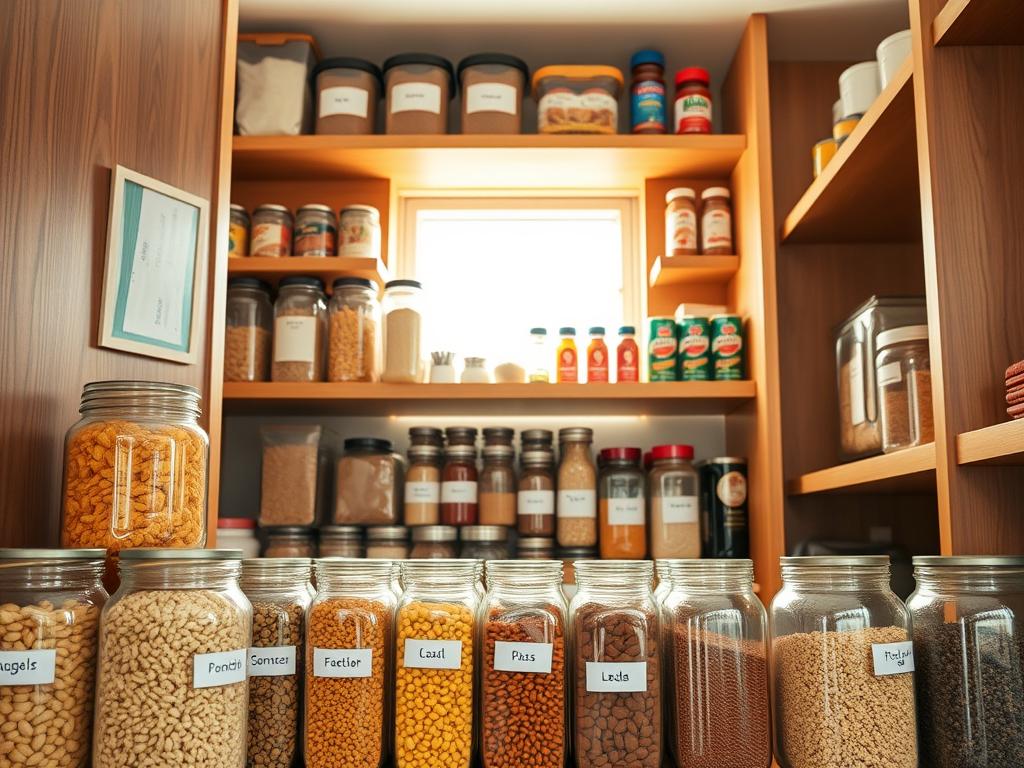
Labeling Containers for Easy Access
Use consistent labels showing the item name and date opened or expiration. A label maker or waterproof stickers keep marks clear after handling.
Color-coded labels help mark allergens, gluten-free items, or kid-friendly snacks for family members.
When transferring bulk goods, note weight or volume on the label. This detail speeds meal planning and keeps portions accurate.
Grouping Similar Items Together
Create clear zones for baking (flour, sugar, leaveners), grains and legumes, pasta and noodles, cereals and snacks, and spices.
Place frequently used items at eye level or near the prep area for quick reach.
Use clear bins or baskets for small packets to reduce clutter. Reserve top shelves for bulk and bottom shelves for heavy containers.
Implementing a First-In, First-Out System
Rotate stock so older items are in front and used first. Move opened containers forward when restocking and place new purchases behind.
This habit shortens waste and keeps pantry inventory fresh.
For bulk items split across containers, pack usable portions and label with the packed date. Recording dates from retail packaging improves accuracy and speeds rotation.
- Adjustable shelving allows reconfiguration as needs change.
- Pull-out drawers make heavy bags easy to reach.
- Lazy Susans maximize corner access.
- Tiered spice racks increase visibility for small jars.
Maintaining Dry Food Freshness
Keeping dry foods fresh requires simple habits. Regular checks and clear rotation protect flavor and food safety. Quick action at the first sign of spoilage helps preserve quality.
A well-planned pantry system makes these tasks fast and reliable. You can organize your food efficiently with a good setup.
Schedule pantry audits every three months to check best-by dates, seals, and packaging. Best-by dates show quality, not safety. But poor quality affects taste and texture.
Use an inventory list, either on paper or an app. This helps track quantities and expiration dates.
This practice cuts down duplicate buys and guides what to store next.
Regularly Checking Expiration Dates
Check expiration dates during audits and grocery unpacking. Mark opened dates on pantry containers with a marker.
Focus on perishable dry items like whole-grain flour, nuts, and powdered dairy. Use items with the earliest dates first to avoid waste.
Rotating Stock for Best Quality
Always use first-in, first-out. Place older packages ahead, newer ones behind.
For bulk items, divide them into smaller storage containers. This speeds rotation and limits repeated air exposure.
Store sensitive items such as whole-grain flour, seeds, and nuts in the refrigerator or freezer after opening. Mark these portions with dates to keep organization clear.
Signs of Spoilage to Watch For
Look for mold, discoloration, clumps in sugar or powders, and powdery residue that may show insects. Smell for off-odors like rancidity or mustiness in grains and flours.
Check for holes in packaging, powdery webbing, or live insects and larvae. If contamination exists, throw away affected items.
Remove all items from the shelf to clean. Adopt a monthly routine: wipe shelves with mild soap and water.
Vacuum crevices and sanitize storage containers before refilling. This keeps the pantry clean and helps spot spoilage early.
Best Practices for Specific Dry Foods
Managing different dry foods calls for simple and targeted steps that fit a smart pantry design. Proper choices help extend shelf life and cut waste. They also make pantry organization easier for daily cooking.
The guidance below focuses on grains, pasta, and spices. It helps people store dry pantry items with confidence.
Storing Grains, Beans, and Legumes
Airtight containers work best for everyday use. For long-term storage, use food-grade buckets with GammaSeal lids or Mylar bags and oxygen absorbers inside buckets. These provide multi-year protection.
White rice and dried beans stay stable in a cool, sealed pantry. Brown rice and whole-grain cereals should be refrigerated or frozen after opening because they contain more oil.
Reusable scoops and utensils must be rinsed and fully dried before use. Moisture can cause spoilage. Label containers with purchase and opening dates to keep the pantry organized.
This label system supports a first-in, first-out routine.
Tips for Retaining Pasta Quality
Dried pasta lasts 1–2 years unopened, but quality drops over time. Store pasta in airtight, cool containers away from humidity and heat. Clear containers help with meal planning by showing shapes at a glance.
Avoid breaking long pasta unless necessary; intact shapes maintain texture better. Fresh or homemade pasta needs refrigeration for short-term use. For longer storage, freeze in dated packages.
This simple step keeps flavor and prevents surprise freezer meals.
Preserving the Freshness of Spices
Whole spices hold flavor longer than ground forms. Use airtight, opaque containers placed away from heat, light, and humidity. Ground spices give best flavor for 6 months to 2 years.
Whole spices can last 2–4 years. Buy smaller amounts of rarely used spices to keep flavor high.
A spice drawer or a dedicated shelf in the pantry is better than above the stove or next to an oven. Adding silica gel packets or oxygen absorbers can benefit sensitive items when used safely.
Note purchase and opening dates on jars to maintain tidy pantry organization. This supports consistent pantry design choices.
Common Mistakes to Avoid when Storing Dry Foods
Storing dry foods seems simple, yet small errors reduce freshness. They also invite pests into your pantry. This short guide shows common mistakes and practical tips.
Clear steps will help protect food. They also make daily use easier.
Overpacking containers
Filling containers to the brim causes spills. It also makes sealing difficult. Leave a small headspace for scooping and expansion when temperatures change.
For bulk buys, divide large amounts into several containers. Smaller containers reduce repeated openings. This lowers oxygen exposure and waste.
Ignoring storage hygiene
Crumbs and unnoticed spills attract insects and rodents. Regularly wipe shelves, sweep corners, and vacuum crevices to stop infestations early.
Keep pet food separate from human food. This avoids cross-attraction and allergens. Always wash and dry containers before refilling. If odors are strong, sanitize or replace the container.
Neglecting to seal containers properly
Relying on cardboard or thin bags invites moisture and pests. Transfer goods into airtight containers or use resealable bags with air removed.
Check gaskets and lids often for wear. Replace containers that no longer seal tightly. For resealable options, consider a vacuum sealer for long-term protection.
Remediation and recovery
If you spot pests or contamination, remove and inspect all items closely. Dispose of packages with chew marks, webs, mold, or off odors in sealed trash bags.
Deep-clean shelves with hot, soapy water. Dry completely before returning food. Wipe walls and corners, launder cloth liners, and replace damaged shelving or containers to prevent repeat infestations.
Fixing these pantry mistakes with simple tips and the right containers keeps dry foods fresh and safe. Small routine steps can stop big problems.
How to Handle Bulk Dry Food Purchases
Buying in bulk can save money and reduce packaging waste for families who need steady supplies. Thoughtful planning helps keep quality high. It also reduces trips to the store.
A clear pantry organization system makes large purchases manageable. It also makes using items day to day much easier.
Benefits of Buying in Bulk
Bulk purchases lower the cost per unit and reduce how often busy households shop. They allow buyers to choose specific brands and product grades. This is useful for cooks or large families.
Moving items into reusable containers cuts single-use packaging. It supports greener food storage options at home.
Storage Solutions for Bulk Items
Choose food-grade buckets with GammaSeal lids or heavy-duty airtight tubs. Stackable plastic bins that fit your pantry shelves also work well.
Portion bulk food into labeled smaller containers for everyday use. Keep the main supply sealed and protected from climate changes.
For items that spoil quickly, like nuts or whole-grain flours, use freezer storage or a cool basement room.
Checking for Pests Before Storing
Inspect packages for holes, webbing, or live insects before opening. Tap or shake bags to check for movement.
Freezing new grains for 3–7 days kills insect eggs in many dry items. Clean and sanitize containers between uses to avoid cross-contamination.
Use bay leaves or pheromone traps to monitor pests. Remember, traps show pests are present but don’t fully control them.
Label portions with product names and dates. Keep an inventory log to avoid buying too much.
Arrange storage to match pantry shelving for balanced weight and easy access. Smart food storage helps bulk buying stay convenient and safe.
| Item Type | Recommended Bulk Container | Short-Term Use | Long-Term Storage Tip |
|---|---|---|---|
| Grains (rice, wheat) | 5-gallon food-grade bucket with GammaSeal lid | Portion into 1–2 quart airtight jars | Store in cool, dry area; consider freezing before sealing |
| Flours | Opaque airtight canisters | Keep a small baking jar on shelf for weekly use | Freeze large bulk or keep in climate-controlled space |
| Nuts & seeds | Vacuum-sealed bags or airtight plastic tubs | Store weekly portions in clear jars | Refrigerate or freeze to prevent rancidity |
| Pasta & dried legumes | Stackable plastic bins or glass jars | Use labeled jars for quick access | Keep off the floor and follow pantry shelving ideas for weight |
| Spices & small packets | Small airtight tins or clear spice jars | Refill countertop spice rack for cooking | Store in dark area away from heat sources |
Sustainable Dry Food Storage Solutions
Adopting sustainable pantry storage helps households cut waste and save money. It also creates a cleaner pantry design.
Small changes to containers and routines extend shelf life. These changes also make pantry organization easier.
Below are practical options and habits that support long-term sustainability. These do not sacrifice convenience.
Eco-Friendly Container Options
Glass jars, stainless steel canisters, and BPA-free plastic containers offer low-impact choices. They are durable and recyclable.
Many people find Mason jars or thrifted glass containers effective and affordable. Some bulk retailers run refill programs with recyclable packaging.
This reduces single-use waste. For short-term items, compostable or biodegradable bags can work.
However, durable, reusable options should be the priority for lasting pantry design improvements.
Reducing Waste Through Proper Storage
Proper storage extends the life of grains, beans, and dry goods. This lowers household food waste in line with EPA guidance.
Buying amounts that match household consumption and portioning staples into usable sizes helps prevent spoilage.
Freezing opened items when appropriate also cuts spoilage chances. Repurposing near-expiry items into meals reduces waste further.
Maintaining a first-in, first-out routine supports better pantry organization and fewer discarded groceries.
Benefits of Reusable Storage Solutions
Reusable storage solutions lower long-term costs compared with disposables. They also reduce plastic waste sent to landfills.
Standardized, stackable containers simplify shelving and improve visibility. They make FIFO rotation easier to maintain.
Shoppers can find local bulk retailers and refill stations. Choosing a set of stackable containers and cleaning them regularly keeps items hygienic and reusable.