

Surprisingly, households in the United States throw away nearly 40% of food each year. Much of this waste is avoidable with a tidy pantry and simple organization ideas.
This short guide shows how to have a clean and organized pantry with efficient storage. A clean pantry has shelves free of spills, crumbs, and expired items.
An organized pantry places items logically so anyone in the home can find what they need easily.
The guide is for U.S. homeowners, renters, busy families, and individuals wanting pantry makeover tips. They will find practical steps and long-term strategies.
It shares creative organization ideas to keep your pantry tidy, grocery trips easier, and reduce food spoilage.
The article covers why a clean pantry matters and the tools that help. It also shows decluttering and categorizing methods and surface cleaning best practices.
You will learn maintenance routines, pest prevention, vertical space solutions, and eco-friendly options. The guide explains stock rotation, creative layouts, and final tips for lasting results.
Importance of a Clean Pantry
Keeping a tidy pantry changes everyday routines. A clean pantry makes food safer and saves time. It also keeps stress low while cooking.
Small habits matter for lasting order. They help create a successful pantry makeover.
Health Benefits of an Organized Pantry
Storing dry goods in airtight containers from trusted brands reduces cross-contamination and allergen exposure. Sealed containers protect flour, nuts, and rice from moisture and contaminants.
Clear labeling and proper rotation lower the chance of eating expired or spoiled food. Following USDA and FDA guidelines helps households spot questionable items early.
Regular cleaning removes crumbs and old packaging that invite pests such as Indian meal moths and grain beetles. Wipe shelves, vacuum corners, and dispose of damaged boxes to reduce breeding sites.
Impact on Meal Preparation Efficiency
An organized layout cuts time spent hunting for ingredients. When staples are grouped and visible, the cook finds what is needed easily.
Clear inventory leads to smarter shopping lists and less duplicate buying. This lowers food waste and saves money.
Creating zones for baking, breakfast, and canned goods improves workflow. Assigning zones helps maintain a clean pantry and smooth meal prep.
| Benefit | Action | Result |
|---|---|---|
| Food safety | Use airtight containers and label dates | Reduces spoilage and risk of allergens |
| Pest prevention | Remove crumbs, seal packages, clean corners | Limits entry points and breeding areas |
| Time savings | Group items by use and keep visible inventory | Faster meal prep and streamlined shopping |
| Cost control | Rotate stock and track supplies | Avoids duplicate purchases and reduces waste |
Essential Tools for Pantry Organization
An organized pantry starts with the right tools. Simple upgrades make keeping the pantry tidy easier to manage.
The suggestions below focus on visibility, durability, and saving space. This helps families find what they need fast.
Clear containers offer quick benefits for seeing contents and keeping foods fresh. Choose BPA-free plastic or glass canisters from trusted brands like OXO, Anchor Hocking, and Glasslock.
Use airtight canisters for flour and sugar, dispenser jars for cereals and grains, and stackable bins for snacks. Vacuum-seal options work well for long-term storage.
Size containers to fit both the contents and the shelves. Small 1–2 quart jars work best for nuts and seeds.
Mid-size 4–6 quart canisters suit flour and sugar. Large 10–20 quart bins hold bulk items. Measure shelf depth first to ensure containers fit well.
Labels turn an attractive setup into a practical system. Consistent labeling helps people find items quickly and supports a neat pantry.
Use chalkboard labels, printable adhesive labels, or label makers like Brother and Dymo for neat, readable tags.
Best labels include the item name, purchase or open date, and expiration date. Place labels on container fronts for easy scanning.
Waterproof labels work best on shelves often wiped down. They keep markings clear and legible over time.
Shelf risers and tiered organizers save wasted vertical space and improve visibility. Adjustable risers, tiered spice shelves, and lazy Susans make items easier to reach.
Materials include wire, acrylic, and bamboo, chosen for style and durability. Risers reduce hidden stock and stop items from being forgotten.
Pick adjustable units to match varying shelf heights for efficient storage. Combining clear containers, smart labels, and risers supports a long-lasting tidy pantry.
Decluttering Your Pantry
A tidy pantry sets the stage for a smooth makeover and a long-lasting clean pantry routine. Start with a clear plan and some sturdy boxes or bins. This preparation makes the process faster and keeps items organized as you sort.
The decluttering process begins by emptying shelves one at a time. Place items on a counter or table to check packaging, dates, and condition. Working shelf by shelf prevents feeling overwhelmed and makes the task manageable in a weekend.
Next, wipe shelves and surfaces before putting items back. Clean surfaces reduce crumbs and spills that attract pests. Following pantry cleaning tips helps make the storage stage safer and fresher for food.
The sorting routine uses five clear piles: keep, relocate, donate, recycle, and toss. Use labeled boxes so each item quickly moves to its new place. Clear bins help visualize what remains and which containers fit in the new pantry.
Throw away items with damaged packaging, mold, off-odors, or pest signs. Dispose of freezer-burned or spoiled goods according to local waste rules. Safety comes first over saving questionable products.
Donate unopened, nonperishable foods with intact packaging and good shelf life. Local Feeding America affiliates, shelters, and community pantries accept many donations. Check each group’s rules on expiration dates and packaging before donating.
Recycle cardboard, glass, and accepted plastics to reduce waste from decluttering. Confirm local recycling rules so you sort materials correctly. This avoids contamination in recycling streams.
The one-year rule helps decide on little-used dry goods. If unopened items sit for over a year, consider donating or tossing them. Exceptions include honey, white rice, and some canned goods which often last longer.
Always check manufacturer dates and USDA or FDA guidance for specific products. Prioritize safety and replace questionable items rather than risk spoilage. Small, regular decluttering sessions make a full pantry makeover simpler and keep your pantry clean.
Categorizing Pantry Items
A clear plan for grouping turns a crowded shelf into an efficient pantry storage system. Simple zones cut prep time and reduce waste. They help keep a tidy pantry that family members can use without guesswork.
Grouping Similar Items Together
Group items by use and type: baking supplies, grains and pastas, canned goods, condiments, snacks, breakfast items, spices, and cooking oils. Use uniform containers or baskets for each category to create visual order. Label each bin or jar so anyone can find what they need.
Place frequently used items at eye level for ease. Store heavy bags of rice or flour on lower shelves to prevent accidents. Keep lighter goods above to reduce clutter during busy meal times.
Creating Meal Prep Zones
Define zones that match cooking routines: a breakfast zone for oats, cereals, and spreads. A baking zone holds flours, sugars, and baking powder. A dinner prep zone keeps pastas, sauces, canned tomatoes, and core spices.
Arrange zones by how often you use them so the most-used ones are easy to reach. Keep meal-specific tools nearby. Measuring cups and spoons near the baking zone speed up baking sessions.
A tidy pantry with clear zones makes everyday cooking faster and encourages efficient pantry storage habits.
Seasonal Item Organization
Store seasonal items—holiday baking supplies, summer grilling rubs, and bulk sale finds—in labeled bins. Date items when they enter the pantry to ensure rotation before expiry.
Move seasonal bins to accessible spots when in use. Then relocate them to the garage, attic, or basement when out of season to free shelf space. Rotating seasonal bins keeps your pantry functional year-round.
These steps help maintain a tidy pantry. They support long-term pantry organization ideas that reduce waste and streamline storage.
Cleaning the Pantry Surfaces
A few careful steps keep shelves fresh and food-safe. Clear everything out, vacuum crumbs, and choose gentle, food-safe cleaners.
These pantry cleaning tips help maintain a clean pantry. They also make deep cleans less daunting.
Recommended cleaning supplies
Use microfiber cloths for streak-free wiping. Mild dish soap works well mixed with warm water. White vinegar removes light grime without harsh fumes.
Baking soda lifts stains and neutralizes odors. Pick all-purpose cleaners from trusted brands like Mrs. Meyer’s or Method for non-food-contact areas.
Wear disposable gloves when handling spills. A soft-bristled brush helps clean corners. Vacuum with a hose attachment removes loose debris.
Keep disinfectant wipes for high-touch spots but avoid strong chemicals on surfaces that touch food.
Best practices for wiping down shelves
Remove all items before cleaning. Vacuum loose crumbs first, then use a soft brush for edges. Wipe shelves with warm water and mild dish soap or water with a splash of white vinegar.
Rinse cloths in clean water. Dry surfaces thoroughly to prevent mold. Sanitize only when needed, such as after spills of raw ingredients.
Use a diluted bleach solution following EPA and CDC guidance. Then rinse and dry before returning food. Wipe exteriors of containers and check seals.
Inspect jars and boxes for residue or signs of pests before placing them back on shelves.
Cleaning frequency recommendations
Adopt a simple schedule to keep your pantry tidy. Do quick spot checks weekly to wipe spills and remove crumbs. Perform a full shelf wipe-down monthly.
For larger households, plan a full pantry cleanse and inventory quarterly. For heavy use, clean twice a year. Address sticky residues immediately to avoid stains and pests.
Strategies for Maintaining a Clean Pantry
Keeping a tidy pantry needs small, steady actions. A few simple routines make it easy to keep the pantry clean. This helps with meal prep and reduces waste.
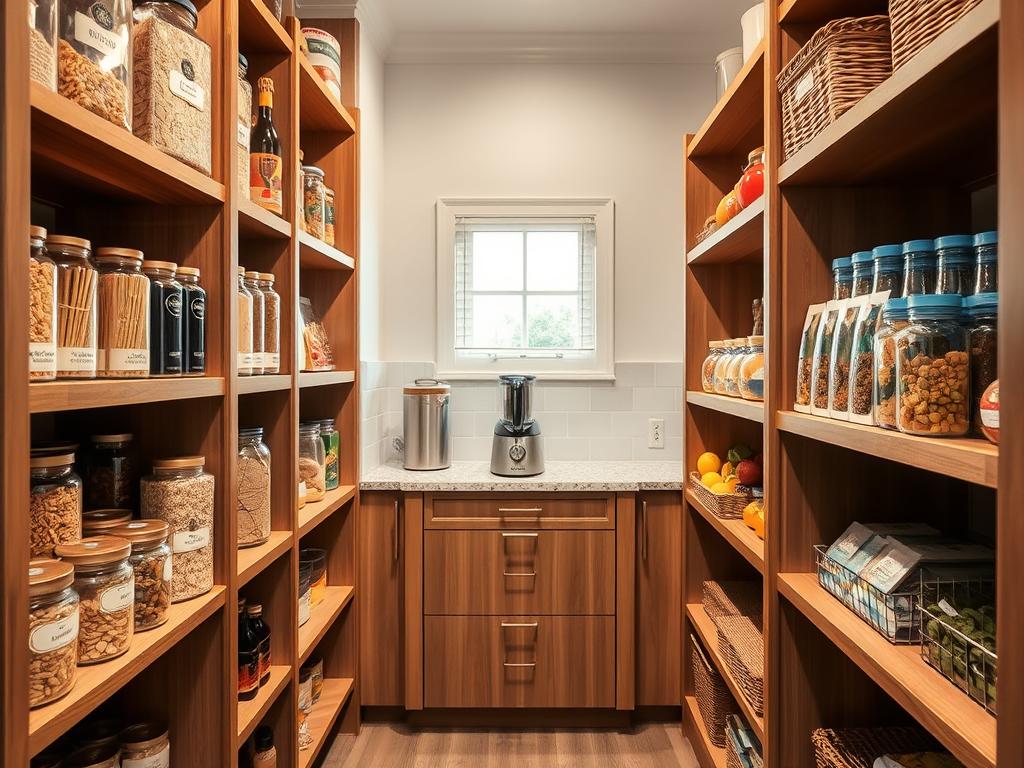
Regular Inventory Checks
Check pantry contents every two weeks or at least once a month. Note low-stock staples and expired items. Update shopping lists and rotate stock using the FIFO method.
Use a pantry inventory app or a printed checklist on the door. This keeps tracking simple and cuts down on forgotten items.
Scheduled Cleaning Days
Set reminders for light weekly tidies and deeper quarterly cleans. Time these cleans with season changes or holidays. Assign family tasks so everyone helps with maintenance.
A short, scheduled clean stops clutter buildup. It also keeps pantry storage efficient.
Quick Daily Maintenance Tips
Use small habits that add up. Return products to their zones after use. Wipe spills immediately and keep a small waste bag or compost container nearby.
Store frequent items in clear, labeled containers. This reduces mess during cooking.
| Task | Frequency | Benefit |
|---|---|---|
| Inventory check | Biweekly or monthly | Prevents stockouts and reduces expired items |
| Light clean | Weekly | Keeps shelves neat and cuts small messes quickly |
| Deep clean | Quarterly | Refreshes shelving and checks for pests or leaks |
| Labeling and rotation | Ongoing | Improves access and supports efficient pantry storage |
| Family task roster | Monthly update | Shares workload and keeps an organized pantry |
Dealing with Pests in the Pantry
Keeping a clean pantry starts with quick detection and steady prevention. Small signs can point to a larger problem. Routine checks cut infestations short and keep food safe for everyone in the household.
Identifying common invaders
Look for webbing, silky threads, or larvae in flour, cereal, and dried fruit. Tiny brown grain beetles and weevils hide in boxes and bags. Holes in packaging, powdery residue, or live insects are clear clues.
Inspect seams and corners of opened packages and reusable containers. Pet food, birdseed, and bulk bins are frequent hotspots where pantry pests begin.
Prevention strategies
Seal all dry goods in airtight containers as soon as packages are opened. Metal or thick glass containers resist pests better than thin plastic ones.
Keep shelves crumb-free and check expiry dates often. Regular pantry cleaning includes wiping shelves, sweeping crumbs, and tossing expired items. This declutters space and removes food sources for pests.
Use natural deterrents like bay leaves or sealed sachets of dried lavender for mild repellent effects. Control humidity and temperature because pests thrive in warm, damp environments.
Effective removal techniques
For small outbreaks, remove everything from shelves and inspect each item. Discard contaminated products and vacuum shelves, corners, and crevices. Then wipe surfaces with soap and water.
Freeze small suspect items at 0°F (-18°C) for 3 to 4 days to kill insects and eggs. Many extension services recommend this method for grains and dry goods.
When infestation is severe, contact a licensed pest control professional. Avoid chemical insecticides near food unless a certified technician approves their use. Follow USDA and local service guidance closely.
Utilizing Vertical Space in the Pantry
Making the most of vertical space changes a tight shelf into effective pantry storage. Small updates add room for staples, seasonal goods, and gadgets. This keeps the pantry tidy and easy to use every day.
Overhead Shelving Solutions
Install extra shelves above current ones. Or choose adjustable systems from Elfa or ClosetMaid to use unused height. These shelves adapt to changing needs and fit odd pantry shapes.
Put clear, labeled bins on high shelves for seasonal or less-used items. Labels show contents and cut down on moving many boxes to find one. For heavy loads, hire pros to protect studs and shelf hardware.
Using Hooks for Gadgets and Utensils
Add adhesive or screw-in hooks to hang aprons, measuring spoons, strainers, and reusable bags. Hanging tools frees up shelf space and keeps items close.
Magnetic strips hold metal utensils well. Attach spice racks under shelves for small jars hidden away. These ideas help keep a tidy pantry without clutter on counters.
Wall-mounted Storage Options
Use blank walls with thin wall-mounted racks, pegboards, and spice organizers from IKEA, Rubbermaid, or Rev-A-Shelf. These turn small spaces into helpful storage.
Keep wall storage for light items and use labeled baskets for neatness. Check weight limits to avoid damage. Wise placement of wall mounts supports an organized and efficient pantry overall.
Eco-friendly Pantry Organization Solutions
Small changes can make a big impact when creating an eco-friendly pantry plan. The goal is to reduce waste and pick durable materials. Keeping a clean pantry helps with daily life.
Choosing the right containers helps extend product life and cuts down on single-use plastics. Glass jars, stainless steel canisters, and BPA-free plastics work well. Brands like Pyrex, Weck, and OXO offer solid choices.
These containers last long and are recyclable at the end of their use. They also help keep the pantry neat and organized.
Using reusable bags and jars for bulk purchases lowers packaging waste. Cotton sacks and silicone bags from brands like Stasher provide resealable and washable storage. These bags are great for grains, nuts, and snacks.
Airtight jars keep bulk items fresh. They also make it easy to find what you need. This supports pantry organization with practical storage solutions.
Composting kitchen scraps reduces landfill waste and closes the food cycle loop. A small countertop bin can hold fruit and vegetable peels. These scraps can join a municipal compost program or a backyard compost pile.
Avoid putting meat, dairy, or oily foods in home compost. Balance green scraps with brown materials for proper decomposition. This method helps create nutrient-rich compost.
Planning meals and rotating stock helps reduce food spoilage. Using first-in, first-out (FIFO) rotation and clear labeling supports this habit. Pair these with sustainable containers and reusable bags to keep the pantry clean and efficient.
| Solution | Recommended Materials/Brands | Key Benefit |
|---|---|---|
| Sustainable storage containers | Pyrex glass, Weck jars, OXO BPA-free plastic, stainless steel canisters | Durable, recyclable, easy to clean |
| Reusable bags for bulk | Cotton produce bags, Stasher silicone bags, airtight glass jars | Reduces packaging waste, keeps bulk items fresh |
| Composting pantry waste | Countertop compost bin, municipal compost services, backyard compost system | Lowers landfill waste, creates nutrient-rich compost for gardens |
| Pantry habits | Labeling systems, FIFO rotation, meal planning routines | Minimizes spoilage, helps maintain a clean pantry |
Rotating Stock for Freshness
An attentive pantry keeps food safe and reduces waste. Households should build simple habits that make rotating stock routine.
Clear labeling, shallow storage, and a visible “use soon” zone help food move from shelf to table before spoilage.
First In, First Out works best when shelves and containers make older items easy to spot.
Place new purchases behind older ones so older goods get used first. Use clear shelving and front-facing labels for easy access.
Stamp open or purchase dates on jars and boxes with a permanent marker. Use shallow bins to keep older items visible.
Move items nearing their dates to a prominent “use soon” zone at eye level to remind everyone.
Check best-by, use-by, and sell-by dates during inventory checks and before cooking to avoid surprises.
The FDA explains these labels, helping shoppers decide when food is still safe to eat.
Tools can automate some tasks. Keep a visible list on the pantry door or use apps tracking expiry dates.
Regular checks reduce waste and keep the pantry organized and functioning smoothly.
These pantry ideas make rotating stock simple and repeatable. Small steps keep the space tidy and protect family health.
They also extend the life of staples in a clean pantry.
Creative Pantry Organization Ideas
A tidy pantry starts with a clear plan that fits the kitchen size and family habits.
This guide offers practical pantry ideas, from layout choices cited by Better Homes & Gardens and HGTV to simple DIY hacks.
Each tip aims to make a pantry makeover manageable and boost storage without costly renovations.
Inspirational pantry layouts
For a walk-in pantry, create distinct zones for baking, snacks, and canned goods.
Use clear shelving so items stay visible and easy to reach.
Better Homes & Gardens shows zoned walk-ins that reduce clutter and speed meal prep.
In narrow pantries, install pull-out baskets and tiered risers to use depth wisely.
HGTV features narrow layouts that rely on vertical organization to keep pantries tidy.
Cabinet-style pantries benefit from door-mounted racks for spices and small packets.
Choose a layout that reflects pantry use and what the household stores most.
DIY organization hacks
Repurpose mason jars for spice storage and label each lid for quick identification.
Use tension rods to create slim vertical shelves for lids or cutting boards.
Convert magazine holders into vertical snack storage to prevent crushed bags.
Dollar-store baskets group like items, and command hooks hold lightweight utensils without drilling.
Pegboard panels let users customize and change layouts as needs evolve.
These low-cost hacks support a pantry makeover that keeps favorites at hand.
Multi-functional storage solutions
Choose a rolling cart that serves as extra counter space and overflow storage.
Fold-down shelves provide temporary workspace for meal prep in small kitchens.
Stackable bins rated for weight can double as step stools safely.
Pick finishes and materials that match kitchen decor and meet durability needs.
Combining flexible fixtures with mindful placement yields efficient storage that adapts to routines and reduces search time.
| Layout Type | Key Feature | Best For | Cost Range |
|---|---|---|---|
| Walk-in with Zones | Clear shelving, designated zones | Large households, frequent cooks | $$$ |
| Narrow Pull-out | Pull-out baskets, tiered risers | Small kitchens, limited depth | $$ |
| Cabinet-style | Door-mounted racks, labeled jars | Apartment kitchens, mixed storage | $-$$ |
| DIY Modular | Pegboards, magazine holders, mason jars | Budget makeovers, renters | $ |
| Multi-functional Furniture | Rolling carts, fold-down shelves | Flexible spaces, entertaining kitchens | $$ |
Final Tips for a Long-lasting Clean Pantry
Keeping a clean pantry over time depends on simple routines and small daily habits. A practical checklist helps turn chores into easy steps that fit busy schedules.
Start with quick tidies each day and add weekly spot checks. Do a monthly inventory using FIFO rotation.
Plan a deep clean every three months and schedule seasonal purges to remove unneeded items.
For the checklist, try printable templates or set smartphone reminders for each task.
During deeper reviews, check for pantry pests, torn packaging, and expired items. These checks keep food safe and waste low.
Personalizing the space encourages regular upkeep. Choose containers and labels that fit your household routines so everyone knows where things belong.
Matching containers and clear labels make pantry organization feel inviting and motivate regular use.
Family involvement helps share the work. Kids can put snacks in baskets while adults manage inventory and bigger tasks.
Set simple rules: return items to their spot, wipe spills right away, and check dates before adding stock.
Make pantry cleaning a quarterly family event with a reward, like a favorite meal, to reinforce good habits.