

Nearly 80% of Americans say clutter raises their stress at home. This shows small changes can really impact daily life.
This guide shares ten practical home organization hacks. These tips help reduce friction, save time, and create calm.
It focuses on realistic decluttering ideas for common U.S. issues: limited storage, busy schedules, seasonal clothes, and kitchen clutter.
Readers will learn a decluttering rhythm and how to use under-bed and vertical space. It also covers better closet and kitchen systems.
Discover ways to repurpose items for storage and how to set up a household command center. You will also learn about digital tools like Google Calendar and Todoist.
These tools help keep your home systems running smoothly. Expect faster morning routines and less time searching for things.
You will gain more usable surfaces and lower stress in a clutter-free home. The guide mentions practical supplies to help, such as Sterilite clear bins, Simplehuman organizers, Ziploc vacuum-seal bags, Command hooks, and IKEA shelving solutions.
Create a Decluttering Schedule
A reliable decluttering schedule turns occasional overhauls into steady upkeep. Small, consistent actions stop messy pileups. This keeps decluttering doable and saves time for priorities.
Daily Tasks to Keep Clutter at Bay
Spend 10–15 minutes each evening on a quick declutter routine. Clear kitchen counters, load dishes, sort mail, and put away stray items.
Lay out clothing for the next day. Set a landing spot for keys and mail to reduce clutter. Use a timer to stay focused and fast.
These simple steps make the home feel more managed every night.
Weekly Focus Areas for Decluttering
Set 30–60 minutes once a week for targeted decluttering. Rotate zones to keep all areas tidy and tasks manageable.
- Living room: toss trash, straighten books and remotes.
- Bathroom: discard expired toiletries and wipe surfaces.
- Bedroom: put away laundry and clear nightstands.
- Kitchen: wipe pantry shelves and remove expired food.
A sample rotation is Monday—kitchen, Wednesday—bathroom, Friday—living room, Sunday—bedroom. Use checklists in Microsoft To Do to speed the process and keep tasks visible.
Seasonal Decluttering Checks
Plan four seasonal decluttering sessions for spring, summer, fall, and winter. These sessions handle big swaps and tasks that weekly routines miss.
Swap seasonal clothes using vacuum bags or clear bins. Donate items unused for a year. Service appliances and rethink furniture placement for better flow.
Follow the one-year rule for clothes. If something breaks and isn’t fixed in 30 days, recycle it.
Donate to Goodwill, The Salvation Army, or local Habitat for Humanity ReStores. Use timers, labels, and checklist apps to save time during seasonal and weekly tasks.
Utilize Space Under Beds and Furniture
The area beneath beds and low furniture is often wasted. It offers one of the largest hidden storage zones in a home. Using this space frees up closets and drawers, which matters in apartments and smaller houses.
Simple choices turn this gap into reliable under-bed storage for linens, toys, shoes, and off-season items.
Storage Bins for Easy Access
Low-profile rolling bins work best when clearance is tight. Brands like Sterilite and IRIS USA make clear plastic containers sized to slide under most frames. Measure the gap from floor to bed rail before buying to ensure a snug fit.
Choose bins with wheels and a front lip so someone can pull them out easily. Label the short end of each bin to speed retrieval. Store shoes, extra linens, off-season bedding, and toys by category.
Clear bins let someone see contents at a glance. This reduces the time spent searching during busy mornings.
Vacuum-Sealed Bags for Seasonal Clothing
Vacuum-sealed bags like Ziploc Space Bag and AmazonBasics compress bulky items up to 75%. These work well for seasonal clothing storage. Fold garments neatly, seal the bag, then remove air with a vacuum or hand pump.
Place the compressed bundles in a dry section under the bed to maximize space. Repeated compression can harm delicate fibers. Use vacuum-sealed bags for sturdy coats, comforters, and sweaters rather than silk or embellished items.
Add silica gel packets or cedar blocks to protect textiles from moisture and pests. Check stored pieces during seasonal reviews to catch any issues early.
Practical Enhancements and Alternatives
Bed risers create extra clearance when frames sit too low. Investing in beds with built-in drawers from IKEA or a platform from Wayfair removes the need for separate containers. Ottomans with storage provide a dual function: seating and easy-access storage.
This keeps frequently used items within reach.
| Solution | Best For | Typical Brands | Key Benefit |
|---|---|---|---|
| Low-profile rolling bins | Shoes, linens, toys | Sterilite, IRIS USA | Easy access with wheels |
| Clear plastic containers | Visible organization | Sterilite, IRIS USA | Quick content identification |
| Vacuum-sealed bags | Bulkier seasonal wear | Ziploc Space Bag, AmazonBasics | Compresses items up to 75% |
| Bed risers | Low bed frames | Generic, retail home brands | Creates extra clearance |
| Beds with built-in drawers | Long-term storage solution | IKEA, Wayfair | Integrated, concealed storage |
Categorize Like Items Together
Good organization starts with clear rules for grouping items. When similar belongings share a home, people find things faster. This cuts search time and makes daily upkeep feel natural.
Room-focused grouping improves flow. In the kitchen, create zones for baking supplies, snacks, and daily cookware. In the bathroom, separate hygiene items, bath linens, and first-aid.
In the home office, keep invoices, bills, office supplies, and reference materials in distinct spots. Use the KonMari question—does it spark joy?—to decide on unclear items.
The Power of Functional Grouping
Functional grouping helps categorize belongings by use, not by random storage. Store rarely used items higher or deeper. Keep high-frequency items at eye level for quick reach.
Small baskets inside larger bins make subdividing categories simple. Effective grouping reduces duplicates and keeps routines consistent. Set fixed zones for kids’ school supplies and pet items.
Everyone knows where to look. The result is a home that runs smoothly without constant re-sorting.
Efficient Labeling Systems
Consistent labeling systems reinforce how things are grouped. Use a label maker such as Brother P-touch for crisp, durable tags. Printable labels work well for uniform shelves.
Chalkboard labels suit containers that change contents often. Label both container exteriors and shelf edges to make retrieval instant. Color-code labels—blue for kids, green for pantry—to speed recognition.
For large storage areas, keep a simple inventory in Google Sheets or Evernote that maps container IDs to contents. Organizers should balance visibility and flexibility.
Use clear bins when possible, add shelf-edge tags, and keep an indexed list when storage gets complex. These steps make maintenance easy and keep the system useful over time.
Make Use of Vertical Space
Small homes gain a lot by thinking upward. Vertical organization turns walls, doors, and closet backs into space.
It creates practical surfaces that free floors and counters. A few smart additions add storage without crowding the room.
Floating shelves, ladder-style units, and modular wall systems like IKEA Kallax or Elfa make good display zones.
Place frequently used items on mid-level shelves for easy reach. Decorative baskets and plants add style and keep surfaces clear.
Install shelves into studs for maximum strength. Use drywall anchors for mid-weight loads. Put heavier items on lower shelves to prevent tipping.
Hooks and pegboards meet many quick-access needs. They hold coats, bags, utensils, tools, and jewelry within plain sight.
Brands such as Wall Control and Heto offer heavy-duty pegboards. Command Hooks work well for renters who need damage-free hanging.
Strategic placement multiplies usefulness. Entryway hooks hold outerwear and masks. Kitchen pegboards free drawers by storing pans and utensils.
Garage walls with labeled hooks organize tools and sports gear. Over-the-door organizers, tall cabinets, and stackable towers add vertical storage.
These additions don’t require major renovations. Wall baskets and sculptural racks combine form with function.
They keep rooms tidy while enhancing décor.
| Solution | Best Use | Weight Capacity | Renter-Friendly? |
|---|---|---|---|
| Floating Shelves | Books, baskets, decor | Low to medium (with anchors) | No, unless using Command shelf systems |
| Ladder Shelves | Display and easy access | Medium | Yes, freestanding option |
| IKEA Kallax / Elfa | Modular customized storage | High (when anchored) | Partial; assembly may require drilling |
| Hooks and Pegboards (Wall Control, Heto) | Tools, kitchenware, accessories | High (metal options) | No; heavy-duty mounts usually need hardware |
| Command Hooks / Strips | Light coats, bags, small decor | Low | Yes, ideal for rentals |
| Over-the-Door Organizers | Shoes, cleaning supplies | Low to medium | Yes |
| Tall Cabinets / Storage Towers | Bulk items, linens, pantry overflow | High | Yes, freestanding models |
Optimize Closet Space with Clear Bins
A well-organized closet maximizes usable space and protects clothing from dust. It also makes items easy to see and reach. Using clear storage bins and smart hangers creates big gains.
Benefits of Clear Storage Options
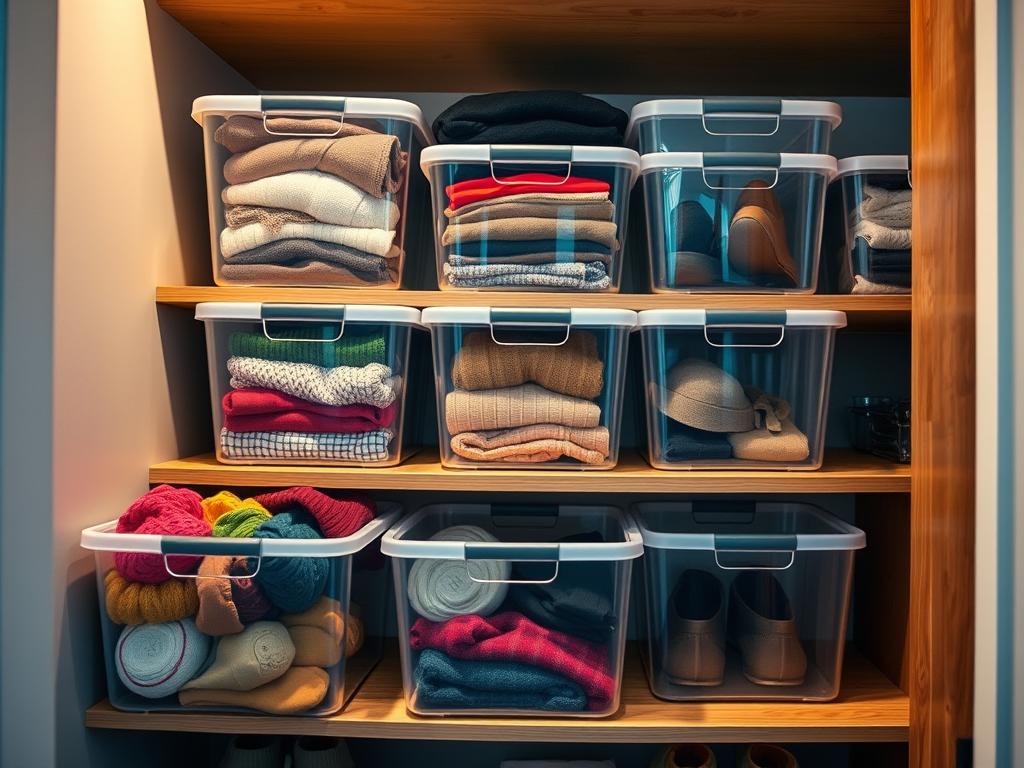
Clear plastic bins from brands like Sterilite, IRIS, and The Container Store show the contents at a glance. This makes finding items faster. It also helps avoid buying duplicates.
Clear bins stack neatly and have labels on the short side for easy reading. Breathable clear fabric bins work well for shoes. They allow air flow to reduce odor and keep shoes visible.
Keeping seasonal items in clear bins lets you store off-season clothes on high shelves or under the bed. Labeling bins with season and contents makes swapping quick and simple.
Smart Hanging Solutions for Clothes
Slimline hangers save space on the rod. Multi-tier hangers hold pants and skirts efficiently. Cascading hooks and special hangers keep scarves and belts tidy and easy to reach.
Adding a second rod or rod doubler doubles hanging space. Organizing clothes by category and color speeds up outfit choices. Garment bags protect delicate items during storage swaps.
Closet organizers like Elfa or IKEA PAX have adjustable shelves and drawers for a custom fit. Cedar hangers or blocks repel moths and add a fresh scent to clothes.
| Solution | Best For | Brands or Examples | Benefit |
|---|---|---|---|
| Clear plastic bins | Seasonal clothing, linens | Sterilite, IRIS, The Container Store | Visibility, stackability, easy labeling |
| Breathable fabric clear bins | Shoes, delicate fabrics | Mesh-front fabric boxes | Airflow to prevent odors, visible contents |
| Slimline & multi-tier hangers | Maximizing rod space | Zober, AmazonBasics style options | More garments per inch of rod |
| Closet rod doubler | Double hanging capacity | Adjustable rod systems | Instantly increases usable hanging space |
| Custom organizers | Tailored closet layouts | Elfa, IKEA PAX | Adjustable shelves and drawers for a custom fit |
| Cedar hangers/blocks | Long-term garment care | Cedar products from real cedar suppliers | Repels moths and adds fresh scent |
To keep closets organized, do a quarterly sweep to remove unworn items and update labels. Using clear bins with smart hangers makes daily routines simpler and wardrobes easier to manage.
Repurpose Unused Items for Storage
Repurposing household items creates sustainable and cost-effective ways to manage clutter. Small changes turn objects into tidy, attractive systems. This extends item life and reduces waste.
Finishes and safety checks keep these solutions practical. They also keep them polished and safe for use.
The next ideas show simple ways to repurpose items. Use uniform labels, matching baskets, or painted lids for a cohesive look. Check shelf weight limits and avoid storing flammables near heat.
Old Jars and Containers for Organizing
Glass mason jars and cleaned food jars are great for small items. Use them for buttons, nails, cotton swabs, spices, and office supplies. Clear jars allow quick identification.
For pantry use, pair airtight lids with printed labels. This keeps food fresh and shelves neat.
Attach adhesive magnets to jar lids to create a magnetic spice rack under shelves or on metal backsplashes. Group jars by use or color. This makes storage both decorative and functional.
This upcycled storage saves money and reduces single-use plastic waste.
Furniture with Built-in Storage Solutions
Choose furniture that pulls double duty. Storage ottomans, beds with drawers, and benches with cubbies add more space. Brands like IKEA and Zinus offer budget-friendly options such as the Malm series.
Thrift stores, Habitat ReStore, and Facebook Marketplace offer inexpensive finds. Convert old dressers into entryway organizers or add baskets to bookshelves. These projects make secondhand furniture functional and stylish.
Streamline Your Kitchen Organization
A tidy kitchen speeds up meal prep, cuts food waste, and keeps surfaces sanitary.
Small changes in layout and storage make a big difference for families that cook daily.
Focus on zones for prep, cooking, and storage to keep counters clear and utensils within reach.
Drawer Dividers for Utensils
Use adjustable drawer dividers to separate everyday cutlery from specialty tools.
Bamboo or plastic trays hold forks, spoons, and knives in neat rows.
Deep drawer organizers work well for pots, pans, and lids when paired with plate holders.
Place knife blocks or a magnetic strip on a wall to free drawer space and improve safety.
Choose utensil organizers that can be repositioned as needs change.
This keeps frequently used tools visible and speeds up cooking tasks.
Organizing Pantry Items by Frequency of Use
Adopt a “use zone” layout: daily items like coffee, cereal, and oil stay at eye level.
Less-used goods go on higher shelves.
Heavy or bulk items belong on lower shelves for easy lifting.
Store grains and flours in clear airtight containers from trusted brands such as OXO Good Grips or Rubbermaid Brilliance.
Label each container with its contents and purchase or open date to extend shelf life and reduce waste.
Use lazy Susans for condiments, tension rods for baking sheets, and stackable can organizers for canned goods.
Rotate stock with FIFO—first in, first out—and keep a running grocery list on the pantry door to avoid duplicate purchases.
Schedule a monthly pantry check to discard expired items and wipe shelves.
Add non-slip liners to drawers and moisture-absorbing packets in humid climates to protect dry goods.
These habits sustain kitchen organization and maintain a healthier cooking space.
Create a Command Center for Important Items
A home command center is a small, centralized spot near the main entrance. Everyone drops essentials and checks schedules there. Placing it by the door helps keep the entryway organized and smoothes last-minute departures.
A well-designed family command center keeps keys, mail, and plans visible. It does this without creating clutter.
Central Location for Keys and Mail
Install a shallow wall shelf or a narrow console table with divided trays. This creates a reliable spot for keys and mail. Use wall-mounted key hooks like Command Hooks or a slim metal rack. These prevent lost keys.
Add a mail sorter with labeled slots for bills, family mail, incoming, and outgoing mail. Keep a small bin or recycle box for junk mail right beneath the sorter.
Add a slim basket for sunglasses and a clipboard for permission slips. This keeps the surface tidy. A single drawer can hold chargers, earbuds, and other daily tech items.
Calendar and To-Do Lists for Daily Management
Display a visible calendar or dry-erase board so everyone sees the day at a glance. Pair a wall calendar with a Google Calendar shared across devices for real-time updates.
Use color-coded entries or task charts to assign chores and appointments to each family member. Combine a physical message center with a simple evening routine. Sort mail, charge devices, and set out items for tomorrow.
This short nightly workflow keeps the command center a functional hub. It also reduces morning chaos.
Utilize Digital Tools for Organization
Pairing physical systems with digital tools helps keep schedules, inventories, and shopping lists synced across devices. This is useful for all household members. Small households using few reliable apps reduce duplicate purchases and missed chores.
Security matters. Protect accounts with two-factor authentication and back up data regularly to cloud storage.
Apps for Personal and Home Management
Task management apps like Todoist and Microsoft To Do simplify recurring chores and shared projects. Notion and Evernote store inventories, manuals, and project notes in one place. Google Keep handles quick lists and attaches photos such as receipts or warranties.
HomeZada supports home maintenance tracking and digital records for appliances. Use shared projects and recurring task settings. Attach photos of warranties and receipts for easy access.
Set push reminders for maintenance dates. Family members can update lists from their phones through shared access.
Virtual Calendars to Keep Track of Tasks
Shared virtual calendars like Google Calendar and Apple Calendar coordinate appointments, family activities, and chore rotations. Create recurring events for trash pickup, bill due dates, and seasonal tasks. Color-code entries by person or task type to avoid confusion.
Link calendar reminders with smart speakers such as Amazon Echo or Google Nest. These announced reminders make starting timed decluttering easier. It helps follow routines without checking a screen.
For grocery and pantry management, apps like OurGroceries or AnyList keep lists synced. Use barcode scanning or photo inventory features to reduce duplicate buys.
Back up important documents to Google Drive or Dropbox. Store digital copies of manuals and warranties in your chosen home project app for easy access when needed.
Maintain Your Organization System
Setting up storage and routines is only half the work. Long-term success depends on steady organization maintenance.
Short, regular check-ins keep systems useful. They also prevent clutter from creeping back. These routines make it easier to adapt when life brings new demands.
Regular Check-In Routines
Monthly audits of 15–30 minutes per zone help maintain organization. Tasks include straightening, re-labeling, discarding expired items, and updating inventories.
Quarterly deeper checks target closets, pantry, and paperwork. An annual review linked to seasonal shifts resets priorities. Use a digital calendar or task app to set reminders and turn these check-ins into habits.
Adjusting Systems as Life Changes
When a household adds a baby, shifts to remote work, or plans a move, it should adjust home systems. Prioritize high-use zones, reassign storage by frequency, and repurpose rooms — like turning a guest room into an office — to improve daily flow.
Involve family members in redesigns to build new habits and share responsibility. Continuous improvement is key.
Collect feedback from everyone in the home. Iterate on solutions like swapping containers or moving the command center. Record wins in a home organization journal or an app like Notion.
Tracking time saved and reduced stress reinforces that organization is an evolving process. Small, consistent tweaks keep the home functional and comfortable.