

Americans throw away enough storage packaging yearly to fill nearly 40,000 shipping containers. This fact shows choosing the right storage containers at home matters more than many realize.
This guide introduces practical home storage solutions. It helps readers pick the best bins and boxes for every room and budget.
It covers plastic bins, fabric boxes, woven baskets, file boxes, shoe and toy chests, pantry canisters, under-bed storage, stackable tubs, and clear organizers. Homeowners, renters, apartment dwellers, and families can find the right fit.
Readers will learn how organization containers streamline clutter and make items easier to find. They also maximize space, boost room aesthetics, and extend stored goods’ life.
Goals include saving time when searching for things, protecting seasonal items, and simplifying moves or off-season storage.
The article explores why containers matter and the types available. It also discusses selection factors, room-by-room recommendations, budget and eco options, customization ideas, and maintenance tips.
U.S. shoppers can find recommended products at retailers like The Container Store, IKEA, Target, Home Depot, Walmart, and on Amazon.
Understanding Storage Containers for Home
The right storage choices turn chaos into calm and protect your valuables. Homeowners who choose smart options find less clutter. They also clean faster and keep items longer.
This section explains why good containers matter. It shows how neat spaces bring real benefits.
Why Storage Containers Matter
Proper containers keep items safe from dust, pests, and moisture. Airtight plastic totes protect seasonal clothes and holiday decor from damp basements.
Moisture-resistant bins guard important documents stored in attics or garages.
Professional organizers like those from The Container Store and Marie Kondo suggest clear labeling. They recommend matching container size to items and shelf space.
This approach lowers damage and keeps keepsakes valuable.
Using the right containers reduces daily stress. Families spend less time looking for essentials, speeding up daily routines.
Cleaning also becomes quicker. Special products like archival boxes help retrieve and store papers long term.
The Benefits of Organized Spaces
Organized homes gain clear advantages. Removing clutter creates more usable space and stops duplicate buying.
Rooms ready for sale sell faster and look more attractive to buyers.
Safety improves when walkways are clear of trip hazards.
In home offices, files and archival boxes increase productivity. They make documents easy to find.
Saving time daily adds up and lowers replacement costs for lost items.
Families also enjoy steady routines. Toy rotation and labeled pantry bins speed meal prep and cut waste.
Experts say start small. Purge before buying new storage bins. Choose containers based on how often you access items.
| Problem | Best Container Type | Practical Tip |
|---|---|---|
| Seasonal clothing | Sealed plastic totes | Use breathable garment bags for delicate fabrics |
| Holiday decorations | Clear stackable bins | Label by room and year for quick setup |
| Important documents | Archival boxes or fireproof file boxes | Scan critical papers and store digital backups |
| Garage tools and supplies | Moisture-resistant storage bins for house | Keep heavy items low and label lids |
| Everyday items | Open bins or baskets | Place near doorways for easy grab-and-go |
Types of Storage Containers Available
Choosing the right container makes organization simple and efficient. This section outlines common options to match your needs. It covers functional differences, materials, and specialty storage solutions.
Bins vs. Boxes: What’s the Difference?
Bins are open or lidded tubs with taller sides and stackable designs. They hold bulk items, seasonal gear, and garage or attic storage well. Standard sizes like 18 x 12 x 10 inches help plan vertical space and shelving layouts.
Boxes tend to be foldable, decorative, or made of cardboard with lids. They suit closets, shelves, and living-room decor where looks matter. Decorative boxes fit behind sofas or on bookcases. Archival boxes protect papers in closets or home offices.
Choosing Between Plastic and Fabric Containers
Plastic containers from brands like Sterilite, Iris, and Rubbermaid are waterproof, pest-resistant, and durable. Clear plastic helps find items quickly. Opaque plastic reduces light for delicate textiles or photos.
Fabric options, found at The Container Store or Target, offer breathable, foldable storage for closets and shelves. Materials include cotton, canvas, non-woven fabric, and polyester with cardboard inserts. Fabric bins add a softer look for bedrooms and living spaces.
Plastic offers protection and lasts longer. Fabric brings style and flexibility. Plastic wipes clean easily, while fabric needs spot cleaning or removable liners.
Specialty Containers for Specific Needs
Specialty pieces solve unique storage challenges. File boxes and archival containers keep tax records safe. Acid-free options are best for long-term document care. Pantry canisters and airtight food storage keep kitchen items fresh.
Toys benefit from rotating organizers, divided bins, and low open tubs for quick cleanup. Shoe boxes, boot racks, garment bags, and hanging organizers improve closet systems. Whitmor and Threshold at Target provide closet-friendly solutions.
Garages and workshops use tool chests, stackable bins, and clear small-parts organizers to find hardware easily. Under-bed rolling containers and vacuum-seal bags save space for bulky bedding and off-season clothes.
Factors to Consider When Selecting Storage Containers
Choosing the right storage containers for home use starts with a clear look at space and durability. Thoughtful selection saves time and keeps belongings safe. The advice below helps homeowners pick residential storage containers that fit their rooms and routines.
Size and Space Requirements
Measure shelves, closet depth, under-bed clearance, and garage shelf height before buying. A quick sketch of each area makes it easier to map container footprints.
Small containers (1–6 qt) suit accessories and craft supplies. Medium bins (10–20 qt) work well for shoes and toys. Large tubs (28–56 qt) handle seasonal clothing and bedding.
Think vertical. Stackable, uniform-height bins maximize shelving. Remember handles and lids when calculating total height.
Use shallow containers for items used daily and deeper tubs for long-term storage.
Material Durability and Maintenance
Rigid plastic like polypropylene and HDPE resists cracking under rough handling. Fabric boxes with reinforced bottoms suit lighter loads and look good in living spaces. Metal containers perform well but need rust prevention in humid rooms.
For sun-exposed areas, choose UV-resistant options. Select moisture-proof or airtight models for food, documents, and keepsakes. Look for BPA-free plastics where occasional food contact may occur.
Cleaning is simple: wipe plastic with mild detergent and water. Spot-clean fabric boxes or wash removable liners. Check flame-retardant specs for fabric bins near heat sources.
Warranty support from brands such as Sterilite, Rubbermaid, and Iris is useful for long-term confidence.
| Factor | What to Check | Best Use |
|---|---|---|
| Dimensions | Measure height, width, depth; include handles and lids | Fit on shelves, under beds, and garage racks |
| Capacity | Match quart sizes to items: small, medium, large | Accessories, everyday toys, seasonal linens |
| Stackability | Uniform heights and locking lids for stable stacks | Maximizing vertical shelf space |
| Material | Polypropylene/HDPE for durability; fabric for light loads; metal for heavy duty | Outdoor-adjacent areas, closets, decorative storage |
| Environmental Resistance | UV resistance, moisture-proof seals, airtight options | Sunlit garages, basements, food and paper preservation |
| Maintenance | Wipeable surfaces, removable liners for washing, rust protection | Easy cleaning and long-term care |
| Safety & Certifications | BPA-free plastics, flame-retardant info, brand warranty | Households with children, long-term storage needs |
Planning with these points makes sure storage containers match room size, usage, and care needs. Smart measurement with material choices builds efficient home storage systems.
Best Storage Containers for Cluttered Spaces
Cluttered rooms need practical, clear, and stable storage solutions. The right containers turn basements, attics, and playrooms into useful spaces. Clear bins help families find items fast and save floor space.
Clear Plastic Bins for Visibility
Clear plastic bins let you see what’s inside without opening them. This is great for seasonal clothes, holiday decorations, and kids’ toys. Families save time by spotting what they need quickly.
Good models include Sterilite ClearView and Rubbermaid Roughneck. Latchable lids keep pests out and work well in basements. Larger bins fit bulky items; medium bins hold clothes or decor.
Clear modular drawers suit craft supplies and small parts. They keep tiny pieces organized and visible. Label drawer fronts to find items quickly and prevent buying duplicates.
Stackable Options for Maximal Space
Stackable bins save vertical space and form neat towers when sizes match. Interlocking lids add stability and stop slips during stacking. Uniform containers make stronger stacks than mixed sizes.
Fabric cubes go well with cube shelving like IKEA KALLAX for a softer look. Plastic drawer towers fit closets and utility rooms. Under-bed rolling drawers slide out for easy access and stack when unused.
Safety is key when stacking. Avoid tall, unstable piles. Put heavy items on the bottom and lighter ones on top. Balance weight evenly and keep used boxes within reach.
Labels help with stacked bins. Use large, clear labels on fronts and sides. Keep a simple inventory list nearby to reduce searching and repeated handling.
Utilizing Storage Containers in Different Rooms
A few smart choices in house storage boxes make daily life easier. Small changes to each room help keep items visible, accessible, and protected.
Living Room: Stylish Storage Solutions
Decorative baskets like seagrass or wicker hide clutter while adding texture. Fabric bins fit neatly in media consoles to hold remotes, chargers, and extra cables.
Lidded coffee-table storage tucks away throws and magazines for a tidy surface.
Modular shelving and matching fabric bins create a cohesive look. Retailers such as Target and Wayfair offer storage cubes that blend with living room decor.
Cable-management boxes and console organizers keep electronics orderly and out of sight.
Kitchen: Functional Storage Containers
Airtight canisters from brands like OXO Good Grips preserve dry goods and cut waste. Stackable pantry bins free up shelf space and make items easy to reach.
Clear plastic organizers in refrigerators improve visibility and food rotation. Pull-out baskets and sliding drawers simplify access in lower cabinets.
Spice racks and labeled containers speed meal prep. Follow USDA and FDA guidance for food storage. Use BPA-free house storage boxes for items contacting food.
Bedroom: Under-Bed and Closet Options
Under-bed solutions include shallow rolling bins and low-profile tubs for shoes or off-season clothes. Vacuum-seal bags compress comforters and bulky items to free space.
Uniform storage containers on closet shelves give a tidy, matched look. Hanging organizers and shoe cubbies optimize vertical space.
Garment bags protect suits and dresses. Cedar-lined boxes or sachets keep moths away. Rotate seasonal items regularly. Stack by weight and fragility to avoid damage.
Smart Storage Solutions for Home Offices
A tidy home office boosts focus and saves time. Smart use of home storage organizers turns clutter into calm.
The right mix of file boxes, desk accessories, and clear labeling creates a workspace that works well.
This setup helps with daily tasks and stores long-term records neatly.
Organizing Documents with File Boxes
Choose upright file cabinets or lateral files for paperwork you need to access quickly. Portable file boxes from Sterilite help you move files easily between rooms.
For storing documents long-term, use Banker’s Box archive boxes. Pick acid-free models for tax returns, legal papers, and warranties to keep them safe.
Keep current documents in desk filing or small lateral units. Store archived records in labeled, moisture-resistant containers on closet shelves or dry, humid-controlled basements.
Digitize important papers too. This reduces clutter and speeds up finding files.
Desk Organizers for Everyday Use
Desk organizers should fit your daily habits. Use pen trays, drawer dividers, and in-desk trays for items you need right away.
Multi-compartment organizers for electronics and cable organizers stop tangled cords and lost chargers.
Compact stackable trays from Akro-Mils or mDesign save space and keep supplies visible. Put frequently used items within arm’s reach.
Store less-used items in labeled containers or bins.
Color-coding folders and clear labeling improve workflow. Shared workspaces benefit from dedicated containers to cut confusion and speed task switching.
Affordable Storage Container Options
Finding budget-friendly storage bins can transform a cluttered room without draining your wallet. A short plan helps buyers pick value without giving up function. The tips below focus on practical choices, shopping spots, and simple tradeoffs when finding home storage solutions.
Budget-Friendly Picks for Every Home
Sterilite and IRIS offer plastic totes that balance price and durability for everyday use. Walmart’s Mainstays line and Target’s Room Essentials deliver affordable fabric bins and stackable tubs. These fit well in living rooms, closets, and garages.
Multipacks and foldable fabric bins often give the best cost per unit. Stackable economy tubs maximize vertical space and reduce the need for extra shelves. Buying fewer, well-chosen pieces after decluttering prevents wasted spending.
Lower-cost options may use thinner plastic and simpler finishes. These containers work well for seasonal clothes, toys, and household tools. For heavy-duty needs, upgrading to sturdier brands is wise.
Where to Shop for Discount Storage Containers
Retailers with regular budget options include Walmart, Target, Home Depot, Lowe’s, and Big Lots. Dollar stores offer tiny organizers for small items. Amazon lists multi-packs and user reviews to compare sizes and quality.
Secondhand sites like eBay and Facebook Marketplace offer used shelving and storage furniture at steep discounts. Membership warehouses like Costco and Sam’s Club sell bulk tubs during seasonal promotions.
Look for post-holiday clearances and spring organization events for deep discounts. Manufacturer outlets and local Habitat for Humanity ReStore locations offer gently used shelving and containers at low prices.
Customization Ideas for Storage Containers
Personalizing storage saves time and makes spaces feel cared for. Small custom touches turn plain storage containers into practical, stylish solutions.
Use labeling systems and simple DIY decor to match décor and family routines.
Labeling for Easy Identification
Clear labels cut search time. Use printed adhesive labels for permanent needs and chalkboard labels for changing contents.
Masking tape with a Sharpie works well for quick fixes. Label makers like Brother or Dymo create uniform text.
Keep labels consistent across house storage boxes. Include category, date stored, and room of origin.
Color-code labels for seasonal rotation or assign colors to family members for shared areas.
Long-term storage benefits from transparent inventory lists. Maintain a digital record in a spreadsheet or an app like Sortly.
Link each container to an ID so family members can check contents without opening every bin.
DIY Decor for Unique Touch
Simple upgrades make storage containers attractive. Wrap plastic bins with fabric or removable contact paper.
Use decoupage and scrapbook paper for accent drawers. Add decorative rope handles for a nautical or rustic look.
Practical mods improve use. Attach caster wheels to heavy bins for mobility. Add clear pockets to fronts for index cards.
Install pull straps on under-bed drawers for easier access.
Safety matters during customization. Avoid covering ventilation when storing items that need airflow. Choose non-toxic adhesives and finishes.
Upcycle wooden crates, wine boxes, or shipping pallets. Sand and paint them for unique house storage boxes.
Eco-Friendly Storage Solutions
Choosing low-impact options helps households cut waste and save money. Readers will learn how simple swaps make storage kinder to the planet. Thoughtful purchases keep a tidy home.
Sustainable Materials to Consider
Bamboo crates and seagrass baskets offer breathability and a warm look. They work well for linens and toys. These need dry spots to avoid mildew.
Recycled plastic bins provide durability and resist moisture. They lower demand for new plastic and last a long time as storage containers.
Organic cotton canvas and metal containers offer other options. Canvas stacks easily in closets. Metal is recyclable and sturdy for garage use.
Look for FSC-certified wood when choosing wooden crates or woven baskets from responsible brands.
Reusing Household Items as Storage
Repurposed jars, shoe boxes, and magazine holders turn common items into clever storage containers. Glass jars work best for pantry staples. Shoe boxes serve as drawer dividers. Magazine holders hold cans or odds and ends.
Thrift-store finds and vintage crates add character. They cost less and keep items out of landfills. Donating or recycling unwanted containers follows local rules.
Many municipalities list drop-off options for mixed materials and large plastics. Extend container life by repairing handles and reinforcing fabric boxes with interfacing. Adding liners protects interiors. Small fixes delay replacement and support an eco-friendly storage approach throughout the house.
Maintenance and Care for Storage Containers
Good care keeps storage containers for home in working order. It also protects belongings inside. A simple routine stops odors, pests, and damage.
This section gives clear steps for cleaning and long-term care. It helps home storage organizers work well season after season.
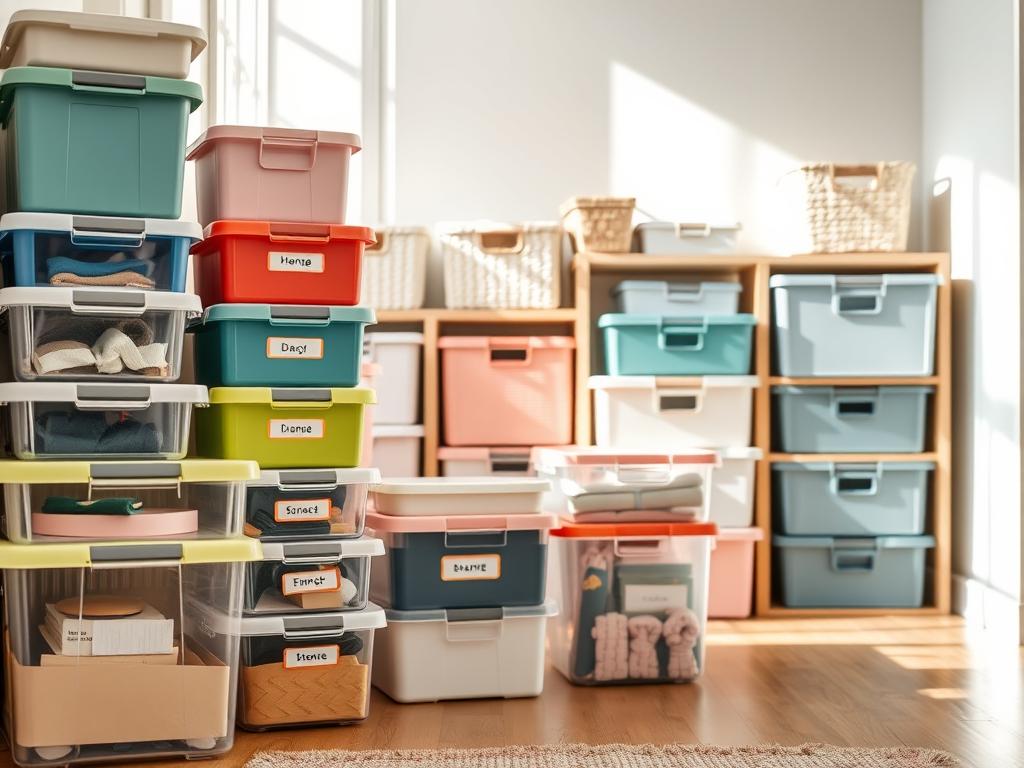
Cleaning and Care Techniques
Empty contents before cleaning. Remove labels and debris, then dust or vacuum the inside.
Wash plastic bins with mild detergent and warm water. Rinse and wipe lids. Air-dry completely before restocking to avoid mildew.
To disinfect non-porous surfaces, use diluted bleach per product instructions. Test a small area first to protect colors.
Brush or vacuum fabric containers to remove dust. Spot-clean with mild soap and water. Remove cardboard inserts before washing.
If mold or mildew appears on fabric, sun-dry items and use suitable cleaners. Discard containers if contamination lasts to protect goods.
Metal containers need rust care. Remove surface rust with white vinegar or rust remover. Then, apply a thin protective coating to extend life.
Avoid placing containers on damp concrete. Use shelves or wooden pallets to cut moisture contact and protect items from cold floors.
Ensuring Longevity of Your Containers
Do not overload containers past their capacity. Distribute weight evenly. Store heavy items on low shelves to avoid warping lids and collapsing stacks.
Replace cracked or warped lids to keep pests and moisture out. Small fixes help: reinforce handles with straps or tape. Use zip ties for broken latches until you get replacements.
Check containers once a year for pests, moisture damage, and wear. Rotate contents to prevent long-term crushing of textiles and fragile items.
Use liners to protect insides from spills and reduce cleaning. Keep a simple inventory list to lower handling and wear from searches.
Regular maintenance keeps home storage organizers reliable. These habits protect valuables, lower replacement costs, and keep containers ready when needed.
Conclusion: Elevating Your Home Organization
Home organization containers and smart storage solutions turn chaotic rooms into calm, usable spaces. Start by decluttering. Then, measure shelves, closets, and under-bed spaces carefully.
Choose materials based on environment and access needs. Clear plastic bins offer visibility and protection. Fabric containers blend with decor in closets. Specialty boxes keep documents and kitchen items safe.
Pick sizes that fit storage zones well. Favor stackable options where possible. Budget and sustainability also matter.
Look for durable plastic from trusted brands or recycled-fabric options to reduce waste. Try buying a few sample containers for testing before bulk buying.
To keep spaces tidy, adopt small habits. Schedule regular decluttering sessions. Use one-in-one-out rules for clothing and toys. Label visible bins to simplify upkeep.
Over time, consistent use of good storage solutions saves time and lowers stress. It also creates a more welcoming home.
Readers are encouraged to use this guide room-by-room. Consult retailer resources or a professional organizer for tailored advice.
The right bins, boxes, and containers transform storage from chaos to calm. They offer durable, affordable, and eco-conscious options for American households.