

Nearly 70% of American households find closet clutter a top daily frustration. Many do not change their storage setup. This shows simple closet storage solutions can improve daily life and reclaim space.
This guide introduces the best closet storage solutions. It helps homeowners, renters, apartment dwellers, busy professionals, and families across the United States. The guide offers practical and stylish ways to maximize closet space.
These solutions range from budget DIY fixes to premium custom closet systems. Readers learn how to assess their needs and pick closet organization systems. Space-saving tricks like vertical storage and corner use are explained.
The article gives product and brand tips including The Container Store, California Closets, and IKEA. It also offers advice for keeping a wardrobe storage system efficient. Expect clear steps covering shelves, hanging organizers, drawers, hooks, baskets, and shoe solutions.
Trends such as minimalist design and eco-friendly options are also included. By following these tips, readers get ideas to optimize space and simplify their daily routines.
Understanding Closet Storage Solutions
Closet storage solutions include systems, fixtures, and accessories to organize clothes, shoes, and personal items. Good closet design helps you find items easily and protects clothes from damage. It also makes a home feel neat and orderly.
Choices range from built-in custom systems to modular, freestanding pieces. The best option depends on whether you own or rent your home.
Definition and Importance
A closet is a functional space. Effective closet solutions combine shelves, rods, drawers, and accessories to improve access and protect clothes. Good design saves time and reduces clutter in the home.
Custom installations from companies like California Closets offer tailored fits and premium finishes. Brands like IKEA or The Container Store provide modular units that are flexible and easier to install. Renters often choose freestanding organizers to avoid permanent changes but still organize effectively.
Benefits of Effective Storage
Organizing closet space saves time because belongings are visible and easy to reach. Using vertical storage, double hanging rods, and slim hangers helps store more items without using extra space.
Proper storage stops overcrowding and protects delicate items with the right shelves and padding. This care extends clothing life and cuts replacement costs. A tidy closet also reduces daily stress and can raise home value if professionally designed.
Comparing options helps clarify trade-offs. Custom closets offer high customization but usually cost more and take longer to install. Off-the-shelf organizers are cheaper and quicker to set up but might not fit as well as built-ins.
Types of Closet Storage Solutions
The right mix of components makes a closet work harder and look neater.
This section describes common options and shows how to combine them into practical closet organization systems.
These systems fit most homes.
Shelving Units
Built-in shelves offer a permanent, high-capacity place for folded sweaters, linens, and handbags.
Retailers like IKEA and The Container Store sell adjustable wire shelving and freestanding units for small closets or reach-in spaces.
Material choices include melamine, solid wood, and metal. Melamine looks clean and costs less.
Solid wood adds warmth and strength. Metal suits heavy loads or moist areas best.
Weight capacity differs by material and bracket type, so check specs before loading.
Shelf spacing is important.
Place higher shelves for seasonal bins and lower shelves for daily clothing.
Clear or labeled bins keep items visible and maintain efficient closet storage.
Hanging Organizers
Single and double hanging rods increase usable vertical space. Double rods let shirts hang above pants in the same space.
This creates smart wardrobe storage for tight closets.
Cascading and tiered hangers group multiple garments on one hook to save rod length.
Slimline hangers save depth and protect fabric.
Over-the-door organizers and garment racks provide temporary or rental-friendly options.
Specialty hanging organizers handle scarves, ties, belts, and handbags.
These reduce drawer clutter and make items easy to find, improving closet organization.
Drawer Systems
Modular drawer units and built-in drawers provide tidy places for folded items, lingerie, and accessories.
Portable drawer organizers separate socks, underwear, and small items inside larger drawers.
Drawers for jewelry or delicate items benefit from felt-lined trays and dividers.
Shallow drawers prevent overfilling, while deeper drawers suit bulky sweaters and seasonal boxes.
Regularly declutter and avoid cramming drawers to keep storage efficient and extend drawer life.
Choosing the Right Closet Storage for Your Needs
Picking the right system begins with clear measurements and an honest look at daily habits. A careful assessment makes matching closet storage easier. This guide walks through measuring, inventorying, and pairing design choices with lifestyle.
First, measure the space. Record width, depth, and ceiling height. Note door swing or bi-fold constraints and usable wall areas.
Small changes in measurement can affect how shelving and hanging rods fit.
Assessing Closet Size
Create a simple inventory: count hanging garments, folded items, shoes, and accessories. Convert that list into needed hanging length, shelf linear feet, and drawer capacity.
Use a tape measure and sketch a basic floor plan.
Try online tools from California Closets or IKEA to test layouts before buying. These apps help visualize spacing and show how different designs perform.
Factor in vertical space. Taller ceilings allow extra shelving or stacked hanging sections. Planning for door clearance avoids costly returns.
Evaluating Personal Style
Match storage to routines. A capsule wardrobe needs less hanging space and more shelving for folded pieces. Parents often choose durable, easy-clean finishes.
Fashion collectors benefit from open display and specialty shoe racks.
Decide on visual priorities. Open shelving highlights clothing and accessories. Closed drawers support a minimalist look and hide clutter.
Mixing styles brings balance; combine modular IKEA systems with boutique bins from The Container Store for cost control and polish.
Consider future needs. Custom closet organization can be phased in as budgets allow. Adjustable shelving and modular inserts keep options open. This maximizes closet space over time.
| Step | Action | Result |
|---|---|---|
| Measure | Width, depth, ceiling, door swing | Accurate fit for shelves and rods |
| Inventory | Count garments, shoes, accessories | Needed hanging length and shelf feet |
| Visual Choice | Open vs closed storage, display needs | Style that matches daily use |
| Plan | Sketch or use brand apps | Saves time and avoids returns |
| Future-proof | Choose modular or adjustable options | Sustains changes while maximizing closet space |
Space-Saving Techniques for Closets
Small changes can free up surprising amounts of room. This section shows ways to use vertical planes and corners. These ideas create efficient closet storage that fits real life.
The focus is on easy upgrades. Proven wardrobe storage ideas deliver quick wins.
Vertical Storage
Using ceiling height turns wasted space into storage. Install tall shelving to stack sweaters and boxes. Place high shelves for seasonal items in labeled bins.
These items stay accessible but out of the way. Double-hang rods put two levels of hanging space where one stood before. This helps maximize closet space in tight homes.
Over-the-door racks and hanging shoe organizers keep the floor clear. Vertical cubbies keep purses and folded tees tidy. Pull-down wardrobe rods bring high bars within reach.
In larger walk-ins, a rolling ladder speeds access to top shelves without cluttering the floor.
Underutilized Corners
Corners often become dead zones. Lazy Susan shelving or triangular shelving makes those angles usable for sweaters, bags, or linens. Corner cubbies and pull-outs convert awkward spaces into neat storage.
They are easy to reach. Custom corner drawers and rotating shoe towers prevent wasted depth. They keep shoe pairs visible.
For very small closets, slim corner shelves fit jewelry and small accessories. Mounting hooks in a corner creates a spot for hats and bags. These would otherwise pile up on the floor.
These approaches together form reliable space-saving closet solutions. They help maximize space while keeping items tidy and accessible. Mixing vertical and corner strategies creates efficient storage for both small and large homes.
| Technique | Main Benefit | Best For |
|---|---|---|
| Tall Shelving | Uses vertical height for seasonal bins and folded items | Closets with high ceilings |
| Double-Hang Rods | Doubles hanging capacity without extra depth | Small bedroom closets |
| Pull-Down Wardrobe Rods | Makes high hanging space reachable | Penthouses and rooms with tall closets |
| Over-the-Door Racks | Clears floor space and stores shoes or accessories | Shallow or narrow closets |
| Lazy Susan / Corner Cubbies | Makes corner contents visible and accessible | Irregular or deep corner closets |
| Corner Pull-Outs / Rotating Towers | Eliminates dead zones and stores shoes efficiently | Closets with deep corner space |
| Slim Corner Shelves & Hooks | Provides small-item storage without bulk | Tight closets and entryway wardrobes |
Maximizing Closet Efficiency
A practical plan makes organizing closet space faster and less stressful. Small routines cut clutter and increase access. They also keep daily choices simple. The next steps focus on seasonal rotations and smart labeling tools that work with common closet organization systems.
Seasonal Rotations
Rotate clothes every season to free hanging and shelf space for current wear. Use vacuum-seal bags for bulky coats and sweaters to reduce volume. Store off-season items on high shelves or under-bed containers to keep the main closet clear.
Adopt a three-box method when swapping: keep, store, donate. Label boxes before moving them so family members know where items belong. This simple step speeds future swaps and prevents piles from accumulating.
Protect delicate fabrics by using breathable garment bags for wool, silk, and lace. Cedar blocks repel moths and add a fresh scent to stored items. For leather, wipe clean and condition lightly. Avoid plastic that traps moisture.
Smart Labeling Tools
Consistent labels turn efficient closet storage into a system everyone can follow. Printed adhesive labels work well on shelves. Chalkboard tags suit baskets and add a casual look. Clear bin labels let users see contents at a glance.
Digital inventory apps complement physical labels by cataloging items and locations. The Container Store offers many label-friendly containers. IKEA’s modular bins pair easily with common label makers for a neat, uniform appearance.
Labels raise retrieval speed and lower clutter buildup. When every family member can find and return items, closet organization systems work without constant supervision.
| Task | Tool | Benefit |
|---|---|---|
| Seasonal swap | Vacuum-seal bags / breathable garment bags | Maximizes closet space by reducing bulk and protecting fabrics |
| Donation decision | Three-box method (keep, store, donate) | Streamlines organizing closet space and avoids hoarding |
| Daily access | Printed adhesive labels / clear bin labels | Improves efficient closet storage and speeds retrieval |
| Family coordination | Chalkboard tags / digital inventory apps | Ensures consistent use of closet organization systems by all members |
| Long-term care | Cedar blocks / leather conditioner | Preserves garments and prevents damage in stored items |
Budget-Friendly Closet Storage Options
Small changes can transform a closet without a large expense. This section shares practical, low-cost ways to use existing space well.
Readers will find easy DIY ideas and a guide to wallet-friendly stores for lasting closet storage solutions.
DIY Solutions
Measure the closet depth, width, and height before buying materials. This stops wasted plywood and wrong brackets. Plan shelves to fit between studs for secure mounting.
Build basic shelves with plywood and metal brackets. Cut plywood to size, sand edges, and apply paint or clear finish for durability.
Use a stud finder and level to fasten shelves to avoid sagging under weight.
Convert tension rods into double-hang systems to double hanging space. Install one rod higher and one lower for shirts and pants.
Use a slim bookcase or old dresser for drawer-style storage of folded items.
Low-cost organizers suit renters who cannot change walls. Clear shoe boxes, fabric shelves, and Command hooks keep the closet tidy without damage.
These items offer affordable closet organization while keeping space intact.
Affordable Store Brands
IKEA closet systems like PAX and ALGOT are modular and fit different budgets. PAX offers a near-custom look at a lower price.
ALGOT provides simple shelves and baskets for smaller budgets.
Stores like Walmart and Target sell cheap accessories like slim hangers, shoe racks, and bins to upgrade function fast.
The Container Store’s value lines offer ready-made organizers for targeted needs.
For best price and durability, mix an affordable modular system with quality pieces. Buy sturdy shoe racks and slim metal hangers to make your storage last longer.
This mix delivers practical results and keeps long-term costs low.
Premium Closet Storage Solutions
High-end closet systems turn cluttered spaces into tailored wardrobes. They blend smart design and durable finishes with useful features. Homeowners seek these for lasting function and resale value.
Custom Closet Systems
Companies like California Closets offer professional design consultations and 3D renderings. They provide full installation for custom closet organization. These fit unique layouts and personal routines.
Bespoke elements include tailored drawers, shoe racks, jewelry inserts, and integrated lighting. Each item maximizes space and brings a cohesive look. This creates a durable and stylish closet.
Pricing depends on scope, materials, and features. Many see this cost as an investment. Well-done custom closets boost home value and improve daily efficiency.
High-End Material Choices
Premium materials include solid wood, hardwood veneers, tempered glass shelves, and leather-lined drawers. Soft-close hardware improves durability and user experience.
Finish and hardware options like brass, stainless steel, and matte black help match decor. Features such as LED lighting, motorized lifts, and humidity control protect garments.
High-end closets focus on visual harmony and technical function. Good material choices ensure long use and elevate the closet’s look and feel.
Popular Brands in Closet Storage
Shoppers often compare popular closet brands when planning a remodel. Each brand offers a different mix of price, flexibility, and service.
Homeowners can match choices to budgets and time frames. This helps make smarter decisions for their closet needs.
The Container Store is known for modular lines like Elfa and configurable systems. These suit many different layouts.
It offers many accessories from drawer dividers to shoe organizers. In-store design consultations assist with planning and organization.
Modular options and labeling supplies make ongoing organization simple. Mid-range pricing for Elfa appeals to those avoiding long custom contractor timelines.
California Closets specializes in fully custom installations with professional design services. The company uses high-quality materials for a tailored look.
They provide full installation for turnkey results. Warranties and bespoke options set California Closets apart for buyers who want durability and a perfect fit.
IKEA targets budget-conscious buyers. Modular lines like PAX and ALGOT are easy to assemble at home.
IKEA offers many finishes and accessories to keep looks semi-custom but affordable. This brand fits people who prefer DIY installation and flexible pricing.
Below is a concise comparison to guide decisions based on cost, goals, and hands-on preferences.
| Brand | Strength | Best for | Price Range |
|---|---|---|---|
| The Container Store | Modular Elfa, accessories, design help | Mid-range modular systems and detailed organization | Mid |
| California Closets | Fully custom design, high-end materials, installation | Turnkey, bespoke closet projects | High |
| IKEA | Affordable modular systems, many finishes | DIY installers and budget remodels | Low to Mid |
Considering these options narrows choices among closet storage solutions. Buyers can identify which brand matches their project needs best.
Whether choosing The Container Store, California Closets, or IKEA, buyers find a practical path to better storage.
Organizing Accessories for Closets
Small organizing accessories can change how a closet works. Thoughtful choices for hooks, racks, baskets, and bins make daily routines faster.
The right mix creates neat, accessible spaces. It also supports a range of wardrobe storage ideas.
Hooks and Racks
Wall-mounted hooks are great for bags, robes, and hats. They free shelf and floor space while keeping items easy to grab.
Over-the-door racks add storage without drilling into walls. Tie and belt racks keep accessories untangled and visible. Multi-hook valet racks hold outfits ready for the next day.
Placement matters. Hooks can be inside doors, on closet walls, or behind shelving to provide quick access without clutter.
Material choice affects durability and look. Brass and stainless steel offer a polished finish and long life.
Plastic options suit temporary setups or kids’ closets. Each option fits different budget and style needs.
Baskets and Bins
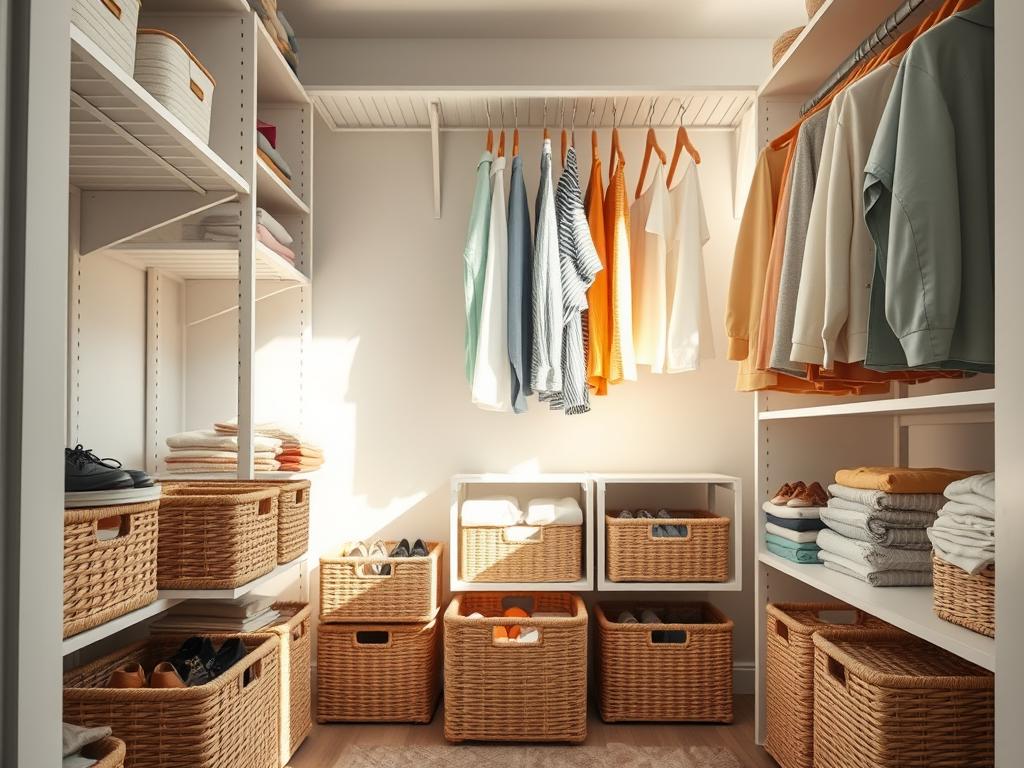
Woven baskets bring texture to open shelving. They are ideal for sweaters or scarves. Clear plastic bins make it simple to spot contents, which helps with seasonal rotations.
Fabric bins work for delicate garments when breathability matters. Stackable totes maximize vertical space in larger closets. Vacuum-seal bags reduce volume for bulky seasonal items.
Size bins to the items stored. Label each container to speed retrieval and keep items organized. Baskets and bins work well in kids’ rooms, on open displays, and inside drawers.
Breathable materials protect delicate fabrics. Uniform bins create a tidy look and simplify wardrobe storage maintenance.
Tips for Maintaining a Well-Organized Closet
A tidy closet starts with a plan and simple habits. These thoughtful steps help keep your closet organized long term.
The guidance below offers practical routines for daily use and seasonal cleaning.
Regular Decluttering
Begin with a seasonal edit and use three boxes: keep, donate, and discard. Place each item in a box without second-guessing.
A wardrobe audit helps find pieces not worn or that no longer fit.
Use evidence-based rules. Donate clothes not worn in 12 months, considering your climate and lifestyle. Mend items before deciding to keep them.
Choose donation and recycling options in the United States. Local charities like Goodwill and The Salvation Army accept wearable clothes.
Textile recycling programs handle damaged fabrics that cannot be donated.
Monthly Maintenance Schedule
Set a rhythm: a weekly quick tidy for 10–15 minutes, a monthly check of frequently used items, and quarterly deep cleaning.
Deep cleaning includes dusting and washing storage bins. These steps save space and time.
Adopt habits to support order. Return items to their spots after use. Fold clothes uniformly and re-label bins when needed.
For families, assign zones for each person. Use color-coded hangers or labels to help everyone follow the same system.
Clear roles reduce friction and improve compliance.
| Task | Frequency | Time | Benefit |
|---|---|---|---|
| Quick tidy (put away items) | Weekly | 10–15 minutes | Keeps closet organization systems functional day to day |
| Reassess frequent items | Monthly | 20–30 minutes | Maintains efficient closet storage and removes clutter |
| Deep clean (dust, wash bins) | Quarterly | 30–60 minutes | Preserves materials and improves longevity of storage |
| Seasonal wardrobe audit | Every 6–12 months | 1–2 hours | Supports regular decluttering and updates closet layout |
| Label and zone check | As needed | 10 minutes | Helps with maintaining closet organization across household members |
Closet Storage for Unique Items
Closets store more than just clothes. They also hold shoes, jewelry, and small items. Good storage keeps these easy to find and protects them.
Practical closet solutions turn clutter into calm. They make daily routines faster and smoother.
Below are ways to fit spaces and budgets. Each pairs well with wardrobe ideas. They keep items visible, safe, and ready to wear.
Shoe storage solutions
Use different systems to match shoe types and usage. Open shoe racks fit everyday pairs. Stackable clear shoe boxes protect seasonal shoes and make finding pairs easy.
Cubby systems create neat rows for casual shoes and sneakers. Wall-mounted organizers save floor space in narrow closets. Under-shelf angled racks keep heels and flats tidy under hanging clothes.
Specialty shoes go in high boxes labeled with photos or tags. This makes finding them simple.
Use shoe trees to keep leather and designer shoes in shape. Store dress shoes in dust bags with silica packs to control moisture and protect them.
Accessories and jewelry
Small items fit well in compartmentalized inserts for watches, cufflinks, and rings. Jewelry trays speed daily choices and keep items from rubbing together.
Wall organizers and hanging solutions stop long necklaces from tangling. Soft-lined drawers protect delicate pieces from scratches. Anti-tarnish strips slow metal discoloration and keep shine longer.
For valuable items, use locked drawers or a home safe. Consider appraisal and insurance for costly pieces to ensure security.
Combining these methods creates neat accessory storage. Thoughtful placement and clear labels maintain order and support long-term care.
Trends in Closet Storage Solutions
Closet storage solutions are moving toward cleaner looks and greener materials. Homeowners and designers want calm, efficient spaces. These spaces fit modern interiors and smaller homes.
New technology also helps people manage clothing and accessories better.
Minimalist Designs
Minimalist closet design uses clean lines and neutral colors. It hides storage to keep clutter out of sight. Slim matching hangers and fabric bins add style and order.
Integrated LED lights create a boutique feel and make things easy to find. Hidden drawers and cabinet fronts make small closets look bigger.
This style keeps the look simple and organized.
Eco-Friendly Options
Eco-friendly closet storage uses sustainable materials like bamboo shelves, FSC-certified wood, and recycled plastic bins. Low-VOC finishes and repurposed furniture offer durable, green solutions.
Brands with reclaimed wood or recyclable parts support long-lasting storage. They may also align with green building programs for renovations.
Sustainable closet organization combines fewer items and smarter storage with better materials. Smart features like app inventories and motion lights improve access and efficiency.
Motorized lifts add to the modern trends in closet storage for American homes.