

Surprisingly, most Americans use less than half of their closet space well. Up to 55% of capacity is wasted in small closets.
This guide shows practical steps to maximize small closet space. It helps simplify your daily routines.
This how-to guide suits people across the United States who want clear closet organization ideas and small closet design tips.
It covers assessment, storage, seasonal rotation, hangers and accessories, drawers and door strategies, plus upkeep tips.
These ideas help create an organized small closet that reduces clutter.
Common small closet types are reach-in closets, shallow pantries used as closets, narrow wardrobe closets, and hallway linen closets.
These often have shallow depth, low ceilings, one hanging rod, awkward doors, or odd alcoves. This guide offers targeted solutions for these issues.
Readers get step-by-step measurement tips, space-saving hardware and furniture advice, hanger comparisons, and storage container guidelines.
It also explains door and drawer solutions and shows maintenance practices.
The goal is to help you maximize small closet space with practical storage ideas, declutter tactics, and easy organization hacks for a small closet makeover.
Understanding the Importance of Small Closet Organization
A tidy small closet changes how a home feels and works. Small closet organization brings clear order and frees up space. It makes daily routines much smoother.
Simple closet storage solutions turn cramped shelves into easy-to-use zones. These help keep a habit of decluttering and closet care long term.
Benefits of an Organized Closet
An organized closet creates more space and shows clothing clearly. Experts from the National Association of Productivity & Organizing Professionals say it boosts function. It also reduces decision fatigue and stress.
A neat layout helps clothes last longer. Proper hanging, folded storage, and breathable bins protect them from damage. Seeing all items reduces impulse buys and duplicates.
Impact on Daily Life
Small closet organization changes morning routines. A quick look at outfits saves time when getting ready for work, school, or events. Seasonal gear is easier to find, cutting down search time.
Nearby rooms stay tidier. Less clothing ends up on bedroom chairs when storage is simple. Clear zones for shoes, bags, and coats keep clutter out of living spaces.
How It Saves Time
Time savings come from small actions. Faster retrieval cuts minutes per item. Placing used pieces at eye level and using labeled bins speeds access. These tips reduce outfit changes and make laundry easier.
Simple rules increase benefits. A one-time closet makeover with regular checks keeps time saved. Using practical closet storage solutions keeps routines smooth and clutter low.
Assessing Your Small Closet Space
A clear assessment sets the stage for smart choices. Before using small closet design ideas, measure the space and list storage needs.
This step helps you prioritize daily items. It also guides decisions during decluttering small closet contents.
Measuring Your Closet
Start with a tape measure, a Bosch or DeWalt laser measure, and graph paper or a closet planning app. Measure width, depth, and height.
Note door swing, built-in shelves, and fixed rods. Record the usable hanging length and each shelf depth.
Measure hanger spacing using the standard hanger width of 17 inches. Mark zones for long garments and shorter items to fit your real needs.
Identifying Storage Needs
Audit clothing and accessories by category: dresses, folded knits, shoes, belts, and purses. Count items in each category. Add a frequency tag: daily, weekly, seasonal.
Prioritize high-use items for easy access. Assign secondary storage for less used pieces. Use this inventory to test small closet designs that fit your items.
Evaluating Items to Keep or Discard
Apply simple criteria: fit, condition, use frequency, and style match. Put questionable pieces in a trial box for 30 days.
Donate wearable items to Goodwill or The Salvation Army. Resell quality pieces on Poshmark or ThredUp.
Send worn textiles to local recycling programs. Follow the one-year rule for seasonal items. Reduce duplicates to improve small closet organization.
Creative Storage Solutions for Small Closets
Small closet organization can turn a cramped space into a neat, useful spot. This section shares ideas to maximize small closet space.
It focuses on vertical systems, multi-use furniture, and over-the-door fixes. These ideas fit U.S. households and budgets.
Utilizing Vertical Space
To get the most from small closet space, start by thinking upward. Install double-hang rods to create two levels for shirts and pants.
Add a high shelf for seasonal bins and extra linens. Tall shelves also work well in deeper closets.
Tension poles with shelves fit narrow gaps nicely. Wall-mounted hooks and pegboards hold bags, hats, and jewelry without using floor space.
Consider Elfa shelving from The Container Store or IKEA PAX and ALGOT systems for modular designs. Closet rod extenders help adjust existing rods when a full remodel isn’t possible.
Multi-functional Furniture
Choose compact dressers, narrow chests, or benches with built-in storage. These stretch space beyond the closet and add function.
Pieces from Wayfair, IKEA, or West Elm blend style and function. They fit tight entryways or inside larger closets.
Rolling garment racks offer temporary hanging space when planning outfits. Under-bed bins hold off-season clothes and save closet space.
These storage options serve both seasonal staging and long-term storage needs.
Over-the-Door Organizers
Over-the-door organizers add storage without the need for shelves or drilling. Clear shoe pockets, fabric shelves, and multi-pocket organizers hold scarves, belts, and accessories.
Simple Houseware and AmazonBasics offer affordable, durable choices. To save walking space, pick low-profile hooks or slim hangers that don’t block door swings.
These closet hacks keep items visible and reachable while maintaining good room flow.
Choosing the Right Hangers and Accessories
Small closet organization starts with smart choices in hangers and closet accessories. Picking the right pieces can free shelf space, protect garments, and make daily routines easier.
A few targeted swaps create immediate gains in capacity and usability.
Slimline Hangers vs. Traditional Hangers
Slimline hangers, often velvet-covered, cut hanger thickness from about 0.5–1 inch to roughly 0.2–0.25 inches. This change boosts hanging capacity by many extra garments on a single rod.
Brands like AmazonBasics and Joy Mangano’s Huggable Hangers are reliable picks for slimline hangers that grip delicate fabrics.
Traditional wood or heavy plastic hangers hold shape better for coats and structured jackets. Use them where support matters most.
A mix of slimline hangers for shirts and blouses and sturdier hangers for outerwear balances space savings with garment care.
Types of Closet Accessories
Shelf dividers, cascading hangers, and tie or belt organizers fix common clutter problems. Shelf dividers stop folded stacks from toppling.
Cascading hangers multiply vertical hanging space by letting several pieces hang from one hook. Tie and belt organizers keep small items visible and easy to reach.
Clear shoe boxes from IKEA or The Container Store protect shoes while making pairs easy to find. Jewelry trays keep necklaces untangled and rings secure.
Rubbermaid bins work well for seasonal storage that sits on an upper shelf.
Hooks and Racks for Extra Space
Wall-mounted hooks and over-the-rod hooks add quick-access spots for bags and robes. Door hooks free floor area without permanent modification.
Valet rods give a place to stage outfits for the next day.
Command Hooks offer damage-free mounting for lightweight items. Metal wall hooks handle heavier bags and hats.
Installing hooks at multiple heights makes small closet organization more efficient by assigning zones for different items.
| Accessory | Best Use | Brands/Examples | Benefit for Small Closets |
|---|---|---|---|
| Slimline Hanger | Shirts, blouses, lightweight garments | AmazonBasics, Huggable Hangers | Maximizes hanging capacity; non-slip surface |
| Wood/Plastic Hanger | Coats, suits, heavy jackets | ClosetMaid, Mainstays | Provides structure and support; prevents shoulder damage |
| Shelf Dividers | Folded sweaters, linens | IKEA, The Container Store | Keeps piles neat; prevents toppling |
| Cascading Hangers | Multiplying hanging rows | Household brands, Amazon listings | Increases vertical capacity without extra rods |
| Tie/Belt Organizer | Accessories like ties and belts | The Container Store, Amazon | Keeps small items visible and untangled |
| Clear Shoe Boxes | Shoe storage and display | IKEA, The Container Store, Rubbermaid | Protects shoes; improves visibility |
| Command Hooks | Light items, temporary needs | 3M Command | Damage-free mounting for rented spaces |
| Metal Wall Hooks | Bags, hats, heavier items | IKEA, local hardware brands | Durable option for frequent use |
| Valet Rod | Outfit staging, temporary hanging | Closet accessory retailers | Makes outfit planning easier; saves time |
Implementing Seasonal Rotation Techniques
Seasonal rotation keeps a small closet functional and tidy all year. This guide shows practical steps and simple hacks to declutter small closet areas. It also helps maximize small closet space without costly renovations.
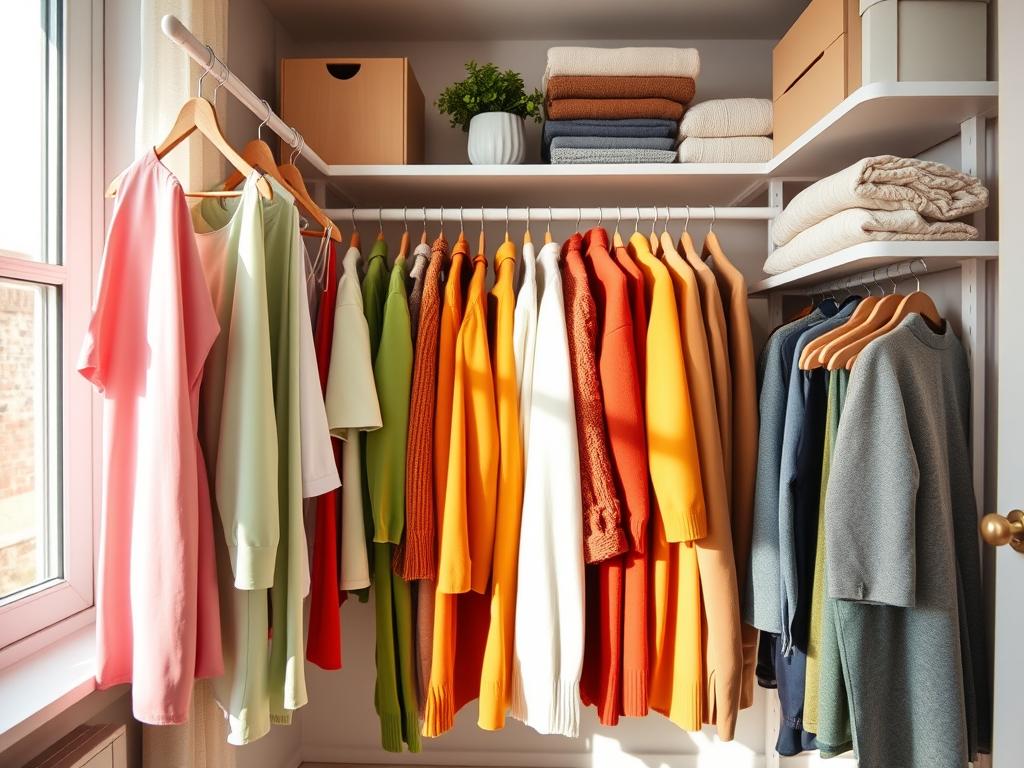
How to Rotate Clothing Seasonally
Start by finding out-of-season items. Move swimsuits, sundresses, or heavy coats into a staging area. Check each piece for stains, loose buttons, or hems that need repair.
Launder or dry-clean garments before storing. Use clear Sterilite plastic bins for casual items, breathable cotton bags for knits and silks. SpaceSaver vacuum bags work well for bulky coats and comforters.
Label containers with contents and dates. Move them to higher shelves, under-bed storage, or off-site places. Keep frequently used clothes within easy reach to maximize space.
Benefits of Seasonal Storage
Rotating seasonally reduces daily clutter and makes outfit selection faster. Fewer items on hangers improve visibility and create room for new purchases.
Proper storage protects clothing from dust, pests, and damage. Avoid long use of non-breathable plastic on delicate fabrics. Add cedar blocks or scented sachets to deter moths and keep freshness.
Tips for Efficient Rotation
Create a seasonal inventory checklist to track stored items. Use color-coded bins or simple labels to find clothes at a glance.
Rotate at predictable times, like spring and fall. Keep a short spreadsheet or notes app listing container contents and storage spots to speed retrieval.
Combine these hacks with regular small closet decluttering to maintain order. Small, steady habits help maximize closet space year-round.
Maximizing Drawer Space Effectively
A few smart choices make a big difference when you want to maximize drawer space in a small closet. Simple inserts and clear containers turn deep drawers into tidy zones for daily items. The right approach pairs drawer organizers with thoughtful folding to keep everything visible and easy to reach.
Drawer Dividers and Organizers
Inserts that segment drawers are good for socks, underwear, and camisoles. The Container Store offers modular grids for custom layouts. IKEA SKUBB boxes fit narrow drawers and stack neatly.
Bed Bath & Beyond carries foam and bamboo trays to separate small items without wasting drawer depth. Choose adjustable dividers to adapt storage needs over time. Use shallow compartments for thin items and deeper ones for bulky pieces.
Good dividers save time and help keep small closets organized.
Storing Accessories and Small Items
Jewelry, watches, belts, and sunglasses benefit from small trays and modular inserts. Magnetic strips keep metal items secure and easy to grab. Clear-lidded organizers let you see frequently used pieces instantly.
Stackable boxes work well for seasonal accessories. Label lids lightly to rotate items easily. These storage solutions protect delicate pieces and cut clutter in tight spaces.
Ideas for Folded vs. Hanging Items
Decide what to fold and what to hang based on weight and wrinkle risk. Fold heavy knits and T-shirts to save hanging space. Hang dresses, blazers, and clothes that crease easily.
Maximize vertical hanging space by grouping shorter items above a second rod. Keep folded stacks shallow to prevent them from toppling. Combine shallow drawers with hanging zones to fully use drawer space while keeping the closet balanced and functional.
Customizing Your Closet with Baskets and Bins
Smart use of baskets and bins turns cramped shelving into efficient storage. An organized small closet depends on choosing containers that match shelf depth, aesthetics, and function.
Small closet organization improves quickly when containers are grouped by use and visibility.
Selecting the Right Storage Containers
Material choice affects both look and function. Woven baskets add texture for open shelves and guest closets. Clear plastic bins provide instant visibility for seasonal items and off-season gear.
Fabric bins keep lightweight items neat. They also collapse for storage between uses.
For most U.S. closet shelves that measure 12–14 inches deep, choose shallow bins no more than 10–12 inches deep. This leaves space for hanging items.
Taller shelves benefit from stackable clear bins. Meanwhile, 8–10 inch cube-style baskets work well on pantry-style racks.
Retailers offer wide selections. The Container Store has premium options, IKEA provides modular systems, Target offers budget-friendly picks, and Amazon supplies fast variety.
Mixing brands helps balance price and durability.
Labeling Baskets for Easy Access
Labels cut search time and keep a system working. Use waterproof labels in bathrooms, chalkboard tags for flexible labeling, or printed labels for a uniform look.
Match label style to shelf materials to avoid sticky residue. Organize labels by category and frequency of use, like Daily Accessories, Winter Hats, and Rarely Worn.
Pair labels with a simple inventory sheet or a phone photo of each shelf to speed retrieval and restocking.
Bins for Shoes and Accessories
Shoe storage should protect shape and save space. Clear shoe boxes allow quick identification. They stack neatly.
Stackable shoe shelves and under-shelf shoe racks maximize vertical space in an organized small closet.
Hanging shoe organizers work well on closet doors or a secondary rod. For leather or suede, use dust bags or cedar shoe trees to prevent creasing and moisture damage during seasonal rotation.
| Storage Type | Best For | Typical Shelf Depth | Recommended Retailers |
|---|---|---|---|
| Woven Baskets | Open shelving, aesthetics, bulky sweaters | 10–14 inches | The Container Store, Target |
| Clear Plastic Bins | Visibility for seasonal items, stackable storage | 10–12 inches | Amazon, IKEA |
| Fabric Bins | Lightweight accessories, toys, linens | 8–12 inches | Target, IKEA |
| Clear Shoe Boxes | Individual shoe protection and display | 6–10 inches | Amazon, The Container Store |
| Stackable Shoe Shelves | Maximizing vertical shoe space | 10–14 inches | IKEA, Target |
Utilizing Closet Doors for Extra Storage
Closet doors offer untapped potential for small closet organization. The back of a door can store shoes, scarves, belts, and jewelry. This saves floor and shelf space.
Inside Door Storage Solutions
Over-the-door organizers like Whitmor shoe pockets or Home Basics slim pockets fit well in tight spaces. Choose low-profile options when hallways are narrow. This avoids blocking traffic.
Door-mounted shelving units hold folded items firmly. Check load limits before you install them. Soft fabric pockets hold accessories using little room.
Rigid racks fit heavier items. Buyers should check each hook’s weight limit. Use anchors for stronger support if needed.
Hooks and Racks for Accessories
Hooks and racks offer easy access for bags, hats, belts, and scarves. Renters can use Command Hooks for no-permanent-damage solutions. Homeowners should choose screwed-in hooks or metal racks for heavier loads.
Place hooks at varied heights to store long scarves without tangling. A short row near the center keeps daily items reachable. Use a slim rail to add multiple hooks in tight spaces.
Concealed Storage Ideas
Concealed storage reduces visual clutter and keeps valuables private. Behind-the-door pockets hide small items like watches or wallets. A shallow cabinet mounted on the inner door stores jewelry and small accessories neatly.
These hidden solutions keep bedrooms looking clean. They help by moving less-used items to quiet door storage. Essentials remain easy to find this way.
| Solution | Best For | Typical Load | Recommended Brand |
|---|---|---|---|
| Over-the-door shoe organizer | Shoes, small accessories | Light to medium (10–30 lbs) | Whitmor |
| Slim pocket organizer | Scarves, belts, sunglasses | Light (up to 10 lbs) | Home Basics |
| Command adhesive hooks | Renters, temporary use | Light (varies by size) | Command |
| Wall-mounted metal rack | Heavy bags, hats | Medium to heavy (30–75 lbs) | Professional hardware brands |
| Shallow door cabinet | Jewelry, valuables | Light to medium (up to 25 lbs) | Custom or specialty organizers |
Tips for Maintaining Closet Organization
Keeping a small closet neat requires simple routines and good habits. Readers will find practical tips for busy schedules. Start with easy steps to stop clutter from coming back.
Regular Decluttering Habits
Do a mini-declutter every three months. Remove items that are damaged, don’t fit, or are never used.
Use the one-in, one-out rule to stop buildup and keep your closet slim.
Donate wearable clothes to places like Goodwill or The Salvation Army. Sell valuable items on apps like Poshmark or Facebook Marketplace for extra cash.
Seasonal Check-ins for Organization
Twice a year, in spring and fall, do deep checks. Rotate seasonal clothes and wash stored garments.
This keeps fabrics fresh and frees space for seasonal clothing.
Check for pests and moisture each time. Fix or replace broken hangers, rods, and shelves to avoid sudden collapses.
Using a Maintenance Checklist
Use a short checklist to keep your small closet tidy. Measure free space and relabel bins when contents change.
Inspect hangers for signs of wear. Tidy drawer dividers and snap a photo of your organized closet.
Set reminders on your phone or calendar for regular upkeep.
| Task | Frequency | Tools |
|---|---|---|
| Quick tidy and one-in, one-out check | Weekly | Laundry basket, donation bag |
| Quarterly mini-declutter | Every 3 months | Labels, trash/recycle bins, donation box |
| Seasonal rotation and deep clean | Spring and Fall | Storage bags, moth deterrent, detergent |
| Maintenance checklist review and photos | Every 6 months | Smartphone, measuring tape, replacement hangers |
Consistent care makes it easy to keep a small closet from becoming messy. These tips help maintain an organized closet with less effort.
Inspiration from Small Closet Makeovers
Design platforms like Houzz and Apartment Therapy show many small closet makeovers. They turn cramped reach-in spaces into efficient storage areas.
Common updates include adding dual-level hanging systems, built-in shelves, and focused lighting. These changes make small closets feel larger and more usable.
Before-and-after ideas often follow a clear playbook. Remove a bulky dresser to free floor space. Add vertical shelving for folded items. Replace mismatched hangers with uniform slimline ones to increase capacity.
These simple changes are popular small closet design ideas. They improve storage and make daily use easier.
DIY closet organization projects are easy for homeowners and renters. Tasks include installing tension shelves and painting the interior a light color for better visibility.
You can add stick-on LED puck lights or motion-sensor strips. Building floating shelves with L-brackets also helps. Modular shelving kits from IKEA or The Container Store provide quick improvement.
Basic tools like a drill, level, and stud finder make these closet hacks safer and more precise.
Professional organizers suggest a few focused steps: declutter first, measure twice, and create zones for different clothes. They recommend investing in slimline hangers, clear bins, a second rod, and good lighting.
Resources from the National Association of Productivity & Organizing Professionals (NAPO) and popular U.S. organizing blogs offer more guidance. These help anyone thinking about a small closet makeover or custom solutions.