

Nearly 70% of Americans say they waste at least five minutes each day searching for clothes. This adds up to weeks of lost time each year. Small closet mistakes cause this big loss.
This guide helps readers spot common closet errors. It offers clear, practical steps to fix them. The focus is on everyday problems that reduce efficiency and cause frustration.
These issues also shorten garment life in U.S. homes, apartments, and walk-in closets.
Readers will learn to avoid common slip-ups like skipping declutter sessions and neglecting maintenance. Design mistakes include ignoring vertical space and using wrong hangers.
Aesthetic missteps like poor lighting and mismatched colors also cause problems.
Fixing these wardrobe blunders saves time and protects clothing. It frees up usable closet space. Benefits include faster outfit choice, fewer lost items, and less money spent on replacements.
The article targets busy professionals, families, renters, or homeowners seeking a hands-on how-to guide. Each section covers a single mistake with practical tips. It provides product examples like ClosetMaid, Rubbermaid, and IKEA SEKTION.
The guide includes step-by-step fixes you can try this weekend.
Not Decluttering Regularly
Keeping a closet tidy starts with one simple habit: regular decluttering. Skipping this step causes common closet problems to build up over time. Small upkeep stops overcrowding and helps you see items better.
It also lowers decision fatigue when picking clothes to wear each day.
Importance of Regular Decluttering
Regular decluttering improves your choices and reduces stress. Studies show that wearing more of your clothes increases outfit options and eases decision fatigue. Marie Kondo-style tips—keep what sparks joy—work well for many people.
Many organizers suggest the one-year rule: if you haven’t worn it for a year, you can let it go.
How Often to Declutter
Simple schedules help keep decluttering easy. Check monthly for expired items, damaged clothes, and obvious clutter. Do deep declutters every 3–4 months to match wardrobe seasons.
A full yearly purge helps reset your closet. Short, 15–30 minute sessions make decluttering less overwhelming.
This method prevents common closet mistakes and stops big decluttering problems.
Signs It’s Time to Declutter
Several signs show when your closet needs decluttering. Full hangers, duplicate items, tags still attached, and clothes unworn for a year are clear warnings. Stained or damaged clothes and constant laundry overflow show trouble too.
Consider donating to Goodwill, The Salvation Army, or local shelters. For worn textiles, use Planet Aid or local textile recycling programs to avoid landfill waste.
Ignoring Vertical Space
Many closet mistakes come from ignoring vertical space. Small closets feel cramped when focusing only on eye-level storage. Using the full height frees floor space for daily use.
Utilizing High Shelves
Upper shelves are best for items used rarely, like seasonal clothes, luggage, and keepsakes. Store these in labeled bins for easy finding. Clear plastic bins from Sterilite or IRIS show contents well. Wicker baskets with labels add warmth without losing order.
Adding Hooks and Racks
Wall hooks, over-the-door racks, and pulley systems use narrow vertical spaces for bags, scarves, hats, belts, and ties. Renters can use 3M Command adhesive hooks to avoid drilling walls. Permanent options include drilled hooks and mounted racks for heavy or frequent use.
Choosing Tall Storage Solutions
Tall wardrobes, slim tallboys, and closet systems like ClosetMaid, Easy Track, or Elfa use unused ceiling height. Measure ceiling clearance and leave 6–12 inches at the top to reduce dust and allow airflow.
Taller units often need step stools like Rubbermaid folding stools for safe access. These methods reduce clutter and fix common closet errors by maximizing vertical space. Proper setup and product choice help prevent tipping and make daily use easier.
Overloading Hanging Rods
One common cause of wardrobe blunders is ignoring how much weight a single rod can hold. Too many heavy coats or denim pieces on one bar cause sagging and damage. Simple checks and small changes stop these closet mistakes before they start.
Assessing weight limits
Most systems from IKEA, ClosetMaid, and similar brands list load ratings in their manuals. If that info is missing, assume a wooden or plastic rod holds less weight than a metal one. Upgrading to metal or reinforced rods lowers the risk of failure.
When possible, spread heavy items across two rods or add a center support. This prevents sagging and damage to your closet hardware.
Types of hangers to use
Hanger types affect space, shape, and garment life. Velvet slimline hangers save space and stop slipping. Wooden hangers support suits and coats to keep their form.
Padded hangers protect delicate silks and knits. Leave about 1–2 inches between garments to cut down wrinkling and visual clutter.
Balancing the load
Place heavy items like winter coats and denim on lower rods when you have a double-hang setup. Put lighter blouses and shirts on upper rods to balance stress on the frame.
Double-hang systems increase capacity while keeping any single rod from bearing too much weight. Rotate seasonal pieces regularly to avoid long-term pressure and reduce common closet organization mistakes.
Addressing these points helps prevent common wardrobe blunders and keeps the closet functional. Avoiding overloading hanging rods is one of the top closet mistakes people make.
Failing to Categorize Items
Many closet mistakes happen when items are tossed together without a clear plan. Failing to categorize slows daily choices and invites clutter. Simple grouping saves time, cuts impulse buys, and keeps inventory accurate.
Benefits of categorization
Categorization brings speed and clarity. When shirts, pants, and dresses have defined zones, search time drops.
Outfit planning becomes easy. Inventory checks show gaps so shoppers avoid buying repeats. These gains fight common closet mistakes and organizing errors.
Effective grouping strategies
- Group by type: keep pants, shirts, dresses together to simplify selection.
- Group by use: separate workwear, casual clothes, and formal attire for quick access.
- Group by frequency: place daily wear within reach, and special-occasion items higher up.
Label shelves and use matching hangers for visual order. Subdivide shelves with bins for socks, belts, and underwear.
Tech users can track inventory with closet apps or spreadsheets. These steps prevent organizing faux pas and common closet mistakes.
Seasonal vs. year-round items
Rotate clothing to keep the closet balanced. Store off-season garments in labeled vacuum-seal or breathable garment bags on high shelves.
Use Sterilite bins or Ziploc vacuum bags for bulky coats. Store out-of-season shoes under the bed.
Keep year-round essentials front and center. Swap items predictably each season so the closet stays neat. This avoids categorization errors and closet mistakes.
Choosing the Wrong Storage Solutions
Picking the right storage can prevent common storage mishaps and closet mistakes. A few smart choices make daily routines smoother. They also protect garments from damage.
This section outlines options. It guides selection of bins and baskets. It also compares custom closets and pre-made systems.
Understanding Different Storage Types
Hanging organizers work well for scarves, ties, and shoes. Shelving units fit folded sweaters and bins. Modular systems give flexibility for changing needs.
Built-in cabinetry boosts resale value and looks polished. Clear plastic bins offer visibility and stackability. Woven baskets bring breathability and style.
Garment racks serve short-term or overflow needs. They are handy for renters and staged homes.
Selecting the Right Bins and Baskets
Material matters when choosing bins and baskets. Plastic bins resist moisture, stack neatly, and are easy to clean. Woven baskets let air circulate and add texture to a closet.
Fabric bins work for light items and soft goods. Size consistency helps when stacking. It keeps shelves tidy and predictable.
Clear labeling improves visibility. It reduces time spent hunting for items.
Brands like The Container Store, IKEA, and Target’s Threshold line provide reliable, budget-friendly options. Consumers should weigh durability, appearance, and use. Avoid wrong storage choices by testing containers before big purchases.
Custom vs. Pre-Made Solutions
Custom systems from California Closets or The Container Store deliver tailored layouts. They maximize every inch and excel in odd-shaped spaces. These options offer long-term value but cost more.
Pre-made systems from ClosetMaid or Rubbermaid are affordable and simple to install. They suit budgets, rental rules, or short-term needs. Though less space-efficient, they allow easy updates and replacements.
| Feature | Custom Install | Pre-Made System |
|---|---|---|
| Cost | Higher upfront investment | More budget-friendly |
| Fit | Tailored to odd layouts | Standard sizes; may leave gaps |
| Installation | Professional install required | DIY-friendly |
| Flexibility | Designed for long-term use | Easy to swap pieces |
| Resale Value | Can increase home value | Little impact on resale |
Not Maximizing Drawer Space
Drawers often hide common closet organization mistakes. When messy, daily routines slow down and storage problems grow. A small plan can bring order.
It also makes it easy to find socks, tees, and accessories.
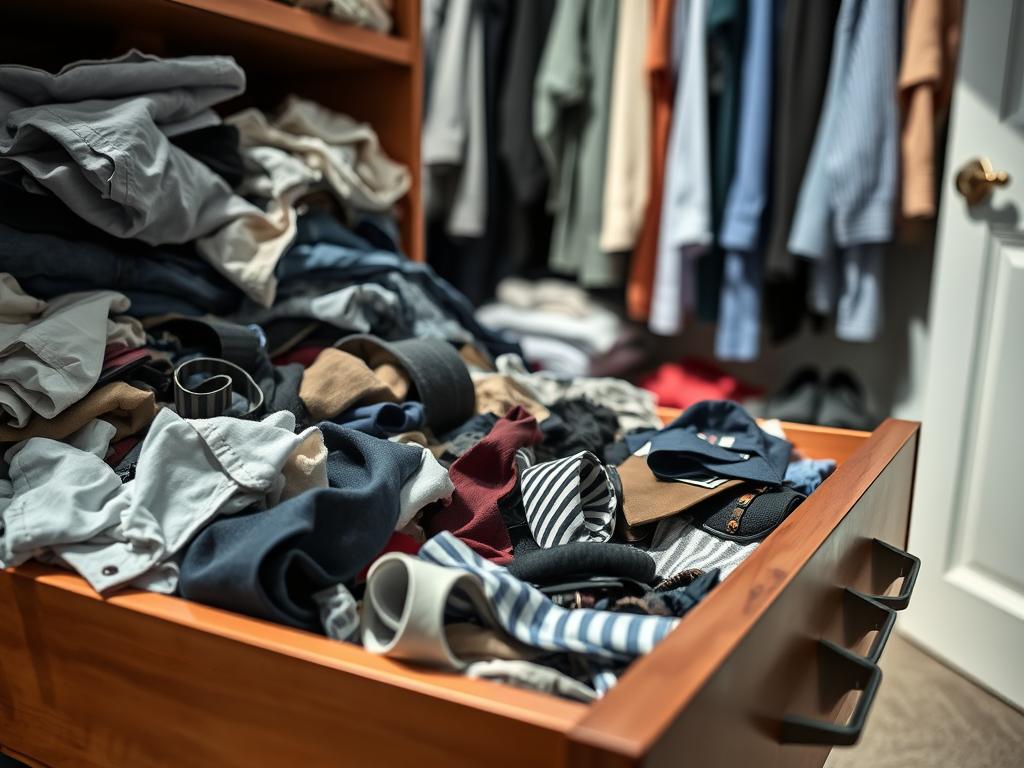
Use drawer dividers to stop items from mixing. Adjustable wood dividers suit deep drawers well. Plastic compartments are best for small accessories.
Fabric organizers hold soft items and move easily when cleaning. Dividers help with socks, underwear, jewelry, and belts. This speeds up your morning routine.
It also keeps things neat. Avoid stuffing mixed items together until your drawer is unusable. This is a common closet mistake.
Store shirts, leggings, and thin items vertically. Roll and file clothes in a standing row to save space.
You can see every piece this way. For bulkier items like sweaters, stacking horizontally protects their shape.
Give each drawer a clear purpose: underwear, activewear, or loungewear. Don’t overfill drawers, as it stops them from sliding well.
Overpacked drawers cause wrinkles and more storage problems. Keep frequently used items in shallow drawers for easy access. Put folded bulky items in deep drawers to use space well.
Use quality drawer liners to protect furniture and keep items from slipping. Simple changes stop common closet mistakes.
Small organizers and clear rules for each drawer cut clutter. This creates a calm and useful closet space that lasts.
Disregarding Lighting
Good lighting changes a closet from confusing to a dependable dressing space. Many closet errors come from poor lighting. Bright, even light shows true colors, reduces outfit mistakes, and makes small closets seem bigger.
Ignoring lighting causes items to be missed and the space to feel messy.
Importance of Good Lighting
Proper light makes every shelf and drawer visible. It shows colors correctly, which stops outfit mismatches. A bright closet helps maintain order because items are easy to find.
Types of Lighting Solutions
Battery-operated LED puck and strip lights fit renters and quick setups. Plug-in LED strips give bright, steady light for hanging areas. Motion-sensor lights add hands-free ease and save energy.
Hardwired recessed or track lighting suits built-in closets needing permanent upgrades. Choose color temperatures from 3000–4000K for warm, natural light that shows true colors.
Installation Tips for Closets
Use motion sensors to save energy and simplify access. Add under-shelf lighting on deep shelves to see items at the back. For hardwired lights, follow electrical codes and hire licensed electricians.
Place fixtures to avoid shadows on clothes and inside drawers.
Smart lighting brands like Philips Hue offer control and color tuning. Lutron provides dimming and scene options for custom brightness.
Good lighting stops closet mistakes and improves the whole organization system.
Skimping on Maintenance
Neglecting small upkeep tasks turns a tidy closet into a problem area. Brief, consistent attention prevents common storage mishaps. It also stops minor issues from becoming costly repairs.
The following checklist helps avoid the top closet mistakes many homeowners make.
The Importance of Weekly Checks
A weekly sweep keeps things orderly. It returns stray items to their places and catches stains early. It also clears laundry before it piles up.
Simple checks reduce clutter and limit the chances of closet mistakes.
Inspect hangers and rods during each check. Replace broken hangers and tighten loose screws. These small fixes prevent rod sagging and damaged garments.
Seasonal Maintenance Routines
Seasonal maintenance needs deeper care. Before storing winter coats, wash or dry-clean them and repair loose buttons.
Rotate seasonal items so frequently used pieces stay accessible.
Clean shelves and vacuum floors each season. Air out stored garments to cut mildew risk. Use cedar blocks or lavender sachets to deter moths and keep fabrics fresh.
Common Issues to Look For
Watch for rod sagging, broken hangers, dust buildup, moisture spots, insect damage, and overstretched elastic. These problems happen when people skimp on maintenance.
- Replace broken hardware and reinforce weak rods.
- Use silica gel packets in bins to control humidity and prevent mildew.
- Seal delicate items in breathable containers when long-term storage is needed.
Adopting simple maintenance routines prevents many storage mishaps. Regular care keeps closets functional and helps avoid frustration in busy households.
Not Personalizing the Space
Leaving a closet generic often leads to neglect. Owners who skip personalization turn a useful storage area into a bland utility zone.
Small touches make the space inviting and reduce common closet mistakes that slow daily routines.
Incorporating Personal Touches
A framed photo, a scented diffuser, or a decorative basket adds warmth and encourages upkeep. A mirror helps with outfit checks while a small tray keeps jewelry tidy.
These simple additions prevent organizing errors by making the closet feel cared for.
Reflecting Lifestyle Needs
Design the layout around daily habits. Commuters should place workwear and shoe storage near the door for quick access.
Parents benefit from lower shelves and labeled baskets for kids’ clothes and toys. Flexible options like a hanging valet rod or a laundry bin help streamline mornings.
Organizing for Accessibility
Apply universal design ideas to improve reach and safety. Keep frequently used items at eye level and place occasional items higher.
Lower shelves should be reachable for children or people with limited mobility. Pull-out shelves, soft-close drawers, and lever-style handles reduce strain and support long-term use.
Forgetting About Shoe Storage
Many people overlook shoe storage when planning a closet. This leads to mistakes that pile up over time.
Small changes prevent wardrobe blunders and make daily routines easier.
Explore practical shoe storage options to use space well. A clear plan cuts closet mistakes and keeps shoes accessible.
Exploring Various Shoe Storage Options
Open shoe racks work well for everyday pairs. They offer quick access and good ventilation.
Cubbies separate pairs by type. Over-the-door organizers save floor space in small closets.
Clear shoe boxes protect from dust and make it easy to see shoes. Under-bed storage keeps off-season shoes out of sight.
Vertical shoe towers use height and fit narrow spaces. Each option suits different needs and closet layouts.
Benefits of Shoe Racks vs. Boxes
Open shoe racks offer fast selection and airflow. They suit daily wear and sports shoes.
Clear boxes stack neatly and protect from dust. The Container Store sells popular boxes with easy identification.
Boxes save space for long-term storage. Racks keep frequently worn shoes visible and ready.
For leather shoes, breathable bags stop moisture and protect finishes better than sealed containers.
Tips for Organizing Shoes Effectively
Place most-used shoes at eye level. Group shoes by how often you wear them or by type: work, casual, or athletic.
Use shoe trees on leather pairs to keep shape. Clean shoes before storing them to avoid stains and smells.
Rotate seasonal shoes to avoid crowding. In tight closets, pick slim over-the-door or hanging shoe pockets to clear floor space.
| Storage Type | Best Use | Pros | Cons |
|---|---|---|---|
| Open Shoe Racks | Daily wear, easy access | Ventilation, quick visual pick | Exposed to dust, less stackable |
| Cubbies | Organized pairs, varied sizes | Neat separation, customizable | Requires space, fixed compartments |
| Over-the-Door Organizers | Small closets, entryways | Floor space saved, low cost | Limited capacity, weight limits |
| Clear Shoe Boxes | Seasonal and long-term storage | Stackable, dust protection, visible | Less breathable, takes box space |
| Under-Bed Storage | Off-season shoes | Out of sight, good for bulky items | Harder access, limited height |
| Vertical Shoe Towers | Narrow closets, vertical space | Maximizes height, compact footprint | May be unstable, limited width |
Overlooking Seasonal Changes
Many homeowners treat wardrobe updates as an afterthought. Overlooking seasonal changes causes cluttered closets and damaged garments.
This also means extra time spent hunting for daily outfits. A focused approach protects closets from common closet mistakes.
Clear routines cut down on stress during seasonal transitions. Simple habits prevent decluttering missteps. The guidance below offers practical steps and storage tips.
Importance of Seasonal Organization
Seasonal organization stops overcrowding and preserves fabric quality. Rotating items on schedule keeps bulky coats from taking over spring space.
Summer dresses stay wrinkle-free. This planning saves time searching and lowers the risk of damage to favorite garments.
Strategies for Seasonal Transitions
Follow a short, repeatable checklist at each swap. First, assess current-season wear and set aside pieces for repair or donation.
Next, launder and mend items before moving them to storage. Then rotate clothing between accessible and long-term storage zones.
- Create a seasonal checklist and set calendar reminders around spring and fall climate shifts.
- Label boxes or update a simple inventory list to track where items live.
- Use clear bins for visibility and keep frequently used off-season pieces within easy reach.
Preserving Off-Season Items
Choose breathable garment bags for coats and suits. Use vacuum-sealed bags cautiously for bulky bedding and delicate fabrics.
Store wool with cedar blocks or in a cedar chest to repel moths. For valuable garments, consider climate-controlled storage to avoid humidity damage.
Avoid common mistakes like trapping items in ordinary plastic bags that hold moisture. Add silica gel packs or moisture absorbers when needed.
These small steps prevent decluttering missteps and support long-term garment care.
| Item Type | Recommended Storage | Common Pitfall |
|---|---|---|
| Wool sweaters | Cedar chest or breathable cotton bag with cedar blocks | Plastic bags that trap moisture and attract moths |
| Coats and suits | Breathable garment bags on wide hangers | Overcrowded rods that crush fabric |
| Bulky bedding | Vacuum-sealed bags with careful monitoring | Compressing delicate fibers without protection |
| Delicate dresses | Acid-free tissue paper in breathable boxes | Hanging in direct sunlight or tight plastic |
| Seasonal shoes | Clear stackable boxes with silica gel packs | Loose piles that deform shape |
Avoiding Color Coordination
Color makes a closet feel intentional. Arranging garments by hue or from light to dark turns cluttered shelves into a boutique-style display. This step lifts the room’s visual appeal and makes the space easier to maintain.
Enhancing Aesthetics Through Color
Sorting by color creates a clean, cohesive look that motivates upkeep. Grouping shirts, pants, and dresses into color families makes the closet look organized at a glance. Using consistent hanger types and spacing improves the effect and stops mistakes that break the visual flow.
Practical Benefits of Color-Coding
Color-coding also speeds up daily decisions. It shortens how long it takes to pick outfits and helps with quick inventory checks. It shows gaps, like a lack of neutral tops, so buying is smarter.
Travelers find packing easier when items are grouped by tone. Taking a quick photo of the arrangement serves as a handy reference.
Tips for Color Coordination Strategies
Start by sorting garments—shirts, pants, and dresses—then arrange by color within each group. Use rainbow order for big wardrobes or monochrome blocks for smaller ones.
Small closets should be flexible with categories to keep outfit options open. Add color-coded labels or shelf tags for accessories to extend the system. Use apps or photos to record the layout for easy restoration. This helps avoid missing out on color coordination, a key closet mistake.