

Nearly 40% of Americans say they have too many clothes and not enough closet space. This gap makes small changes very valuable. Even minor adjustments can lead to big gains in organization.
This guide shows practical, low-cost steps anyone in the United States can use. It follows professional advice from the National Association of Productivity & Organizing Professionals (NAPO). They suggest sorting items into keep, donate, sell, and trash piles before buying storage solutions.
Readers will find affordable closet organization ideas from Good Housekeeping and The Spruce. Examples include tension rods, clear bins, and thrifted shelving. This guide also includes budgeting tips from NerdWallet and The Balance. These tips show how modest spending cuts replacement costs and saves time.
The article offers a simple plan: assess your space first and set a realistic budget. Next, try DIY builds and shop smart for budget-friendly closet solutions. Finally, adopt maintenance routines to keep your closet organized for the long term.
Understanding the Importance of Closet Organization
An organized closet changes daily routines. It cuts time spent hunting for clothes and preserves garments. It also frees up usable space.
Small, strategic moves can deliver big results. These changes do not require a large spend.
Benefits of an Organized Closet
Easy outfit selection saves minutes each morning. It reduces wardrobe anxiety and stress.
Better garment care, like proper hanging and separation, lowers wear and replacement needs. Consumer editors at Real Simple and Good Housekeeping note this.
Visible, accessible items are less likely to be forgotten or damaged.
Increased usable space follows simple editing and smart storage choices. Clear grouping and labels also improve visibility.
These changes reduce impulse purchases. They support budget closet organization tips that maximize what already exists.
How Organization Saves Time and Money
Time savings add up over weeks. A study by the Bureau of Labor Statistics shows small daily efficiencies compound.
Less time searching means more time for work or family tasks.
Cost savings are measurable. Avoiding duplicate buys and reducing premature replacements cuts recurring expenses.
Consumer finance analyses estimate modest monthly savings from planning purchases. Tracking clothing condition also helps. These results come from saving money strategies like inventory lists and seasonal audits.
Psychological Benefits of Decluttering
Decluttering lowers stress and decision fatigue. Studies in environmental psychology link tidy spaces to reduced cortisol and clearer focus.
People report better mood and easier bedtime routines when their living spaces feel orderly.
Improved sleep and daily rhythm follow from less visual clutter. These mental health gains reinforce cost-effective closet storage choices emphasizing simplicity and consistency.
| Benefit | Practical Action | Estimated Impact |
|---|---|---|
| Faster Mornings | Group outfits, use visible storage | Save 10–20 minutes per day |
| Lower Replacement Costs | Proper hanging, seasonal inspections | Reduce clothing spend by 5–15% yearly |
| Reduced Impulse Buys | Keep inventory list, set a 24-hour rule | Save $20–$50 per month |
| Better Mental Health | Regular declutter sessions, clear surfaces | Improved focus and lower stress scores |
| Space Gain | Remove unused items, use slim hangers | Gain up to 25% more usable space |
Assessing Your Closet Space
A careful assessment sets the stage for smart spending and effective change. Measuring the space and listing existing components helps you focus your budget.
This step keeps the plan practical and focuses on budget-friendly closet solutions and low-cost organization ideas.
Measuring dimensions
Measure width, depth, and height before shopping. Use a tape or laser measure and note door swing, shelf depths, and usable vertical clearance.
Record the distance from floor to lowest shelf and from top shelf to ceiling. Sketch the layout on paper or with a phone app to include window or HVAC intrusions.
Know common closet types to guide choices. Reach-in closets often span 3 to 8 feet and usually work with single rods.
Walk-in closets offer more vertical options and may need modular systems. Reach-through layouts require attention to door clearances when adding racks or baskets.
Identifying storage pieces
List existing shelves, rods, drawers, shoe racks, and hardware. Note what works and what should be repaired, repurposed, or donated.
Measure shelf depths and rod heights so replacements match usable space. Check for familiar brands like IKEA ALGOT, ELVARLI, and ClosetMaid.
Note component sizes and attachment styles. Small upgrades to these systems provide budget-friendly solutions by fitting existing parts instead of replacing units.
Recognizing clutter hotspots
Check for trouble spots: floor piles, overflowing shelves, underused vertical space, and seasonal overflow. Look for signs items need attention, like wrinkled clothing or missing shoe pairs.
Photograph problem areas from different angles for a before-and-after record. Photos help when choosing low-cost ideas like clear shoe boxes or hanging shelves.
Once measurement, inventory, and hotspot checks are complete, choices become targeted and efficient. This approach prevents impulse buys and stretches funds for the best budget-friendly solutions.
Budgeting for Your Organization Project
A clear budget turns a messy plan into a manageable project. Assess your closet size and note priority problems like shoe crowding or lack of hanging space.
Pick a target range before shopping. This approach keeps purchases purposeful and helps save money on closet organization.
Use practical ranges to guide your expectations. For a minimal refresh, set $25–$100 for bins and hooks.
For solid DIY upgrades, plan $100–$300 for shelving and new rods. For a near-professional overhaul, budget $300 or more.
Add a 10–15% contingency for surprises.
Setting a Realistic Budget
Start by prioritizing needs over wants. List must-haves first, like shoe racks or more hanging space, then optional upgrades.
Match the total budget to your closet size and timeline. This method helps find affordable ways to organize without overspending.
Allocating Funds for Supplies
Break down costs by item to allocate funds where they matter most. Typical prices include clear plastic bins ($5–$20) and slim hangers ($10–$30).
Also consider tension rods ($7–$25), baskets ($5–$40), shelving materials ($10–$100), and basic hand tools ($10–$50).
Assign the biggest budget share to solutions that fix major problems. If shoes clutter your closet, spend on shoe organizers.
If you need better hanging space, invest in rods or double-hang systems. Choosing multipurpose items can stretch your budget further.
Tracking Expenses
Choose a simple tracking method: a spreadsheet, budgeting app like Mint or YNAB, or a paper ledger. Record every purchase and keep receipts for returns.
Track resale or donation values to find the net cost and show real savings from the project.
Time purchases around sales like Black Friday, Amazon Prime Day, and end-of-season clearance to lower costs.
Compare unit prices, buy multipurpose pieces, and delay nonessential items to maximize savings. These tips support budgeting and stress saving money on closet organization.
DIY Organization Solutions
Hands-on projects can transform a crowded closet without spending much money. This section covers practical steps for using household items again. It shows how to build simple shelves and pick baskets and bins to keep things neat. Emphasis is on fastening safely, finishing neatly, and finding materials affordably.
Upcycling everyday items
Use shoeboxes to hold belts, jewelry, and small accessories. Cover boxes with leftover paint or contact paper for a uniform look.
File organizers hold scarves and wrapping paper. Stand them on a shelf to keep soft items easy to reach.
Install tension rods low in the closet to hang shoes or roll scarves. Wooden crates can stack into cubbies for sweaters or tote bags.
Sand edges, stain or paint the crates, and seal corners to avoid splinters. When using ideas from Pinterest or YouTube, check load limits and fasten brackets and screws into studs when possible.
DIY shelving ideas
Floating shelves can be made with pre-cut boards from Home Depot or Lowe’s. Choose 1×12 boards, mark studs with a stud finder, and mount with floating or L-brackets for support.
Space shelves no more than 24 inches apart for typical clothing loads. For drywall without studs, use heavy-duty anchors rated for the expected weight.
Reclaimed wood makes a rustic shelf. Sand, stain, and seal the surface before use.
When assembling adjustable shelving with L-brackets, stagger bracket placement. Test each shelf with boxes before loading.
Creative uses for baskets and bins
Woven baskets hide clutter while adding texture to the closet. Clear Sterilite bins and IKEA KUGGIS fabric organizers make it easy to see and swap contents.
Group items by function: belts in one bin, hats in another, and seasonal clothing in stackable boxes. Labeling helps find things quickly.
Use chalkboard labels, a label maker, or paper tags tied with twine. Baskets also work well for items to donate. Swapping them out keeps the closet evolving with your needs.
These budget-friendly solutions keep the closet neat and adaptable.
| Project | Materials | Estimated Cost | Key Tip |
|---|---|---|---|
| Shoebox Accessory Tray | Shoeboxes, paint, contact paper | $0–$10 | Use leftover paint for a cohesive look |
| Tension Rod Scarf Rack | Tension rod, curtain rings | $5–$15 | Place rods between studs for extra strength |
| Floating Shelves | Pre-cut boards, brackets, anchors | $20–$60 | Find studs with a stud finder when possible |
| Stackable Crate Cubbies | Wooden crates, sandpaper, stain | $10–$40 | Seal edges to prevent splinters |
| Basket Grouping System | Woven baskets, clear bins, labels | $15–$50 | Label by category for quick access |
Affordable Storage Options
Creating tidy closets without overspending starts with smart shopping and reuse. A mix of discount retail finds, thrifted pieces, and online deals works best. This keeps quality high while saving money on closet organization.
Shopping at Discount Retailers
Retailers like Target, Walmart, IKEA, HomeGoods, and Big Lots offer many low-cost organizers. For example, check Target’s Threshold and Room Essentials lines, Walmart’s Mainstays, and IKEA’s SKUBB and KUGGIS options.
Focus on slim hangers, hanging organizers, and shoe cubbies. Compare price per unit and material thickness both in store and online. Sometimes, spending a little more on plastic or fabric units means they last longer and save money.
Exploring Thrift Stores and Garage Sales
Goodwill, Salvation Army, Habitat for Humanity ReStores, and garage sales can provide shelving, baskets, and furniture very cheaply. Inspect each item carefully for stability and hidden damage before buying.
Clean and disinfect used pieces, tighten loose screws, and add fresh paint or liners to refresh them. At garage sales, politely negotiate prices to get better bargains for your budget.
Online Resources for Budget Storage
Online sites like Amazon (warehouse deals), Facebook Marketplace, Craigslist, OfferUp, Freecycle, and eBay offer new and used bargains. Always check seller ratings and return policies to avoid costly mistakes.
Use coupon codes and cash-back services like Rakuten to cut costs. Measure your closet space and confirm product dimensions before buying. Choosing items that balance cost and durability saves money over time.
| Source | Example Products | Price Range | Tip |
|---|---|---|---|
| Target | Slim hangers, hanging shoe organizer | $5–$25 | Compare Target app prices and in-store clearance |
| Walmart | Wire shelving, Mainstays bins | $8–$40 | Buy multipacks for lower cost per item |
| IKEA | SKUBB organizers, KUGGIS boxes | $7–$50 | Measure before purchase; flat-pack saves space |
| Thrift/Resale | Wood shelves, baskets, dressers | $3–$60 | Inspect for damage; clean and repair as needed |
| Online Marketplaces | Warehouse deals, used shelving, modular units | $0–$100 | Check return policy and seller ratings |
Maximizing Vertical Space
Making the most of vertical clearance delivers big gains with small cost. This approach keeps spending low while having a high impact.
It follows practical budget closet organization tips. The section below covers simple, renter-friendly moves and more permanent installs.
These options can scale with your budget.
Utilizing shelves and hooks expands usable volume without widening the footprint. Stack clear plastic bins on upper shelves to keep items visible.
Place bulky items like luggage or winter bedding on the highest shelf, out of daily reach.
For hanging items, add heavy-duty screw-in hooks where studs are available. Renters can use Command hooks rated for different loads.
Choose the 5–7.5 lb size for scarves and the 16–22 lb options for backpacks. Everbilt and similar hardware offer metal hooks that hold 30–50 lb when mounted into studs or anchors.
Over-the-door organizers create instant storage without carpentry or major expense. Shoe pockets free up floor space.
Shelf-style hangers add a tidy row for sweaters or purses. Multi-pocket organizers keep small items like belts, gloves, and cosmetics visible and accessible.
Whitmor and mDesign make budget-friendly over-the-door styles for lightweight to moderate loads. Most fabric pocket organizers carry 5–10 lb per pocket.
To protect doors, place felt pads where the organizer touches the surface. Avoid overloading pockets near the hinges.
Installing a rack system is the next step for durable expansion. Adjustable closet rods and tension double-hang rods can immediately double hanging capacity.
Tension rods work well for renters when the rod fits snugly and the load stays balanced.
For a modular route, consider ClosetMaid ventilated wire shelving or IKEA options like ALGOT or BROR for heavier needs.
Use a stud finder to locate framing for secure fastenings. Choose drywall anchors rated for the expected load if studs are not available.
Level each shelf before tightening and test with incremental weight.
Prioritize vertical expansion before any horizontal remodeling. This sequence offers affordable ways to organize your closet quickly and effectively.
| Solution | Typical Cost | Load Guidance | Best Use |
|---|---|---|---|
| Clear stacking bins | $8–$30 each | 10–30 lb per bin | Seasonal clothing, linens |
| Command hooks (adhesive) | $5–$15 per pack | 5–22 lb depending on type | Light bags, hats, scarves |
| Everbilt screw-in hooks | $6–$20 per pack | 30–50 lb when in stud | Heavy coats, backpacks |
| Over-the-door pockets (Whitmor/mDesign) | $12–$35 | 5–10 lb per pocket | Shoes, accessories |
| Tension double-hang rod | $10–$25 | Hold full hanging rows if balanced | Double hanging for shirts and pants |
| ClosetMaid wire shelving | $30–$120+ | 20–50 lb per shelf with proper anchors | Modular shelving for varied items |
| IKEA ALGOT/BROR systems | $40–$200+ | Varies; BROR supports heavier loads | Expandable, budget modular builds |
Seasonal Closet Maintenance
Seasonal closet maintenance keeps a wardrobe useful and compact. A clear routine prevents clutter and protects clothing from damage.
The following steps pair practical rotation methods with simple review habits to support budget-friendly closet solutions.
Creating a System for Seasonal Rotation
Store off-season clothes in labeled bins on high shelves or under-bed storage to free daily space. Use vacuum-seal bags for bulky coats and comforters.
Choose breathable garment bags for silk and wool items. Keep a “seasonal swap” checklist to speed transitions.
Include items to move, cleaners to use, and scents like cedar blocks or lavender sachets to deter moths. These habits help organize closets on a budget.
Evaluating Items Annually
Schedule one annual review to judge wear, fit, and usefulness. Ask if an item is stained or worn less than twice a year.
Use clear criteria: condition, frequency of use, fit, and sentimental value. Donate usable pieces to Goodwill or local shelters.
Sell higher-value items on Poshmark, Mercari, or eBay to recover costs for supplies.
Planning a Seasonal Purge
Run a timed purge with four decision piles: keep, donate, sell, recycle. Set a 30- to 60-minute timer to avoid decision fatigue.
Label boxes and align donation drops with pickup schedules or community days to cut repeat visits. Track donated or sold items to measure space gained and savings earned.
Regular purges reduce costly overhauls and support budget-friendly closet care and seasonal maintenance.
Tips for Maintaining Organization
Keeping a closet tidy after a makeover is easier with simple routines and clear rules. Small, daily actions protect the time and money invested in storage solutions.
The following guidance draws on practical habits and budget-friendly strategies to keep systems working long term.
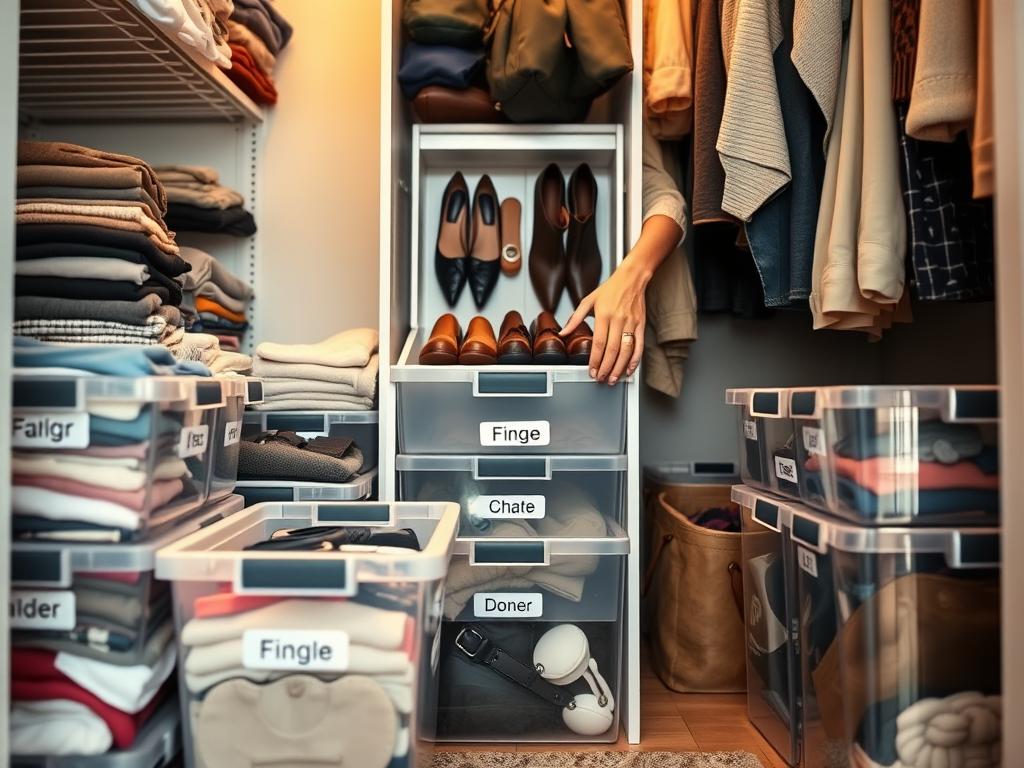
Daily Habits to Stay Organized
They should return garments to assigned spots each night. Hanging shirts and dresses immediately saves space and cuts ironing time.
When an item is worn, put it back on a hanger or into the laundry basket right away.
Uniform hangers reduce visual clutter and free up inches of rod space. A one-in, one-out rule limits accumulation. It also helps low-cost closet ideas last longer.
Short routines prevent the need for large weekend cleanups.
How to Deal with New Items
Before bringing purchases into the closet, decide where each item will live. If space is tight, remove a similar piece to make room.
Set a 30-day trial: if a new garment remains unworn, consider donating it.
Price-conscious shoppers benefit from lists and a 48-hour wait on nonessential buys. These affordable tips reduce impulse purchases and keep the wardrobe compact.
Periodic Reviews of Closet Space
Quarterly mini-checks catch wear, pests, and misplaced items early. An annual deep review helps reassess storage needs and plan replacements.
Photographing the closet during reviews makes problem areas obvious and tracks progress over time.
Budget closet organization tips work best when maintenance happens regularly. Disciplined upkeep protects investments in shelving, bins, and racks.
It also extends the life of low-cost closet organization ideas.
Conclusion: Embracing a Budget-Friendly Organized Closet
After small, deliberate steps, an organized closet on a modest budget becomes a reliable daily asset. A focused closet organization budget and affordable closet organization tactics save time each morning. They also reduce impulse buys.
Over months and years, these practices lead to fewer replacements and longer garment life. You also save money on closet organization choices.
Long-term benefits extend beyond finances. Reduced clutter lowers stress and improves decision-making. Consistent routines deliver daily satisfaction.
A strategic approach to budget-friendly closet solutions compounds value. Invest in low-cost organizers now, and reinvest savings toward durable items later.
For those ready to expand, next steps include tackling the pantry or garage. You can also save for modular units from IKEA, ClosetMaid, or The Container Store. Monitor sales cycles and set aside funds to afford upgrades without debt.
Start with assessment, set a realistic budget, and implement high-impact, low-cost changes. Maintain simple habits and periodic reviews to keep gains intact. With plain strategies and steady effort, affordable closet organization produces measurable improvements in comfort, time, and wallet.