

Americans spend about 55 minutes daily searching for lost items. This adds up to over 9 full days yearly lost to clutter and poor systems.
This guide offers a practical household organization checklist for people in the United States.
It provides a clear, room-by-room approach. Anyone can follow this easy plan to organize their home.
The step-by-step format moves logically: assess, plan, declutter, organize, maintain, then digitize.
Each stage has simple tasks and clear results, like less clutter and faster morning routines.
You’ll also see easier cleaning and better mental clarity after following these steps.
To start right away, gather basic supplies like boxes, trash bags, labels, and simple tools.
Then plan a 30- to 90-minute decluttering session to build momentum.
The checklist includes home organizing tips and clever hacks. It also suggests trusted resources.
These include The Container Store for storage, Marie Kondo’s KonMari method for decluttering, and EPA guidelines for donations and recycling.
By using this household organization checklist, readers get a repeatable system.
This system works room after room and task after task to keep homes neat and efficient.
Understanding the Importance of Home Organization
A tidy home changes how a household works day to day. When spaces are arranged with purpose, routines run smoother and stress eases.
The following subsections outline practical reasons to invest time in order. They also offer clear home organizing tips to start your checklist.
Benefits of a Well-Organized Home
Organized rooms make cleaning faster and free up usable space for living and play. Fewer trip hazards improve safety for children and older adults.
Neat storage boosts curb appeal when selling. Professional organizers and interior designers emphasize function and flow to increase daily comfort and home value.
Financial gains follow practical order. Households that track possessions buy fewer duplicates.
Meal prep becomes more efficient with a labeled pantry and a clear fridge. This reduces food waste. Lower stress from predictable systems can cut health costs.
How Clutter Affects Mental Health
Research links clutter to heightened stress and anxiety. Visual chaos forces the brain to process extra stimuli, which reduces focus and raises cortisol levels.
Psychology studies show that disordered spaces make tasks harder and choices more draining. Clutter also affects rest and routines.
A crowded bedroom can disrupt sleep. A messy entryway makes it harder to find essentials and adds friction to mornings.
Small, steady decluttering wins improve mood. Professional advice often suggests tackling one drawer at a time to build momentum.
Time Savings Through Organization
Systems save time. Labeled bins, a designated drop zone for keys and backpacks, and consistent end-of-day habits cut minutes from daily transitions.
Families commonly reclaim 10–20 minutes each morning when essentials are organized and visible. Tracking time saved in the first weeks shows proof of progress.
A simple home organization checklist helps measure returns. Seeing minutes add up motivates upkeep and highlights the value of routines and storage.
| Focus Area | Concrete Change | Typical Time Saved | Expected Benefit |
|---|---|---|---|
| Entryway | Install wall hooks, shoe rack, labeled basket for mail | 5–15 minutes/day | Easier exits, fewer lost keys, reduced morning stress |
| Kitchen | Organize pantry by category, label shelves, clear containers | 10–25 minutes/meal prep | Less food waste, faster cooking, fewer duplicate buys |
| Bedroom | Create designated laundry bin, under-bed storage, nightly tidy routine | 5–10 minutes/night | Improved sleep, calmer bedtime, easier outfit choices |
| Home Office | Use file folders, digital backups, cable management | 15–30 minutes/week | Better focus, quicker document retrieval, reduced tech frustration |
Assessing Your Space Before Organizing
Before starting, do a quick walkthrough to get clarity. Look for entryway clutter and crowded kitchen counters. Notice overflowing closets, piles of paperwork, garage storage issues, and scattered kids’ toys.
Take photos of these problem areas. This helps you track progress and plan your home organization.
Use simple categories to make decisions easier. Sort items by how often you use them—daily, seasonal, or rarely. Also, group by function like work, recreation, or storage.
This step sets up a practical decluttering checklist.
Identifying Areas to Organize
Walk through each room and find trouble zones. The entryway often becomes a drop point for bags and shoes. Kitchens show clutter on counters and in junk drawers.
Closets hide items that no longer fit or are unused. For garages and playrooms, note storage needs and safety issues. Bedrooms benefit from clear pathways and tidy surfaces.
Writing down these trouble spots creates a focused to-do list for organizing your home.
Evaluating Storage Options
Compare built-ins like closets and cabinets with freestanding shelving and under-bed boxes. Drawer organizers keep small items tidy. Vertical wall storage saves floor space.
Multi-use furniture, such as storage benches and ottomans, adds function without extra clutter. Consider cost, accessibility, space efficiency, and appearance.
Brands like IKEA, The Container Store, and Wayfair offer many price points. Measure niches and doorways before buying to avoid returns.
Repurposing existing furniture can cut costs and make assessing your space faster.
Taking Inventory of Items
List belongings by category. Write down quantities, note condition, and track how often you use each item. A simple spreadsheet, notebook, or apps like Sortly and Google Sheets work well for this.
Label items as donate, recycle, repair, or keep-to-store. This helps move smoothly to the next step.
Use your inventory to make a decluttering checklist that fits your real needs. When items are counted and sorted, decisions become clearer.
This clarity helps you keep going while organizing your home.
| Step | Action | Tools or Brands | Expected Outcome |
|---|---|---|---|
| Walkthrough | Identify trouble zones and photograph | Phone camera, notepad | Visual record for planning |
| Categorize | Sort by frequency and function | Labels, sticky notes | Priority map for tasks |
| Measure | Take precise dimensions of spaces | Tape measure, laser measure | Right-fit storage purchases |
| Compare storage | Weigh pros and cons of options | IKEA, The Container Store, Wayfair | Cost-effective, accessible solutions |
| Inventory | List items, quantities, condition, use | Google Sheets, Sortly, notebook | Actionable decluttering checklist |
| Label decisions | Mark donate, recycle, repair, store | Color labels, app tags | Faster decluttering and removal |
Creating an Action Plan
Before starting tasks, a clear plan helps turn your intention into real progress. This guide shows practical steps to create action plan items. It links these steps to a home organization checklist. It also offers home organizing tips to keep your momentum steady.
Setting Realistic Goals
Begin with SMART goals for each space. For example, aim to reduce kitchen countertop items by half within two weekends. Breaking large jobs into small steps prevents feeling overwhelmed and builds confidence.
Estimate the time, supplies, and costs for each goal. Clear estimates make it easier to add tasks to calendars. This helps you follow the home organization checklist without surprises.
Prioritizing Areas to Tackle
Focus on areas that impact daily life most. Entryways, kitchens, and main bathrooms usually give the biggest return for your effort. Bedrooms and living rooms come next, with attics and garages last.
Consider seasons and special events. If guests are coming or holidays are near, shift focus to visible spaces. A triage approach uses quick wins, medium projects, and deep organizing to keep energy high.
Establishing a Timeline
Make a timeline mixing short daily habits with longer work sessions. Daily 15–30 minute habits stop clutter from building back up. Save 1–3 hour weekend sessions for medium-size tasks.
Plan larger weekend or multi-week room projects. Include extra days for decision fatigue, donation trips, and shopping for containers. Enter these blocks into your calendar and treat them like appointments to stay on track.
Use this plan to turn ideas into action. With clear goals, smart priorities, and a real timeline, the home organization checklist becomes a strong tool for lasting change.
Decluttering: The First Step to Organization
Decluttering clears physical space and mental clutter. A focused decluttering session starts home organization well and helps maintain it later.
Strategies for Effective Decluttering
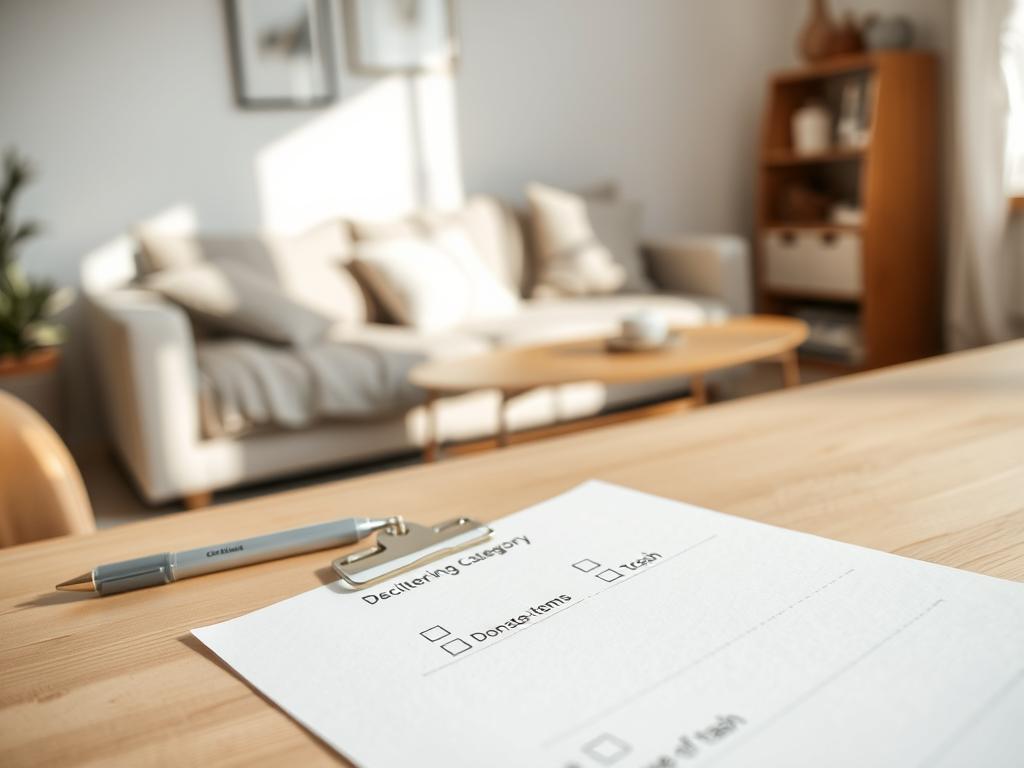
Try the KonMari method by category and ask whether an item sparks joy. Use the four-box method—keep, donate, trash, relocate—to decide quickly.
Set rules to let go of items unused for 12 months. Work in short, timed sessions of 25–45 minutes to keep focus and energy.
Handle hazardous materials carefully. Old aerosols, paint, and electronics need proper disposal by EPA or local rules in the United States.
Deciding What to Keep or Toss
Use simple filters: usefulness, condition, how often used, space, and replacement cost. Keep duplicates only if needed and combine similar things in one place.
For donations and resale, try Goodwill, Habitat for Humanity ReStore, local shelters, Facebook Marketplace, OfferUp, and consignment stores. A clear decluttering checklist tracks donations and sales.
How to Handle Sentimental Items
Limit sentimental keepsakes to one box. Keep representative items, not everything. Digitize memories by scanning photos and creating photo books to save space.
Share stories about items with family before passing them on. Set rules, like one memory box per person. Preserve delicate items in acid-free boxes and use climate-controlled storage for long-term care.
Organizing Techniques for Different Spaces
A practical approach turns disorder into calm. This section shows room-specific methods blending function and style.
Readers will find kitchen organization tips, living room storage ideas, and bedroom decluttering methods that fit daily routines.
Kitchen Organization Tips
Group tasks into zones: prep, cooking, baking, and storage. Keep frequently used tools near work areas to save time and steps.
Use clear pantry canisters, stackable bins, drawer dividers, lazy Susans, and shelf risers for easy access. Brands like OXO and Rubbermaid offer reliable long-term storage options.
Organize the fridge with clear bins by category. Label dates and move older items forward. A weekly meal-prep and cleanup keeps order and reduces food waste.
Living Room Layout and Storage
Balance looks with utility by choosing low-profile storage furniture and baskets for throws and toys. Media consoles tidy electronics with cord management.
Built-in shelving displays books and décor while adding storage. Plan furniture to keep traffic flow and create zones for relaxing, working, and entertaining.
Dual-purpose pieces, like coffee tables with hidden compartments, add function without crowding the space. Label bins and use toy rotation to reduce clutter.
These steps make the living room storage efficient and welcoming for family and guests.
Bedroom Decluttering Ideas
Start with clothing. Closet systems, uniform hangers, and seasonal rotation simplify choices. Use under-bed storage with breathable bags to protect off-season linens.
Create a bedside charging station or drawer for devices. Keep a small tray for essentials and limit décor to promote better rest.
Regularly clear nightstand drawers to avoid clutter. Store spare bedding in cotton bags. Keep a donation bag in the closet to remove unwanted clothes easily.
These ideas support a calm and sleep-friendly bedroom environment.
| Space | Key Technique | Recommended Products | Routine Tip |
|---|---|---|---|
| Kitchen | Zone layout; clear containers; rotate perishables | OXO canisters, Rubbermaid Brilliance, lazy Susans | Weekly meal-prep and fridge check |
| Living Room | Low-profile storage; zone furniture; toy rotation | Woven baskets, media console with cord management | Monthly declutter and re-style surfaces |
| Bedroom | Closet systems; uniform hangers; under-bed storage | Cotton storage bags, slim velvet hangers, storage bins | Seasonal clothing swap and donation bag |
Sustainable Storage Solutions
Smart storage combines practicality with care for the environment. Readers following a home organization checklist find choices that save space and reduce waste.
The goal is durable, attractive storage that fits daily routines and supports long-term values.
Choosing the Right Storage Containers
Clear plastic bins from brands like Sterilite or Rubbermaid allow visibility for seasonal items. They are stackable and great for closets.
Woven baskets add a warm look in living areas. Modular drawer systems fit custom closet layouts. Vacuum bags compress bulky linens to save space.
Measure shelves and cubbies before buying. Choose durable, stackable containers. Use a label maker, printed labels, or chalkboard tags to keep things clear.
Uniform containers create a cohesive look and simplify the home organization checklist.
DIY Organization Hacks
Repurpose shoeboxes as drawer dividers for socks and small items. Tension rods under sinks hold spray bottles neatly. Magazine holders store foil, wrap, and cutting boards upright.
Pegboards become flexible centers for tools or craft supplies. Build floating or custom closet shelves from reclaimed wood for a perfect fit.
Anchor wall-mounted projects securely. Use moisture-resistant materials in bathrooms and basements to extend shelf life. These hacks lower cost and tailor storage to real needs.
Eco-Friendly Materials and Options
Choose bamboo shelving, recycled plastic bins, or cotton and jute baskets to get biodegradable or low-impact storage options.
Buying secondhand furniture from thrift stores or Habitat ReStores gives pieces new life and cuts demand for new materials.
Invest in quality items that last to reduce waste. Support sustainable brands like West Elm or Etsy artisans who upcycle materials.
Donate or resell decluttered items. Take hazardous waste to municipal collection centers to reduce landfill impact and complete an eco-friendly organization plan.
Maintenance Tips to Keep Your Home Organized
Small, steady actions stop clutter from piling up. This guide shares tips to help families manage daily mess and repair. Use clear zones and simple routines to keep things easy and ordered.
Daily Habits to Maintain Order
Ten-minute evening tidy-ups make a big difference. Put items back after use and clear counters each night. Sort mail daily to stop paper clutter.
Add a five-minute morning reset for busy spots like the entryway or kitchen island. Attach new tasks to existing habits to succeed.
For example, declutter five items after brushing teeth. Use labeled bins and visible clues so family members know where things belong. This helps everyone follow the checklist easily.
Setting Up a Regular Cleaning Schedule
Create a simple task schedule to reduce stress. Daily quick chores, weekly deep cleans, monthly declutter checks, and seasonal projects cover most needs.
Try this rhythm: daily wipe-downs and dish care, weekly bathroom and vacuum cleaning, monthly pantry and fridge checks, seasonal closet swaps and garage cleanouts.
Shared calendars like Google Calendar or Cozi keep tasks clear and send reminders. For busy homes, hiring pros can fill gaps. Rotate chores to keep work fair and prevent burnout.
The Role of Accountability
Accountability helps systems last. Involve family members in routine checks. Use short checklists and set digital reminders with apps like Todoist or Trello.
Quarterly audits show new storage needs after changes, like a new baby or remote work. Consider a professional organizer for setup and coaching. Celebrate milestones to reward progress and build habits.
Digital Organization: Don’t Forget the Virtual Space
A tidy home needs a tidy digital life. Many homeowners overlook files, photos, and inboxes when organizing. A short digital reset cuts paper clutter and smooths daily routines.
Organize digital files and photos with a folder hierarchy that matches physical systems. Create top folders for rooms, projects, or functions like Finances, Warranties, and Receipts. Use a clear naming style like 2026-04-01_description to make searching easier.
Back up important folders to cloud services like Google Drive, Dropbox, or iCloud regularly. Delete duplicate and blurry photos first. Tag and sort images by event or year.
Create albums for quick viewing. Tools like Google Photos and Apple Photos help with grouping and facial recognition to save time.
Use digital decluttering tools to speed the process and avoid mistakes. Cloud storage like Google Drive and OneDrive keeps files accessible on all devices. Duplicate-file finders such as CCleaner and Gemini help remove extra copies.
Password managers like 1Password and LastPass keep passwords safe. Email apps like Unroll.Me and Gmail filters reduce newsletter clutter. These support a routine of inbox zero.
Practice inbox management: use labels or folders and set filters for routine messages. Check email during set times. Unsubscribe from unwanted lists manually or with tools to reduce incoming mail.
Turn on two-factor authentication. Choose strong, unique passwords to protect digital assets. Keep operating systems and apps updated for better security and performance.
Balance digital and physical spaces by scanning key documents and storing encrypted copies in the cloud. Scanning receipts and warranties cuts paper buildup and eases searching.
Keep original important documents like birth certificates and vehicle titles in a fireproof safe. Use scanned backups for everyday access.
Schedule digital maintenance alongside home checks. A monthly or quarterly review of folders, photos, and subscriptions keeps things current.
Use this time to sync hacks for physical spaces with your digital setup. This keeps both areas neat and efficient.
Final Thoughts on Home Organization
Home organization is a process that rewards steady effort. The plan here asks readers to assess their space and create an action plan. Then, declutter, set up organizing systems, pick sustainable storage, maintain routines, and organize digital life.
These steps form a clear home organization checklist. It turns an overwhelming project into manageable tasks.
The main benefits are time savings, reduced stress, better functionality, and cost savings from buying fewer duplicates. Setting realistic goals helps keep systems adaptable as needs change. Tips that focus on quick wins help maintain momentum and make progress visible.
To start, schedule one short decluttering session this week and invite family members to join. Consider hiring a certified professional organizer through the National Association of Productivity & Organizing Professionals (NAPO) for extra support. Track progress with before-and-after photos and note time or money saved to reinforce habits.
For more help, check retailers like The Container Store and IKEA for storage solutions. Donation centers include Goodwill and Habitat ReStore. Apps such as Sortly, Google Drive, Trello, and Todoist aid in planning. Recommended books are Marie Kondo’s The Life-Changing Magic of Tidying Up and Joshua Becker’s The Minimalist Home. Finally, download or create a printable home organization checklist. Follow the timeline from earlier sections and use these tips to keep steady progress.