

Nearly 40% of U.S. households buy duplicate groceries because they can’t find items easily. This causes avoidable losses. Smart pantry design ideas can help fix this problem.
This guide sets clear goals: maximize storage capacity, improve pantry cabinet organization, and ensure easy access.
It also aims to blend style with function in kitchen pantry design. Readers will find practical pantry storage solutions to reduce food waste and speed meal prep.
These ideas also simplify inventory control. Designers and retailers like IKEA and The Container Store influence many efficiency principles here.
These include modular shelving and labeled systems. This article covers essentials, space-saving strategies, and layout choices such as walk-in, reach-in, and galley pantries.
It also discusses shelving selection, smart storage products, styling, door options, accessibility, seasonal maintenance, and DIY projects.
Whether planning a custom pantry or optimizing a small closet, this guide offers actionable steps and product ideas.
Tools and materials mentioned include wire, wood, laminate shelving, OXO, Kilner, Mason jars, Brother label makers, chalkboard labels, and LED lighting.
Throughout the article, pantry design ideas and storage tips will appear naturally. Readers will get easy-to-follow how-tos and real-world recommendations for better kitchen pantry design.
1. Understanding Pantry Essentials
A well-stocked pantry starts with clear priorities. Organization helps by reducing spoilage and speeding cooking. It also supports meal planning and improves safety by keeping heavy items low and glassware secure.
The USDA recommends storing dry goods properly and watching shelf life. This helps cut waste and protects food quality. Thoughtful pantry designs can also save money by avoiding duplicate grocery purchases.
The core elements of good pantry storage are easy to list. Adjustable shelving offers flexibility as needs change. Clear containers make dry goods visible at a glance.
Labeled baskets and bins keep snacks organized. A dedicated spice zone speeds meal preparation. Areas for cereal, snacks, and baking, plus sturdy countertops, help keep tasks tidy.
Hardware completes the pantry system. Shelf supports and pull-out trays improve access. Lazy Susans and slide-out drawers make corners usable.
Door-mounted racks add extra storage tiers. Brands like Blum and Rev-A-Shelf offer soft-close hinges and pull-out organizers. They fit many budgets.
Climate and pest control protect groceries and pantry life span. Airtight containers from OXO and VacMaster block pests and humidity. Proper sealing and moderate kitchen humidity reduce infestation risk.
Regularly checking expiration dates and storing dry goods off the floor are best practices. These are promoted by food safety groups.
Pantry styles vary with space and lifestyle. Walk-in pantries offer room for countertops and small appliances. They suit large households well.
Reach-in pantries are shallow. They need clever shelving and small pantry organization to maximize space. Integrated pantry cabinets blend with kitchen cabinetry for a cohesive look.
Stylistic variants match décor and function. Farmhouse style favors open shelving and mason jars, lending a lived-in charm. Modern minimal designs hide storage behind sleek doors with push-to-open hardware for a clean profile.
Transitional designs mix form and function for balanced aesthetics. Choosing a style depends on household needs. Large families prefer walk-ins for capacity and layout options.
Apartment dwellers benefit from small pantry organization. Compact pantry storage solutions keep essentials accessible without clutter.
2. Maximizing Pantry Space
Smart pantry planning turns wasted space into usable storage. This part focuses on practical steps for gaining capacity and improving access.
These tips work from floor to ceiling. Readers will learn quick wins and durable solutions for large pantries and tight kitchens.
Vertical Storage Solutions
Use full wall height to multiply storage. Install adjustable shelving systems with slotted standards and brackets.
You can also choose track systems that move as your needs change. Tall pull-out units keep oils and condiments organized and visible.
Stackable clear containers from brands like OXO, Rubbermaid, and Sistema create usable vertical zones. Modular bins divide tall shelves into reachable layers.
They also speed up inventory checks. A wall-mounted pegboard or rail can hold tools, aprons, or small baskets to free counter space.
Utilizing Hidden Corners
Corners often hide wasted cubic footage. Revolving lazy Susans and pull-out corner carousels from Rev-A-Shelf give full access to deep corner shelves.
Corner drawers and diagonal shelving provide smoother reach and reduce blind spots. For reach-in pantries, tapered shelving or corner pull-out trays prevent dead space.
Narrow nooks benefit from custom shelving or repurposed pieces like apothecary-style cabinets. These fit odd dimensions and keep tidy lines.
Decluttering Tips
Start by emptying the pantry and grouping items by category. Check expiration dates and set unopened nonperishables aside for donation.
Follow local guidelines when discarding expired goods to reduce waste responsibly. Create a “use-first” zone for soon-to-expire items.
Label containers clearly to avoid duplicates. Adopt a quarterly purge schedule and keep an inventory checklist to track stock.
The “one in, one out” rule helps prevent hoarding and frees shelf space for specialty items.
3. Choosing the Right Pantry Layout
Choosing the right layout shapes how a homeowner uses pantry space. This choice affects storage, workflow, and renovation cost.
Clear comparisons help match a layout to a household’s needs and the available square footage.
U-Shaped vs. L-Shaped Pantries
A U-shaped layout places shelving and counters on three sides. It fits larger walk-in areas and creates zones for baking, prep, and appliances.
The layout gives abundant storage but may feel tight if circulation space is limited.
An L-shaped layout uses two adjacent walls. It suits medium-sized spaces and corners.
This plan keeps sightlines open and supports simple work triangles for quick meal prep. Storage is lower than a U-shape but accessibility is better.
A quick comparison clarifies trade-offs for homeowners weighing pantry design ideas and kitchen pantry upgrades:
| Feature | U-Shaped | L-Shaped |
|---|---|---|
| Best for | Large walk-in areas with dedicated zones | Medium walk-ins and corner spaces |
| Storage capacity | High | Moderate |
| Accessibility | Good, can feel enclosed | Very good, more open |
| Appliance/counter space | Ample room for appliances and prep counters | Room for a small counter or designated zone |
| Ideal user | Frequent cooks who need organized zones | Families seeking easy reach and visibility |
Walk-In vs. Reach-In Options
Walk-in pantries provide space for bulk goods, appliances, and clear sightlines. They can include countertops and a second sink for busy kitchens.
Planning traffic flow and layered lighting improves their function.
Reach-in pantries save space in smaller kitchens. Slim pull-out shelves and door organizers maximize storage depth.
Labeled containers keep items visible and reduce rummaging.
Budget matters. Walk-ins often require remodeling and larger budgets. Reach-ins suit retrofit projects and use accessories to boost usability.
Galley Style Considerations
Galley pantries are narrow corridors with shelves on both sides. They offer efficient linear access when space allows.
Aisles should be at least 36 inches wide for comfortable movement and door clearance.
Use slim pull-out drawers and vertical storage to keep capacity without blocking passage.
To avoid feeling claustrophobic, choose consistent lighting, light paint tones, mirrored backs, and open shelving to widen the view.
4. Selecting Pantry Shelving
The right shelving defines function and style in a pantry. Choices about material, adjustability, and openness shape pantry storage solutions. They also guide long-term pantry cabinet organization.
A clear plan helps match shelving to budget, climate, and daily habits.
Different Types of Shelving Materials
Solid wood offers lasting durability and a warm look. Maple and oak resist wear when sealed properly.
Plywood provides a cost-effective wood option. It has good strength when finished against moisture.
Laminate is a budget-friendly choice that cleans easily. It works well for busy households that want low maintenance.
Wire shelving improves ventilation and limits dust. Small items may tip without liners.
Metal shelving delivers industrial strength for heavy bulk storage. It suits garages or large pantries.
Choose moisture-resistant finishes or clear sealing on wood for humid climates. This prevents warping and pests.
A practical shopping tip: IKEA, Home Depot, and Lowe’s carry modular systems across price points. Custom carpentry costs more but offers tailored shelving ideas and high-end finishes for integrated spaces.
Adjustable Shelving Benefits
Adjustable shelves adapt to tall cereal boxes, short spice jars, and seasonal containers. Flexibility means less rework when family needs change.
Granular control matters; aim for shelf increments every 1–2 inches. Choose sturdy brackets rated for the expected load.
Many adjustable systems list weight per shelf in product specs. Simple installation and reconfiguration often save money over time compared with fixed shelving.
Open vs. Closed Shelving
Open shelving gives instant visibility and encourages neatness. It showcases attractive containers and makes frequently used items easy to grab.
Visible displays support curated pantry shelving ideas and quick meal prep.
Closed shelving hides clutter and blocks dust. Cabinets create a cleaner look for integrated kitchens.
They improve pantry cabinet organization when packaging is mixed. Closed doors suit users who want a tidy appearance without daily upkeep.
A hybrid approach blends both styles. Use open shelves for everyday items and decorative jars.
Reserve closed cabinets or drawers for overflow, appliances, and unattractive packaging. Match the balance to the kitchen’s style and the homeowner’s habits.
| Material | Strength | Maintenance | Best Use |
|---|---|---|---|
| Solid Wood (Maple, Oak) | High | Seal against moisture and spills | High-end pantries, visible shelving |
| Laminate | Medium | Easy to clean | Budget kitchens, low-maintenance homes |
| Wire | Medium | Ventilated; needs liners for small items | Ventilated storage, produce areas |
| Metal | Very High | Durable; resists heavy loads | Bulk storage, utility pantries |
Careful selection aligns material choice with pantry storage solutions and long-term pantry cabinet organization. Thoughtful planning reduces clutter and protects goods.
It keeps the pantry working well for daily life.
5. Incorporating Smart Storage Solutions
Smart storage turns a cluttered pantry into a calm, usable space. Thoughtful choices improve access and keep supplies visible.
These pantry design ideas and pantry storage solutions suit both large and compact layouts.
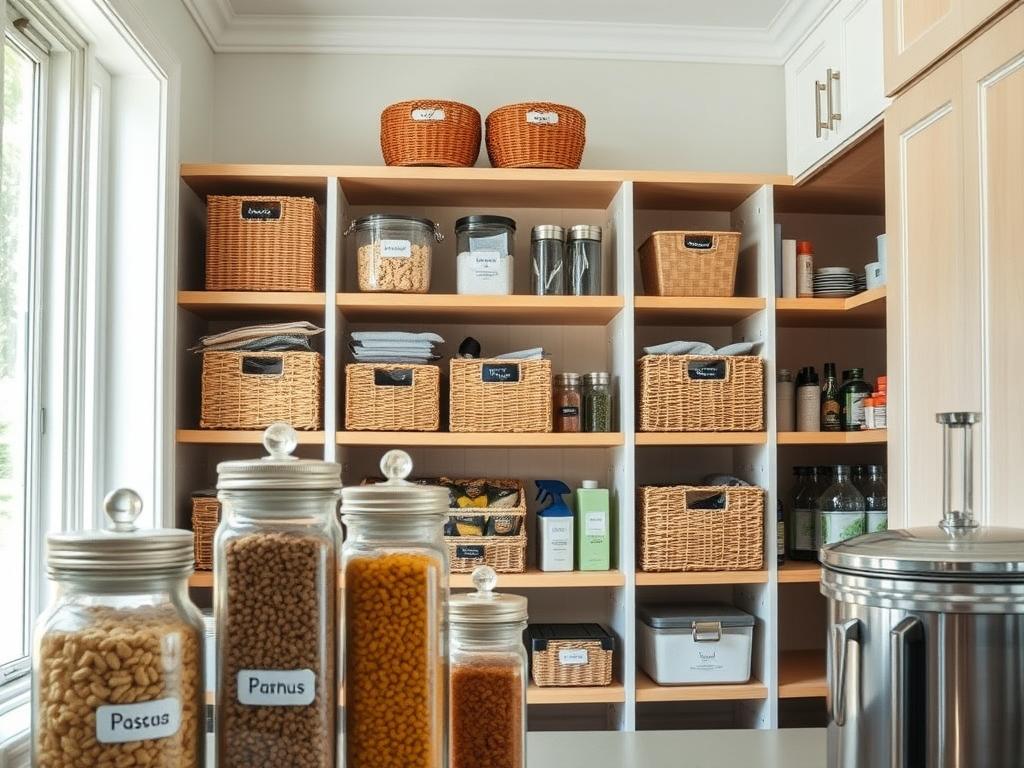
Start by grouping like items in baskets and bins for quick grab-and-go access. Use wire baskets for ventilation and woven seagrass for a warm look.
Plastic bins work well in wet areas. Uniform bin sizes help with stacking and shelf planning. Clear-front bins show contents at a glance.
Baskets and Bins for Efficiency
The Container Store, SimpleHouseware, and IKEA offer clear sizing and weight capacities. Choose bins that match shelf depth and leave space for labels.
Stackable, uniformly sized bins simplify pantry cabinet organization and improve small pantry storage.
Labeling for Easy Access
Consistent labels cut search time and help everyone put items back correctly. Use weather-resistant labels for lasting use. Brother P-touch label makers produce professional labels.
Chalkboard labels create a casual feel. Printable labels help keep inventory lists updated.
Labels speed up finding items and let children help. They protect organization when many users access the pantry.
Define zones like Baking, Breakfast, Canned Goods, and Snacks to keep order.
Stackable Containers Advantages
Stackable containers maximize vertical space and reduce air exposure. Airtight plastic containers like OXO Good Grips work well for cereals and grains.
Glass jars from Anchor Hocking and Kilner suit long-term storage. Vacuum-sealed options are useful for bulk items.
Use consistent sizes—1.5L, 3L, 6L—to boost stacking efficiency. Label each container with contents and purchase or expiration date.
Include a measuring cup or scoop with bulk containers to improve usability and support pantry organization.
| Item | Best For | Recommended Brands | Key Benefit |
|---|---|---|---|
| Wire Baskets | Snacks, produce bags | IKEA, SimpleHouseware | Ventilation and quick visibility |
| Woven Seagrass Bins | Baking mixes, linens | The Container Store, IKEA | Warm texture and aesthetic appeal |
| Clear-Front Plastic Bins | Canned goods, pantry staples | SimpleHouseware, The Container Store | Easy content viewing and uniform stacking |
| Airtight Plastic Containers | Cereals, grains | OXO Good Grips | Keeps food fresh and pest-free |
| Glass Jars | Long-term storage, dry goods | Anchor Hocking, Kilner | Durable, attractive, nonreactive |
| Vacuum-Sealed Bags | Bulk items, seasonal storage | Various brands | Maximizes space and extends shelf life |
6. Adding a Touch of Style to Your Pantry
A well-styled pantry blends usefulness with visual appeal. Thoughtful choices in color, lighting, and decorative storage lift a functional space.
This transforms the pantry into a room that complements the kitchen. The following practical suggestions help homeowners apply pantry design ideas.
These ideas look curated and work hard every day.
Color Schemes and Décor
Light neutrals and soft pastels open compact pantries. Pale grays, warm creams, and mint tones reflect light and keep shelves airy.
For a luxe effect, dark cabinet colors like navy or forest green create drama when paired with brass hardware.
Coordinating pantry tones with kitchen cabinetry creates a cohesive flow. White shaker cabinets pair well with beadboard backs inside the pantry for a farmhouse feel.
Shiplap or crown molding on built-ins adds architectural polish without cluttering the space.
Small decorative touches elevate form and function. Framed recipe prints, a chalkboard for grocery notes, and glass Kilner or Le Parfait jars with labels provide a tidy, styled look.
These items keep contents visible and organized.
Lighting Options for Ambiance
Layered lighting improves both mood and utility. An overhead LED fixture provides general light.
Under-shelf LED strips or puck lights offer task illumination for lower shelves and countertops.
Motion-sensor solutions like Philips Hue or battery-operated LED strips add convenience and save energy.
Choose warm white (2700–3000K) for a cozy feel in food prep zones. Pick cool white (3500–4000K) for crisp visibility that helps identify items easier.
Decorative Storage Ideas
Combine style with storage by using labeled glass jars for grains and legumes. Woven baskets work well for bread.
Decorative tins keep tea and coffee organized. Eye-level open shelves are ideal for displaying attractive olive oils or vintage cookware.
Group items by container style or color for a curated look that photographs well. Keep frequently used staples in reachable spots.
This ensures the aesthetic does not hinder daily use. Thoughtful shelving and curated containers make the pantry both beautiful and practical.
7. Aesthetically Pleasing Pantry Doors
Choosing the right pantry door can reshape how a kitchen looks and works. This guide covers practical and stylish door choices. It helps homeowners match form with function.
The guide highlights door types, material trade-offs, and ways to add storage. These tips keep good design and utility balanced.
Choosing the Right Door Style
Space and traffic flow help choose the best door style. Bi-fold and sliding barn doors save space and avoid bumping islands.
Pocket doors disappear into walls, perfect for tight kitchen layouts. Hinged doors offer full access in traditional reach-in pantries. Curtain or beaded doors fit casual or cottage kitchens well.
Practical details are key for daily use. Check hardware ratings and track quality on sliding doors. Also, measure clearance so doors open smoothly without blocking walkways or appliances.
Glass vs. Solid Wood Options
Glass doors showcase tidy pantry organization. Tempered glass offers safety. Frosted or seeded glass softens view and lets light in.
Glass needs frequent cleaning to remove fingerprints. Solid wood doors hide pantry contents and reduce visual clutter.
Wood protects light-sensitive foods and may need refinishing in humid kitchens. Hybrid options like mullioned glass balance display and concealment.
Custom Designs for Personalization
Custom pantry design offers built-in function. Cabinetmakers and local shops craft doors with panels matching kitchen cabinetry.
Brands like KraftMaid provide semi-custom options blending with many kitchen styles. Door interiors can serve as extra storage.
Shallow shelves, spice racks, bag dispensers, or pegboards maximize utility. A chalkboard inset tracks grocery lists and meal prep notes.
Thoughtful custom design turns pantry doors into useful real estate every day.
8. Ensuring Accessibility in the Pantry
A well-planned pantry makes daily routines easier for everyone in the household. Smart pantry designs combine ergonomic placement with clever hardware. These changes help keep items reachable and safe.
Considerations for Height Variability
Design shelving in different height zones. Put heavy bulk items on low shelves and frequently used goods at eye level. Use high shelves for seasonal items only.
Keep most-used items between 28 and 48 inches from the floor for easy reach. Install pull-down shelving for upper storage. Products like Rev-A-Shelf swing-down racks help users reach high shelves safely.
Adjustable shelving lets you change heights as needs change.
Kid-Friendly Storage Solutions
Make low baskets and labeled drawers at children’s height for snacks, cereal, and cups. This encourages independence and reduces spills. Use clear labels and color-coding so kids learn organization fast.
Secure hazardous items with child-safe locks. Use safe stacking to prevent items from toppling. Keep light, often-used items easy to reach to avoid climbing and accidents.
Adjusting for Elderly Users
Use pull-out shelves, lazy Susans, and side-opening cabinet pullouts to reduce bending and twisting. Choose lever-style handles for an easier grip. Add finishes that improve visibility for low vision.
Add non-slip flooring and bright task lighting. Include a small stool or fold-down seat for comfort during long tasks. Follow universal design rules: reachable surfaces, clear floor space for walkers or wheelchairs, and visual contrast to help navigation.
9. Seasonal Pantry Maintenance
Keeping a pantry functional takes routine care and smart habits. Seasonal maintenance stops waste, keeps shelves tidy, and helps organize pantry cabinets well.
The steps below help households clean, rotate stock, and track inventory regularly.
Regular Cleaning Routines
Spot-clean your pantry monthly. Deep-clean it every quarter. Do a full seasonal purge once a year.
Start by removing all items from shelves. Check the packaging for damage or pests.
Wipe surfaces with mild soap and water. Vacuum corners. Use a vinegar solution to deodorize.
For mold or mildew, apply a diluted bleach solution safely. Always follow label instructions closely.
Use food-safe shelf liners from Duck Brand or Gorilla Grip to make cleaning easier. Put items back only after surfaces dry and containers are clean.
Rotating Stock Effectively
Use FIFO—first in, first out—by placing new purchases behind older items. Date-label bulk containers to keep track of freshness.
Make an eye-level “use soon” zone for items near expiration. Portion bulk buys into meal-size containers and freeze when possible.
Visible inventory helps stop overbuying. Clear bins and labeled shelves support quick access to your pantry items.
Inventory Checklist Practices
Create a checklist by category with staples like grains, canned goods, baking supplies, oils & vinegars, snacks, spices, pet food, and specialty items.
Update quantities and expiration dates during each seasonal check. Use digital tools like AnyList or Out of Milk to make restocking easy.
You can also keep a simple spreadsheet synced with grocery apps. Link inventory checks to meal planning and shopping trips for balance after events.
Combining these routines with smart storage boosts efficiency. It supports consistent pantry cabinet organization all year long.
10. DIY Pantry Projects for Personal Touch
A few well-chosen DIY pantry projects can turn storage into a key part of kitchen design. These ideas focus on affordable updates. They improve function and style without needing a full remodel.
Simple shelving units are a smart first step. Build floating shelves with 1×12 pine boards and sturdy brackets. You can also adapt IKEA units like IVAR for painted, customized shelves.
Tools and materials should include a stud finder, level, screws, brackets, shelf pins, and paint or stain. Anchor heavy loads into studs. Add edge trim for a polished finish. Use semi-gloss paint for easy cleaning.
Creative jar labels make contents easy to spot and keep a clean look. Options include chalkboard stickers, kraft paper tags with a kraft pen, waterproof printed labels from a Brother P-touch, or vinyl cuts made with a Cricut.
Best practices are to list the product name, purchase or open date, and use-by date. Keep fonts and sizes consistent. Color-code categories like baking or grains. Choose label materials that resist spills and steam. Remove residue with warm soapy water or Goo Gone.
For transformative makeovers, try repainting, adding beadboard or wallpaper, and installing LED strip lighting under shelves. Swap hardware for a unified finish. Add a butcher block prep top or mount a pegboard back wall for hooks and baskets.
Plan carefully: measure, budget, and put function first—lighting, adjustable shelves, and pull-outs. Source materials affordably from Habitat for Humanity ReStore, local lumber yards, or marketplaces like Wayfair and Overstock. This keeps DIY pantry projects and custom pantry design affordable.