

Nearly 60% of Americans admit they own at least one closet full of clothes they no longer wear. This reality turns many mornings into a search for something that feels right.
This guide explains how to declutter closet spaces with a clear, practical approach. To declutter a closet means removing, organizing, and responsibly disposing or storing items. This creates a more functional wardrobe.
A closet cleanout means emptying and reassessing a closet’s contents to improve its organization. This process leads to a better space for your clothes.
Readers can expect reduced decision fatigue and faster morning routines after this closet cleanout. They also will see better visibility of wardrobe pieces and fewer duplicate purchases.
The step-by-step plan covers why decluttering matters and how to prepare. It includes sorting clothes, handling accessories and shoes, applying the one-year rule, building a system, organizing storage, and maintaining results.
Most single-wardrobe projects take about 2–6 hours. Shared or large closets may take more time. Scheduling one uninterrupted block helps keep momentum during decluttering and organizing.
Whether your goal is a minimalist wardrobe, better closet organization, or less clutter-related stress, this guide helps align your clothing with everyday needs. It aims to make the closet a useful, calm part of your home.
Understanding the Importance of Decluttering
An orderly closet saves time and lowers stress. Thoughtful closet organization helps people find outfits quickly.
It also protects garments and makes laundry routines smoother. Retailers like The Container Store offer product lines and layout standards.
Professional organizers use these to boost efficiency in both small and large wardrobes.
Practical benefits appear quickly. A well-arranged space makes mornings easier and cuts duplicate purchases.
This saves money when homeowners see what they already own. Sellers and donors gain options from tidy wardrobes.
Some items may be sold at consignment or donated.
Benefits of an Organized Closet
Faster dressing, more usable space, and longer garment life are clear wins.
Proper storage reduces friction and wear on fabrics. Time saved in morning routines adds up over weeks and months.
Financial advantages follow. Spotting excess or missing pieces can stop impulse buys.
Organized closets reveal pieces suitable for resale at shops like Buffalo Exchange or Plato’s Closet.
Impact on Mental Health
Research links clutter to stress and decision fatigue. A chaotic environment can sap focus and lower productivity.
Clearing a closet reduces daily anxiety by simplifying choices. Tidying brings emotional rewards.
People feel control after decluttering sections. This can improve mood and help better sleep for some.
Environmental Considerations
Responsible disposal reduces landfill waste and supports circular fashion. Donating to Goodwill or Salvation Army helps keep textiles in use longer.
Selling at consignment or using textile recycling like H&M collection also extends textile life.
Repair and upcycling extend garment life. Local tailors and services like The Renewal Workshop offer mending and repurposing options.
Choosing these paths during decluttering limits the environmental cost of fast fashion.
Simple decluttering hacks include sorting by use, testing fit before deciding, and applying a one-year rule for infrequent items.
Thoughtful habits and small systems make it easier to maintain a minimalist wardrobe and keep positive change over time.
Preparing for the Decluttering Process
A clear plan makes a closet cleanout less daunting. Start with small, measurable targets. Gather tools before beginning. This reduces decision fatigue and speeds progress.
Setting Realistic Goals
Define specific goals like reducing hanging items by 30% or creating a capsule wardrobe of 30 pieces. Pick priority zones such as work outfits, casual wear, or outerwear. Decide whether to tackle the whole closet at once or in chunks.
Use time estimates to plan your sessions. One shelf takes 15–30 minutes, a full wardrobe 2–6 hours. A family closet may need half to a full day. Small wins keep momentum during a closet cleanout.
Gathering Necessary Supplies
Assemble sturdy garbage bags for disposal and labeled boxes for Keep, Donate, Sell, and Repair. Add markers, slim non-slip hangers, shelf dividers, storage bins, a lint roller, and a handheld steamer or stain remover for items to keep.
Prepare donation items by washing or fixing minor flaws to improve acceptance and resale chances. Use spreadsheets or apps like Stylebook, Cladwell, or Closet+ to inventory pieces and plan outfits.
Creating a Schedule
Choose a template that fits your life: a single-day block, a weekend plan, or micro-sprints of 30–60 minutes three times a week. Block times on a calendar and set reminders. This helps sessions happen on schedule.
Align sessions with seasonal needs like spring cleaning or pre-holiday packing. For large closets, enlist a partner, friend, or professional organizer. Set deadlines for donation drop-offs and listing items for sale to finish your plan.
Sorting Through Clothes: The First Step
A clear plan makes cleaning your closet faster and less stressful. Start by choosing to empty the whole closet or work by category.
Grouping similar items helps you decide quickly. It also improves how you organize your closet for the future.
Categorizing Items
Work through tops, bottoms, dresses, outerwear, activewear, and intimates one group at a time.
Use subcategories like work shirts versus casual shirts. This helps you compare similar items directly.
Set up a flat surface such as a bed or large table. This lets you see every piece at once.
Establishing a “Keep” Pile
Keep items that fit well and have been worn in the past year, unless they are seasonal.
Choose pieces that match your current style or pair well with other clothes. Try on uncertain garments to check fit and look.
Photograph outfits when you still can’t decide. This helps make the decision easier.
Put items to keep right away into storage areas. Hang shirts, fold sweaters, and move seasonal clothes into bins.
This keeps you moving and supports lasting closet organization.
Creating a “Donate” Pile
Select gently used items that are clean and have no major stains or damage for donation.
Consider options like Goodwill, Salvation Army, or local shelters. For valuable pieces, use consignment platforms such as Poshmark or The RealReal.
You can also sell items on Facebook Marketplace or eBay.
Keep records of donated items by asking charities for receipts. Label boxes with contents and estimated value before drop-off or pickup.
Disposing of Damaged Items
Check if garments can be repaired. Local tailors often fix hems, replace zippers, and mend seams.
Throw away items that cannot be fixed through textile recycling programs when you can.
Use brand take-back programs like H&M collection points or local services such as Pact Collective if available.
Separate moldy, heavily soiled, or biohazardous pieces. Follow local waste rules for safe disposal.
| Action | When to Use | Examples |
|---|---|---|
| Keep | Fits, worn recently, suits lifestyle | Work blazer, everyday jeans, favorite dress |
| Donate | Gently used, clean, no major damage | Casual tops, outgrown coats, extra sweaters |
| Sell/Consign | Higher-value or designer items | Coach handbag, Madewell coat, vintage denim |
| Repair | Minor damage worth fixing | Zipper replacement, resewing buttons, patching |
| Recycle/Dispose | Beyond repair, stained, moldy | Rag projects, textile recycling, municipal trash |
Evaluating Accessories and Shoes
Before arranging shelves and boxes, take a calm look at accessories and shoes. This helps to streamline closet organization. It also makes the next steps faster.
This step encourages choices based on condition, use, and how items fit into your wardrobe now.
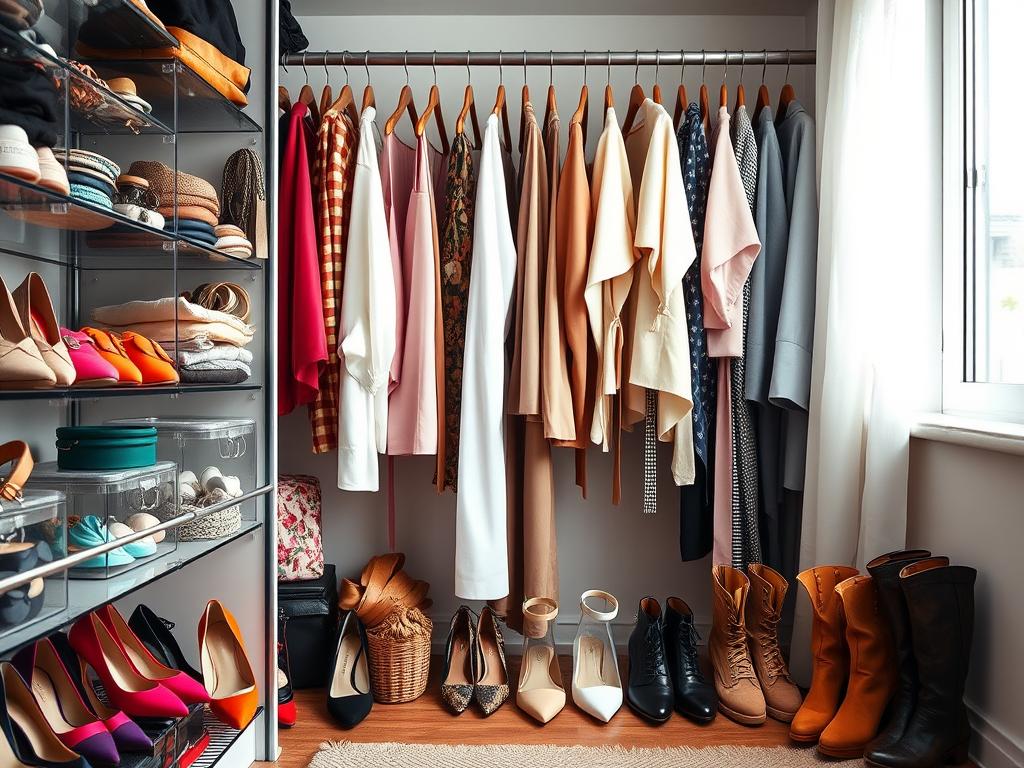
Assess pieces one at a time. Ask whether each item is comfortable and free of damage. Check if it was worn at least once in the past year.
Use the same keep, donate, or dispose rules used for clothing on necklaces, belts, hats, and shoes. Prioritize multifunctional items that suit a minimalist approach.
Assessing What to Keep
Examine jewelry for tarnish, missing stones, and safety. Check belts for working buckles and proper fit. Try on hats to confirm shape and comfort.
For shoes, verify fit and sole condition. Items with sentimental value should only be kept if they do not crowd daily pieces.
Tips for Accessory Organization
- Use jewelry trays and anti-tarnish pouches to protect metals and gemstones.
- Mount hooks on a wall or inside a door to keep necklaces untangled and visible.
- Place sunglasses and small items in clear bins to remain easy to find.
- Sort belts and scarves in drawer organizers or on tension rods to save shelf space.
- Label bins and group items by function, such as daily wear or special occasions, to speed morning routines.
- Try muffin tins for rings and small studs when space is limited; over-the-door organizers work well for purses.
Footwear Management Strategies
Check each pair for wear and comfort. Keep shoes used regularly or those serving a clear seasonal or functional purpose. Clean shoes before storing.
Leather pairs benefit from shoe trees to maintain shape. Choose storage that fits your available space.
Clear shoe boxes provide visibility. Stackable racks maximize vertical space. Under-bed containers store off-season footwear. Boot shapers protect tall boots.
| Item | Keep If | Store Suggestion | Action |
|---|---|---|---|
| Necklaces | No tangles, worn in last year | Wall hooks or jewelry tray | Keep or donate if unused |
| Rings & Earrings | Intact stones, safe to wear | Anti-tarnish pouches or muffin tins | Repair or discard damaged pieces |
| Belts | Fits well, functioning buckle | Drawer organizer or hanging strip | Donate if out of style |
| Sunglasses | Clear lenses, no cracks | Small clear bins | Store by season or purpose |
| Everyday Shoes | Comfortable, frequent use | Clear shoe boxes or rack | Keep; clean before storing |
| Seasonal Shoes | Good condition, seasonal need | Under-bed storage or stackable rack | Rotate seasonally; donate gently used pairs |
| Tall Boots | Hold shape, no major scuffs | Boot shapers or upright storage | Repair soles or donate if damaged |
Keep a small repair list for a local cobbler. Have a donation plan for items that still have life. Organizations like Soles4Souls accept gently used shoes for reuse.
These steps reduce clutter and help declutter closet spaces with purpose.
Implementing the One-Year Rule
The one-year rule offers a simple test for unused items. It checks if a piece was worn in the past year or is planned for near-future use. Using this rule helps create a tidy, purposeful closet and supports a minimalist wardrobe.
Wardrobe essentials are timeless pieces that fit well. They meet daily needs and include items like a neutral blazer, quality jeans, and a white shirt.
A dependable pair of black pumps or white sneakers suits many occasions. For a professional look, add a tailored suit, silk blouse, and polished loafers. A casual lifestyle benefits from versatile denim, plain tees, and a light jacket. Active lifestyles call for moisture-wicking tops, reliable leggings, and a weatherproof shell.
Choosing quality over quantity cuts down decision fatigue. A compact capsule wardrobe helps decide what to keep during decluttering. Identifying essentials clears out items that only take up space.
Recognizing occasional use items
Some clothes serve occasional but important needs, like formal wear or ski jackets. They can stay if worn within a year or stored in labeled bins.
If an item hasn’t been worn in over a year and has no planned event, consider removing it. Vacuum-sealed storage or off-site units free up main closet space. A small, labeled system keeps occasional items accessible without clutter.
Understanding sentimental value
Sentimental items make decluttering harder. Limiting keepsakes to a set number protects memories and stops overflow. Use a memory box to preserve meaning without occupying closet space.
Photographing items or repurposing textiles into quilts gives closure while reducing volume. Taking time and consulting a trusted friend provides helpful perspective. Cataloging the memory box contents keeps long-term storage organized and out of the main closet.
| Category | Examples | Storage Recommendation | One-Year Rule Action |
|---|---|---|---|
| Essentials | Neutral blazer, quality jeans, white shirt, classic sneakers | Keep in main closet; rotate seasonally | Keep if worn regularly; replace when worn out |
| Occasional Use | Formal dress, ski jacket, tuxedo, holiday sweaters | Store in labeled bins or vacuum-sealed bags | Keep if used within a year or has a planned event |
| Sentimental | Heirloom dress, concert tees, graduation gown | Designate a memory box; store off-site if needed | Limit number; photograph or repurpose to reduce bulk |
| Worn/Damaged | Torn shirts, stained coats, irreparable shoes | Dispose responsibly or recycle textiles | Remove immediately during a closet declutter tips session |
Developing a Decluttering System
A clear decluttering system makes a big closet project feel manageable. It speeds decisions and tracks items to keep momentum.
Anyone can declutter closet space without getting stuck by using practical methods.
The Four-Box Method
Label four boxes: Keep, Donate (or Sell), Repair, and Discard. Put every item into one box to create a clear workflow.
This method forces decisive action and reduces indecision. It also speeds the entire process.
With boxes ready, tasks like repair drop-off and donation pickup become quick next steps.
Set a 15–30 minute timer per clothing category. Finish filling one box before moving to the next.
Schedule donation drop-off within 48 hours. These tips prevent indecision and keep progress visible.
Using Digital Tools and Apps
Digital tools turn a messy closet into an organized inventory. Apps like Stylebook, Cladwell, and Closet+ help catalog wardrobes.
Poshmark, Depop, and The RealReal help sell items. Google Sheets or Airtable track inventory and transactions.
Photograph items against a plain background. Tag them by season, color, and occasion to build outfit plans.
Batch photo sessions to save time. Use app analytics to monitor wear and decide what to keep.
Keep privacy in mind when uploading. Limit sharing and remove location tags to protect personal data.
These apps help maintain a minimalist wardrobe. They also provide data-driven prompts for future decluttering.
Adopting the Marie Kondo Approach
The KonMari method asks you to tidy by category and touch each item. Ask if it sparks joy.
This emotional filter differs from pragmatic rules like the one-year test.
Combine methods for balance. Use KonMari for sentimental or valuable pieces, and four-box method for daily clothes.
This way, emotion and efficiency guide your choices together.
Set limits for sentimental items to apply KonMari realistically. Use its folding and storage techniques to improve visibility.
These small habits sustain order after decluttering. They add to long-term hacks for daily life.
Organizing the Restored Closet Space
Once the declutter closet stage is complete, set up systems to keep the space tidy and usable. Thoughtful organization transforms a cleaned closet into a practical one. These strategies focus on smart storage, garment care, and clear labeling to support daily routines.
Utilizing storage solutions
Choose products that fit the closet’s size and the homeowner’s budget. Slim non-slip hangers and modular shelving maximize capacity. Clear plastic bins and fabric cubes improve visibility and protect against dust.
Hanging organizers, drawer dividers, and garment racks handle overflow without crowding shelves. Use vertical space by adding tall shelving and double-hang rods for shorter garments.
Hooks on doors or side walls keep belts, scarves, and bags off the floor. Retailers like The Container Store, IKEA, Home Depot, and Wayfair offer options at varied prices.
Folding vs. hanging: what works best?
Hang delicate and structured pieces like blazers, dress shirts, and dresses to preserve their shape. Fold knits, t-shirts, and casual wear to save hanging space and avoid stretching.
Use KonMari folding for visibility and to keep stacks low and stable. Select hangers by fabric type: padded or wooden for coats, slim velvet for blouses, sturdy wood for suits.
Rotate seasonal items into labeled bins or vacuum bags to free hanging space and keep the current wardrobe accessible.
Labeling and sectioning
Label shelves, bins, and hanging sections so every item has a clear place. Use labels for categories like Work, Casual, Active, Formal, and Seasonal.
In family closets, color-coded or icon labels speed up clothing selection. Choose removable or chalkboard labels for flexibility as tastes and wardrobes change.
Regularly updating labels supports continued organizing efforts. This helps maintain the systems that made the declutter work well in the first place.
Maintenance: Keeping the Closet Decluttered
Keeping a closet tidy requires simple habits and small checks. A steady routine helps keep your closet decluttered. It also supports a minimalist wardrobe over time.
Establishing a Routine
Daily habits stop clutter from building up. Always return garments to their place after use. Empty pockets before washing clothes.
Spend five to ten minutes each week straightening shelves and hangers. Each month, scan your closet to remove items that no longer fit. Also remove clothes that show wear.
Use a one-in-one-out rule for new purchases. Or set a firm limit on how many clothes you keep. Add calendar reminders for mini-checks. Plan donation drops every three months.
Seasonal Reviews
Create a simple seasonal checklist. Before storing clothes, launder and repair what needs it. Rotate seasonal items so the current season stays accessible and neat.
Schedule deeper reviews in spring and fall. These align with wardrobe changes. During these reviews, reassess your needs if major life changes happen, like a new job, pregnancy, or moving.
Encouraging Minimalism in Purchases
Stop clutter by shopping with a plan. Make a wishlist and wait 30 days before buying nonessential clothes. Choose quality and versatile items for easier organizing.
For occasional wear, borrow from friends or rent clothes from services like Rent the Runway. Buying secondhand is another option. Spend clothing money on investment pieces that last and reduce frequent turnover.
| Maintenance Task | Frequency | Purpose |
|---|---|---|
| Daily return and pocket check | Daily | Prevents clutter and lost items |
| Five–ten minute tidy | Weekly | Keeps shelves and hangers orderly |
| Monthly quick scan | Monthly | Remove damaged or ill-fitting items |
| Donation drop | Quarterly | Clears excess and supports reuse |
| Major seasonal review | Biannual (spring, fall) | Rotate items, repair, and reassess needs |
| Purchase waiting period | As needed | Reduces impulse buys and helps organize wardrobe |
Conclusion: Achieving and Sustaining an Organized Closet
Decluttering a closet provides clear and lasting benefits. An organized closet saves time each day and reduces clothing expenses. It also helps your clothes last longer while easing outfit decisions.
With less decision fatigue, picking outfits and packing for trips becomes much faster and easier. These benefits boost your focus and lower stress, improving well-being.
Donating, reselling, or recycling clothes also helps the environment. Responsible disposal cuts waste and supports local thrift shops and resale sites.
Tips like scheduling seasonal reviews and having donation boxes ready help keep your closet neat. These habits extend benefits for many years.
Small actions can lead to bigger changes. Sharing before-and-after photos or hosting clothing swaps inspires others to declutter.
Volunteering at places like Goodwill can motivate friends and family to tidy their wardrobes. Simple steps work well: clear one shelf today, plan a full cleanout, and schedule a donation drop-off. These habits build lasting closet care.