

Nearly 70% of U.S. closets are underused because items are stored inefficiently. This causes crowded shelves and wasted space.
This short guide helps readers learn folding methods to save space and improve closet organization.
It focuses on practical, step-by-step folding techniques and space-saving solutions for renters, homeowners, and small apartment dwellers.
Actionable techniques in the article will show how to maximize storage and reduce wrinkles. They also speed up daily dressing routines.
The guide covers basic folds and specific methods for T-shirts, pants, and sweaters.
It also offers tips on dresses, accessories, drawer storage, and seasonal rotation.
Following these organizing tips will create a clearer closet layout and more usable storage capacity.
This leads to a tidier home with less clutter to manage.
The Importance of Folding Clothes Properly
Proper folding transforms a crowded closet into an efficient wardrobe. Small changes reduce wasted air gaps and allow neat vertical stacks.
Rolling and KonMari-style folding can increase drawer capacity by 25–50%, a gain recommended by The Container Store and popularized by Marie Kondo.
Space optimization in the closet starts with how items are folded. Tight rolls and crisp flat folds make better use of space.
When clothes are stacked vertically, users can see and reach every piece without disturbing the rest. This helps declutter and keeps routines smooth.
Space Optimization in the Closet
Grouping like items by type, season, or frequency speeds retrieval and prevents re-mess. This supports declutter efforts and keeps shelves tidy.
Simple organizing tips like labeling bins and reserving eye-level space for frequently worn pieces cut search time in the morning.
Careful folding increases usable capacity by eliminating gaps between garments. Studies note optimized folding frees up to half the space in drawers or shelves.
These gains let people store more without buying extra furniture.
Preventing Wrinkles and Damage
Correct folding protects fabric structure and extends garment life. Folding knitwear avoids shoulder stretching caused by hangers.
Seams and fibers face less stress when items are folded flat or rolled appropriately for each fabric type.
Fabric-specific concerns matter. Delicate silks and lace need gentle, loose folds and often tissue paper or a garment bag to prevent creasing.
Cotton and many synthetics tolerate tighter rolls that save space without harm.
Beyond garments, tidy folding saves time and eases decision fatigue. A well-organized closet speeds morning routines and reduces stress.
These psychological benefits pair with practical gains, making closet organization a high-return task.
Basic Folding Techniques Everyone Should Know
A few reliable methods cover most everyday needs. They help keep closets tidy and save space with little effort. These tips suit apartments, dorms, and family homes.
Two main approaches work best for most wardrobes. One creates flat, neat stacks for formal clothes. The other compresses casual pieces for travel and drawers.
The Conventional Fold
The conventional fold starts on a flat surface. For shirts, align the shoulders and smooth out wrinkles. Fold each sleeve inward along the shoulder seam.
Then fold the shirt in half or into thirds to form a flat rectangle. Dress pants follow a similar routine. Fold pants lengthwise, matching the seams.
Press a gentle crease down the legs. Fold the length into thirds for a compact rectangle. This method produces tidy stacks for shelves or hangers.
The Rolling Method
The rolling method starts with a smooth, flat garment. Lay the item face down and smooth wrinkles. Fold sleeves in so the profile is narrow.
Roll tightly from one end to the other. Rolling suits T-shirts, activewear, and travel packing. It reduces visible creases and saves space in suitcases and drawers.
Rolling trades a tidy shelf look for compactness. It maximizes horizontal space and makes it easier to see items in a drawer.
Both methods benefit from a good workspace and simple tools. Use a flat surface, non-slip shelf liners, and folding boards for uniform results. Use the conventional fold for dressier pieces and rolling for casual wear and trips. These folding techniques blend speed and order for daily life and travel.
How to Fold T-Shirts for Space Efficiency
T-shirts can take up a lot of space if you fold them carelessly. This section shows easy steps to fold shirts.
These methods save room and keep shirts ready to wear. Readers will learn two main folding styles that maximize storage.
The T-Shirt Fold Technique
Lay the shirt face down on a flat surface. Fold each side toward the center so sleeves line up straight.
The shirt becomes a neat rectangle. Fold the neck down toward the hem. Then fold the rectangle in half or thirds based on drawer depth.
This creates uniform stacks that are easy to pull out without disturbing others.
For a KonMari vertical file, fold the rectangle into a compact bundle again. Tuck the hem into the last fold so the shirt can stand upright.
Standing shirts turn drawers into visible files. This method uses vertical space well and maximizes storage.
Rolling T-Shirts for Better Space
Smooth the shirt to remove air and creases. Fold the sleeves inward to create a long rectangle.
Then tightly roll from the bottom hem up to the neck. Rolling shrinks the shirt’s horizontal space footprint.
It fits well into packing cubes, shelves, or baskets. Lightweight knits and blends roll with little wrinkling.
Pure cotton holds shape better when folded normally. Pick the method that suits the fabric to keep the garment looking good.
Storage and Maintenance Tips
Use drawer dividers or bins to hold folded or rolled shirts. Label bins to keep habits and speed up daily choices.
Refold shirts every two to four weeks to keep stacks tidy and fresh.
- Uniform folds make stacking neat and help save space.
- Vertical files increase visibility and help rotate seasonal clothes easily.
- Rolling works best for travel and tight shelves where space is tight.
Organizing Pants: Tips and Techniques
A tidy pant system helps people find what they need quickly. It also keeps fabrics in good shape. Simple tips make daily routines smoother and maximize storage in closets and drawers.
Grouping pants by fabric and how often they are worn reduces decision time. It also prevents heavier items from crushing lighter ones.
Dress pants need care when folded to keep creases sharp. Start by fastening the button and zipper. Lay the trousers flat and line up the seams.
Fold one leg over the other or fold them lengthwise in half while keeping the crease intact. Then fold into thirds from hem toward waistband. This method keeps pants compact and crease-free.
When you have space, hang structured trousers to keep their press intact.
For casual pants like jeans, rolling saves shelf depth. Smooth the fabric first, fold lengthwise, then roll tightly from cuff to waist.
This rolling method saves space on deep shelves and in luggage. Denim is bulky, so stack folded pairs vertically or roll and place them in bins. This avoids over-compression that can cause stiffness.
Use pant hangers when quick access matters. Tiered or clamp hangers let you hang several pairs on one rod.
Cascading hangers reduce crowding and maximize storage on limited hanging space.
Light, starch-free pressing before folding preserves creases on dress pants. Put tissue paper along fold lines to reduce permanent creasing and keep fabric smooth.
Grouping pants by weight and fabric—denim, chinos, dress pants—and by how often you wear them creates a useful system. It puts the most-used items within easy reach.
Below is a quick comparison of common pants storage methods and when to use each.
| Storage Method | Best For | Space Impact | Fabric Care Notes |
|---|---|---|---|
| Folded into thirds | Dress pants, trousers | Compact shelves, drawers | Preserves crease if folded carefully; use tissue paper |
| Rolled tightly | Jeans, chinos, travel packing | Saves shelf depth and luggage space | Prevents deep creases; avoid over-compression for denim |
| Tiered or clamp hangers | Multiple pairs, quick access | Maximizes rod capacity | Keeps press on structured trousers; ideal for lightweight fabrics |
| Vertical stacking in bins | Casual wear, seasonal storage | Easy visibility and reach | Use breathable bins to prevent mustiness; rotate to avoid long compression |
Folding Sweaters to Avoid Stretching
Knitwear needs gentle handling to keep its shape and feel. Hanging heavy sweaters stretches shoulders and causes hanger bumps. The weight pulls against thin fibers. Folding is safer for most knit garments.
Choose a balance between neat stacks and breathable storage to keep fabric loft. When decluttering wardrobes, smart folding saves space while preserving fit.
Stack vs. Fold: Which is Better?
Stacking folded sweaters saves vertical space and keeps shelves tidy. Small stacks make shirts easy to reach. This helps with closet organization.
Over-stacking compresses fibers and causes sagging over time. Aim for three to six items per pile, depending on thickness. This prevents crushing and uses shelf height well.
The Ideal Sweater Folding Method
Lay the sweater face down on a flat surface. Fold one shoulder toward the center. Then fold the other shoulder to form a long rectangle.
Fold the sleeves across the body or tuck them along the sides. Fold the body into thirds to create a compact rectangle. This shape resists stretching and stacks well.
For drawers, the KonMari vertical fold stands out. It lets you see every sweater at once. It also saves space in tight drawers.
| Step | Purpose | Tip |
|---|---|---|
| Lay flat | Eliminates hanger stress on shoulders | Use a smooth surface; avoid rough edges |
| Fold shoulders | Creates a central rectangle for neat stacking | Align seams to reduce bulk |
| Tuck sleeves | Prevents sleeve distortion and saves width | Tuck tightly for thinner stacks |
| Fold into thirds | Makes a compact shape for shelves or drawers | Use KonMari for vertical drawer display |
| Protect and store | Preserves fibers and repels pests | Use acid-free tissue, cotton bags, cedar or lavender |
Always clean and dry sweaters before storing to prevent stains, mildew, and pests. Avoid airtight plastic for long-term storage. It can trap moisture. Use shelf dividers and breathable bins to keep stacks upright when organizing closets.
Space-Saving Methods for Dresses and Skirts
Smart closet organization starts with picking the right method for each garment. Long, structured dresses do best on hangers that support shoulders and keep shape.
When hanging space is tight, folding and careful packing protect items from deep creases and damage.
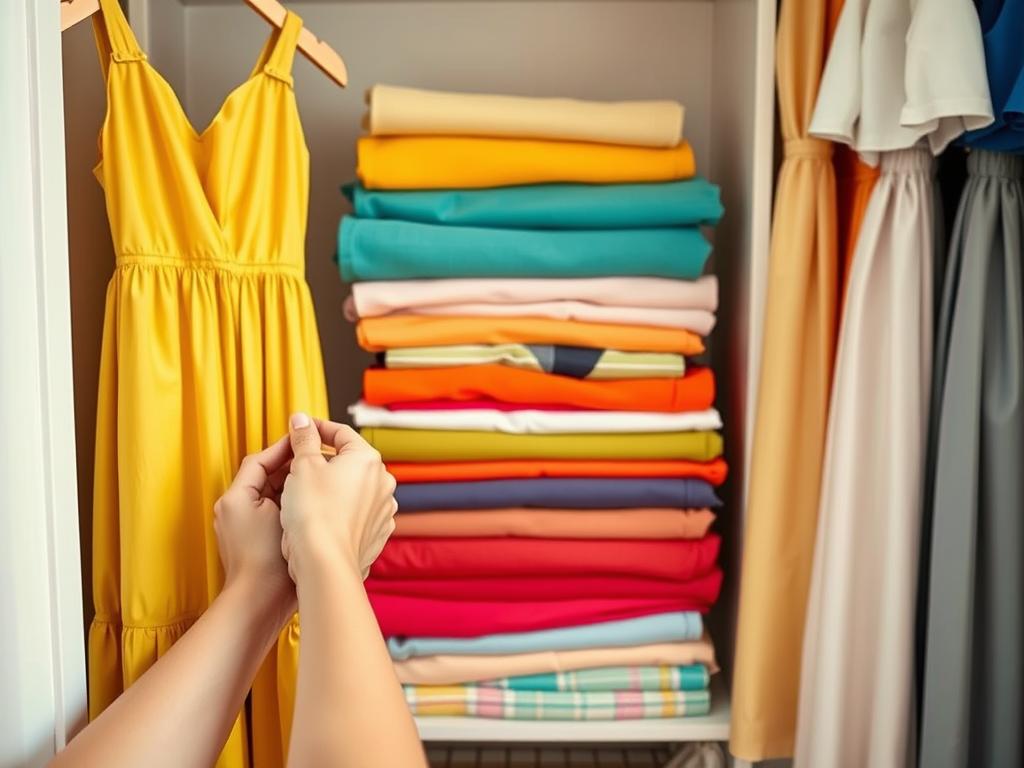
Folding Techniques for Long Dresses
When travel or limited rods require folding, use a padded hanger to protect the bodice. Fold dresses at natural seams to avoid fabric stress.
Bring the skirt up over the bodice, then fold in half so the weight spreads evenly. For chiffon, silk, or beaded fabrics, place acid-free tissue between folds to prevent snags and lessen creasing.
Fragile evening gowns store best flat in boxes with tissue layers. Garment bags made of breathable cotton work well when hanging space exists. They protect from dust and keep the dress’s shape.
The Compact Skirt Strategy
Skirts without stiff structure fold nicely by folding the waistband to the hem, then into thirds. Rolling soft skirts gently saves space and cuts visible fold lines.
Zip or button skirts before folding to keep their silhouette. Pleated skirts need special care. Hang them by clips to keep pleats crisp.
If folding pleated skirts, align folds along pleats and use tissue to cushion sharp creases. Store heavier skirts under lighter ones to avoid crushing delicate fabrics.
Practical Space-Saving Options
To maximize rod space, use cascading multi-tier hangers or skirt hangers with clips that hold multiple items on one hook. These save space by hanging many garments in a compact vertical column.
This leaves room for jackets and dresses that must stay flat. Rotate formal wear seasonally by placing off-season dresses in labeled boxes or breathable garment bags.
This habit improves closet order and keeps daily space clear. A few mindful steps help fold clothes to save space while protecting fabric and extending garment life.
Creative Ways to Store Accessories
A tidy home starts with thoughtful accessories storage. Small items can quickly clutter drawers and shelves. Practical tips help keep scarves, belts and ties visible and ready to wear.
The following methods balance accessibility with space savings. Anyone can fold clothes, save space, and cut morning stress.
Folding Scarves Efficiently
Lightweight scarves work well folded in half lengthwise and rolled from one end. This makes a slim bundle that fits in divided trays. Rolling stops bulky stacks from toppling in drawers.
For heavy knit or bulky scarves, fold into a compact rectangle. Store upright in a drawer or shelf bin. Upright storage reduces over-compression and keeps fibers loftier.
Use multi-hook scarf hangers or pant hangers with clips to hang several scarves vertically. These tools free shelf space and make patterns easy to scan when choosing an outfit.
Organizing Belts and Ties
Roll leather belts into loose coils and place them in drawer compartments or clear plastic bins. This keeps buckles from scratching and saves room. It’s better than laying belts flat.
Install a wall-mounted belt rack or an over-the-door organizer for quick access. Visible storage speeds selection and helps support a tidy home routine.
Ties benefit from dedicated tie racks or small hangers. These let them hang straight. Hanging stops wrinkles and preserves silk patterns better than tight rolls.
Drawer dividers, divided trays, and hanging organizers from brands like The Container Store and IKEA make a big impact. These organizers turn chaos into neat zones. They also support regular decluttering.
Multipurpose hacks include repurposing shoe boxes or clear bins for seasonal sets. Label each container to keep order and simplify rotating items.
Care and maintenance matter. Condition leather belts periodically. Let delicate silk ties air out after wear before storing. Small care steps extend life and keep storage fresh.
Utilizing Drawer Space Effectively
Drawers offer a great chance to maximize storage in any bedroom. Smart folding and inserts can turn cluttered stacks into neat, accessible systems.
The tips below focus on organizing drawers and folding clothes to save space. They also help keep garments visible and cared for.
Folding Clothes for Drawer Storage
Vertical file folding works best for T-shirts, underwear, and socks. Fold each T-shirt into a small rectangle. Stand them on edge to see every shirt at a glance.
For underwear and socks, use a roll or pair-and-fold method. This keeps items tidy and easy to pull out.
Bulky items need a different approach. Half-fold sweatshirts and hoodies and tuck sleeves inside to make a flatter shape. Place them in a lower drawer or side section to protect lighter garments.
Group items by category and color. Put frequently worn pieces in top or front drawers. Seasonal or rarely used clothes go lower or in secondary storage. This routine declutters and speeds up daily dressing.
Layering Techniques for Limited Space
Layer drawers by how often you use items. Put everyday clothes in the top layer and less used ones beneath. This keeps what you need close and reduces searching time.
Use thin shelf dividers or multi-compartment organizers to create tiers. Modular drawer systems like IKEA VARIERA or adjustable dividers from The Container Store offer flexible compartments. They keep folds consistent and stop items from mixing.
Avoid overstuffing drawers to protect fabric and allow airflow. Add breathable liners and cedar or lavender sachets to repel moths and keep drawers fresh. Do a quarterly drawer audit to refold, declutter, and rotate items to keep the system working well.
| Item | Best Fold | Drawer Placement |
|---|---|---|
| T-Shirts | Vertical file fold | Top/front drawer for daily wear |
| Underwear & Socks | Roll or pair-and-fold | Small compartments near front |
| Sweatshirts & Hoodies | Half-fold, sleeves tucked | Lower drawer or side section |
| Seasonal Items | Compact fold, vacuum or box if needed | Secondary storage or bottom drawers |
How to Maximize Vertical Space
Making use of vertical space changes a crowded closet into a tidy, efficient area. Small changes lead to big gains when maximizing storage. The tips below focus on practical, affordable upgrades that fit most budgets and layouts.
Use of Shelf Dividers
Shelf dividers keep folded stacks upright and stop them from falling over. They create clear zones for sweaters, jeans, and shirts so each pile stays neat. This helps users quickly find items and keep clutter down.
Choose durable materials like acrylic or bamboo for lasting support. Brands such as The Container Store and IKEA offer modular options that fit standard shelves. Measure shelf depth and spacing before buying to ensure a tight fit.
Dividers boost organization and allow neat vertical stacking. They serve as visual borders that make sorting by category easier. For heavy stacks, place dividers near shelf ends and store bulky items lower for safety.
Thinking Outside the Box: Hanging Methods
Hanging solutions expand vertical space without costly renovations. Double-hang rods increase hanging capacity by creating two clothing tiers. Cascading and tiered hangers hold many garments in a small vertical area.
Pant and skirt hangers made for multi-tier storage free up rod length. Over-the-door hooks and rod extenders add hanging room in tight spots. Measure rod and door clearance before buying to avoid fit problems.
Closet systems like Elfa and California Closets offer built-in vertical organization for a polished look. Affordable options include IKEA ALGOT and Amazon’s multi-tier hangers, providing space-saving solutions at lower prices.
Other vertical storage ideas include wall-mounted pegboards, ladder shelves, and slim shelving units. These can hold baskets of rolled clothes or vertically stacked folded items for easy access. Pair folding techniques with vertical racks to save space and keep closets compact.
Always consider installation and safety. Check shelf height and rod clearance, secure heavy hardware to studs when possible, and store heavy items lower. These steps protect closet structure while maximizing storage with smart vertical design.
Seasonal Clothing and Space Management
The change of seasons is a great time to declutter and choose storage options that keep your home tidy. Preparing garments before storing them helps reduce odor, pests, and damage. Simple steps like washing, mending, and folding properly make changing seasons easier and faster.
Folding and Storing Seasonal Items
Clean each item before storing it. Dirt and body oils attract insects and cause stains over time. Heavier coats need looser folds to protect their shape.
Thin knitwear should be laid flat to avoid stretching. To save space, roll tees and sleepwear compactly. Bulkier sweaters fit best in breathable boxes to avoid crushing.
Label each container clearly so you can easily find items next season.
Best Practices for Long-Term Storage
Use breathable storage bins for most fabrics. Vacuum-seal bags work well for bulky down jackets. Avoid compressing delicate knits and leather for long-term storage.
Cedar blocks and silica gel packets help control moisture and keep scents fresh without harsh chemicals. Store labeled boxes on high shelves or under beds if the temperature and humidity stay stable. Avoid attics and basements, which often have wide climate swings.
Keep a simple inventory by photographing or listing items. This prevents duplicate purchases as you declutter.
Use natural repellents like cedar or lavender. Always wash items first to reduce pest risks. Rotate often-used seasonal pieces to easy-to-reach spots. These habits protect garments and keep your home tidy in the long term.
Tips for Maintaining a Clutter-Free Closet
Keeping a closet tidy takes small habits done regularly. A clear plan helps people declutter on a schedule. It also keeps items visible and makes the most of limited space.
Use consistent folding and storage routines. These support long-term closet organization. They create a tidy home that feels easy to maintain.
Regular Decluttering
Schedule a closet clean-out every quarter or at the change of each season. A short, scheduled session stops clothes from piling up. It also keeps decisions simple.
Use the three-box method: one for keep, one for donate, and one for repair. That speeds choices and reduces second-guessing.
Apply clear rules when deciding what to keep. Items worn in the last 12 months stay. Also keep those that fit well and have real emotional value.
Donate or recycle anything that no longer fits or goes unused.
Rotating Clothes for Optimal Space
Rotate clothing by season and use frequency to maximize shelf and rail space. Store off-season items in labeled bins or under-bed boxes. This frees prime closet real estate.
When rotating, check garments for damage and clean them before storing. Keeping items folded consistently helps preserve shape. It also makes it faster to find essentials.
Build quick habits that keep clutter away. A nightly five-minute tidy to return items to their spots and refold pieces keeps the closet orderly.
| Routine | Action | Benefit |
|---|---|---|
| Quarterly Clean-Out | Use keep, donate, repair boxes and follow the 12-month rule | Fewer unused items, easier decisions, improved closet organization |
| Seasonal Rotation | Move off-season garments to storage bins; label clearly | More usable space, streamlined daily dressing, tidy home appearance |
| Daily Tidy | Return clothes to assigned spots; refold when needed | Prevents buildup, maintains folding methods that fold clothes save space |
| Donation & Recycling | Schedule pickups with Goodwill or Salvation Army; use local textile recycling | Responsible removal of unusable items, supports community needs |
| Professional Help | Hire a certified closet organizer for complex layouts | Expert organizing tips, tailored storage solutions, long-term order |
Visible organization encourages use. Label shelves and adopt consistent folding that folds clothes to save space. Keep frequently worn items within reach.
These small steps support a clutter-free closet. They also help create a more organized, tidy home.
Specialty Fabrics and Their Folding Needs
Specialty fabrics need extra care to last and fold without damage. Delicate folding saves space and protects clothes. Using cleaning, padding, and proper placement prevents snags, discoloration, and loss of loft.
Folding Delicate Fabrics
Always clean delicate items before storing. Use gentle detergent and handwash silk, satin, lace, or embellished garments when you can. Lay flat to dry, and only store when fully dry to stop mildew.
Fold along natural seams and place acid-free tissue between layers. Store flat in shallow boxes or use padded hangers inside breathable garment bags. These steps help preserve form and save space.
Managing Bulkier Items Like Coats
Heavy coats and down jackets do best on broad-shouldered hangers to keep their shape. Use breathable garment bags for long-term storage. Avoid vacuum bags on down jackets to keep loft and insulation.
If folding large outerwear is needed, fold along natural seams and pad with tissue to protect finishes. Place items in shallow boxes to avoid crushing insulation.
For leather and suede, store on padded hangers or wrapped in breathable cloth. Condition leather before storing it. Check items every three to six months, refresh cedar blocks or desiccants, and air them before use.