

Only about 30% of Americans living in urban areas feel their small apartments are organized. Yet, daily habits can change that quickly. This guide offers practical steps anyone can start today. It helps create lasting order without bulky renovations.
The goal is simple: to provide clear and sustainable organization ideas. These ideas fit studios, one-bedrooms, and compact urban flats across the United States. It focuses on realistic routines and space-saving strategies.
Readers will learn how to keep their small apartment organized daily. The guide shows how to assess space and declutter effectively. It also helps choose storage and furniture that work well together.
The advice balances quick daily habits with long-term changes. It includes tips on vertical storage and minimalist choices. This makes upkeep easy for busy renters and owners alike.
Assessing Your Space and Needs
Before starting any organizing project, do a quick assessment. This helps set clear priorities. It saves time and cuts waste when planning your small apartment organization.
A focused review shows where clutter gathers. It also reveals which storage solutions fit best into your routine.
The first task is to identify clutter hotspots. Walk through each room with a timer set for 10–15 minutes. Check the entryway, kitchen counters, coffee tables, bathroom surfaces, dresser tops, and closet floors.
Make a note of the items piling up. They might be mail, clothes, dishes, or gadgets. Use a simple checklist or labels to record what appears most often.
Identifying Clutter Hotspots
Entryway piles form when coats, bags, and mail have no home. Kitchen counters turn into catch-alls for receipts, keys, and groceries. Living room coffee tables and bathroom surfaces attract daily items needing a quick home.
Dresser tops and closet floors collect clothes that are rarely put away.
Understanding Your Lifestyle
Next, map your habits to shape storage needs. A remote worker needs an efficient desk area. An avid cook requires accessible cookware and spices.
Hobbies and household size affect how much space items demand. Track your daily routines for one week. This will show which items get used often and which are rarely touched.
Setting Realistic Organization Goals
Set goals using the SMART model: specific, measurable, achievable, relevant, and time-bound. For example, “clear kitchen counters every night” or “reduce closet volume by 30% within one month.”
Prioritize your goals by impact and feasibility. Keep rental rules and budget in mind. Focus on actions that bring the biggest gains when assessing space.
Simple wins create momentum for bigger changes in decluttering. Taking small, steady steps makes organizing small spaces sustainable long term.
Smart Storage Solutions
Smart storage makes a small apartment feel bigger and more comfortable. Good choices free up floor space. They create flexible areas and keep essentials close.
Utilizing Vertical Space
Wall shelves and tall bookcases lift items off the floor. They also draw the eye upward. IKEA’s Kallax and Bekvam spice racks work well in kitchens and living rooms.
The Container Store and Amazon sell floating shelves and pegboards. These hold tools, mugs, or office stuff.
For rentals, use safe mounting methods. Command strips hold light items. Picture hooks hold medium loads. For heavy shelves, ask the landlord before installing anchors. Use approved toggle bolts if allowed.
Multi-Functional Furniture
Furniture with double duty cuts clutter and adds storage. Examples include sofa beds, storage ottomans, drop-leaf tables, Murphy beds, and nesting tables.
These pieces let one area serve as a living room, guest room, or dining nook.
Wayfair, West Elm, and Walmart offer budget-friendly options. Measure doorways and rooms before buying. This ensures the piece fits and is easy to assemble.
Under-Bed Storage Options
Space under the bed is good for seasonal clothes, shoes, linens, and rare-use items. Rolling bins, shallow plastic drawers, and vacuum-seal bags maximize space and keep things neat.
Choose clear containers or label bins for quick finding. Bed risers add clearance when needed. This keeps bulky items hidden and works well with other storage tips.
| Storage Type | Best For | Affordable Brands/Retailers | Rental-Friendly Tips |
|---|---|---|---|
| Wall Shelves / Pegboards | Books, kitchen tools, décor | IKEA, The Container Store, Amazon | Use Command strips for light items; picture hooks for medium loads |
| Tall Bookcases / Kallax | Vertical storage for multiple rooms | IKEA, Wayfair, Walmart | Anchor to wall with landlord-approved hardware for safety |
| Multi-Functional Furniture | Seating, sleeping, and hidden storage | Wayfair, West Elm, Walmart | Measure doorways and room dimensions before buying |
| Under-Bed Bins / Vacuum Bags | Seasonal clothes, shoes, extra linens | Amazon, The Container Store, Walmart | Opt for clear bins or label containers for easy access |
| Storage Ottomans / Sofa Beds | Hidden storage and extra seating/guest bed | West Elm, Wayfair, IKEA | Check weight limits and assembly needs |
Daily Organization Habits
Small apartment organization works well with simple, repeatable routines. Daily habits give structure to busy days. They make managing small spaces easier.
Short tasks add up. They help keep clutter from taking over your home.
Creating a Morning Routine
A 10–15 minute morning checklist sets a calm tone. Make the bed and clear surfaces used for morning tasks. Put dirty clothes in a hamper and lay out work items.
These steps support small apartment organization by preventing mess from spreading. Starting with a tidy space reduces stress and improves focus.
People who wake to order report faster mornings and better productivity at work.
Incorporating Evening Cleanup
An evening reset of 15–20 minutes closes the loop on the day. Wash dishes, wipe counters, fold throws, and return items to their homes.
Use a phone alarm or calendar reminder to build the habit. Apply the two-minute rule: if a task takes two minutes or less, do it now.
This rule makes it easier to declutter daily and keeps common areas neat.
Setting Daily Decluttering Goals
Small, focused targets make daily decluttering realistic. Try goals like remove five items that don’t belong or discard one paper.
Put away all shoes as another goal. Short goals fit busy schedules and help organize small spaces.
Track progress with a checklist or habit-tracker app to see improvement over weeks. Visible progress reinforces the routine and turns organization into a lasting habit.
| Task | Time | Benefit |
|---|---|---|
| Make the bed | 2 minutes | Immediate sense of order |
| Clear morning surfaces | 3–5 minutes | Reduces visual clutter for focus |
| Put clothes in hamper | 1 minute | Prevents laundry pile-up |
| Evening dish wash | 10 minutes | Keeps kitchen usable and hygienic |
| Two-minute tasks | ≤2 minutes | Quick wins that maintain order |
| Daily declutter goal | 5–10 minutes | Steady reduction in excess items |
The Art of Minimalism
Minimalism in a small home starts with clear choices. It can help anyone reduce their living space without feeling deprived.
The goal is to create a calm and usable environment through intentional decisions.
Evaluating What You Really Need
Use simple tests to decide what stays. Try the 90/90 rule: if you haven’t used an item in 90 days and won’t soon, consider removing it.
Make an inventory by category—clothing, kitchenware, electronics. Grouping similar items helps spot duplicates and excess. This makes decluttering easier in small apartments.
It also supports long-term minimalist apartment organization.
Strategies for Letting Go
Sort belongings into keep, donate, recycle, and trash piles. Box donations and label them clearly.
Schedule a drop-off or pick-up within a week. This ensures items leave your home promptly.
Consider donation options like Goodwill, Salvation Army, shelters, and resale platforms like Facebook Marketplace, OfferUp, or Poshmark.
Recycle electronics responsibly. Always follow local guidelines for hazardous waste disposal.
Benefits of a Minimalist Lifestyle
Clear surfaces and open floor space make cleaning faster and daily life easier. Reducing possessions lowers stress and decision fatigue.
These benefits help organize small spaces in a lasting way. More functional storage and lower costs follow.
Your home will feel larger. Regularly editing belongings keeps decluttering simple while maintaining style and comfort.
Room-by-Room Organization Tips
A clear plan makes apartment organization easier to follow. This room-by-room method breaks the space into smaller tasks. It focuses on function to maximize small living areas without clutter.
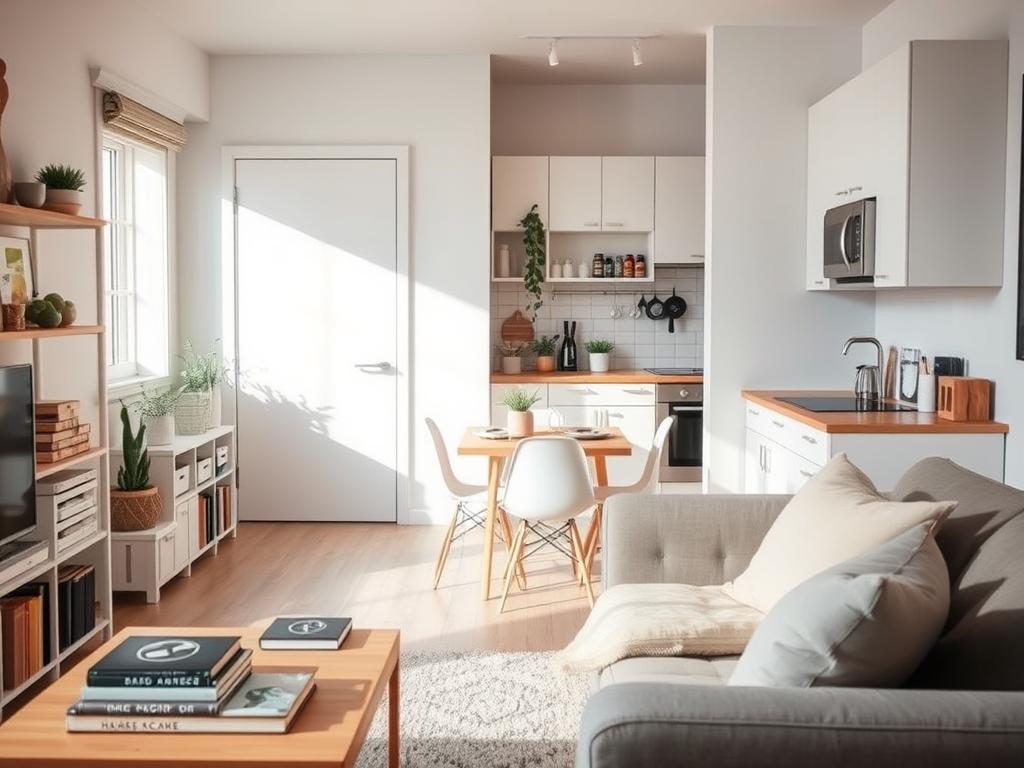
Organizing the Living Room
Divide the living area into zones: seating, work, and storage. Zoning stops clutter from spreading and keeps items close at hand.
Pick furniture with hidden compartments, like TV stands with cabinets or storage benches. Use decorative baskets for blankets and magazines to keep surfaces neat.
Manage media gear with cord organizers and a tray for remotes. Store seasonal decor in labeled boxes to keep the area simple.
Maximizing Kitchen Efficiency
Keep often-used tools near prep areas to cut down walking while cooking. Magnetic knife strips and under-shelf racks free counter space.
Use lazy Susans in cabinets and stackable containers in the pantry. Clear airtight containers from brands like OXO or Rubbermaid improve visibility and freshness.
Throw out expired food and combine duplicate tools. Rotate small appliances so counters stay clear and handy items are easy to reach.
Bedroom Organization Techniques
Create a calm, clutter-free sleep zone to support better rest. Limit nightstand space to stop piles of clutter.
Use under-bed storage for off-season clothes and drawer dividers for socks and accessories. Wall hooks hang bags and robes off the floor.
Follow a one-in, one-out rule for clothing to stop your wardrobe from getting overcrowded.
| Area | Key Tip | Recommended Products |
|---|---|---|
| Living Room | Zone by function; use hidden storage and baskets | Storage bench, cord organizers, woven baskets |
| Kitchen | Store items by frequency; use clear containers and racks | OXO/Rubbermaid containers, lazy Susan, magnetic knife strip |
| Bedroom | Keep sleep zone minimal; use under-bed and dividers | Under-bed bins, drawer dividers, wall hooks |
Effective Use of Closet Space
Small closets can feel crowded without a plan. Smart choices turn tight spaces into efficient storage zones.
These tips support effective closet organization and practical storage solutions for small apartments.
Seasonal Clothing Rotation
Rotate wardrobes each season to free hanging space. Store off-season garments in labeled bins or vacuum bags.
Use acid-free tissue for silk, cashmere, and delicate pieces. Check items before packing.
Donate clothing not worn in the last year. Add cedar blocks to deter moths and keep linens fresh.
Adding Shelving and Hooks
Renter-friendly options expand capacity without permanent changes. Tension rods create extra hanging tiers.
Removable shelving units and over-the-door hooks add storage for bags and scarves. Command adhesive hooks hold hats and belts without drilling.
Install an adjustable shelf or a second hanging rod to double hanging space. A small shoe rack or cubby system keeps footwear tidy.
Utilizing Clear Bins for Visibility
Clear plastic bins make it easy to find accessories and seasonal items. Brands like Sterilite and Iris offer durable, stackable options.
Use a label maker or printed tags for consistent labeling. Keep like items together: belts, hats, scarves, and off-season sweaters.
Utilizing clear bins improves visibility and speeds daily routines.
Inviting Natural Light
Bright, airy rooms lift mood and make spaces feel larger. In small apartments, natural light is key to maximize space.
Arranging Furniture for Light Flow
Place large furniture away from windows so daylight is not blocked. Angle seating toward windows to create a welcoming spot.
Float sofas or beds in studio layouts to open pathways. Clear walkways so daylight reaches dark corners.
Choosing Light Furniture Colors
Pick light wood tones, white, beige, or soft pastels to brighten surfaces. These colors reflect light and make rooms look bigger.
Balance pale hues with textured rugs, woven throws, and patterned pillows to avoid a dull look. Use small muted accents to add depth.
Using Mirrors to Reflect Light
Place mirrors opposite or near windows to boost daylight and add depth. A large floor mirror suits living areas well.
Mirrored trays or furniture add subtle reflections. For rentals, use adhesive mirror tiles or lean mirrors safely against walls.
Secure tall mirrors with anti-tip hardware when needed for safety.
Digital Organization Strategies
Keeping a small apartment orderly involves more than just physical items. Clear digital habits help reduce stress and save time.
These habits help manage bills, warranties, and household plans better. The steps below cover file cleanup, device order, and calendar use.
Decluttering digital files
Create a simple folder system for important categories: Finance, Receipts, Manuals, and Personal. Use consistent file names like 2026-03_BankStatement.pdf for faster searching.
Remove duplicate files and empty folders during a monthly tidy-up. Back up important documents to Google Drive, Dropbox, or iCloud.
Keep one offline copy of important files for emergencies. This adds a layer of security to your documents.
Organizing your smart devices
Uninstall unused apps from phones, tablets, and smart TVs to free storage and boost performance. Group frequently used apps into labeled folders like Home, Utilities, and Bills for quick access.
Set up a central charging station on a shelf or tray to reduce cable clutter. Keep all devices charged in one spot.
Use Bluetooth trackers like Apple AirTag or Tile for often misplaced items. Pair trackers with a phone app and designate a drawer or hook for keys to save time searching.
Consolidate platforms when possible. This limits the number of accounts and logins you need to manage.
Implementing a digital calendar
Use Google Calendar or Apple Calendar to schedule cleaning tasks, trash collection days, and donation drop-offs. Create recurring events for weekly chores and monthly digital tidy-ups.
Share your calendar with roommates or partners so everyone knows trash days, grocery runs, and shared errands. Color-code events to separate chores, bills, and social commitments.
Enable notifications for time-sensitive tasks. A clear digital calendar helps build consistent habits and reduces last-minute clutter in a small space.
| Task | Recommended Tool | Frequency | Quick Tip |
|---|---|---|---|
| File backup | Google Drive / iCloud / Dropbox | Weekly incremental, monthly full review | Use clear folder names and date prefixes |
| App cleanup | iPhone/Android settings | Quarterly | Remove apps not opened in 90 days |
| Device charging station | Power strip, cable organizer | Daily | Place near entry to drop devices on arrival |
| Track misplaced items | Apple AirTag / Tile | As needed | Attach to keys, wallet, or bag |
| Calendar planning | Google Calendar / Apple Calendar | Weekly setup, daily check | Use shared calendars and color codes |
Time Management for Maintaining Order
Keeping a small apartment tidy depends on simple routines and clear priorities. Time management helps stop clutter from piling up. Small habits make cleaning less of a chore and more of maintenance.
Scheduling Regular Cleaning Days
Set a weekly schedule combining quick daily resets with one deep cleaning session. For example: Mondays for laundry; Wednesdays for bathroom; Saturdays for vacuum and dust. Do monthly decluttering and reassess storage.
Scheduling cleaning days creates predictability and lessens decision fatigue. When tasks have set times, they become routines. These routines keep small spaces functional and calm.
Importance of Setting Timers
Use short, timed bursts to keep momentum. Pomodoro-style cleaning sessions work well: 25 minutes focused or 10–15 minute sprints for intense tasks. Timers turn vague plans into clear actions.
Timers make chores manageable and show a clear end point. This structure increases focus. It helps finish tasks without spending too much time.
Balancing Work and Home Responsibilities
Blend chores into your daily work rhythm, especially if you work from home. Use breaks for 5–10 minute tidying. This keeps common areas ready and avoids long cleaning sessions at night.
Delegating chores lessens the burden. Assign tasks to household members with clear instructions and short check-ins. When possible, hire help for deep cleaning or laundry pickup to save your personal time.
| Strategy | Action | Timebox |
|---|---|---|
| Weekly focus | Rotate laundry, bathroom, vacuuming, dusting | 1–2 hours per session |
| Daily reset | Clear surfaces, wash dishes, quick sweep | 10–15 minutes |
| Timed sprints | Pomodoro cleaning bursts for high-impact zones | 10–25 minutes |
| Monthly maintenance | Declutter and reassess storage solutions | 2–3 hours |
| Work-home integration | Use breaks, delegate tasks, outsource when needed | 5–30 minute intervals |
The Role of Technology in Organization
Technology can simplify daily routines and keep a small apartment tidy with less effort. It changes how people manage chores, track items, and plan errands.
Practical gadgets and tools save time and reduce visual clutter.
Smart home devices automate repetitive tasks and cut down on upkeep time. They free mental space for other priorities while helping maintain order.
Smart Home Devices for Efficiency
Smart plugs let residents schedule lamps, fans, or coffee makers, keeping cords controlled. Appliances run only when needed.
Robot vacuums like iRobot Roomba and Eufy handle daily floor care on a set schedule. Voice assistants such as Amazon Alexa and Google Nest link devices.
They allow someone to start cleaning or adjust lights with a quick command. These setups reduce clutter from cords and cleaning gear.
Scheduled cleaning keeps surfaces clearer. Remote control helps when someone is away, and energy management lowers wasted power use.
Apps for Organization and Planning
Apps help users break projects into small tasks and track progress. Todoist, Trello, Google Keep, and Any.do manage to-dos and sync with calendars.
Sortly and CamScanner assist with inventory and digital receipt storage. Habitica and Streaks turn routines into trackable habits.
Integrations with calendars and reminders make daily habits easier to build. Using these apps cuts down on paper lists and duplicate purchases.
Notifications prompt small actions that prevent clutter from piling up.
Benefits of Online Grocery Shopping
Online grocery shopping helps people limit bags and bulky items in a small home. Services like Instacart, Amazon Fresh, Walmart Grocery Pickup/Delivery, and local chains offer delivery windows and pickup choices.
Scheduling orders reduces impulse buys and helps keep pantry items organized. Digital lists and repeat orders prevent duplicates and wasted space.
Delivery options save time spent walking aisles and carrying groceries. This keeps entryways and counters less crowded.
| Tool Type | Example Brands/Apps | Main Benefit |
|---|---|---|
| Smart plugs | TP-Link Kasa, Wemo | Automated power control, reduced cord clutter |
| Robot vacuums | iRobot Roomba, Eufy | Scheduled cleaning, less manual vacuuming |
| Voice assistants | Amazon Alexa, Google Nest | Centralized device control, hands-free commands |
| Task and planning apps | Todoist, Trello, Google Keep, Any.do | Task management, calendar sync |
| Inventory and scanning | Sortly, CamScanner | Digital inventories, easy lookup of items |
| Habit trackers | Habitica, Streaks | Consistent routines, habit reinforcement |
| Grocery delivery | Instacart, Amazon Fresh, Walmart Grocery | Time savings, fewer bags, planned purchases |
Keeping the Momentum Going
Maintaining a tidy small apartment is about steady effort, not a big overhaul. A simple routine helps keep momentum. It also prevents clutter from coming back.
Set short checkpoints and use easy tools to make progress clear and manageable.
Tracking Your Progress
He or she can use before-and-after photos, a checklist, a habit tracker app, or a short journal. These log wins and setbacks. Monthly reviews work well for tracking progress.
Count donated items, note cleared surfaces, and measure reclaimed square footage. This tracking makes small gains feel real. It also guides the next steps.
Rewarding Yourself for Achievements
Small, budget-friendly rewards help reinforce good habits. A new houseplant, a decorative basket from Target, or a casual dinner out make good incentives.
Positive reinforcement shifts focus from chores to benefits. This makes keeping momentum more enjoyable.
Revisiting Your Organization Strategy Regularly
Quarterly reviews help adapt to life changes like a new job or seasonal wardrobe swaps. Rotate items and tweak storage solutions during these reviews.
Consider upgrades to shelving, apps, or multi-use furniture when needed. Regular revisiting keeps the system practical and sustainable over time.