

Nearly 60% of Americans waste at least ten minutes daily looking for clothes. This lost time adds up quickly over a year.
This short guide shares practical, lasting ways to keep closets organized in U.S. homes. It shows how to organize closets, from assessing and decluttering to picking storage and setting routines.
Readers get tips that fit busy professionals, parents, renters, and homeowners. They learn how to save time daily, reduce stress, and extend garment life using smart habits and storage.
The article includes DIY methods and trusted options from brands like IKEA and The Container Store. It also covers tech tools and shopping tips for long-term closet care.
Follow these steps: assess and declutter, choose storage, set a system for seasonal rotation and categorizing, develop maintenance habits, and plan periodic reassessment. This method keeps closets organized for months and years.
Understanding the Importance of Closet Organization
The state of a closet affects daily routines and long-term habits. Clear systems cut minutes from morning prep. They protect garments and reveal unused space.
Practical closet organization ideas bring order to clothing, shoes, and accessories. This helps people spend less time searching. They can wear what they love more often.
Below are tangible benefits and psychological effects that explain why investing time in order pays off.
Use these points as a guide when applying closet organization tips at home.
Benefits of an Organized Closet
Time savings is the most immediate payoff. Faster outfit selection lowers stress during busy mornings. It streamlines daily routines.
Proper hanging and storage reduce wrinkling and fabric damage. This lengthens garment life and preserves quality.
Space optimization follows next. Shelving, vertical solutions, and consolidated storage increase usable square footage. The Spruce and Real Simple report smart storage boosts capacity. It also reduces daily friction.
Financial gains appear when people avoid duplicate purchases. Clear views of inventory lead to smarter shopping. These savings add up, making organization a budget tool.
Psychological Impact of a Clutter-Free Space
An orderly closet reduces decision fatigue and lowers stress. Research links tidy spaces with better focus and emotional well-being.
When clothing areas are uncluttered, sleep quality and mood often improve.
Sustained organization creates a sense of control and accomplishment. This positive feedback helps maintain closet order over time. Small, consistent habits prevent clutter from returning.
For quick wins, follow simple closet organization tips. Group items by use, keep often-worn pieces accessible, and rotate seasonally. These ideas help build lasting systems.
Initial Steps to Declutter Your Closet
Before rearranging shelves or buying storage bins, a clear plan speeds up the task and makes it effective. Take a quick inventory and measure the space. This helps decide which closet organization hacks to use and shows how to organize a closet to fit daily life.
Assessing Current Closet Contents
Start by emptying the closet or taking photos of shelves and hanging rods. Seeing everything at once helps spot duplicates and unused items. Group your clothes into categories like tops, bottoms, outerwear, activewear, formalwear, and accessories.
Measure rod heights, shelf depths, and floor space carefully. Write down these numbers to plan storage and pick shelves that fit. Track how often you wear each item.
Use a rule like “not worn in 12 months” to mark things for review. Think about changes like working from home or new hobbies. These can change what belongs in your main closet. Keep a short inventory sheet with category counts to guide your choices and shopping.
Deciding What to Keep, Donate, or Discard
Set clear rules: fit, condition, how often worn, sentimental value, and style. Sort items by deciding to keep, repair, donate, recycle, or sell. This method speeds decisions and cuts down on doubt.
If items are good but unwanted, donate to charities like Goodwill or The Salvation Army. Professional clothes may go to Dress for Success. For worn fabrics, use recycling programs like H&M garment collection or TerraCycle.
Wash items before donating. Fix pieces if repair cost is low. Stained or badly damaged fabrics go to recycling or trash if no textile option exists. To recover costs, sell items on platforms like Poshmark, eBay, or Depop.
Keep a short checklist by your closet to keep habits clear. These steps make decluttering easier and help maintain order. Simple, repeatable actions are the best closet organization hacks for lasting tidiness.
Choosing the Right Storage Solutions
Selecting the right mix of shelving, bins, and accessories creates a closet that works every day. Practical choices balance strength, access, and appearance. This guide outlines options for different budgets and lifestyles, focusing on the best closet organization systems and tools.
Shelving Options for Optimal Space Usage
Fixed shelving offers a sturdy, permanent base for heavy items. It suits those wanting a lasting setup with no frequent changes. Adjustable systems like IKEA PAX or offerings from California Closets provide flexibility for growing wardrobes.
Material choice matters. Plywood or solid wood shelves hold weight and resist sagging better than particleboard or MDF. Metal shelving fits industrial or laundry areas and supports heavy bins.
Open shelving keeps items visible for quick access. Cabinets and cubbies hide folded clothes and reduce clutter. Double hanging rods, pull-out shelves, and pant racks increase space without widening the closet.
Budget brands like Rubbermaid and ClosetMaid offer reliable, practical closet organization ideas without a custom price tag.
Bins and Baskets for Smart Storage
Clear plastic bins work well for seasonal storage because you can see the contents easily. Breathable fabric bins protect delicate fabrics, while woven baskets add texture for accessories. Use uniform sizes for stackability and efficient shelf use.
Labeling speeds retrieval. Printed labels or clear lids help users identify contents quickly. Place labels on front edges so they stay visible when items stack.
Shop The Container Store, Target, or Amazon for stackable bins that match shelf depth. Specialty organizers for scarves, belts, and undergarments keep small items tidy. Drawer inserts prevent tangling or loss of socks and jewelry.
For moisture control, add silica gel packets in closed bins to reduce mold and mildew during off-season storage. This small step helps maintain organization long-term.
Implementing a System for Closet Organization
A clear plan turns a crowded wardrobe into a practical space. This section outlines steps for a lasting closet organization system.
It makes daily dressing easier and reduces clutter over time.
Seasonal Rotation of Wardrobe Items
Begin with a simple schedule for seasonal closet rotation. A biannual switch in spring and fall works for most climates.
Families in variable regions may prefer quarterly swaps.
Pack off-season clothes into labeled bins, vacuum-seal bags, or under-bed storage. Clean garments before storing.
Use breathable storage for wool and cashmere to protect fibers.
Place cedar blocks or lavender sachets with stored pieces to deter moths. Keep a short checklist for rotation day.
Create a basic inventory using a photo log or a simple spreadsheet. Clear labels and quick notes prevent forgotten items.
This speeds up future rotations.
Categorizing Clothes by Type
Group garments by category: shirts, blouses, pants, skirts, dresses, outerwear. Within those groups, sort by use—work, casual, active, and formal.
This makes outfit choices fast.
Use uniform hangers to save space and maintain order. Slim velvet hangers maximize capacity.
Reserve wooden hangers for structured coats and blazers.
Arrange items so frequently worn pieces sit at eye level. Store rarely used items higher or lower.
Designate a small capsule area for go-to outfits to streamline mornings.
Set up accessory stations near related clothing: keep belts next to pants and ties by shirts.
This helps assemble looks without hunting through drawers.
Utilizing Vertical Space Efficiently
Making use of vertical closet storage can turn small closets into very useful spaces. Simple additions free shelf space and reduce clutter. They also create clear zones for daily items.
The right setup allows easy access. It helps keep the closet organized over time.
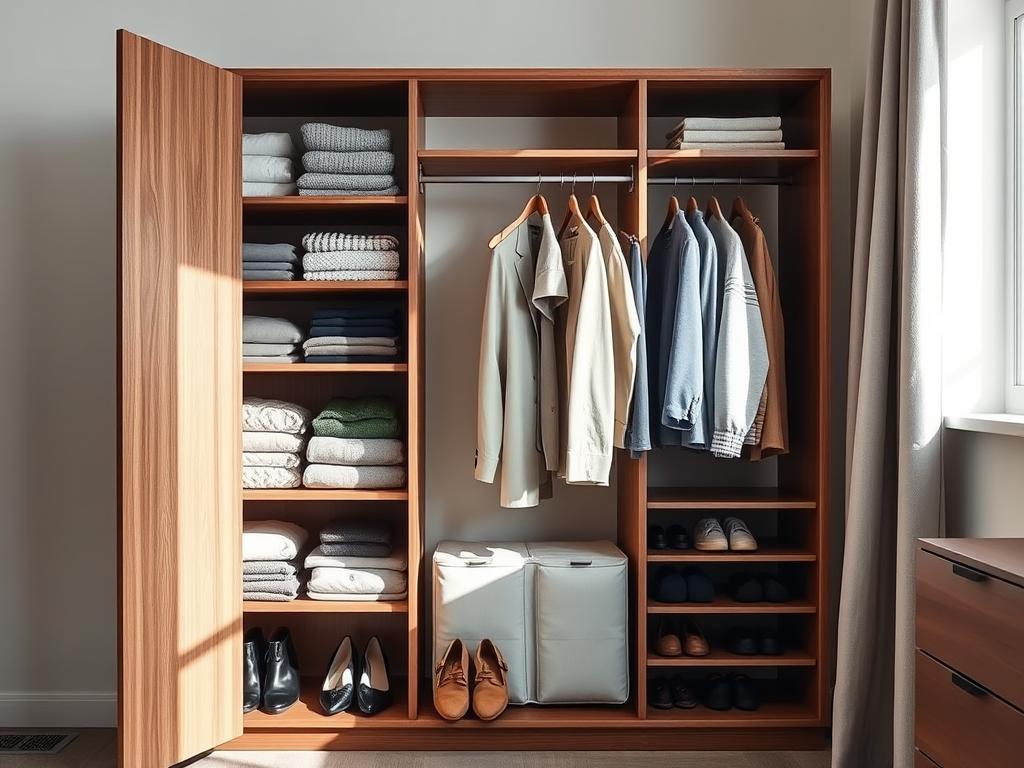
Adding Hooks and Racks
Wall-mounted hooks offer quick access to bags, hats, and robes. Renters can use Command hooks to avoid damage. Homeowners might choose stainless-steel hooks for a strong, permanent fix.
Accessory racks keep ties, belts, and handbags visible and off shelves. Adding a second lower rod creates double-hang sections. This lets you separate shirts from pants and adds hanging space.
Tiered or cascading hangers increase hanging capacity. Cascading systems can save up to 50% of rod space. This is a smart hack for organizing small wardrobes.
Over-the-Door Organizers
Over-the-door shoe organizers are great for flats and sandals. Pocket organizers hold beauty tools, sunglasses, and small accessories. This helps keep countertops clear.
Over-the-door racks also store scarves, jewelry, and seasonal coats. This frees up shelf and rod space. Choose slim-profile organizers from The Container Store, Bed Bath & Beyond, or AmazonBasics. These avoid crowding the doorway.
Check door thickness and weight limits before installing. Heavy items should attach to studs. Or move them to nearby wall space if the door cannot hold the load.
These ideas help keep doors working well while improving storage space.
Tips for Maintaining Closet Organization
Keeping a closet tidy needs simple routines and occasional checks. Small daily habits stop clutter from building. Regular upkeep helps storage work well and keeps order long-term.
Daily Habits to Keep Chaos at Bay
Use a one-in, one-out rule to prevent buildup. When you add new items, donate or discard one old item.
Do a quick nightly reset for five minutes. Hang clothes, fold loose items, and put shoes back on racks.
This small action keeps your closet organized every day.
Use two laundry baskets: one for washing and one for mending. Return clean clothes promptly to their places to reduce piles.
Keep a donation bag in your closet for unwanted items. This makes regular purging easy and supports closet hacks.
Weekly or Monthly Maintenance Checks
Weekly scans take just minutes. Rehang clothes, realign bins, and move misplaced items to their zones. These quick checks stop small issues from growing.
Monthly audits are deeper. Check shelves, rods, and bins for damage. Tighten loose hardware and test storage to ensure it lasts.
Look at which clothes are worn often and which are not used.
During seasonal rotations, reevaluate fit and usefulness. Move rarely used items to storage or donate them.
Adjust shelves or add hooks if your needs change to support closet organization better.
Track simple metrics to help future choices. Note how often clothes are worn and list missing essentials.
These notes make decluttering easier and show useful closet organization hacks for next time.
Color-Coding Your Wardrobe
Color-coding can turn a messy closet into a calm and efficient space. This method brings clear visual order that helps you choose outfits faster. Small habits help keep the system working and make it easier to maintain your closet.
Benefits of a Color-Coded System
A color-driven layout reduces decision fatigue by allowing the eye to find matching pieces quickly. It speeds up getting dressed on busy mornings. The closet also looks nicer and more organized.
Color grouping helps you spot missing tones to add when shopping. When shirts, sweaters, and outerwear share a color order, the closet feels neat and planned.
How to Effectively Color-Code Clothes
Start with a clear order. Place items from light to dark or follow a rainbow sequence: white, neutrals, pastels, brights, then darks. Use the same order in all sections for consistency.
Use labeled dividers, colored hang tags, or matching hangers to keep the system in drawers and shelves. Folded clothes benefit from methods like KonMari to keep neat stacks.
Handle prints and multicolored clothes by giving them a special section or grouping them by their main color. Add shelf labels and uniform hangers to make daily care simple.
These tips work well with other closet ideas like bins, racks, and vertical solutions. Regular checks and easy rituals help keep the color-coding system strong. This extends the value of your organized wardrobe.
Organizing Shoes and Accessories
The right storage choices make daily dressing easier. They help keep closets neat over time. This guide shares practical shoe and accessory ideas for every space and budget.
It highlights products and DIY fixes. These help keep items visible, protected, and ready to wear.
Designated shoe storage solutions
Shoe racks and shelves work best when picked for a person’s shoe collection. Tiered shelves and cubbies keep sneakers and flats easy to see. Slanted shelves show heels and dress shoes clearly.
Stores like IKEA, The Container Store, and Wayfair offer modular pieces for closets or entryways. Clear shoe boxes and stackable bins make seasonal swaps simple. Labels or phone photos on the front help find shoes fast.
For bulky boots, under-bed rolling drawers and zippered boxes save closet floor space. Wall-mounted shoe organizers or hanging pockets fit narrow areas. They keep shoes off the ground and closets tidy.
Creative ways to organize accessories
Jewelry stays tangle-free in drawer inserts, hanging valet trays, or on pegboards. Small trays and labeled compartments keep rings and earrings sorted for quick choice. Curtain-rod hooks or tension rods hold clutches and bracelets affordably.
Belts and ties fit well on vertical hangers, pegged racks, or scarf hangers. Handbags keep their shape on open shelves with purse shapers or tissue paper. Frequently used bags can hang on hooks for easy access.
Sunglasses and small items go into trays or divided drawers to stay easy to find. Affordable DIY tricks create big wins. Muffin tins divide jewelry drawers. Tension rods make mini shelves for clutches.
Curtain rod hooks turn a simple bar into a bracelet station. These ideas pair with closet tools like shelf dividers and clear bins. They protect items and keep them visible.
Below is a compact comparison to help pick the right option based on space, cost, and visibility.
| Storage Type | Best For | Approximate Cost | Visibility & Access |
|---|---|---|---|
| Tiered shoe shelving | Everyday shoes, sneakers | $30–$150 | High—easy to see and grab |
| Clear stackable shoe boxes | Seasonal or specialty shoes | $2–$12 per box | High when labeled or photo-tagged |
| Under-bed rolling drawers | Boots and off-season footwear | $25–$80 | Medium—good for bulk items |
| Wall-mounted pockets | Entryways, walk-ins | $15–$60 | Medium—saves floor space |
| Drawer inserts & trays | Jewelry, sunglasses | $10–$40 | High—keeps small items sorted |
| Pegboards & hooks | Necklaces, belts, handbags | $15–$70 | High—customizable display |
Utilizing Technology for Closet Organization
Technology makes keeping a closet tidy and easy to access much simpler. Apps and gadgets help catalog items, plan outfits, and remind users about rotating seasonal pieces. Retail platforms and modular systems make buying pieces that fit a space easier.
The right digital tools let you track what you own and how often you wear items. Stylebook, Cladwell, and Closet+ help catalog clothes, create outfits, and identify wardrobe gaps. A Google Photos album or spreadsheet works as a simple inventory for quick reference.
Label makers from Brother and Dymo bring order to bins and shelves. Barcode tools speed up cataloging in large closets. Alexa or Google Assistant can create voice-triggered lists and set reminders to maintain organization regularly.
Choosing storage from trusted retailers reduces guesswork. The Container Store’s Elfa line and IKEA’s PAX system offer modular setups for custom layouts. California Closets provides full customization for complex spaces.
For budget-friendly options, Amazon, Target, and Walmart supply hangers, bins, and accessories. These items pair well with higher-end systems. Specialty items also help preserve garments.
Clear shoe boxes from The Container Store or IKEA make identification easy. Cedar chests and L.L. Bean storage protect seasonal pieces from moisture and pests. Buyers should check measurements and read reviews before purchasing.
A short table compares popular closet organization tools and where to find them. It helps match needs to budget and space.
| Tool | Function | Where to Buy |
|---|---|---|
| Stylebook, Cladwell, Closet+ | Inventory, outfit planning, wear tracking | App Store, Google Play |
| Brother, Dymo label printers | Consistent bin and shelf labeling | Amazon, Staples |
| Elfa (The Container Store), PAX (IKEA) | Modular shelving and custom fittings | The Container Store, IKEA |
| Clear shoe boxes, cedar storage | Shoe visibility and garment preservation | IKEA, The Container Store, L.L. Bean |
| Amazon, Target, Walmart accessories | Budget hangers, bins, hooks | Online and in-store |
Using technology and smart shopping helps people find the best closet systems for their needs. Proper tools and routines make maintaining organization easier every week and season.
Evaluating and Adjusting Your Organization System
An organized closet needs checkups now and then. These help find clutter spots and worn storage solutions. They also show which items rarely get worn.
A simple review every six months and an annual audit give a clear view of what works. These reviews help you see what needs to change.
Knowing When to Reassess Your Organization Method
Signs to check your closet system include clutter buildup and items that are always misplaced. Also watch for shelving or bins that no longer hold up.
Life changes like a new job, seasonal wardrobe shifts, or family growth signal the need to reassess. Use objective measures like time spent finding outfits, the number of unworn items, and donated pieces to find problems.
Adapting to New Needs Over Time
When adjusting closet organization, choose modular and adjustable solutions that can grow with you. Adding a shelf or swapping to slimmer hangers can help quickly.
Installing a second rod also creates more space. If your budget allows, professional systems from companies like California Closets or custom installers can be added over time.
To keep your closet neat long-term, build small habits and schedule audits linked to life events like moves or career shifts. Regular tweaks keep your system flexible and useful.
Following these closet tips helps create a plan that stays helpful as your needs change and your wardrobe grows.