

Nearly 80% of parents say toy clutter or school items cause daily stress at home.
This fact shows how small habits can overwhelm family life.
This short guide helps busy U.S. families learn practical home organization tips with kids.
It focuses on systems that are durable, age-appropriate, and easy to maintain.
Parents can reclaim time and reduce stress with these methods.
Common pain points include overflowing toys, laundry piles, and lost school supplies.
These everyday issues add minutes that become hours and push families away from shared time.
The right approach makes a tidy house with kids feel possible, not punishing.
Realistic goals are important: expect reduced clutter and clear zones for play and schoolwork.
Create daily routines that take 10–20 minutes.
Children will learn to contribute, building habits that last.
The methods here draw on evidence-based habit formation and developmentally appropriate tasks.
They include practical product suggestions from retailers such as IKEA, The Container Store, and Target.
Professional organizers and child-development specialists favor simple routines, clear storage, and consistent rewards to sustain progress.
Understanding the Importance of Organization
Keeping a household orderly around children changes daily life for the better. Clear systems cut down on wasted time, lower stress, and make the home safer.
Families who adopt sensible routines find more time for work, play, and rest. They also build steady habits that last.
The benefits of organizing with kids go beyond neat shelves. Parents who use labeled storage and daily routines spend less time hunting for shoes or school supplies.
Research links tidy environments to lower cortisol levels and better parental well-being. Reduced clutter also limits trip hazards and creates calmer spaces for everyone.
Children gain practical skills when they join household efforts. Age-appropriate chores and simple storage tasks support responsibility and independence.
Organized bedrooms and study corners improve sleep and focus for homework. Predictable spaces reduce overstimulation, which helps behavior and cuts down on tantrums.
Shared organization systems improve family dynamics by clarifying expectations and boosting communication. Parents model life skills children will use into adulthood.
A consistent approach to putting things away helps siblings cooperate without constant reminders.
View organizing as an investment in time and behavior, not a one-time cleanup. Small, repeatable steps preserve gains and make maintenance easier.
Family-friendly organization ideas that fit daily rhythms pay off with less stress and more meaningful family moments.
Benefits for Parents
Parents save valuable time when systems work. Labeled bins and a shared morning routine reduce last-minute searches and missed appointments.
Less clutter lowers stress and helps parents think clearly at work and home. Safer, tidy rooms cut accidents and make supervision simpler.
Benefits for Children
Children develop skills that matter in life. Sorting toys and putting items back build responsibility and planning.
Stable environments help kids sleep better, concentrate on school, and play more safely. Clear expectations reduce friction and teach emotional regulation through routine.
| Area | Parent Benefit | Child Benefit |
|---|---|---|
| Entryway | Less time finding coats and shoes | Learn to store belongings in one place |
| Playroom | Faster cleanup before meals | Practice sorting and sharing |
| Study Area | Improved focus for remote work or tasks | Better homework habits and concentration |
| Bedroom | Lower stress at bedtime | Consistent sleep routines and independence |
| Kitchen | Easier meal prep with labeled storage | Simple tasks like clearing plates build routine |
Decluttering: The First Step
Decluttering creates space so storage systems work well and daily life feels calmer. Families who reduce extra items cut down visual and physical clutter. This clutter often overwhelms both parents and kids. A clear plan helps make the process faster and stick longer.
Setting Decluttering Goals
Good decluttering goals follow the SMART method: specific, measurable, achievable, relevant, and time-bound. Examples include “donate 50 toys this weekend” or “clear one closet in two hours.” You might also “sort school papers daily for 10 minutes.”
Focus on busy areas like the entryway, living room toy spots, and kids’ bedrooms. Small wins in these areas make routines easier. Tracking progress helps everyone see their impact.
Tips for Effective Decluttering
Sort items into groups: toys, clothes, books, art supplies, and school papers. Then make four piles: keep, donate, recycle, and trash. This method makes decisions faster and clearer.
Follow the one-in, one-out rule to limit future clutter. When a new toy or clothing item comes in, remove an older item. This simple method helps parents avoid feeling overwhelmed.
Include children in the process at their age level. Older kids can choose keepsakes and donation items. Younger kids do better with fewer options and clear limits. This helps make decluttering with children a team effort.
Set session times between 20 and 90 minutes to prevent burnout. Short, regular sessions work better than long, rare ones. After each session, note what was removed and adjust storage plans.
Use donation spots like Goodwill, Salvation Army, consignment shops, and local Buy Nothing groups. Check for recalls on older toys with the Consumer Product Safety Commission. Safely throw away broken items.
| Step | Action | Timeframe |
|---|---|---|
| Plan | Set SMART decluttering goals for families and list target areas | 15–30 minutes |
| Sort | Divide items into keep, donate, recycle, trash by category | 20–90 minutes per session |
| Involve Kids | Give choices to older children; offer limited options to younger ones | 5–20 minutes per child |
| Rehome | Drop off donations or list on local groups and consignment sites | 1–3 days |
| Maintain | Apply one-in, one-out rule and revise storage plans after decluttering | Ongoing |
Creating a Kid-Friendly Organization System
An effective system keeps toys reachable, visible, and easy to use. It focuses on low shelving, clear containers, and routines that make cleanup automatic.
Durable materials and anchored furniture protect kids and give parents peace of mind.
Best setups use open storage so children know where items belong. A mix of cubbies, baskets, and stackable bins reduces clutter.
This supports independent play. Parents should choose pieces that double as furniture, like storage ottomans and benches.
Safety matters. Anchor tall units to walls following CPSC guidance. Choose rounded corners and non-toxic finishes.
Place heavy toys on lower shelves to reduce tipping risk. Keep pathways clear to prevent trips.
Best Storage Solutions for Toys
Low shelving units like IKEA KALLAX or Target Threshold cubbies work well with baskets and clear bins.
Mesh bags hold stuffed animals. Rolling carts corral vehicles. Stackable clear plastic bins with lids keep small parts organized.
Toy rotation reduces overstimulation and keeps interest longer. Store half the collection away and rotate weekly.
This pairs well with good toy storage to make playtime feel fresh and cleanup quicker.
Furniture with built-in storage saves space. Ottomans, benches, and under-seat chests hide toys while serving daily needs.
Choose washable fabrics and easy-to-open lids so kids can use them without help.
Using Bins and Labels
Bins and labels for kids should be visible and placed at child’s eye level. Use color-coded bins for quick sorting.
Picture labels help preschoolers learn. Word labels help older children build reading skills.
Use removable, washable labels like chalkable stickers or a Brother P-touch for flexibility. Update labels as interests change.
Teach children to return items to their bins to keep the system working.
Consistency matters. Keep labels and bin categories the same across rooms. Reinforce cleanup habits with short, regular sessions. This makes the system part of daily life and keeps child-friendly organization effective.
Involving Kids in the Organization Process
Getting children involved builds ownership and helps systems last longer. When parents ask kids to help design storage and routines, the family agrees better. Framing tasks as part of family life turns chores into teamwork.
This method helps teach kids organization in a way that feels fair and useful.
Teaching Responsibility
Start with clear, simple instructions and show each step. Parents can model tasks by working alongside children. Praise specific actions like, “You put the books back on the shelf,” to encourage habits.
Connect each task to good results, such as faster cleanups or finding favorite toys. Use timers and short routines to keep kids focused.
Age-Appropriate Tasks
Match duties to a child’s abilities to keep expectations realistic. For toddlers, tasks are simple and concrete. Preschoolers can sort toys and help with shoes.
Early elementary children can make beds with help and sort laundry. Tweens manage closet care and school papers. Teens handle laundry, deep cleaning, and schedule management.
Support tools make participation easier. Chore charts, visual checklists, and small rewards give structure. A 10-minute clean-up race or sticker chart keeps momentum.
Offer limited choices when kids resist. Negotiate fair alternatives and keep consequences steady and fair.
Below is a quick comparison of tasks by age to guide families in assigning responsibilities and encouraging regular involvement.
| Age Group | Typical Tasks | Support Tools |
|---|---|---|
| Toddlers (1–3) | Pick up large toys; place books on low shelves; put clothes in hamper | Open bins, low shelves, picture labels |
| Preschool (3–5) | Sort toys into bins; help with shoes; wipe table after crafts | Simple checklists, colored bins, step stools |
| Early Elementary (6–8) | Make bed with guidance; sort laundry by color; store school bag | Routine charts, labeled baskets, timers |
| Tweens (9–12) | Organize closet; basic room cleaning; manage school papers | Folders, shelving, weekly checklist |
| Teens (13+) | Do laundry; weekly deep-clean; manage personal schedule | Calendar apps, storage bins, reward systems |
Designing Functional Spaces
Thoughtful layouts make homes easier to live in when kids are present. Start by defining zones for play, sleep, study, and storage. Keep these zones flexible to adapt as children grow.
Use furniture to mark areas in open-plan rooms. Do this without blocking traffic flow.
Multi-Use Furniture Ideas
Choose pieces that serve two or more purposes. A loft bed with a desk underneath saves floor space. It creates a study corner.
Beds with built-in drawers cut the need for extra dressers in small rooms. Convertible tables work well for crafts and family meals. Storage benches and toy boxes double as seating and containment.
Fold-down desks mount on the wall. This frees up room for play. Modular shelving from brands like IKEA can change as needs shift.
Durable finishes and stain-resistant fabrics keep items looking fresh after heavy use. These multi-use furniture ideas support tidy, flexible living.
Creating Play Zones
Design distinct areas for imaginative play, building, art, and reading. Use rugs, low shelving, or portable partitions to define each zone. Avoid permanent walls.
Placing frequently used toys in their zone reduces scatter. Rotate toys to keep interest high and clutter low. Set up a small cleanup station near play areas.
Include wipes, a dustpan, and a toy bin. Choose washable rugs and durable materials to make maintenance simple. Clear boundaries and reachable storage turn active corners into manageable spaces.
Thoughtful creation of play zones helps parents maintain order. It also gives children places to focus and explore.
Implementing Routines for Organization
Routines make household life smoother by cutting down on daily decisions and setting clear expectations. Small habits keep clutter from piling up. Families who create routines with kids see less last-minute scrambling and calmer task transitions.
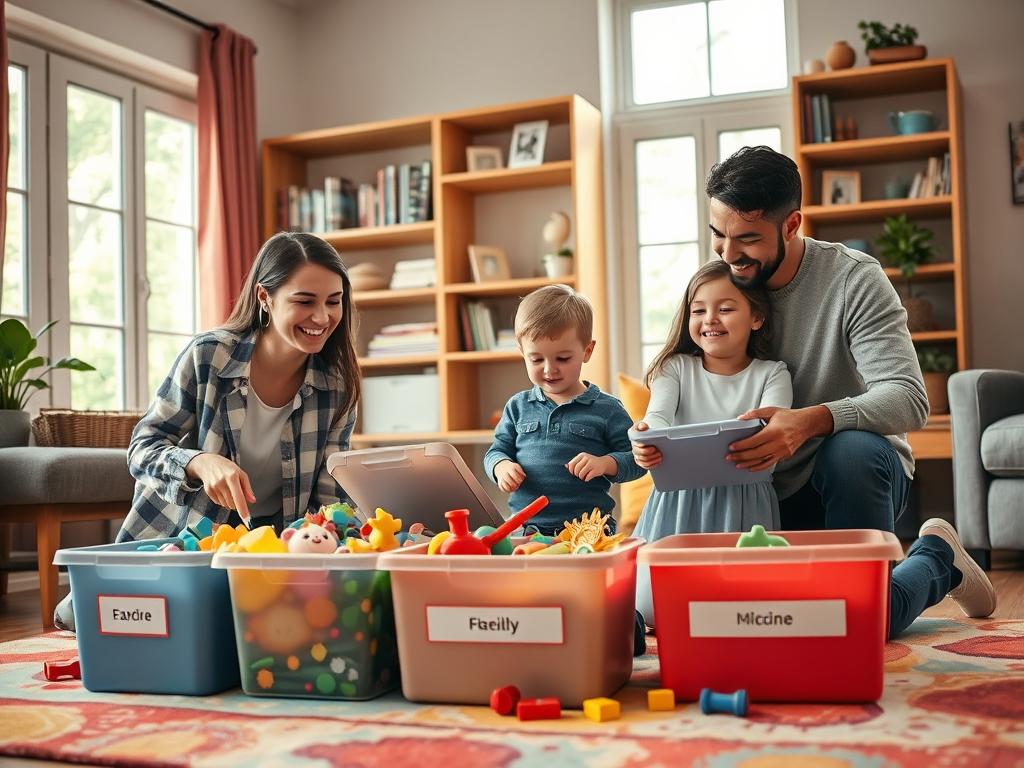
Start with a simple morning plan. Break tasks into short steps so they fit real life. Use charts or checklists near the entryway to help everyone stay on track.
Morning routines
Typical steps include making the bed, placing pajamas in the hamper, and brushing teeth. Pack backpacks and put shoes and coats in their spots. Set aside 15–30 minutes before leaving the house for these tasks.
Parents can smooth mornings by laying out outfits the night before and prepping lunches ahead of time. A single tray for keys, wallets, and masks keeps essentials from getting lost.
Visual checklists work well for younger children. Older kids respond to short timers and small responsibilities. These ideas support routines while keeping energy low and focus high.
Evening cleanup practices
A short family cleanup of 10–20 minutes after dinner or before bedtime prevents piles from growing. Assign zones so each person knows what to tackle. One child can gather toys while another sorts homework and a parent loads the dishwasher.
The tidy-by-task method speeds work and builds teamwork. Use wind-down rituals to mark the shift from cleanup to quiet time, like dimming lights or reading together.
Reserve one evening a week for deeper chores like vacuuming and sorting school mail. This weekly reset preserves order and reduces big cleanups.
| Routine | Time | Key Steps | Who |
|---|---|---|---|
| Morning checklist | 15–30 minutes | Make bed, hygiene, backpack ready, shoes/coats placed | Children + caregiver |
| After-dinner tidy | 10–20 minutes | Collect toys, sort school items, load dishwasher | Whole family |
| Weekly reset | 30–60 minutes | Vacuum, sort mail, deep declutter | Adults + older kids |
Choosing the Right Tools for Organization
Picking practical tools makes daily order easier. Parents can match items to room needs and save time. The right mix of products and apps keeps chores simple and habits consistent.
The list below highlights reliable, widely available brands and specific items that work well in family homes. These choices support safety, durability, and easy maintenance. They stay within budget.
Organizational Tools by Room
Entryways need quick drop zones. Command hooks, a shoe rack, a mail sorter, and a catch-all tray help control clutter.
Kitchens benefit from clear Sterilite or Rubbermaid containers for snacks. Labeled baskets hold lunch supplies. A central command area stores papers and schedules. Brother label makers make identification fast.
In the living room, use toy baskets, media consoles with cord management, and soft-close storage bins to keep play items contained and safe.
Bathrooms work better with divided caddies, drawer organizers for small items, and mounted dispensers for soap and shampoo. These reduce spills and speed up cleanups.
For bedrooms, add under-bed drawers, closet organizers from IKEA, over-the-door hooks, and hanging shoe organizers for small toys. These solutions maximize space and keep floors clear.
Laundry areas run smoother with separate hampers by color. A dedicated folding station and labeled detergent bins help sorting and washing.
Digital Organization Apps
Shared calendars and chore apps keep everyone on the same page. Google Calendar or Cozi work well for family schedules. FamCal is another option for shared planning.
For chores and tasks, OurHome and Tody help assign and track jobs. ChoreMonster engages younger children with gamified rewards.
Note and list tools like Google Keep, Evernote, and Microsoft OneNote store recipes, school papers, and to-do lists so nothing gets lost.
Sync devices, set shared reminders, and use color coding for each family member. These steps make digital apps act like a reliable helper.
Families should enable secure accounts and set parental controls when needed. This protects privacy and keeps apps accessible for kids.
- Practical tip: Test one physical organizer and one app at a time to avoid overwhelm.
- Practical tip: Place frequently used items within children’s reach to encourage independence.
- Practical tip: Review systems monthly to adjust as children grow.
These organizational tools for every room pair well with easy-to-use digital apps. Families that adopt small, consistent changes will find hacks that save time and reduce stress.
Sustaining a Tidy Home Environment
Keeping order in a busy household requires small, steady actions. A family that adopts simple habits prevents clutter from piling up.
This approach makes daily life calmer. It keeps spaces ready for spontaneous play or guests.
Practical systems make upkeep manageable. Use checklists and short routines so tasks don’t fall on one person.
These methods help sustain a tidy home. They teach kids responsibility and make chores predictable.
Regular Maintenance Tips
Daily habits should be quick and purposeful. Try a 10–20 minute family tidy session.
Sort mail and trash, wipe kitchen surfaces, and pick up shoes and stray clothing. These small acts reduce time spent on big cleanups.
Weekly tasks keep rooms fresh. Schedule vacuuming, a laundry load, and rotate toys.
Pick one drawer or shelf to declutter each week. A rotating checklist or chore calendar spreads responsibility evenly.
Monthly care prevents hidden problems. Deep-clean toy bins and inspect toys for damage.
Reassess storage needs and purge outgrown clothes. Mark these tasks on a family calendar to avoid forgetting them.
Seasonal Organization Checklists
Spring calls for a deep declutter. Donate clothes that no longer fit and clean closets and under beds.
Check outdoor ride-on toys for wear. These actions refresh the home after winter.
Summer is ideal for outdoor gear and travel prep. Organize toy storage and assemble travel bags.
Set up activity stations. Clear labeling speeds retrieval and return.
Fall focuses on the school year. Create a command center for backpacks and school mail.
Sort and label supplies and ready coats and boots. This reduces morning chaos.
Winter requires swapping wardrobes and indoor planning. Store summer clothes and build indoor activity kits.
Review holiday gift storage. Keep an inventory of major toy categories to avoid overbuying.
Long-term upkeep means periodic reviews. Schedule biannual system checks and rotate storage solutions as children grow.
Maintain an inventory list for key items. These measures support sustaining a tidy home over the years.
Organizing Bedrooms for Kids
A calm, functional bedroom helps children sleep, play, and study with less stress. Simple, reachable systems make daily tidy-up routines faster. Parents can set up zones for clothing, toys, and school supplies so kids know where things belong.
Creative Closet Solutions
Lower rods and adjustable shelving from IKEA or ClosetMaid let children reach their clothes without help. A double-hang rod separates tops from bottoms and keeps outfits visible. Hanging organizers with labeled pockets hold accessories, socks, and small toys within easy reach.
Color-coded hangers or seasonal bins on upper shelves speed wardrobe swaps. A rotating capsule wardrobe trims choices each day and reduces decision fatigue. Parents should set a seasonal schedule to declutter outgrown items after birthdays and seasonal changes.
Maximizing Under-Bed Storage
Shallow pull-out bins on casters provide quick access to shoes, spare bedding, and toys. Clear plastic bins make contents obvious. Fabric bins with lids cut dust.
Vacuum storage bags work well for bulky seasonal items like winter coats and extra blankets. Bed risers add clearance when needed, but stability and safety must come first. Label bins and rotate items seasonally.
These steps focus on maximizing under-bed storage while keeping the room tidy and functional.
Streamlining Family Schedules
Coordinated schedules reduce last-minute stress. They help everyone plan for events and responsibilities ahead.
A few simple habits can make daily life calmer for both parents and children.
Start with a shared calendar. Tools like Google Calendar or Cozi allow families to keep color-coded entries.
Recurring blocks for homework, chores, and bedtime remove guesswork from daily plans.
Use of calendar tools
Set reminders and attach notes or files to appointments to keep permission slips and school info in one place.
Sync calendars across phones and smart speakers. For homes with less technology, a paper calendar on the fridge works well.
Time management tips for parents
- Batch similar tasks like laundry and meal prep to save time during the week.
- Build short buffer periods of five to fifteen minutes between activities to cut rushing and late pickups.
- Delegate chores and swap carpools with other families to free pockets of time.
- Use a family yes/no rubric to decide new commitments based on current capacity.
- Prepare backpacks and lunches the night before. Create a morning pick-up station to speed exits.
Routines and simple checklists reduce decision fatigue for both kids and adults.
When families use these methods, they have fewer surprises and more predictable evenings.
Making the Most of Small Spaces
Families living in compact homes can enjoy style and order by maximizing every inch. Clear zones, smart furniture, and habits keep clutter under control.
The goal is to make the most of small spaces without losing comfort or play areas.
Space-Saving Ideas
Choose multifunctional furniture like sofa beds, ottomans with storage, and nesting tables. Fold-down desks and wall-mounted tables free floor space after homework or craft time ends.
Murphy beds and loft beds open up play or study space during the day. Use toy rotation to limit how many items are stored at once.
Keep clear zones with rugs and low shelving to define play and rest areas without bulky furniture. Over-the-door organizers and baskets keep small items accessible and hidden.
Vertical Storage Solutions
Think upward. Floating shelves, wall hooks, and pegboards are great for backpacks, art supplies, and seasonal gear.
Tall, narrow bookcases anchored to studs store books and bins while using minimal floor space. High-mounted cabinets hold items safely out of reach.
Use Command hooks and rails in entryways for coats and hats to keep traffic areas tidy. Confirm wall anchors meet weight guidelines and pick finishes to match your decor.
Celebrating Organizational Success
Celebrating success helps families turn new habits into lasting routines. Small wins build momentum. A cleared play corner, a tidy bedroom, or a completed donation box are worth noting.
Visible recognition keeps children engaged. It shows that order is a shared family value.
Reward Systems for Kids
Use simple, non-material rewards first. Try extra story time, choosing a family activity, or a sticker chart for daily wins.
Occasional tangible rewards can mark big milestones. The goal is to shift toward pride and added privileges as rewards.
Apps like OurHome gamify chores. They make a chore-to-reward system easy to track.
Tracking Progress Together
Tracking progress together shows steady improvement. Use a weekly chart, a checklist on the fridge, or before-and-after photos of decluttering.
Monthly family check-ins help celebrate wins, adjust plans, and set new goals. These include hosting guests without stress or freeing a play corner.
When the whole family shares success, it builds motivation and teamwork.