

Nearly 40% of U.S. renters live in units under 650 square feet. This fact shows that learning how to maximize small apartment space is essential, not optional.
This guide offers practical strategies to maximize tiny living spaces for renters and owners nationwide. It covers assessing constraints and smart furniture selection.
You’ll also find creative storage solutions, organization systems, decorating tips, layout planning, outdoor optimization, technology, and real-world case studies.
Readers in studios, one-bedroom apartments, shared housing, downsizing, remote work, or minimalism will benefit from these tips. They include budget-friendly DIY fixes and premium purchases from IKEA, West Elm, Wayfair, The Container Store, and Rubbermaid.
Using these methods can boost functionality, reduce daily stress, and improve aesthetics. They also increase perceived square footage and appeal to future renters or buyers.
To track progress, measure usable floor area and storage capacity in cubic feet. Note how often you declutter and record time saved on daily routines.
Understanding the Challenges of Small Apartment Living
Living in a compact urban apartment comes with clear physical limits. Many U.S. units have small floor space and shallow closets. Kitchens are tight and hallways narrow.
Renters face fixed layouts and load-bearing walls. Building rules often stop plumbing or electrical changes. These limits affect which organization ideas will fit.
Storage often is too small. Lack of shelves, no pantry, and tiny balconies mean creative solutions are needed. Tenants must blend sleeping, working, dining, and entertaining into one area.
Big furniture can block traffic and shrink the space. Choosing the right size furniture helps make small apartments feel larger.
Small spaces affect the mind as much as the body. Clutter raises stress and lowers focus. How roomy a space feels depends on layout, light, and color more than size.
Good organization can make a place feel more open. Mental health links closely to control and personalization. Tenants who rearrange or add storage feel better.
Social life can suffer without flexible seating and multifunctional areas. Clever small space tips create inviting places for guests.
| Constraint | Typical Impact | Practical Adjustment |
|---|---|---|
| Limited floor area | Reduced walking paths and activity zones | Use scaled furniture and define zones with rugs |
| Small closets | Clothes overflow, boxes in living areas | Add slim wardrobes, use under-bed storage |
| Compact kitchen counters | Less prep space, crowded appliances | Install wall rails, use vertical shelving |
| Fixed structural elements | Limits on renovations and layout changes | Choose modular furniture and renter-friendly hooks |
| Multi-use demands | Blended functions feel cluttered | Create foldaway desks and convertible seating |
| Psychological strain | Stress, reduced concentration, social hesitancy | Adopt routine decluttering and lighting upgrades |
Essential Strategies for Space Optimization
Small apartments need careful choices to work well. This section shares practical steps to help residents create clear zones and reduce clutter. It aims to support efficient apartment organization and maximize tiny living spaces with realistic storage solutions.
Prioritizing Functionality
Start with a needs audit. List daily activities like sleeping, cooking, working, and relaxing. Mapping tasks to spots stops overlap and makes storage easier.
Define clear traffic paths and keep walkways free. A sofa or bookcase can separate a living area from a workspace. This helps create the feel of separate rooms.
Adopt a one-function-per-item rule unless furniture is meant to serve many purposes. Use furniture placement to mark zones instead of adding partitions. Create simple nightly habits like a five-minute reset and a landing zone for keys and mail.
Embracing Minimalism
Apply the 80/20 rule: keep the 20% of items used most often and remove or store the rest. This reduces storage load and improves access to essentials, which is key for small apartment storage solutions.
Edit wardrobes and rotate seasonal clothing to limit items per category. Services like Rent the Runway help reduce closet bulk. Digital storage cuts paper piles and helps maximize tiny living spaces.
Practical minimalism means curated possessions and thoughtful decor, not emptiness. Rotate décor boxes seasonally to refresh interiors. These steps support lasting apartment organization and a calmer home environment.
Furniture Selection for Limited Space
Choosing furniture for a small apartment requires thought about function, scale, and movement. The right pieces help maximize small apartment space while keeping rooms airy and usable.
This short guide highlights practical options and sizing tips that fit common small apartment decor ideas.
Multi-Functional Options
Convertible sofas like the IKEA Friheten or West Elm Henry sleeper serve as seating and a guest bed without stealing floor space. Murphy beds from Resource Furniture or Murphy Bed Depot fold into the wall to free up daytime area.
Storage ottomans, lift-top coffee tables, and benches with hidden compartments add extra storage. Fold-down desks and drop-leaf tables such as IKEA NORDEN or pieces from CB2 offer dining or work surfaces that tuck away when not in use.
Modular shelving and stackable units from Wayfair or The Container Store adjust as needs change. Buyers should check for gas springs, solid hardware, and proper weight ratings to ensure longevity.
Choosing the Right Scale
Measure before buying. Use a tape measure or apps like RoomScan and Magicplan to build a scaled floor plan. Proportionate furniture avoids visual crowding and maximizes small apartment space.
Pick low-profile sofas, narrow armchairs, and slimline media consoles to keep sightlines open. Leggy furniture raised off the floor creates a sense of openness. Clear acrylic or glass tables reduce visual weight without losing function.
Rug size matters. Avoid oversized rugs that overwhelm small rooms. Use rugs to define seating zones. Keep pathways at least 24–30 inches wide for comfortable movement.
Choose adjustable pieces such as extendable tables and nesting tables. These items adapt to varying guest counts and support flexible living, a practical small apartment decor idea.
Creative Storage Solutions
Small apartments need smart choices that use every inch. This section shows handy storage ideas to maximize space and keep rooms tidy. Simple renter-friendly fixes can turn cluttered corners into neat zones.
Use vertical space to free the floor. Install tall shelves near the ceiling and keep a step stool handy. Wall-mounted pegboards and rails clear countertops and keep tools easy to reach.
Over-the-door organizers from The Container Store or Amazon store shoes and supplies without drilling. Floating shelves above doors hold books and plants. Ceiling bike racks or hanging planters free up bulky items and create a lighter feel.
Hidden storage keeps surfaces clean and hides clutter. Under-bed drawers hold off-season clothes and linens. Beds and sofas with built-in compartments combine seating with storage, making daily routines easier.
Staircase drawers fit duplex lofts and condos. Decorative trunks and ottomans offer extra seats and hide blankets or games. Small gaps above kitchen cabinets and by appliances hold seldom-used items well.
Renters can use non-permanent fixes to avoid lease issues. Tension rods expand closet space. 3M Command hooks hang utensils without damage. Freestanding shelves offer strong storage and move easily when needed.
Below is a comparison that helps choose the best option for small apartment needs.
| Solution | Best For | Installation | Storage Capacity |
|---|---|---|---|
| Tall Shelving Units | Books, boxes, decor | Freestanding or anchored | High — uses vertical height |
| Wall-Mounted Pegboards | Kitchen tools, craft supplies | Drilled or adhesive hooks | Medium — customizable layout |
| Under-Bed Rollers | Seasonal clothes, shoes | None — slide under bed | Medium — concealed |
| Built-In Stair Drawers | Small items, linens | Carpentry required | High — utilizes unused space |
| Decorative Trunks & Ottomans | Blankets, toys | None — moveable | Low to Medium — dual use |
| Over-the-Door Organizers | Shoes, toiletries | Easy hang — no tools | Low — efficient for small items |
Smart Organization Techniques
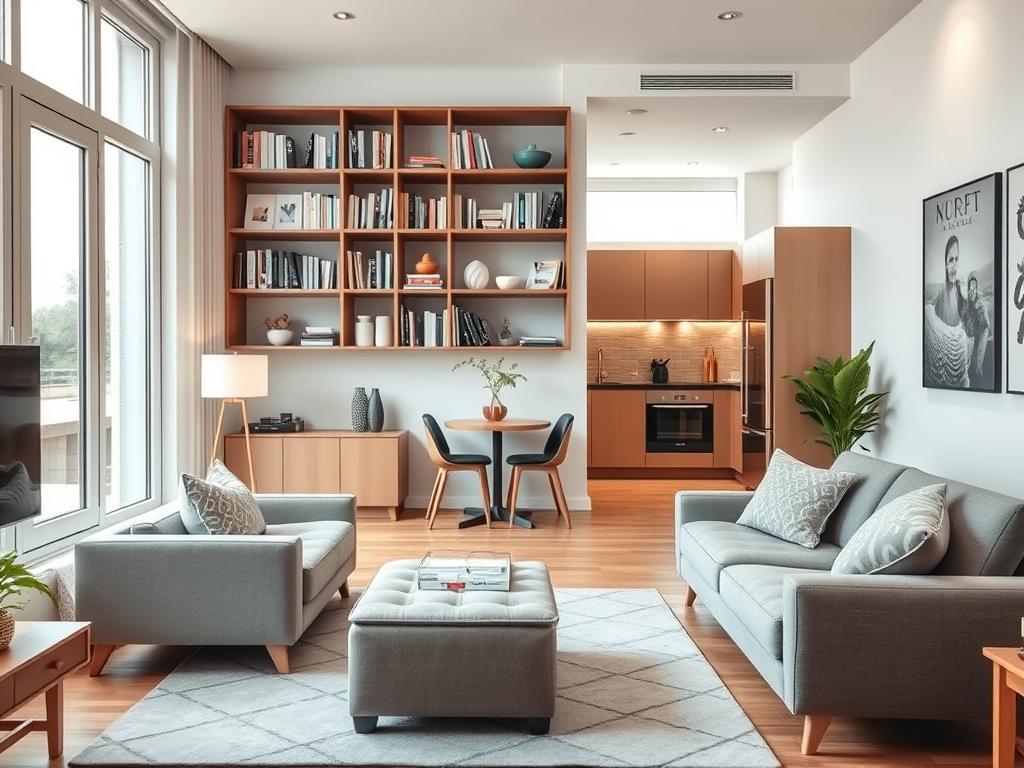
Smart organization can turn a small space into a calm home. Simple routines and the right containers reduce clutter. These tactics help you make the most of a small apartment.
The main goal is to free up floor space, speed up daily tasks, and keep shared areas tidy.
Decluttering Regularly
Set a regular declutter schedule. Do short weekly pickups and monthly reviews of clothes and kitchen gadgets. Plan an annual deep clean.
These habits stop clutter from building and keep your apartment organized.
Create clear decision rules. Donate items unused for 12 months and discard broken items. Keep only one of each duplicate. Use a one in, one out rule for non-consumables to prevent slow clutter buildup.
Coordinate donation and recycling drop-offs with local services like Goodwill or The Salvation Army. Keep a simple log to track what you discard. When roommates share standards and systems, common areas stay neater and easier to manage.
Effective Use of Containers
Choose clear, labeled bins so you see what’s inside quickly. Labels should note the item type and season to save decision time. This approach cuts frustration and saves minutes every day.
Use drawer dividers for utensils, socks, and office supplies. They help you use small drawers better. Vacuum-seal bags, like SpaceSaver, manage bulky bedding and off-season clothes to save space.
Kitchen counters benefit from labeled canisters and magnetic jars for staples. Stackable containers and modular boxes make neat, uniform storage towers. These fit well in closets and on shelves.
Keep a brief inventory of rarely used items so you avoid searching again and again.
| Task | Frequency | Recommended Container | Benefit |
|---|---|---|---|
| Quick tidy of living areas | Weekly | Open basket | Rapid pickup; visible storage |
| Category review (clothes, gadgets) | Monthly | Clear labeled bin | Faster decisions; seasonal rotation |
| Deep clean and purge | Annually | Vacuum-seal bags (SpaceSaver) | Reduced bulk; more closet space |
| Utensil and supply organization | As needed | Drawer dividers | Improved access; better use of drawers |
| Pantry and staple storage | Weekly restock | Stackable canisters, magnetic jars | Freed cabinet space; easy reach |
Decorating Tips for Small Spaces
Decor can change how a compact home feels and functions. Thoughtful finishes, light choices, and reflective surfaces help small spaces breathe.
These ideas focus on practical and attractive ways to maximize small apartment space while keeping style intact.
Color Theory and Light
Choose a light, neutral palette like soft whites, pale grays, or warm beiges to reflect daylight and open sightlines.
A mostly monochromatic scheme reduces visual clutter and creates cohesion across rooms.
Limit bold accents to one or two items, such as a throw pillow or a lamp, so the eye can rest.
Sheer curtains or roller shades keep windows bright and let furniture benefit from natural light.
Layer lighting to give depth. Use a ceiling fixture for ambient light and a reading lamp for tasks.
LED strips or picture lights work well for accents. Matte finishes on walls cut glare, while small glossy accents add sparkle and interest.
Using Mirrors to Enhance Perception
Place mirrors opposite windows to double perceived natural light and brighten corners.
A full-length mirror along a narrow wall elongates the space and reflects floor area to create openness.
Mirrored furniture or panels expand visual volume without crowding the room.
Grouping smaller mirrors into a gallery forms a focal point and increases light bounce over tidy, attractive views.
Position mirrors to reflect curated vignettes or greenery rather than clutter. This keeps the room calm and intentional.
These small space living tips balance function with style.
Thoughtful color choices, layered lighting, and strategic mirror placement give compact homes a clearer, more spacious feel.
Room Design and Layout Considerations
Design choices shape how a small apartment feels and works. Planning well can maximize space and keep the home comfortable. This helps make the apartment both practical and cozy.
Open vs. Closed Layouts
Open layouts make studios or one-bedrooms feel larger by letting light flow freely. They allow flexible zones for living, dining, and work. Renters like using movable furniture and rugs to mark areas.
Closed layouts offer privacy and sound control. They work for people needing a private bedroom or home office. A hybrid style uses bookcases, curtains, or screens to split spaces without building walls.
When changing layouts, check ventilation, sightlines, and building rules. Use reversible changes that avoid permanent damage.
Arranging Furniture for Flow
Start with a focal point like a window or TV. Place seating around it to guide movement. Moving furniture away from walls creates cozy activity areas.
Keep main walkways at least 24 inches wide, especially near kitchens, bathrooms, and doors. Rugs show zones; make sure furniture matches the rug’s size.
Choose low-profile storage and glass or acrylic pieces to keep sightlines clear. Test layouts with apps like Planner 5D or SketchUp. Moving items before settling helps find the best arrangement. This makes small spaces work better and fit daily life needs.
Outdoor Spaces: Maximizing Patios and Balconies
Outdoor nooks increase living space for small apartments. With planning, balconies or patios serve as spots for dining, gardening, and relaxing. Small changes make areas feel larger and invite comfort.
They also support smart storage and decor ideas for small apartments.
Vertical gardening saves floor space and adds greenery without crowding. Wall planters, pocket planters, and vertical trellises help grow herbs, small vegetables, and flowers.
Railing planters and tiered stands add privacy and visual interest.
Choose plants that fit local climates and need little care. Succulents, basil, parsley, lettuce, and small grasses grow well in tight spots.
Lightweight pots and self-watering systems ease maintenance and reduce weight. Always check building rules for weight limits before placing heavy planters.
Furniture shapes comfort and use on small terraces. Foldable bistro sets, stackable chairs, and built-in benches with storage add function and style.
Benches with storage keep cushions and tools out of sight and reduce clutter. This supports small apartment storage solutions.
Pick durable materials that resist weather and stay compact. HDPE, powder-coated steel, and teak last through seasons and keep their look.
Compact cushions and weatherproof fabrics add coziness while leaving room to move freely.
Lighting and textiles help create mood without using space. Outdoor rugs, string lights, and solar lanterns bring warmth and extend evening use.
Retractable shades and privacy screens block wind and neighbors’ views. They make patios more private and comfortable.
The table below compares popular vertical gardening and furniture options for small balconies. It helps readers choose by weight, maintenance, cost, and space use.
| Option | Weight | Maintenance | Cost Range | Space Impact |
|---|---|---|---|---|
| Wall planters | Low | Low with self-watering | $20–$150 | Minimal floor use, high vertical gain |
| Railing planters | Low to medium | Moderate | $15–$80 | Creates edge greenery and privacy |
| Tiered plant stand | Medium | Low | $30–$200 | Stacked footprint, high plant capacity |
| Foldable bistro set | Low | Low | $50–$300 | Easy storage, frees floor when folded |
| Built-in bench with storage | Medium to high | Low | $200–$1,200 | Dual function: seating plus hidden storage |
| Stackable chairs | Low | Low | $30–$250 | Flexible seating, compact when stacked |
Technology to Enhance Small Living
Smart tech turns small layouts into calm, efficient homes. Devices reduce daily work and help residents use apartment space well. This happens without losing comfort or style.
Start with climate and air quality. Nest and Ecobee thermostats adjust heating and cooling to when rooms are used. Compact air purifiers from Dyson or Levoit clean the air without big machines.
Combination washer-dryer units and microwave-convection ovens save utility space. These reduce the need for multiple bulky appliances.
Smart Home Devices for Efficiency
Smart lighting like Philips Hue and LIFX use slim fixtures and LED strips to provide layered light. This cuts the need for large floor lamps. Motorized blinds and remote window treatments save wall space. They remove heavy hardware from windows.
Voice assistants such as Amazon Echo and Google Nest Hub control devices centrally. They replace remotes and wall switches with voice commands. Smart plugs and compact power strips reduce visible cords in small apartments.
Utilizing Apps for Organization
Floor-plan apps like Magicplan or RoomScan help place furniture exactly. This planning avoids crowding and maximizes space in small apartments.
Inventory apps like Sortly keep track of items in bins and storage. Meal-planning apps like Paprika and Mealime cut kitchen clutter by limiting extra groceries. Shared task tools such as Trello or Todoist help roommates manage chores efficiently.
| Use | Example Products/Apps | Benefit for Small Apartments |
|---|---|---|
| Climate control | Nest, Ecobee | Reduces need for space-consuming heaters and fans; saves energy |
| Air and purification | Dyson, Levoit | Compact units improve air quality while taking minimal floor space |
| Lighting | Philips Hue, LIFX | Thin fixtures and strips provide layered light without large lamps |
| Voice control | Amazon Echo, Google Nest Hub | Centralizes device control; reduces switches and remotes |
| Combined appliances | Washer-dryer combos, microwave-convection ovens | Frees floor and counter areas traditionally taken by two units |
| Planning and layout | Magicplan, RoomScan | Accurate measurements to maximize small apartment space |
| Inventory and declutter | Sortly, Encircle | Tracks possessions to support efficient apartment organization |
| Meal and supply management | Paprika, Mealime, Instacart | Reduces food waste and oversupply that clutters small kitchens |
| Cloud storage | Google Drive, Dropbox | Digitizes documents so physical filing takes up less space |
Case Studies: Successful Small Apartment Designs
These case studies show practical ways to maximize small apartment space and bring small apartment decor ideas to life. Each example pairs real products and retailers with clear outcomes. Readers gain both visual references and small space living tips that translate into everyday changes.
Innovative Design Examples
A studio was converted using a Resource Furniture wall bed along with an IKEA modular storage system. Combining a Murphy bed with a fold-down desk reclaimed daytime floor area for exercise and entertaining. This setup shows how multifunctional furniture and careful measurement help a studio serve as living room, office, and guest space.
A one-bedroom used a framed, low-back Wayfair bookshelf as a partition. The open-plan layout keeps light flowing while the bookshelf defines zones and adds storage. This method balances openness with organization and offers a strong example for renters and owners alike.
A micro-balcony was transformed with vertical planters and a foldable bistro set from Target. Lightweight planters free up floor space and compact seating creates a cozy outdoor area. This shows simple ways to expand usable space and maximize small apartment space outdoors.
A tiny two-bedroom relied on built-in under-stair storage and custom organizers from The Container Store. These additions doubled storage without adding square footage. This demonstrates how custom solutions improve daily function and storage efficiency.
Lessons Learned from Small Space Living
Measurement and planning are crucial. Many problems come from buying items before measuring doorways and clearances. Investing in quality multifunctional pieces pays off more than cheap single-use furniture.
Regular decluttering and maintenance keep systems working well. Flexibility and modularity allow a home to adapt as needs change. Renters benefit from renter-friendly upgrades that are non-permanent but impactful.
Personalization and good lighting matter for well-being. Small spaces work better with meaningful items and light instead of empty minimalism. Key takeaways: measure carefully, prioritize functions, choose multifunctional furniture, use vertical and hidden storage, keep routines, and use technology to simplify management. These steps help anyone maximize small apartment space with practical small space living tips.