

Did you know nearly 70% of renters say clutter makes small homes feel smaller? This happens even when square footage stays the same. This guide shows how simple changes can free up space and improve daily life.
This short guide gives practical, step-by-step ways to organize a studio apartment. It is for renters and owners across the United States. It especially helps first-time apartment dwellers, remote workers, and minimalists who want more from compact living.
Readers will find clear advice on assessing needs and decluttering. The guide also covers choosing the right furniture and maximizing vertical space. You will learn how to create distinct zones within one room.
The article covers kitchen and bathroom organization, color and design for visual expansion, and easy cleaning routines. It also offers long-term maintenance tips to keep your space tidy and functional.
Used well, these steps increase usable square footage and reduce clutter. They define functional areas and make small space living more comfortable and efficient. The guide matches common searches about maximizing studio apartment space and offers real solutions and product ideas for anyone wondering how to organize a studio apartment.
Understanding the Unique Challenges of Studio Apartments
Studio apartments pack living, sleeping, cooking, and sometimes working into a single open floor plan. This layout makes limited space a key factor in any organization plan. Visual clutter and poor layout shrink perceived space and make daily tasks harder.
In many U.S. cities, studios usually measure between 300 and 600 sq ft. These sizes mean narrow kitchens, small closets, and fewer electrical outlets. Renters face rules that limit drilling or painting.
Because of those rules, tension rods, removable hooks, and freestanding organizers are valuable space-saving solutions.
Multi-functional furniture changes how a studio works. Pieces that combine seating, sleeping, and storage let one item serve several needs. Convertible sofas, storage benches, and drop-leaf tables create flexible spaces for guests, work, and meals.
IKEA offers compact lines like BRIMNES and HEMNES for small-space living. West Elm and CB2 provide higher-end multi-functional options. Wayfair carries a broad price range to choose from.
Murphy beds free up floor area but often need installation. Convertible sofas vary in comfort and durability. Nesting tables and folding desks offer adaptable surfaces for work or dining.
Prioritize items with built-in storage to limit separate furniture pieces. This approach keeps walkways clear and helps avoid bulky furniture later. Thoughtful furniture choices and layout create practical, attractive solutions for studio living.
Identifying Your Needs and Goals
Before moving furniture or buying storage, review your daily life honestly. List activities like sleeping, cooking, working, entertaining, exercising, and storage needs.
Measure furniture footprints carefully to avoid costly mistakes when using compact living tips.
Make a simple checklist to show your priorities. Include how often you use items and time spent on activities.
Add essential pieces such as a desk or mattress to your list. This helps match space to your real routines and supports studio apartment organization.
Small moves can boost flow. Put the bed where it won’t block windows or walkways.
Keep the kitchen triangle—sink, stove, fridge—clear for cooking efficiency. Use rugs and furniture to define zones without walls.
Creating a Functional Living Area
Start by mapping your daily patterns on paper. Mark sunny spots for relaxing and quiet corners for work.
Group seating near light sources and leave clear paths of 30–36 inches for main walkways. These are key functional layout tips.
Measure furniture and compare sizes to your room sketch. Choose multitasking pieces like sofa beds or nesting tables to save space.
Keep often-used items within reach to make daily routines smoother. These are good compact living tips.
- Audit activities: sleeping, cooking, working, entertaining, exercising.
- Create a needs checklist and measure furniture footprints.
- Define areas with rugs, lighting, and furniture arrangements.
Establishing Personal Zones
Zoning breaks the open plan into sleeping, lounging, dining, and working areas using visual cues. Use open shelving, curtains, bookcases, or folding screens for separation without walls.
IKEA KALLAX shelves and RoomDividersNow folding screens are practical, real-world options to try.
Set clear goals for each zone. For example, make the bedroom restful and the workspace free of distractions.
Choose items that support these goals. Blackout curtains help sleep, and task lighting improves focus for work.
| Zone | Primary Goal | Low-Cost Divider | Key Item |
|---|---|---|---|
| Sleeping | Restful, clutter-free | Curtain system | Storage bed |
| Working | Productive, minimal distractions | Open shelving | Compact desk |
| Lounging | Comfortable, social | Bookcase divider | Sofa with storage |
| Dining | Practical, space-saving | Folding screen | Drop-leaf table |
Keep traffic flow and accessibility in mind when arranging zones. Maintain clear routes and place daily essentials within easy reach.
These steps improve studio apartment organization and make compact living tips work well in real life.
Maximizing Vertical Space in a Studio
Small studios need smart ideas that lift storage off the floor. This keeps living spaces open and roomy. Here, readers will find easy tips for using walls and high areas to store more without crowding.
The advice includes simple steps for installing shelves, styling them, and creative storage ideas. These tips fit well with a minimalist lifestyle.
Utilizing Wall Shelves
Wall shelves save floor space and add visual height. They keep essentials close and organized. Floating shelves offer a clean, minimalist look.
Bracketed shelves hold heavy items like books and dishes. Ladder shelves lean on walls for layered displays. Cube units mix open and closed storage for neatness.
IKEA SKÅDIS pegboard is a flexible option for wall organization. It’s great in kitchens, entryways, and craft spaces. Renters can use Command Strips to hang light shelves without holes.
Adhesive hangers help keep small things tidy. For heavier shelves, anchors and studs offer strong support.
Style shelves by mixing open displays with closed boxes to reduce visual clutter. Keep daily items at eye level and decorations higher. Matching baskets or bins create a unified look and easy access.
Innovative Storage Hacks
Find vertical storage in surprising places. Over-the-door organizers hold shoes and supplies without using floor space. Magnetic strips display knives, tools, or metal spice jars on walls. Pegboards keep craft tools and small gadgets tidy.
Bed risers raise the mattress to add under-bed storage with clear bins. Off-season clothes fit neatly in labeled boxes under the bed. Multi-tiered rolling carts, like those from Seville Classics, slide under counters or between furniture for flexible storage.
Ceiling-mounted pot racks and hanging planters save cabinet and counter space. They also add style and keep counters clear by using vertical layers.
| Solution | Best Use | Pros | Notes for Renters |
|---|---|---|---|
| Floating Shelves | Display, light storage | Sleek look, easy to style | Use lightweight versions with Command Strips |
| Bracketed Shelving | Books, kitchenware | Strong, supports heavy items | Secure to studs or use heavy-duty anchors |
| Ladder Shelves | Layered displays, plants | No wall drilling, decorative | Ensure stable placement behind furniture |
| Cube Units | Mixed open/closed storage | Customizable, hides clutter | Place against walls to save floor space |
| Pegboards (IKEA SKÅDIS) | Tools, craft supplies, kitchen utensils | Highly customizable, modular | Use removable mounts for renter-friendly setup |
| Over-the-Door Organizers | Shoes, cleaning tools | Easy install, uses unused space | Choose cushioned hooks to protect doors |
| Magnetic Strips | Knives, metal tools, spice jars | Clears counter, accessible | Mount above prep areas for safety |
| Bed Risers + Clear Bins | Under-bed storage | Maximizes hidden space, keeps items visible | Measure clearance to choose correct riser height |
| Seville Classics Rolling Carts | Mobile kitchen or craft storage | Durable, fits narrow gaps | Slide between fridge and counter or tuck under counters |
| Ceiling-Mounted Racks | Pots, pans, hanging plants | Frees cabinets, decorative | Ensure secure ceiling anchors for weight |
Choosing the Right Furniture
Selecting pieces for a studio requires a clear plan. Thoughtful choices save space and improve daily life.
This section focuses on practical factors to consider when choosing the right furniture for a compact home.
Look for efficient furniture design that balances form and function. Measure doorways, stairwells, and elevators before buying large items.
Prioritize lightweight frames, slim profiles, and finishes that resist wear.
Compact and Foldable Options
Compact and foldable options free up floor area when not in use. Folding dining tables and drop-leaf desks make dining and work flexible.
Stacking chairs and wall-mounted desks save storage space between uses.
Materials matter for longevity and ease of handling. Metal and plywood give strength with low weight.
Upholstered pieces add comfort while keeping the footprint small.
The IKEA NORBERG wall-mounted drop-leaf table is an example of a space-saving choice to consider.
Check how pieces move through tight spaces. Ease of storage and simple mechanisms reduce hassle.
Choose items that fold flat or nest for quick stowing.
Storage Beds and Ottomans
Storage beds and ottomans transform sleeping and seating into hidden storage. Platform beds with built-in drawers keep linens and seasonal clothing close at hand.
Hydraulic lift beds reveal a large underbed cavity for bulky items.
Ottomans work as seating, a footrest, and a storage box for blankets or electronics.
Pick a size and mattress height that preserves circulation. This also allows easy access to compartments.
Quality hinges and durable lift mechanisms matter for daily use.
Brands like Nectar offer mattresses that fit many platform frames.
Confirm warranties and reinforcement of moving parts before purchasing.
Balancing compact and foldable options with storage beds and ottomans creates a flexible studio layout.
Thoughtful selection reduces clutter, supports efficient furniture design, and makes small spaces feel larger and more livable.
Decluttering: The First Step to Organization
Before arranging shelves and buying bins, an honest clear-out is essential. A focused declutter creates breathing room and reduces daily decision fatigue. It also shows what storage is needed.
The approach below blends practical decluttering strategies with simple routines that fit busy lives.
Assessing Unnecessary Items
Begin with a room-by-room inventory. Sort items into five categories: keep, donate, sell, recycle, and trash. Use criteria like frequency of use, sentimental value, condition, and space cost to guide choices.
Set realistic limits for common items. For clothes, try limiting to one closet’s worth. For kitchenware, keep one set of daily essentials plus a few occasional pieces. Quick rules like these simplify tough decisions.
Consider donation outlets like Goodwill, Salvation Army, and local shelters. To sell gently used items, use Facebook Marketplace, OfferUp, or Craigslist. Follow local guidelines for recycling and trash removal.
Techniques for Successful Decluttering
Use proven methods to speed progress. The KonMari approach asks whether an item sparks joy. The four-box method sorts every item into keep, donate, sell, or trash boxes. The time-based purging method removes anything not used in 12 months.
Work in short sessions of 15–30 minutes to avoid overwhelm. Make decisions quickly to stop second-guessing. Photograph keepsakes when letting them go to keep memories without clutter.
Store long-term items in clear bins with labels for easy retrieval. Combine minimalist storage ideas with labeled containers to keep order and visibility.
Schedule seasonal purges twice a year to stop clutter buildup. Regular reassessment turns decluttering into lasting habits. These habits support a tidy and functional studio.
| Step | Action | Tools | Typical Time |
|---|---|---|---|
| Inventory | Room-by-room sort into five piles: keep, donate, sell, recycle, trash | Boxes, labels, marker | 30–60 minutes per room |
| Decision Criteria | Use frequency, sentimental value, condition, space cost to choose | Checklist or quick scorecard | 5–10 seconds per item |
| Declutter Method | Apply KonMari, four-box method or 12-month rule | Timers, camera for photos | 15–30 minute sessions |
| Sell/Donate | List items online or drop at donation centers like Goodwill | Smartphone, packing supplies | Varies; listing 10 items in 1 hour |
| Storage | Place long-term items in clear, labeled bins using minimalist storage ideas | Clear bins, labels, shelving | 30–90 minutes to organize |
| Maintenance | Schedule two seasonal purges to sustain studio apartment organization | Calendar reminders | 1–2 hours per purge |
Storage Solutions for Every Area
Small apartments need smart choices. This section offers practical storage tips for every area in a studio.
It provides clear advice for kitchen, bathroom, and bedroom spaces. The tips focus on easy use and lasting order.
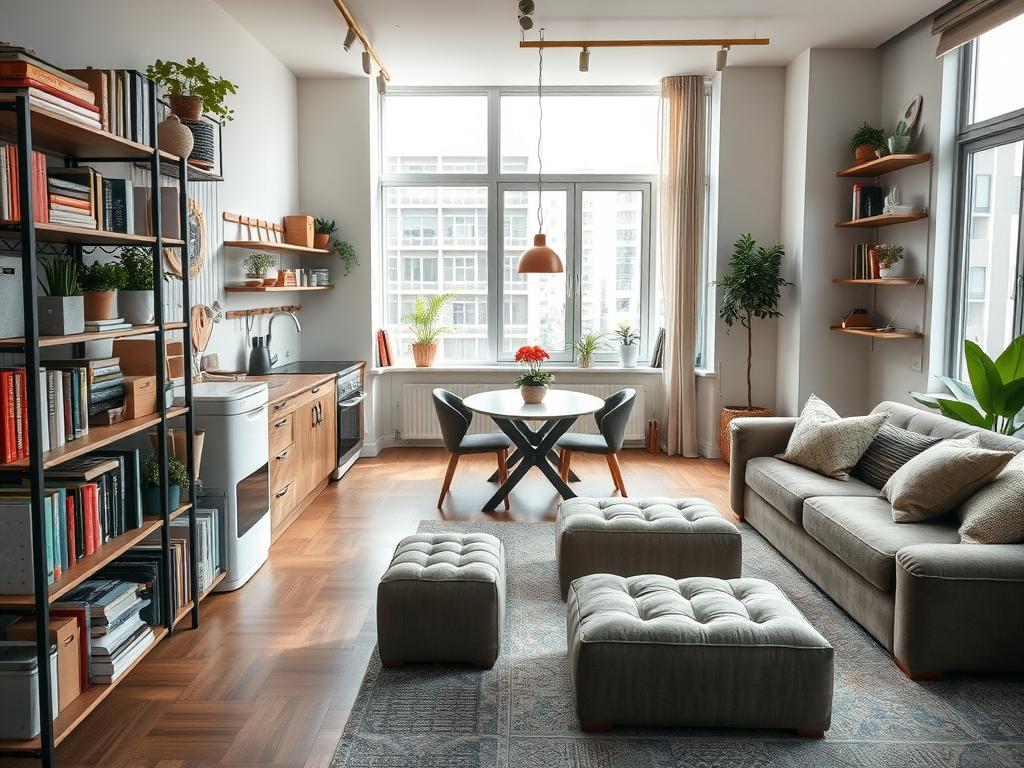
Kitchen organization tips focus on freeing counters and improving access. Store small appliances like toaster ovens and coffee makers in cabinets when not in use.
Use under-shelf organizers and a shallow dish rack to keep surfaces clear. Install drawer organizers for utensils and vertical dividers for baking sheets.
Add pull-out shelves in lower cabinets to avoid digging. Pick multi-function appliances like Ninja or Instant Pot to cut clutter.
Use labeled, stackable food containers to maximize pantry space and keep inventory visible.
Bathroom storage essentials help reclaim floor space and keep daily items close. Fit an over-toilet shelving unit or a mirrored medicine cabinet to store toiletries.
Wall-mounted caddies and suction-cup baskets work well for renters. Use a slim rolling cart under the sink for bottles and cleaning supplies.
Add hooks or an over-the-door towel rack for towels. Consider vacuum-sealed bags for off-season linens.
Drawer dividers keep cosmetics neat. Magnetic strips or vertical holders secure metal grooming tools.
Bedroom storage ideas aim to reduce visible clutter and expand usable space. Under-bed storage bins and low-profile vacuum bags hold linens, shoes, and seasonal clothing.
Nightstands with drawers or wall-mounted shelves keep surfaces tidy. Where closet space allows, install adjustable shelves and double hang rods to increase capacity.
Rotate the wardrobe seasonally to simplify choices and keep daily clutter low. These ideas make compact living easier and more comfortable.
Utilizing Color and Design for Space Efficiency
A smart way to live in small spaces is by choosing paint and patterns carefully. Using color and design can make a studio look brighter and taller. This can happen without big renovations.
Simple changes to trim, ceiling, and accent walls add depth. They also guide the eye to different zones in the space.
Light Colors for Visual Expansion
Light colors help expand a space visually because pale tones reflect light well. Soft whites, pale grays, and light beiges keep sightlines clear and reduce clutter.
Painting ceilings with high-gloss white paint makes the ceiling seem higher. Slightly lighter trim around windows and doors frames them gently.
Limit your color palette to two or three hues. Use one accent color to define areas like a sleeping nook or dining corner.
Mirrors placed opposite windows or in narrow hallways boost daylight. They also increase the sense of depth in the room.
Cohesive Design Elements
Cohesive design creates flow between different zones. Matching wood tones or metal finishes link the kitchen, living, and sleeping areas together.
Textiles chosen from the same color family add variety without cluttering the view. This keeps the design balanced.
Pick furniture scaled to the room size. Low-profile sofas and exposed-leg pieces keep lines open and ease movement.
Use functional decor like woven baskets for storage. Decorative trays help gather small items, and pretty boxes hide clutter on shelves while enhancing style.
| Design Goal | Practical Tip | Example Item |
|---|---|---|
| Maximize brightness | Use soft white paint and add a full-length mirror opposite a window | High-gloss ceiling paint |
| Create visual flow | Select consistent finishes across furniture and fixtures | Brushed nickel hardware set |
| Define zones without walls | Apply one accent color sparingly and repeat in textiles | Accent throw pillows and a small rug |
| Keep space airy | Choose low-profile, exposed-leg pieces and compact living tips | Apartment-sized sofa with wooden legs |
| Add texture, not pattern | Favor woven throws and subtle rugs over bold prints | Neutral textured area rug |
Organizing Kitchen Essentials Effectively
A small kitchen in studio living needs smart strategies. Organizing kitchen items boosts efficiency and reduces clutter. The goal is to keep tools and food where they are used most.
Everything should be easy to find and within reach.
Start by setting clear zones: a prep zone with knives and cutting boards, a cooking zone with pots and pans, and a storage zone for dishes and dry goods.
This zoning helps small space living and reduces the time spent searching for kitchen items.
Clever Cabinet Organization
Install pull-out shelves for deep lower cabinets to reach pans and small appliances without bending down. Add a lazy Susan in corner cabinets so spices and oils stay visible and handy.
Use tension rods to store lids and cutting boards vertically. Shelf risers create two levels for plates and cups, doubling usable space.
Thin, labeled baskets keep similar items like baking tools or tea bags organized and grouped together.
Clear, stackable containers from brands such as OXO Good Grips or Rubbermaid Brilliance improve visibility and keep food fresh. Label containers with contents and dates to manage inventory well.
Pantry and Food Storage Solutions
When pantry space is limited, use door-mounted organizers for snacks and wall-mounted spice racks for easy access. Place frequently used items at eye level and bulk goods in labeled bins on lower shelves.
Airtight containers and resealable bags extend shelf life and reduce food waste. Vacuum-sealers work well for long-term storage of proteins and grains in small spaces.
Adopt meal-prep habits to reduce ingredient stockpiles. Plan weekly menus, buy only needed amounts, and choose multi-purpose ingredients to simplify shopping and storage.
| Problem | Solution | Suggested Product |
|---|---|---|
| Hard-to-reach items in deep cabinets | Pull-out shelves and sliding trays | IKEA UTRUSTA pull-out shelf or generic sliding tray |
| Corner cabinet waste of space | Lazy Susan or rotating shelf | Rev-A-Shelf lazy Susan insert |
| Stacked plates and fragile dishes | Shelf risers to create tiers | Simplehouseware adjustable risers |
| Unclear pantry contents | Clear, stackable containers and labels | OXO Good Grips or Rubbermaid Brilliance |
| Spices take up counter or shelf space | Wall-mounted or door-mounted spice racks | SimpleLeader or YouCopia spice organizers |
| Bulk items cluttering shelves | Labeled stackable bins placed low or high | mDesign or Sterilite storage bins |
Setting Up a Functional Work-from-Home Area
Creating a small, purposeful work-from-home area in a studio apartment starts with clear planning. A compact zone that blends with the rest of the space makes daily work feel intentional. It also helps reduce visual clutter.
Designate a workspace by picking a spot with natural light and low foot traffic. A nook near a window or corner by a bookcase works well. This setup keeps distractions down and mood up.
Choose space-saving desks like a wall-mounted desk, narrow console, or small writing desk with storage. Add shelving or a mobile cart to hold papers, chargers, and supplies. This setup can be tucked away when not in use.
Blend the workstation into the apartment’s design by matching finishes. Add a small plant or framed print to make the area feel deliberate. It helps the room look cohesive.
Designating a Workspace
Place the desk so the monitor sits at eye level. The user should face away from heavy walkways. Use a slim desk with drawers or a floating shelf to save floor space.
- Pick a low-traffic corner near a window for natural light.
- Use wall-mounted desks or narrow consoles for tight spaces.
- Keep work materials on a mobile cart or open shelving for quick stowage.
- Match colors and textures to the apartment to keep the look unified.
Ergonomic Considerations
Good ergonomics prevent strain in compact settings. A chair with lumbar support keeps posture steady. Desk height should allow elbows to form about a 90-degree angle.
Affordable ergonomic accessories like laptop stands, external keyboards, and seat cushions help when expensive chairs are out of budget. Regular short breaks, brief walks, and stretches reduce stiffness in small spaces.
Cable management improves safety and tidiness. Use cable clips, cord sleeves, and a small power strip mounted under the desk to keep cords organized. This keeps cords out of the way.
Keeping Cleaning Simple and Efficient
A tidy studio feels larger and more restful when cleaning is simple and regular. Small habits make a big difference in studio apartment organization.
Keeping essentials within reach cuts friction and makes quick cleaning tasks more likely to get done.
Daily routines for maintenance should be brief and predictable. Short, focused actions stop clutter from building up. They also keep surfaces usable.
Daily Routines for Maintenance
Start with a 10–15 minute tidy-up each day. Wash dishes after use and put them away. Wipe countertops every night to remove crumbs and spills.
Vacuum or sweep high-traffic areas quickly, especially near the entrance and kitchen. While coffee brews, wipe the stove or sink to build cleaning into existing habits.
Make a weekly checklist for deeper tasks like cleaning the bathroom, mopping floors, changing bedding, and wiping kitchen appliances. Keep the list visible near the door or fridge to stay on track.
Store cleaning supplies in a compact caddy or under the sink. Easy access helps keep daily routines consistent and improves studio apartment organization.
Choosing the Right Cleaning Supplies
Choose multi-surface cleaners and microfiber cloths for quick, streak-free results. A compact or stick vacuum from brands like Dyson or Shark offers strong suction without bulk.
Include a small mop, disinfectant wipes, and a collapsible bucket to save space. For eco-friendly options, try Seventh Generation, Method, or Mrs. Meyer’s products.
Select space-saving storage like a slim broom and mop holder, a small caddy under the sink, and hooks inside a closet door. Thoughtful storage helps keep cleaning simple and supports long-term studio apartment organization.
Personalizing Your Space
A studio should reflect who lives there while staying tidy and usable. Personalizing your space starts with small choices. These choices make a big visual impact without crowding the floor.
Thoughtful accents lift mood and make the layout feel intentional. They also support compact living tips that keep daily life smooth.
Adding Decorative Touches
Choose low-clutter decor that adds character without weighing the room down. A gallery wall or slim console with curated frames brings personality and preserves walking space.
Add a few houseplants to add color and improve air quality. Snake plant and pothos thrive in low light and need little care. Textiles like rugs and throw pillows add warmth and texture.
Pick multi-use decor to stretch every purchase. Decorative baskets, storage boxes, and functional art such as wall hooks hide items while adding style. Use vertical groupings for artwork to draw the eye upward. Avoid oversized pieces that overpower the room.
Refresh the vibe with seasonal swaps of small items. Switching pillow covers or one framed print keeps things fresh without big buys.
Balancing Aesthetics with Functionality
Prioritize pieces that serve more than one purpose. Stylish benches with hidden storage and attractive trays for remotes make routines neater. Tiered plant stands hold books and decor while saving floor space.
Keep surfaces intentional and minimal. Aim for one or two curated items per table or shelf. This reduces visual clutter and maintains airflow. When functional items match the decor style, bins and baskets add cohesion.
Layer lighting to create mood and meet tasks. Combine a warm floor lamp for ambient light, a table lamp for reading, and LED strips under shelves for accenting. Thoughtful lighting completes the room and aids practical needs.
Maintaining an Organized Studio Apartment Long-Term
Keeping a studio tidy over months and years depends on steady habits. Regular reassessment helps spots what doesn’t work. This includes cramped furniture, worn storage, or zones that no longer fit remote work.
Scheduling a quick quarterly review makes these checks easy and predictable. During reassessment, use a checklist: check furniture flow, access to daily items, and storage condition. Note items that accumulate over time.
Tracking accumulation patterns shows where to declutter or downsize. A simple spreadsheet or app can track long-term items. This can guide decision-making efficiently.
Routine tasks keep the studio working daily. Daily tidy-ups and weekly cleaning help prevent clutter. Seasonal decluttering stops clutter from building back up.
Prompt repairs and replacing worn bins keep things efficient. Small issues don’t grow when addressed early. Consistent efforts also reduce stress, speed up mornings, and ease hosting.
Use habit-building tricks like setting reminders and pairing tidying with morning coffee. Reward progress to help stay motivated. Over time, organizing becomes a natural part of life, not a chore.