

More than 70% of Americans say clutter slows their morning routine. Much of this comes from tangled jewelry, misplaced belts, or jammed purse shelves.
Organizing accessories in your closet saves time and protects delicate items. It also helps stretch the life of leather bags and costume jewelry.
This guide offers clear and practical ideas for organizing closets in U.S. homes. It explains why neat accessory storage matters—it helps you plan outfits faster and keeps more shelf and drawer space free.
Readers will follow a simple workflow: assess current items, pick storage solutions, and sort by type. Next, optimize vertical space and use a color-coding system.
Then, rotate seasonal pieces, keep items visible, and schedule regular upkeep. Personalize labels and finish with decorative touches.
The article uses terms like declutter accessories closet, DIY accessory organization, and accessory closet organization hacks to keep advice useful and searchable.
Before you start, gather a notepad or smartphone for inventory and a soft cloth to clean. Collect donation bags, basic organizers like hooks and trays, and a measuring tape to plan your storage.
Assess the Current State of Your Accessories
Before rearranging shelves or buying organizers, take a close look at what you already have. A good assessment saves time when decluttering your accessories closet. It also helps decide which storage fits each item.
Start by working in zones: one shelf, one drawer, or one hanging area at a time. This prevents overwhelm and helps you track progress. Use a phone camera or spreadsheet to record what you find in each zone.
Take Inventory of Existing Items
Divide your accessories into types: jewelry, bags, belts, scarves, hats, sunglasses, and hair accessories. List how many you have and note how often you wear each item. Photograph tangled necklaces or duplicate pairs to help decide later.
A small closet may take 30 to 60 minutes to sort. Larger collections or many boxes can take 1 to 3 hours. Work in short sessions if needed. Mark each item as “keep,” “repair,” or “donate.”
Practical tips help. Lay out all belts to check for worn holes or broken buckles. Photograph bracelets together to spot duplicates. Use your list to plan storage that will organize your accessories closet well.
Evaluate Condition and Usability
Look closely at each piece for wear. Check for tarnished jewelry, stretched straps, broken hardware, stains on scarves, and scuffs on bags. Small fixes can restore value. Polish silver with a jeweler’s cloth and spot-clean fabric bags with mild detergent.
Use simple rules for decisions. Keep items you love or wore in the past year. Repair pieces if the cost is reasonable. Donate or recycle items that are unused or too damaged. Goodwill and The Salvation Army accept many textiles and accessories.
Note storage needs based on item condition. Fragile or heirloom jewelry should go in padded boxes. Sunglasses or daily necklaces you use often should be easy to access. These choices help organize your closet and keep it tidy.
| Step | Action | Time Estimate | Outcome |
|---|---|---|---|
| Zone work | Sort one shelf or drawer at a time | 15–45 minutes per zone | Reduced overwhelm, clearer progress |
| Catalog | Photograph and list items by type | 30–90 minutes total | Accurate inventory to declutter accessories closet |
| Inspect | Check for wear, stains, and broken hardware | 10–30 minutes | Repair list and donate/recycle candidates |
| Decision rule | Keep if used in last year; repair if cost-effective | Ongoing during sorting | Fewer unnecessary items, easier to organize accessories closet |
| Storage notes | Tag fragile and frequently used items for proper placement | 5–15 minutes | Better access and protection for valuables |
Choose the Right Storage Solutions
Selecting the right pieces can turn a chaotic closet into a calm, usable space. Focus on systems that match item size, frequency of use, and budget.
Thoughtful choices make storage solutions for accessories work harder and keep daily routines quick.
Start with versatile containers that fit your shelves and drawers. Clear bins offer instant visibility for seasonal items.
Woven baskets hide clutter and handle bulky sweaters. Felt or velvet trays protect jewelry from scratches while adding a polished look.
Brands like IKEA, The Container Store, and Target provide affordable and upscale options to suit different styles.
Bins, Baskets, and Trays
Choose sizes to match the items stored. Small clear bins hold belts and sunglasses. Medium woven baskets are ideal for scarves and hats.
Large plastic bins work for off-season pieces. Stackable, modular pieces maximize shelf space and make closet organization easy.
Label each container for quick retrieval. Use removable labels or a label maker to update contents with ease.
For jewelry, place felt or velvet trays inside drawers to keep necklaces, rings, and bracelets separated and scratch-free.
Hooks and Hangers
Hooks and hangers free up shelf and drawer space. Command adhesive hooks are simple for light items.
Over-the-door hangers hold multiple bags or hats. Multi-hook racks keep daily items visible and within reach.
Use jewelry hooks or a pegboard to hang necklaces and prevent tangling.
Install hooks at reachable heights and group similar items together. Use wall anchors for heavy bags to avoid damage.
Thoughtful placement supports efficient accessory storage and reduces time spent searching for pieces.
Dividers and Drawer Organizers
Customize drawers with adjustable dividers and small compartment inserts. Use dedicated slots for earrings and rings.
Include watch pillows for timepieces and accordion-style fabric organizers for scarves. Bamboo organizers offer durability.
Clear acrylic provides visual access for quick selection.
Measure drawers before purchasing organizers to ensure a proper fit. For budget-friendly alternatives, repurpose muffin tins for tiny jewelry.
Build foam board dividers or decorate shoeboxes for a neat, low-cost system. These DIY options support effective closet organization ideas without a large investment.
| Category | Best Materials | Typical Use | Budget Tip |
|---|---|---|---|
| Bins | Clear plastic, fabric | Seasonal items, bulk storage | Buy at Target or repurpose grocery bins |
| Baskets | Wicker, woven seagrass | Bulky scarves, hats, sweaters | Mix IKEA for low cost and The Container Store for premium |
| Trays | Felt, velvet, acrylic | Jewelry protection and display | Use velvet jewelry trays inside a drawer |
| Hooks & Hangers | Metal, adhesive plastic | Bags, belts, necklaces | Command hooks for renters; wall anchors for heavy items |
| Dividers | Bamboo, acrylic, foam board | Drawer customization, small-item separation | DIY foam board dividers for custom fits |
Categorize Your Accessories
A clear system to categorize accessories helps you find items easily and keeps the closet tidy. Start by grouping pieces by function. Also, sort by how often you use each item.
This step lets you apply accessory closet organization hacks better. It helps plan storage that fits your daily routine.
Next, sort items into main groups. Create separate zones for jewelry, bags, belts, and scarves. Grouping by purpose aids quick outfit assembly or seasonal rotation.
Jewelry: Necklaces, Earrings, and Bracelets
Hang necklaces on hooks or a hanging organizer to stop tangles. Use earring trays or a magnetic board to keep pairs together. Place bracelets on cuff stands or shallow trays for easy access.
Store precious metals and gemstones with anti-tarnish strips or individual pouches. Lined jewelry boxes work well for mixed collections. Arrange pieces by daily wear versus special events so outfit-ready items sit front and center.
Bags and Purses
Sort bags by size, season, and usage frequency. Keep structured bags upright on shelves using tissue paper to keep their shape. Use dust bags for high-end brands like Coach, Kate Spade, and Madewell to protect finishes.
For small closets, repurpose an over-the-door shoe organizer for crossbody bags and clutches. Stackable shelf dividers help keep shape and create neat rows. These accessory closet organization hacks save space and prevent crushed handbags.
Belts and Scarves
Mount a belt rack or use hooks to display belts. A vertical tension rod with S-hooks saves floor space. Leather belts stay best rolled or laid flat and benefit from regular conditioning with leather cleaner.
Fold scarves by material and weight. Hang lightweight scarves on a scarf hanger. Roll bulkier knits into bins. Store silk scarves flat in drawer inserts to avoid creases. Group by function, such as work versus casual, to support a future color-coding plan.
| Accessory | Best Storage | Care Tips | Why It Helps Organize Accessories Closet |
|---|---|---|---|
| Necklaces | Hanging hooks, jewelry tree | Anti-tarnish strips, separate compartments | Prevents tangles and speeds outfit selection |
| Earrings | Earring trays, magnetic board | Keep pairs together, avoid moisture | Reduces time spent searching for matches |
| Bracelets | Cuff stands, shallow trays | Store by metal type, soft lining | Maintains shape and protects finishes |
| Handbags | Upright on shelves, dust bags | Tissue paper to hold shape, dust bags for luxury | Maximizes shelf space and preserves value |
| Small Bags & Clutches | Over-the-door organizers, shelf dividers | Keep flat or slightly stuffed to retain form | Efficient use of vertical and door space |
| Belts | Belt rack, hooks, rolled in drawers | Condition leather, avoid tight bends | Keeps belts visible and crease-free |
| Scarves | Hangers, rolled in bins, drawer inserts | Store silk flat, separate by fabric weight | Prevents wrinkles and sorts by season |
Optimize Vertical Space
A well-planned vertical layout can maximize closet space and speed up daily routines. Start by measuring shelf heights and depths before buying any system. Proper measurements stop wasted gaps and make sure bins and trays fit neatly.
Adjustable shelving systems let users change storage as needs shift. Brands like Rubbermaid, IKEA PAX, and EasyCloset offer modular options for shoes, bags, and folded items.
Adding risers creates double levels on one shelf to keep shoes below and purses above.
Utilize Shelving Units
Choose shelves that can be moved to fit tall boots or shallow jewelry trays. Shelving units turn wasted vertical space into functional zones. Measure before buying to make sure height and depth fit your accessories.
Layered Organizers
Stacking solutions expand usable surface area without using floor space. Tiered earring stands and layered trays separate necklaces, rings, and watches so items stay untangled and easy to see. Vertical stacking cubes work well for folded scarves and small bags.
Wall-Mounted Solutions
Pegboards, slatwall panels, and rail systems with hooks offer flexible storage for accessories. Wall Control and Elfa panels let you display hats, necklaces, and belts in customizable ways.
For heavy items, mounting into studs improves safety and keeps the decor intact. Using vertical strategies keeps often-used items at eye level and seasonal or rare pieces higher up.
These closet ideas mix style and function. They turn walls and tall shelves into practical storage without crowding the floor.
Implement a Color-Coding System
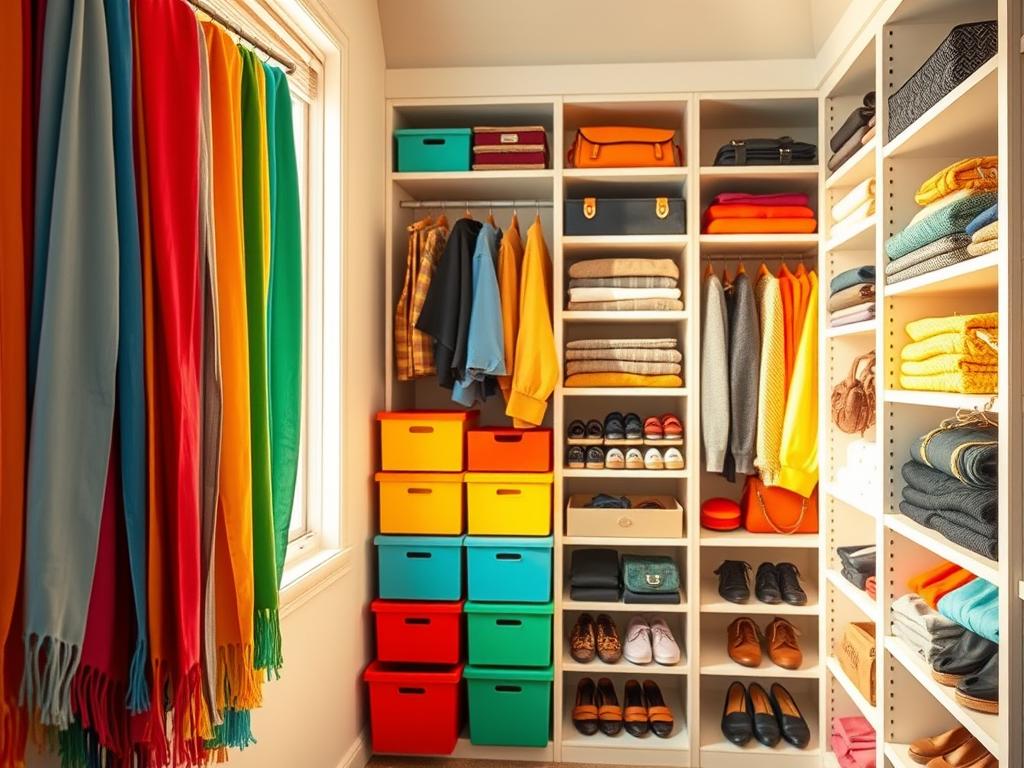
A simple color plan can change how someone tidies up accessory closet items. Start with a short strategy that pairs function with style. Choose colors that fit daily habits and the closet’s look before adding labels or bins.
Create a Color Palette
Pick three to five colors: neutrals, one or two bright accents, and a seasonal tone. Use colored bins, Avery or Brother P-touch labels, and tag systems. Mark categories or owners in shared spaces with these colors.
Apply the colors to hanging areas, drawer labels, and small trays. This makes zones clear at a glance.
Group like items by color to choose outfits quickly. For example, put black bags together, brown belts on one hook, and neutral scarves in one drawer.
This method helps someone use color-coding and keeps daily dressing simple.
Benefits of Color Coordination
Color coordination speeds finding items by making them easy to see. A matching palette creates a calm, boutique-style flow. This reduces stress when picking accessories.
Practical benefits include faster matching and easier outfit mixing. These accessory closet hacks keep order without extra effort.
Keep the system practical. Group by type and use first. Then add color as a second layer so the scheme boosts speed and style.
This way, the system avoids overcomplicating storage or making tidying accessory closet harder.
Streamline Seasonal Accessories
A simple seasonal plan keeps your closet efficient and wearable all year. Audit your accessories twice a year, in spring and fall. This helps keep everyday items easy to reach and ready to wear.
The routine stops overpacking. It also helps you declutter accessories that no longer fit your needs.
Rotate Items Based on Season
Create a “current season” zone at eye level for daily use. Keep a “store” zone on higher shelves or bins for off-season items.
Swap heavy scarves, wool hats, and boots for sandals, sun hats, and lightweight scarves during your spring audit.
Use labeled plastic bins for quick item swaps. Make a list of items to move each season. This reduces decision fatigue in the mornings.
Store Out-of-Season Items
Use storage that fits the material of your accessories. Vacuum-seal bags save space for bulky sweaters and winter knitwear.
Breathable fabric bins protect leather from mildew. Place silica gel packets inside bins to control moisture.
Clean and dry items before packing. Wrap delicate pieces in acid-free tissue paper. For designer bags, consider climate-controlled storage during long breaks.
Donate or consign items that no longer fit your seasonal needs. Services like ThredUp or local shops help free up space and fund new storage.
| Item Type | Best Storage Method | Protective Step |
|---|---|---|
| Bulky sweaters and winter hats | Vacuum-seal bags | Fold neatly, remove pilling, ensure completely dry |
| Leather bags and belts | Breathable fabric bins with acid-free stuffing | Condition leather, avoid plastic wrap, add silica gel |
| Delicate jewelry and costume pieces | Labeled plastic bins with compartments | Wrap in acid-free tissue, separate metals to prevent tarnish |
| Seasonal shoes (boots, sandals) | Stackable clear boxes or shoe racks | Clean soles, use shoe trees for shape, label boxes |
| Designer or high-value items | Climate-controlled storage or secure home closet | Document condition, insure if necessary, use protective dust bags |
Maintain Accessibility and Visibility
Keeping accessories easy to find saves time and reduces clutter. Use clear choices and thoughtful placement so items are visible at a glance.
Small changes create a more efficient routine when dressing and packing.
Use transparent containers
Clear acrylic organizers and plastic bins speed up visual scanning. Acrylic stackable drawers work well for makeup and small jewelry.
Clear shoe boxes help with handbag storage. Transparent storage makes it simple to spot a missing piece fast, without opening every box.
One downside is clear solutions show dust and fingerprints. A quick dusting once a week keeps containers looking neat.
Users who want a uniform look can pair clear bins with labels to balance visibility and style.
Arrange for easy access
Place everyday pieces at eye level. Store less-used items higher or lower.
Create a getting-ready zone near a mirror with good light. This helps the final steps of dressing happen in one spot.
Group outfits together — belt, bag, and coordinating jewelry — for grab-and-go convenience.
Store heavier items low to avoid strain when lifting. Add a small stool or foldable step for high shelves.
Install LED strip lights under shelves to brighten dim corners and improve accessory storage.
These tips cut time spent searching and make daily routines calmer. Clear containers and a good layout go a long way.
They help create a tidy, usable closet.
Regular Maintenance and Cleaning
A tidy accessory closet stays useful when regular maintenance becomes part of the routine. Small, consistent actions prevent clutter and protect valuable pieces from damage.
Schedule periodic reviews to catch problems early and keep organization systems working. Use calendar reminders or apps like Google Calendar and Todoist for quarterly checks.
Plan an annual full audit to maintain order and spot hidden issues in your closet.
During a review, follow a checklist: inspect hardware for loose screws, polish metal accents, and re-fold or re-roll scarves. Recondition leather goods and re-label bins as needed for better visibility.
Clean and declutter regularly to maintain airflow and hygiene. Dust shelves with a microfiber cloth, vacuum the floor, launder fabric bins, and sanitize non-porous organizers to remove grime.
For jewelry care, use the right cleaner for each material. Use silver polish for sterling pieces and mild soapy water for costume jewelry. Let items dry fully before returning them.
Adopt practical decluttering rules to keep the collection manageable. The one-in, one-out method helps limit growth. Consider donation or resale when items are no longer worn.
For textiles, donate gently used scarves and hats to local charities. Broken costume jewelry can go to metal recycling centers.
Luxury items with resale value can be consigned through The RealReal or high-end local consignment shops.
Keep accessory closet organization hacks in mind when making changes. Small labels, consistent categories, and routine checks make maintenance feel quick and effective.
Personalize Your Organization Method
Personal touches make storage practical and pleasant. A plan that fits daily routines keeps items within reach. It also reduces decision fatigue.
This section shows easy ways to tailor space with style and function.
Create Customized Labels
Labeling turns clutter into clarity. Use a Brother P-touch or a Dymo label maker for bins, shelves, and drawers. Print stickers for a softer look.
Examples make the system easy to use at a glance. Try labels like “Everyday Jewelry,” “Clutches,” or “Belts — Casual/Formal.”
For shared closets, add initials or colored tags to avoid mix-ups. Mark containers “Spring/Summer” and “Fall/Winter” for seasonal swaps.
Tailor Storage to Personal Preferences
Design storage around lifestyle and habits. A commuter may keep work items like a laptop bag near the door. A frequent host might display statement pieces on open shelves.
Adjust heights, zones, and organizers to fit your routine. Mount a small mirror and a tray for rings near the closet door. Set up a travel station with packing cubes for frequent flyers.
DIY accessory organization adds personality and saves money. Monogrammed dust bags, painted crates, or a decorative pegboard can match room decor.
These touches support long-term use and invite joyful maintenance.
Practical tips include grouping items by how often you use them. Keep similar items together and test layouts before deciding. Small experiments help you find what works best.
Final Touches to Enhance the Organization
A tidy accessory closet improves with a few smart finishing touches that mix function and style.
Small upgrades can improve the space without costing much.
They make daily routines easier and inspire care for accessories.
Add Decorative Elements
Decorative baskets and matching bins add texture and hide clutter on a budget.
West Elm has elegant baskets, Target and HomeGoods offer affordable decor, and Amazon sells hooks and LED lights for a boutique feel.
A fresh paint coat or peel-and-stick wallpaper on the back wall adds depth.
Matching hooks or knobs also help create a unified look.
Showcase Favorite Items
Make a small display area for statement pieces like sunglasses and small bags on open shelves.
Use floating shelves for designer handbags or a framed shadowbox for heirloom jewelry.
Jewelry trees or trays highlight standout items, and UV-protective glass protects delicate pieces from light.
Rotate displays to reduce wear and keep the space feeling fresh.
To finish, make one small change today—add hooks, clear bins, or a strip light.
Then schedule an inventory and declutter session to keep the space neat.
Regular small improvements using simple organization hacks make long-term maintenance easier.