

Surprisingly, the average American home stores nearly 19 pairs of shoes per person. Many closets struggle to hold a week’s worth without chaos.
This short guide shows practical, space-saving strategies to organize shoe closets with tight space. It explains how to keep your shoe collection efficient.
Learn closet organization hacks that maximize storage and protect footwear. You will save time when dressing and prevent shoe damage.
Create a tidy shoe closet that both looks good and works better. Advice comes from The Container Store and Real Simple. They suggest decluttering first, then adding smart storage.
This step-by-step guide suits U.S. homeowners and renters. It covers assessing your collection, choosing storage, and using vertical space.
Organize shoes by use and maintain the system over time. Each tip uses easy solutions and products available in the American market.
Assessing Your Shoe Collection
Before rearranging shelves, take an inventory of your shoes. A quick audit shows what to keep, store, or donate. This step helps clear space and plan storage that fits your needs.
Begin by sorting footwear into clear categories. Count items in each group to guess how much space they need. Use a spreadsheet or app to track volume and gaps.
Determine Your Shoe Categories
Common groups include everyday shoes, work shoes, athletic, formal, boots, sandals, slippers, and specialty footwear. Remember size and shape differences. Tall boots need vertical space. Heels keep their shape best in individual slots.
Choose storage based on material. Leather and suede work well in breathable containers. Canvas sneakers fit fine in stackable bins. Write storage notes for each category to match their needs.
Identify Shoes for Donation or Discard
Set rules to remove shoes: bad damage, discomfort, no use in 12 to 24 months, or duplicate pairs. This keeps your collection practical and compact.
Clean and fix shoes before donating. In the U.S., Goodwill, The Salvation Army, local shelters, and Soles4Souls accept gently used shoes. For worn-out shoes, check TerraCycle or brand take-back programs like Nike or Adidas for recycling.
Pack donations in marked boxes or bags for drop-off or pickup. Tracking items removed helps you stay organized and plan your shoe collection better.
Choosing the Right Storage Solutions
Small closets need smart choices to organize shoes efficiently. The best shoe storage depends on shoe types and floor space. Whether a home is rented also matters. A clear plan stops clutter and keeps daily pairs easy to reach.
Many begin shoe rack organization with open shelving. Adjustable wire or wood shelves from IKEA and The Container Store give clear shoe views. Shelves fit flats, pumps, and sneakers and can change height as the collection grows.
Tiered shoe racks save limited floor space. Freestanding metal or bamboo racks from Amazon Basics and Whitmor stack multiple tiers. They work well at the closet base for quick reach.
Cubby systems and modular shelving separate each pair. Units like IKEA Kallax or ClosetMaid cubes fit bins to hide out-of-season shoes. Custom cubes avoid mixing and make shoe organization simple.
Specialty racks protect delicate designs. Boot shapers and heel hangers keep tall boots upright and keep their shape. Slim-profile options save horizontal space in narrow closets.
Over-the-door pocket organizers fit flats, sandals, and kids’ shoes well. Clear-pocket styles help scan contents quickly. Measure door thickness and clearance before purchase.
Hanging fabric shelves add vertical slots by attaching to a closet rod. Heavy-duty ones avoid sagging. Over-the-door organizers free floor space and suit renters. They offer a budget-friendly way to organize shoes in a closet.
Maximizing Vertical Space
Small closets benefit from vertical thinking. Using the closet’s height frees floor space. This makes shoe storage easier without crowding.
A few smart choices turn empty wall and shelf heights into usable zones.
Use stackable solutions to protect footwear and keep shoes visible. Clear stackable bins from brands like Iris or Sterilite shield sneakers from dust. They also let the wearer spot pairs at a glance.
Modular boxes with interlocking designs form stable towers and include ventilation holes to reduce moisture risk.
Practical tips: place heavier shoes on lower stacks. Move single-season items to the top. Label each container to avoid needless unstacking.
These small steps help sustain order and improve retrieval speed.
Wall-mounted fittings convert vertical planes into display and storage. Floating shelves, slatwall panels like Elfa by The Container Store, and peg systems lift shoes off the floor. They turn shoes into an organized showcase.
Sloped or tilted shelving offers angle visibility, which is useful for heels and dress shoes.
Hanging organizers suit boots and high-tops. Hooks, magnetic rods, and tension-mounted options fit renter-friendly installations without drilling.
For heavier systems, installers should locate studs and use anchors rated for the load. Place frequently used pairs within easy reach.
A simple plan mixing clear stacking bins, modular boxes, and wall-mounted racks expands capacity and keeps the closet tidy.
These closet organization hacks and shoe ideas work together to maximize storage while preserving accessibility.
Organizing by Frequency of Use
Prioritizing reachability makes a small closet much more functional. Place the pairs worn most often where they are easiest to grab.
Move seasonal or special-occasion shoes to less accessible spots until they are needed.
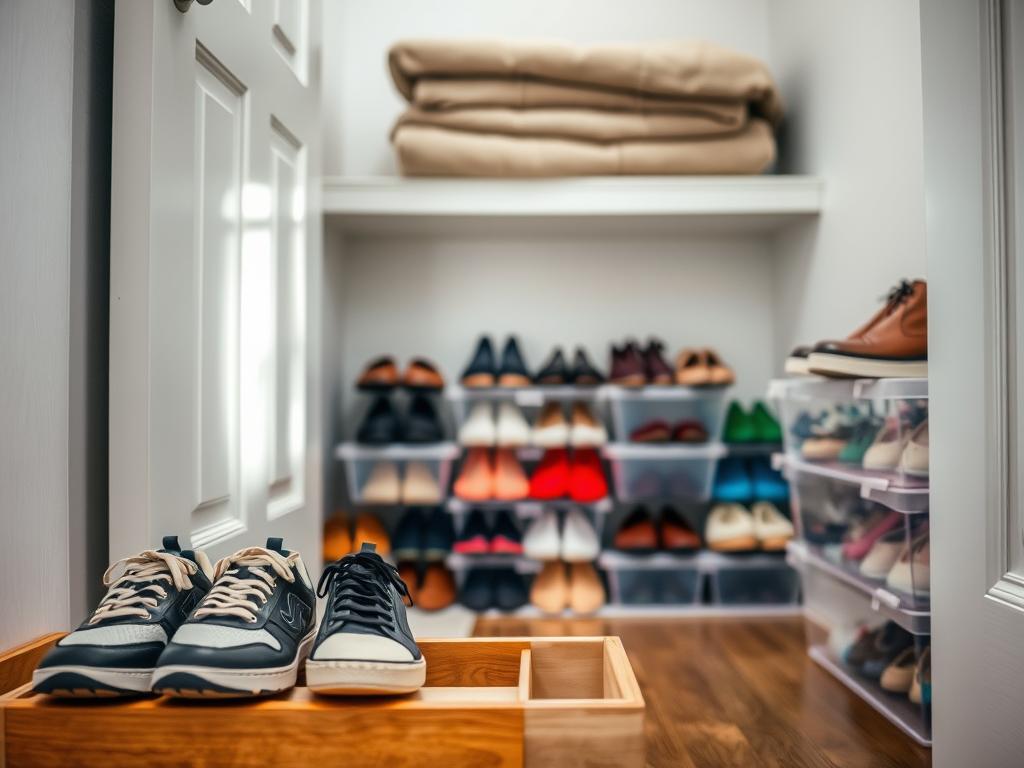
Daily Essentials vs. Seasonal Options
Identify daily essentials like work shoes and everyday sneakers. Store these at eye level or close to the closet entrance for fast access.
This habit reduces clutter and speeds up your morning routines.
Store winter boots, sandals, and formal footwear on higher shelves, under-bed boxes, or offsite during the off-season.
Use breathable bags for leather boots to prevent damage. Vacuum-seal bags save space and keep fabric sneakers clean.
Rotate Shoes Regularly
Set a routine to rotate seasonal footwear twice a year, in spring and fall. Check wear patterns monthly to catch issues early.
Alternating pairs prevents rapid wear and lets shoes air out between uses.
Simple labels or a closet map help track where each pair lives and when it was last worn.
Utilizing Baskets and Bins
Grouping shoes in baskets and bins keeps a shoe closet tidy. It also makes daily choices easier. Clear containers and a simple labeling system create one of the best shoe storage solutions for small spaces.
Transparent bins help users spot shoes quickly without digging through boxes. Brands like Iris and Sterilite offer stackable clear bins. These bins cut dust and save shelf space.
Clear shoe cubes with front doors from Zeetop and SONGMICS are good for seasonal or formal shoes. They keep footwear off active shelves.
Labeling makes shoe retrieval faster and shelves consistent. Adhesive labels, a DYMO or Brother label maker, or printable tags work well. Use category, size, or season on each label to help anyone find shoes quickly.
Adopt a simple labeling system to make it more useful. Color-code by season and use activity icons. Place labels on bin fronts at eye level.
For boxes with mixed shoes, add a short inventory list to the lid. This shows what’s inside without opening the bin.
These organization ideas make closets more efficient and protect shoes. When combined with good storage, they turn clutter into a neat shoe closet. This saves time every morning.
Incorporating Creative Solutions
Small closets benefit from creative thinking that fits shoes to space and style. This section shows budget-friendly, hands-on options. It also offers clever repurposing ideas to expand storage without a major remodel.
These shoe organization ideas and closet hacks focus on practicality and keeping visual order.
DIY Projects for Custom Storage
Measure available space before cutting materials. PVC pipe organizers work well for boots and sandals. Cut lengths of PVC, sand rough edges, then glue or stack them into rows for cubbies.
Use larger diameters to preserve boot shafts.
Crate shelving creates a rustic look that holds multiple pairs. Mount wooden crates or a wine rack horizontally, seal them with polyurethane, and anchor to studs. Add non-slip liners to prevent scuffs.
Tension rod solutions add tiers without drilling. Place rods at staggered heights to cradle heels or hang lightweight boot shapers. This method uses vertical gap space and keeps shoes visible.
Repurposing Existing Furniture
An old bookcase becomes a shoe unit when shelves are spaced for footwear. Insert non-slip shelf liners and adjust heights to fit different shoes. A TV stand with open cubbies stores everyday pairs near the door.
Hallway benches and shoe cabinets convert easily. Add simple shelving inside wardrobes or armoires to create rows for shoes. Hooks on inner doors hold flip-flops and accessories.
Under-bed storage clears closet space. Shallow rolling bins or DIY drawers on casters tuck away seasonal shoes. Label containers for quick swaps during refreshes.
Eco-conscious shoppers can repurpose finds from IKEA or thrift stores. Upcycling reduces waste and yields sturdy pieces that fit shoe storage needs without overspending.
- Quick checklist: measure space, choose weight-rated materials, protect shoe finishes, follow trusted tutorials.
- Budget tip: mix DIY and thrifted furniture to balance cost and custom fit.
Creating an Accessible Layout
Designing a user-friendly closet layout makes daily routines faster and keeps the space neat. Start by planning zones for activities to match how the household moves during the day.
Simple choices reduce time spent searching. They also improve overall shoe rack organization.
Arrange by Type or Style
Group shoes by category: sneakers, dress shoes, boots, and sandals. This grouping helps you find shoes for work, exercise, or errands easily.
Within each group, sort by color or height to create a tidy look.
Use lower shelves for flats and sandals to avoid bending. Mid-level shelves suit stacked sneakers and everyday shoes. Display heels on angled shelves where their profiles are visible for quick selection.
Place Frequently Worn Shoes at Eye Level
Reserve middle shelves for the 8–12 pairs you wear most often. Eye-level placement cuts down on bending and saves time.
Keep heavy or bulky boots on lower shelves to protect your posture and prevent strain. Store off-season shoes on upper shelves in clear bins or labeled boxes for visibility.
Anchor tall shelving and avoid stacking heavy items overhead to keep the area safe and pathways clear.
| Zone | Best For | Practical Tip |
|---|---|---|
| Eye Level | Daily essentials (8–12 pairs) | Place most-used shoes here for quick access and comfort |
| Mid Shelves | Sneakers, casual shoes | Use stacking bins or open shelves to balance visibility and space |
| Lower Shelves | Boots, heavy footwear | Store bulky items low to protect joints and stabilize shelving |
| Upper Shelves | Off-season or archival shoes | Use clear boxes with labels to organize shoes closet and ease retrieval |
| Overall Layout | All categories | Apply closet organization hacks like zoning and consistent labeling for long-term order |
Maintaining Your Organized Closet
Keeping a neat shoe area takes some weekly care and a seasonal check. A simple plan helps maintain tidy shoe closet routines.
It also stops clutter from building back up. Small, regular actions make the system last longer. They also save time over months.
Weekly Check-Ins
They recommend a five- to ten-minute habit each week. Return shoes to their spots. Wipe visible dust, and air pairs that were worn.
This keeps floors clear and makes it easier to find daily footwear. During quick checks, inspect for loose soles, broken straps, or moisture.
Fix minor repairs right away to stop small issues from becoming bigger problems. Use cedar shoe inserts to absorb moisture and odors between wears.
Spot-clean scuffs with products made for leather, suede, or fabric. Rotate insoles when they get compressed to keep comfort. These small fixes help declutter shoe closet areas.
Seasonal Refreshes
Twice a year, do a deeper swap. Move off-season shoes to higher storage. Clean and condition items before packing.
This step protects materials and frees prime space for current-season pairs. Use each refresh to reassess what is worn. Find extra pairs to donate or recycle based on recent use.
Removing unused shoes helps keep a tidy closet and supports more mindful buying. Update an inventory list or closet map after each refresh.
A current record speeds decision-making and supports shoe organization for future upkeep. Small records prevent repeat clutter and keep the system efficient.
Styling Your Shoe Closet
To make a tidy shoe closet feel inviting, blend function with simple styling. Few well‑chosen touches can turn storage into a display that encourages regular use.
Lighting, textures, and consistent spacing help form shoe organization ideas that are both practical and attractive.
Adding Decorative Elements
Install battery-operated LED strip lights or puck lights from brands like Lutron or Philips Hue-compatible options. These brighten shelves and highlight prized pairs.
Use woven baskets or fabric liners to hide casual items while matching linens to bedroom decor. Swap generic knobs and hooks for decorative hardware.
This change can unify the closet with the room’s style.
Using Color Coordination Techniques
Arrange shoes by color gradient to simplify choices and create a color-blocked display.
For a cleaner look, keep shelving neutral. Store bright or patterned shoes in clear bins so they stand out without clutter.
Maintain consistent spacing, tilt a few focal shoes for display, and reserve a small ledge for a rotating featured pair.
This setup mimics visual merchandising used in retail. Styling should never sacrifice accessibility.
Prioritize protection, easy reach, and sensible shelving depth so these closet organization hacks keep shoes visible and usable.
The goal is a tidy shoe closet that looks curated yet supports everyday routines.