

Surprisingly, the average American household wastes nearly 30% of its groceries each year. Much of this waste comes from snacks forgotten in an unorganized pantry.
This short guide shows parents and caregivers how to organize a snack pantry efficiently. It helps create a clutter-free snack area that is safe and easy for children to use, from preschoolers to teens.
Readers will learn how to assess and declutter their pantry. The guide explains storage options like clear bins and airtight containers. It also offers categorization ideas, like sorting healthy snacks from treats and grab-and-go options.
It covers kid-friendly placement, maintenance routines, and seasonal rotation. The guide suggests using technology tools to track inventory. These tips make pantry organization easy to keep up.
Quick actions to start now: set a 30-minute timer for decluttering. Gather basic storage supplies like bins and labels. Find a kid-accessible shelf so children can safely reach approved snacks.
Understanding the Importance of a Well-Organized Pantry
A tidy pantry makes daily life smoother for busy families. Clear zones, labeled containers, and easy access save time in hectic mornings. Small, consistent changes lead to big improvements in routines and food choices.
Smart pantry organization helps households find snacks and ingredients fast. When items group by type, duplicate purchases drop. Parents see fewer arguments over missing treats.
Children choose healthier options when those choices sit front and center.
Benefits of Organizing Snacks
Faster snack selection reduces stress. Portioned containers and clear bins support portion control. This setup limits overeating.
An organized snack cabinet keeps fresh fruit, whole-grain crackers, and nut butters visible. It nudges the family toward better choices.
Impact on Meal Preparation
Meal prep is faster when staples are easy to find. Grouping breakfast items, school-lunch components, and baking staples follows mise en place principles. This method saves time during weekday prep.
Reducing Food Waste
Proper layout supports first-in, first-out rotation. This lowers spoilage. Clear storage and visible expiration dates prevent forgotten boxes of crackers or cereal.
Less waste cuts grocery bills and makes the household eco-friendly. Composting expired perishables minimizes landfill contributions.
| Focus Area | Practical Action | Household Benefit |
|---|---|---|
| Snack Visibility | Use clear bins and front-facing placement | Faster choices, healthier picks |
| Meal-Prep Shelves | Designate shelves for breakfast, lunches, baking | Smoother workflows, reduced prep time |
| FIFO Rotation | Place newly bought items behind older stock | Less spoilage, lower grocery costs |
| Portion Control | Pre-portion snacks into single-serve containers | Better portion habits, fewer disputes |
| Routine Maintenance | Schedule quick weekly checks | Maintains order, prevents clutter buildup |
Assessing Your Current Pantry Situation
Before any reorganization, take time to survey the pantry. Measure shelf widths, depths, and heights to get a clear starting point. Note door swing, lighting, and floor space for bins or a rolling cart.
Photograph shelves for reference when restocking and to compare progress.
Evaluate shelving material and weight limits to choose durable containers. Wire shelves may need solid shelf liners or shallower bins. Solid wood or laminate shelves handle heavier storage.
Identify natural zones: top shelves for bulk and rarely used items. Eye-level shelves hold everyday snacks. Low shelves are for kids to reach safely.
Evaluating Space and Layout
Measure each shelf and record dimensions. Write down clearances to determine container heights. Check pantry type—walk-in, reach-in cabinet, closet-style, or a snack cabinet—as each needs tailored organization ideas.
Note lighting and ventilation to protect freshness.
Test shelf weight by placing heavy items and checking for sag. Mark areas with limited clearance where tall boxes won’t fit. Allow for the door swing when planning baskets or a slim cart.
Identifying Snacks and Kids Food Categories
Create a detailed inventory of all snack items. Include cereals, crackers, granola bars, fruit snacks, dried fruit, nuts, single-serve packs, baking items, drinks, and fresh produce used as snacks. Use a simple list or table for quick sorting.
| Category | Examples | Storage Notes |
|---|---|---|
| Cereals & Grains | Oatmeal, family cereal boxes | Use airtight containers to keep crispness and pests away |
| Single-Serve Packs | Granola bars, crackers, fruit pouches | Store in clear bins for grab-and-go access |
| Nuts & Dried Fruit | Almonds, raisins | Label with allergen info and refrigerate if needed |
| Beverages & Drinks | Juice boxes, shelf-stable milk | Group together and keep heavier items on lower shelves |
| Kid-Specific Items | Squeezable fruit, snack packs, portioned treats | Place on low shelving for easy reach and safety |
Separate allergen-containing foods like peanuts, tree nuts, dairy, and gluten. Note labeling and storage needs to reduce cross-contact. Identify kid-focused categories: school lunch items, after-school snacks, special treats, and portion-controlled options.
This clarity helps select the best snack storage solutions.
With measurements, shelf types, and a full inventory, homeowners can choose containers that fit real needs. Clear notes make it easier to organize the pantry.
This streamlines daily routines. It also keeps snacks accessible and safe for the whole family.
Decluttering Your Pantry: Step by Step
Decluttering starts with a plan and a clear workspace. Begin by clearing a counter or table. Remove items from one shelf at a time to keep the process manageable.
This method helps you apply pantry organization tips and hacks as you evaluate items.
Use a simple checklist to sort removed items. Check expiration dates and packaging. Look for pest signs or bulging cans.
Throw away spoiled goods and opened items kept too long. Donate unexpired, unwanted nonperishables to Feeding America food banks following their rules.
Use a “maybe” box for uncertain items. Keep it only for a short, set time. Reassess later to avoid clutter returning.
Removing Expired or Unwanted Items
Empty one shelf and lay items on a clear surface. Check each product’s expiration date and seals.
Throw away items showing spoilage, bulging, or pest damage. For unopened, dated nonperishables, consider donating them.
Local food banks, like Feeding America, accept many packaged goods. Follow their guidelines to ensure safety.
Place doubtful items in the “maybe” box. Set a two-week review date. This stops emotional holding of snacks and keeps the pantry tidy.
Sorting Snacks by Type
Sort snacks into clear categories for easier use. Bins may include breakfast items, savory snacks, sweet treats, healthy snacks, baking ingredients, beverages, single-serve packs, and allergy-safe options.
Grouping by category supports pantry organization tips and helps caregivers find kid-friendly snacks quickly.
Arrange groups by how often they are used and child age needs. Keep toddler-safe foods on lower shelves and older kids’ snacks higher.
Pre-portion bulk items into resealable bags or clear containers when sorting. This speeds up snack prep.
Match packaging formats together to simplify storage. Store pouches with pouches and boxes with boxes.
These pantry organization hacks save space and make the pantry easier to maintain.
Choosing the Right Storage Solutions
Choosing smart storage makes snack time easier for the whole family. Simple container choices and clear labeling turn a messy shelf into an organized snack cabinet. This setup saves time and reduces waste.
These pantry organization ideas focus on durability, visibility, and kid accessibility.
Containers: Types and Benefits
Clear plastic bins let families see contents at a glance. They are lightweight and safe for kids to reach. Airtight glass jars, like Mason or Anchor Hocking jars, keep snacks fresh and show what’s inside.
These glass jars are heavier than plastic containers. Stackable BPA-free plastic containers maximize vertical space. Wire baskets add airflow for chips and produce.
Magazine holders work well for chip bags and boxed snacks. Pull-out baskets or drawer organizers make grabbing items easier on deep shelves.
Specialty options include snack dispensers for cereal and granola. Portion-control bento-style containers help with lunches. Vacuum-seal systems offer long-term snack storage.
Retailers such as The Container Store, IKEA, and Amazon offer both budget and premium picks. Matching container size to shelf depth prevents wasted space in an organized snack cabinet.
Labeling Options for Easy Identification
Clear labeling speeds selection and keeps kids on track. Printed labels and label maker tapes from Brother or DYMO create neat, legible tags. Chalkboard labels and write-on removable stickers are good for rotating contents.
Include item name, open date, expiration date, and allergy notes like contains peanuts. Place labels front-center on bins and lids for quick reading. Waterproof labels help in humid pantries.
Color-coding by category or child adds another layer of organization. Use green for healthy snacks and red for treats. This teaches choices and simplifies decisions.
These pantry organization ideas pair with thoughtful container choices to form practical snack storage solutions that last.
Categorizing Snacks for Efficiency
Organizing snacks makes daily choices easier. It also speeds up meal prep.
A quick system that separates healthy options from treats helps families form better habits without stress.
Use clear zones and simple labels to create pantry organization ideas that last.
Healthy snacks follow clear criteria: whole grains, fruit or vegetables, low added sugar, and protein or fiber.
Examples include unsweetened applesauce, whole-grain crackers, hummus packs, string cheese, and single-serve fruit cups in water or juice.
Mixed nuts fit when age-appropriate and allergy rules allow.
Place healthier snacks at eye level and near the front of shelves. This makes them easy to grab.
Store nut-free packs in sealed containers for classrooms with restrictions. Use visible labels for allergy guidance and portion suggestions.
Treats include cookies, candy, chips, and sugary drinks.
Keep these treats on higher or lower shelves to make them less visible.
This placement nudges children toward better choices without banning favorites.
Design a grab-and-go area for rushed mornings and lunch packing.
Use compartmentalized bins, clear zipper bags labeled by day, or small containers for pre-portioned granola bars, fruit pouches, pre-wrapped sandwiches, and small milk cartons.
Balance each kit with protein, a fruit or vegetable, a grain, and dairy when you can.
Add insulated lunch boxes or small cooler packs nearby. These keep foods safe during transport.
These pantry organization ideas reduce decision fatigue and save time on busy mornings.
The following table shows quick examples to categorize snacks and build functional grab-and-go sets.
| Category | Examples | Placement & Tip |
|---|---|---|
| Healthy Protein | String cheese, hummus packs, Greek yogurt tubes | Eye level; label by expiration |
| Fruit & Veg | Fresh fruit, fruit cups in water, carrot sticks | Front of shelf; reusable bins |
| Whole Grains | Whole-grain crackers, mini whole-wheat sandwiches, granola bars | Eye level; pre-portion for school |
| Treats | Cookies, chips, candy, soda | Top or bottom shelf; smaller portions |
| Grab-and-Go Kits | Pre-wrapped sandwich, fruit pouch, cheese stick, small milk | Dedicated bin near prep area; labeled by day |
Creative Ways to Maximize Pantry Space
Small pantries can feel cramped without a plan. Smart choices turn narrow shelves into efficient storage areas. This allows quick access to snacks and family staples.
These pantry organization hacks focus on vertical solutions and door-mounted ideas. They maximize usable space while keeping snack organization clear and safe.
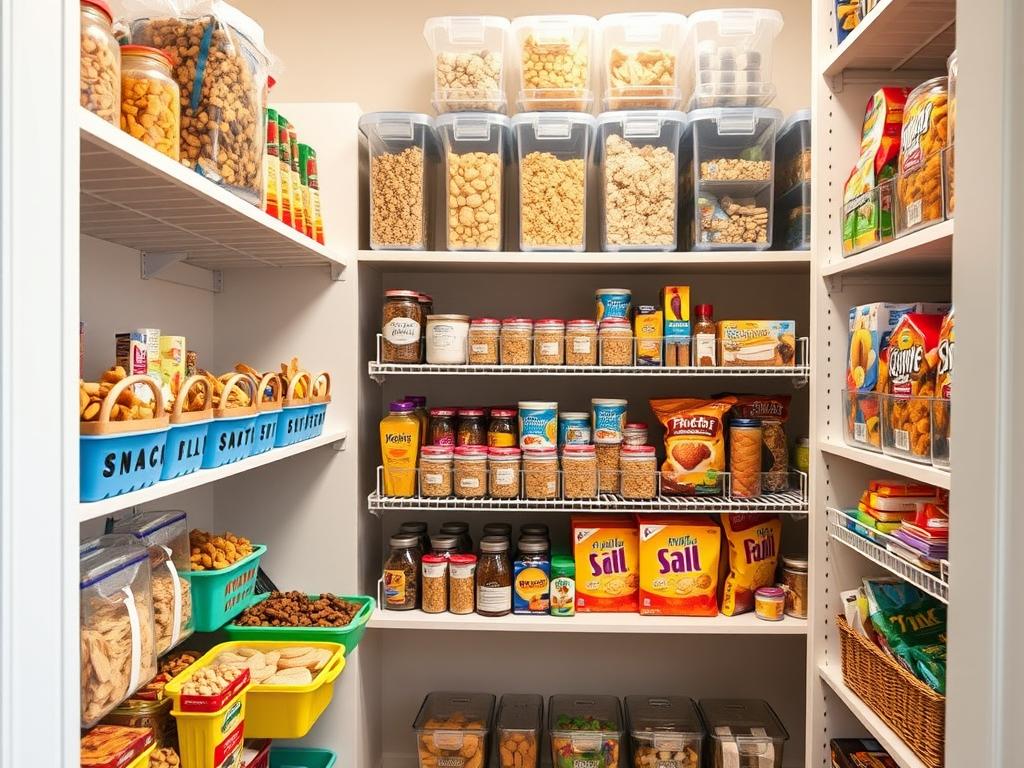
Vertical Storage Solutions
Install shelf risers to stack cereal boxes and canned goods. Risers double shelf capacity and keep tall items visible. Stackable bins are great for bulk snacks with labels facing forward.
Tiered organizers fit behind bottles or on countertop edges. They display jars and condiments neatly. Wire shelving and adjustable brackets add height where needed.
Sliding baskets and pull-out shelves bring items from deep shelves to the front. This cuts time spent digging for favorites.
Over-the-shelf hanging systems and pegboards free counter space. They hold utensils, clip-on cup holders, or small baskets for single-serve snacks. Adjustable shelving or closet-rod changes help families adapt shelves as packages sizes change.
Utilizing Door Space Effectively
Over-the-door organizers with clear pockets keep single-serve items visible and contained. Narrow spice racks on the door store small containers and snack bars without losing shelf space. Tension rods create dividers for soda cans, bottled juices, or rolled snacks inside cabinet doors.
For walk-in pantries, magnetic strips on doors hold metal snack tins. Clip-on baskets attach to doors for lightweight plastic containers and squeezable pouches. Be mindful of door hardware weight limits and keep allergens or choking hazards out of children’s reach.
These pantry hacks maximize space while supporting consistent snack organization. Small investments in risers, pull-outs, and door racks create a tidy pantry. This saves time and reduces clutter.
Organizing for Kid-Friendliness
An organized snack cabinet helps kids find healthy choices easily. Simple systems make mornings smoother. They reduce requests for permission.
Thoughtful snack pantry organization encourages independence while keeping safety in mind.
Place a low shelf or a reachable bin for age-appropriate items. Children can access choices alone. This cuts down on after-school rummaging.
Use durable, shatterproof containers and rounded-edge bins to prevent accidents.
Keep choking hazards out of reach for toddlers. Put heavy or breakable items on higher shelves. Store perishable snacks like yogurt in the refrigerator.
Child locks are useful when unsupervised access could be unsafe.
Use picture labels, color-coded bins, or icon stickers so non-readers can pick snacks easily. A tidy setup supports snack pantry organization. It makes restocking faster for caregivers.
Invite children to help pick containers, select colors, and arrange items in their bins. Participation builds ownership and encourages healthier choices over time.
Turn pantry tasks into learning moments. Teach counting by inventorying snack packs. Sort by color or type and introduce basic nutrition concepts.
These small lessons fit naturally into pantry organization tips.
Create a brief weekly routine—10 to 15 minutes of “pantry patrol.” Kids can tidy, rotate snacks, and note favorites for shopping lists.
Reward cooperation with a small privilege to reinforce positive habits.
Meal Prep and Planning with Snacks in Mind
Planning snacks along with meals saves time and money. It turns pantry organization ideas into daily routines. These make mornings smoother and help avoid impulse buys at the store.
A short prep session on Sunday sets up the week. Prepare grab-and-go portions and use clear labels for easy access.
Packaged portions reduce waste and speed assembly. Use clear containers for single-serve nuts, sliced fruit, and trail mix. Label containers by day so kids and caregivers find items fast.
Incorporating Snacks into Weekly Meal Plans
Create a simple weekly snack plan that matches how to organize snack pantry zones. Pair snacks with meals for balanced nutrition. For example, have protein after sports and fruit plus dairy for afternoon energy.
- Monday: yogurt + granola (stored in stackable clear tubs)
- Tuesday: apple slices + nut butter (pre-sliced in labeled bins)
- Wednesday: veggie sticks + hummus (single-serve hummus cups)
- Thursday: whole-grain crackers + cheese sticks
- Friday: banana + trail mix (portion-packed bags)
Reserve a shelf or basket for prepped snack kits. This links snack storage to meal planning and keeps the pantry orderly.
Packing Healthy School Lunches
Use pantry-organized items to build lunchboxes fast on weekdays. Choose whole-grain crackers, canned or frozen fruit cups, and shelf-stable hummus cups. Keep single-serve, nut-free spreads for schools with allergy rules.
Store lunch supplies—napkins, utensils, condiments—near lunch foods. Use an insulated lunch bag with a cold pack for perishables. Prep cut fruit and sandwich parts the night before in labeled bins for easy assembly.
| Component | Pantry Storage Tip | Portion Guidance |
|---|---|---|
| Fruit | Clear airtight tubs on middle shelf for visibility | 1 small cup or 1 medium whole fruit |
| Protein | Stackable containers for yogurt, hummus, cheese sticks | 1 serving (15–20g protein for older kids) |
| Grains | Bins for whole-grain crackers and tortillas | 1–2 portions depending on age |
| Snacks/Treats | Single-serve jars or zipper pouches labeled by day | Keep treats small, 100–200 calories |
| Extras | Basket near lunch supplies for utensils and cold packs | One of each item per lunch |
Maintenance Tips for a Stays-Organized Pantry
Keeping a pantry tidy requires a few simple habits. Regular checks stop clutter from piling up. Small, steady actions save time for the whole family.
Plan maintenance with routines the household already follows. A quick weekly sweep clears spills and misplaced items.
Monthly checks of inventory and expiration catch forgotten goods. Quarterly deep cleans help reassess shelf layout and container needs.
Use calendar reminders or phone apps to prompt purges. Pair pantry sweeps with grocery days to spot shortages. This speeds restocking and improves pantry hacks families trust.
Regularly scheduled purges
- Check expiration dates and discard expired items.
- Wipe shelves and clean containers to stop crumbs and pests.
- Reorganize misplaced snacks into correct zones.
- Restock grab-and-go bins for quick school mornings.
- Update labels when product sizes or brands change.
Maintenance works best when systems adapt to life changes. As children grow or diet needs shift, shelf assignments should adjust accordingly.
Swapping small bins for large containers helps when buying in bulk. Adding low shelves lets younger kids reach snacks safely.
Adapting organization as needs change
- Reassess after lifestyle changes like new allergies or more people at home.
- Try a new layout for weeks, keep what works, discard what doesn’t.
- Scale solutions: add low-access space or change shelves to tall storage.
- Avoid sticking to one method; flexibility improves long-term pantry organization.
| Task | Frequency | Purpose |
|---|---|---|
| Quick shelf sweep | Weekly | Remove spills, return misfiled items, maintain visibility |
| Inventory and expiration check | Monthly | Identify expired items, plan grocery list, update pantry organization tips |
| Deep clean and layout review | Quarterly | Wipe shelves, reassess containers, test new pantry organization hacks |
| Label update and restock grab-and-go bins | Monthly | Keep grab items ready, ensure labels match contents |
Seasonal Snack Organization Strategies
Managing seasonal treats means creating systems that simplify transitions between holidays, summer picnics, and cold-weather comforts.
A clear plan keeps everyday snacks accessible while making room for holiday baking supplies, party plates, and limited-time treats.
Set up a dedicated seasonal zone where holiday-specific items live. Use labeled bins for Halloween candy, Thanksgiving baking mixes, or summer picnic packs.
This helps hosts pull a single container when needed. It also keeps short-term items separate from daily staples in the snack pantry.
Pre-stock for events by checking inventory against menus. Make a simple list of required items and pull those from the seasonal zone.
Add disposable plates, napkins, and single-serve snack packs to a party shelf for fast entertaining.
For perishable seasonal items, plan proper storage. Move items needing refrigeration into the fridge or freezer and mark dates on labels.
This reduces spoilage after celebrations. It keeps food safety front of mind and improves snack pantry organization.
Rotate seasonal snacks so favorites stay handy during their peak. Move summer fruit pouches and picnic mixes to eye-level in warm months.
Shift winter hot cocoa mixes and holiday cookies forward as temperatures drop. Off-season items can be stored higher or in less-accessible spaces.
Track seasonal favorites in the inventory system to avoid overbuying. Use clear containers and season-labeled tags like Winter Treats or Summer Snacks.
Visible storage speeds the swap between seasons. It supports pantry organization ideas that save time.
When extra treats remain after an event, consider donation options. Unopened items within their expiration dates often qualify for local food banks.
This helps clear space and reduces waste. It keeps the organized snack pantry plan tidy.
| Season | Examples to Stock | Storage Tip | Quick Action Before Event |
|---|---|---|---|
| Spring | Fruit pouches, picnic crackers, trail mix | Clear bins labeled “Spring” at mid-shelf | Check pouches for punctures; add ice packs for outings |
| Summer | Hydration drinks, snack bars, BBQ marinades | Store bulky items in stackable containers near door | Pre-assemble grab-and-go packs for beach days |
| Fall | Snack-sized nuts, baking mixes, Halloween candy | Use airtight bins and rotate candy forward | Label party bin; set aside baking essentials |
| Winter | Hot cocoa, holiday cookies, roasting spices | Place seasonal bin at eye level for quick access | Check expiration dates; move fridge items into cold storage |
Utilizing Technology for Pantry Management
Technology can make pantry routines easier. It brings clarity to snack rotation for busy families. Targeted tools help track inventory and set reorder limits.
These digital options support good pantry organization. They create reliable snack storage solutions without adding clutter.
Inventory tracking apps work well with physical organization. Pantry Check, Out of Milk, and AnyList run on iOS and Android.
These apps offer barcode scanning, expiration alerts, and shared lists. Families can categorize items as granola bars, fruit snacks, or lunchbox staples. This helps organize snacks into pantry zones quickly.
Key features include barcode scanning for fast entry and expiration notifications to reduce waste. Shared household lists let caregivers and older kids update stock.
Sync options with Amazon Alexa or Google Assistant let users check quantities and add items by voice. This saves time during busy mornings.
Privacy is important when choosing an app. Review app permissions carefully before use.
Apps that offer local storage are better if cloud syncing concerns you. Local-only apps limit data sharing but still track snack inventory effectively.
Online grocery lists cut down store visits. Instacart, Amazon Fresh, and Walmart Grocery let families create recurring orders or subscribe to staples.
Linking an inventory app to a shared online list keeps items replenished before supplies run low.
Smart ordering means setting reorder limits, like requesting new boxes when only two remain. Bulk buying shelf-stable snacks works well if space allows.
Review order history to spot items that are unused. This helps families adjust future snack purchases.
Below is a practical comparison to guide app and platform choices for pantry management.
| Tool | Key Features | Best Use |
|---|---|---|
| Pantry Check | Barcode scanning, expiration tracking, batch edits, local backup | Detailed inventory and expiration management for families with many packaged snacks |
| Out of Milk | Shopping lists, pantry counts, shared lists, quick add | Simple list syncing and quick pantry counts for caregivers on the go |
| AnyList | Recipe saving, ingredient tracking, shared household lists | Meal planners who want inventory tied to recipes and snack planning |
| Instacart / Amazon Fresh / Walmart Grocery | Recurring orders, subscriptions, aisle mapping, local delivery | Automated restocking for commonly used snacks and bulk purchases |
Final Touches: Adding Personal Flair
A few thoughtful accents turn a functional pantry into a welcoming, easy-to-use space. Simple choices such as printed custom labels with clean fonts, chalkboard paint strips for changing contents, and picture labels for young children help keep the snack cabinet organized and items easy to find.
Mason jars and apothecary-style containers improve the look and make pantry organization feel intentional rather than cluttered.
Decorative touches should stay practical. Patterned shelf liners that wash easily, a small potted herb if the pantry gets light, and a coordinated color palette tie the area to the kitchen without reducing durability.
Shoppers can find affordable labels and craft supplies at Target, The Container Store, Michaels, and Amazon to build an attractive system without overspending.
Creating a family-friendly space means balancing style with clear rules. Post a simple note about snack limits, allergy reminders, and cleanup expectations.
Add a family snack chart, a “surprise treat” jar for rewards, or a chalkboard for the weekly snack plan to keep everyone engaged and responsible.
Finally, treat the pantry as a living system. Regularly review what works with the family and celebrate small wins.
Adjust pantry organization tips to fit changing routines. This attention keeps the snack cabinet useful and sustainable for the household.