

More than 80% of Americans say clutter makes daily tasks harder. This shows that knowing how to organize your home can improve everyday life.
This beginner guide shows simple, room-by-room steps for anyone starting fresh. It focuses on easy wins like 30-minute sessions and weekend projects. It also suggests affordable supplies so progress stays steady and realistic.
This guide is for beginners who want practical tips and systems that last. It covers mindset, decluttering methods, and specific strategies for living rooms, kitchens, bedrooms, bathrooms, home offices, and outdoor spaces.
Readers will see benefits like less stress, saved time, simpler routines, and easier cleaning. These come from proven home organization ideas that fit everyday life.
Recommended supplies include clear plastic bins from Iris or Sterilite and Brother P-touch labelers for neat labels. Also suggested are drawer dividers, over-the-door organizers, hanging shoe racks, Elfa closet systems from The Container Store, and multi-compartment pantry organizers. A budget-versus-premium guide helps readers choose what works for them.
The guide is organized so readers can jump to specific rooms and revisit useful systems. Transform your space into an organized haven with these beginner-friendly strategies on how to organize your home room by room.
Understanding the Importance of Home Organization
An orderly home shapes daily life in ways people often underestimate. Clear surfaces and defined zones reduce friction in routines.
Small habits add up to steady improvements when someone follows simple home organization tips. The result is time saved and fewer lost items.
It also creates a sense of calm that carries through each day.
Below are key areas to consider. Each part links practical benefits to clear action steps.
Readers will find organizing hacks that fit their schedule and priorities.
Benefits of an Organized Home
An organized home delivers measurable gains. People spend less time searching for belongings and cut cleaning effort.
Entertaining becomes less stressful when spaces stay guest-ready. Better layout and storage increase usable square footage.
Families often avoid duplicate purchases, creating tangible financial savings.
Productivity research supports these claims. Studies show tidy environments boost task efficiency and reduce decision fatigue.
Those effects translate into faster mornings and smoother workflows for remote work or household tasks.
Psychological Impacts of Clutter
Clutter affects mood and health. Research from the American Psychological Association links disorder with higher cortisol, the stress hormone.
Chronic clutter can raise anxiety and disrupt concentration during work or study.
In contrast, an orderly setting supports improved sleep and steadier mood.
Clear spaces free cognitive bandwidth. That makes it easier to focus on tasks, enjoy downtime, and process emotions with less overwhelm.
How Organization Affects Daily Life
Practical examples show the difference organization makes. An organized closet and nightstand speed up morning routines.
Kitchen organization streamlines meal prep and reduces food waste. A tidy home office supports deep work and fewer interruptions.
Systems matter more than perfection. Labeled bins, dedicated zones, and short routines turn one-time cleanups into sustainable habits.
Simple steps like a 10-minute nightly reset and a weekly maintenance check keep progress steady.
Intentional ownership replaces extreme minimalism for most people. Keeping items that serve a purpose or bring joy creates a balanced home.
Those choices make it easier to tidy up your home without feeling deprived.
For further guidance, readers can consult expert organization advice from The Container Store guides, Real Simple and Good Housekeeping articles, and university research summaries on environment and cognition.
These sources offer practical organizing hacks and tested strategies to adopt at home.
| Benefit | Measured Impact | Practical Tip |
|---|---|---|
| Time saved | Minutes recovered per day for routine tasks | Use labeled bins and zone storage for quick retrieval |
| Lower stress | Reduced cortisol and fewer anxiety triggers | Start with a 10-minute nightly tidy up your home habit |
| Improved productivity | Higher task efficiency, less decision fatigue | Create a dedicated, clutter-free work area |
| Financial savings | Fewer duplicate purchases, less food waste | Inventory key items and label storage zones |
| Better sleep | Easier sleep onset and mood regulation | Keep bedroom surfaces clear and store electronics out of sight |
Getting Started: Decluttering Your Space
A clear plan helps you declutter your space and start a lasting routine. Begin with a small area. Set a short timer and gather boxes or bins labeled for different outcomes. This method keeps momentum and lowers overwhelm when organizing your home.
Tips for Effective Decluttering
Start with one drawer or shelf to build confidence. Set a 15–30 minute timer and wear comfortable clothes. Play upbeat music to keep your energy up.
Prepare clearly marked stations for trash, donate, sell, and keep before you begin. Use a simple checklist to track progress and avoid decision fatigue. Break larger jobs into daily or weekly goals.
For garages or basements, create a realistic timeline. Add tasks to a decluttering calendar for steady progress.
The Four-Box Method Explained
Label four boxes or areas: Keep, Donate/Sell, Recycle, and Trash. Sort items one at a time and place each in the right box. Use this for closets, kitchen counters, and playrooms for fast results.
Sort by category, not location. For example, gather all T-shirts from every drawer before choosing. This cut downs repeated decisions and speeds the work. The four-box method makes organizing easier and clearer.
How to Decide What to Keep
Use simple rules. Ask if you used the item in the last 12 months. Check if it is in good condition and serves a clear purpose. Limit sentimental items and take photos of extras before you let them go.
Follow the one-in, one-out rule for wardrobes and similar groups. Keep duplicates only if they add clear value. For seasonal items, if unused for a year, think about donating or selling.
For donations, try Goodwill, The Salvation Army, or local shelters. To sell items, use eBay, Facebook Marketplace, or Poshmark. Present items cleanly with good photos and detailed descriptions for faster sales.
Handle hazardous waste and electronics carefully. Best Buy and Staples take some electronics for recycling. Check local rules for batteries and hazardous materials. Schedule bulk pickups to clear large items safely.
Organizing the Living Room
A well-planned living room blends style with practical organizing ideas that make daily life easier. These ideas focus on furniture, atmosphere, and smart storage. The goal is to make the room feel open, tidy, and welcoming.
Choosing Functional Furniture
Choose pieces that serve more than one purpose. Storage ottomans and coffee tables with shelves hide blankets and games. They also offer surface space.
IKEA Kallax units work well as room dividers with baskets for quick cleanups. Wayfair and West Elm sell console tables with drawers that tuck away mail and chargers.
Consider sleeper sofas for guests and media units with cord management to keep electronics neat. Amazon sells modular shelving and slim media consoles for narrow layouts. Functional furniture cuts clutter and supports long-term organizing.
Creating a Cozy Atmosphere
Arrange seating into conversation zones. Pull chairs and sofas inward to form a natural cluster, keeping walkways clear. Use an area rug to define the zone and show walk paths.
Soft lighting improves mood and cuts visual clutter. Floor and table lamps placed in corners add warmth. Philips Hue bulbs let users adjust brightness and color for the time of day.
Limit decorative items and rotate them seasonally. Throw pillows and woven blankets soften surfaces and hide small messes. This keeps the living room organized without losing comfort.
Storage Solutions for Small Spaces
Maximize vertical space with floating shelves and wall cabinets. Narrow bookcases and nested tables offer surface areas without using much floor space. Use under-sofa bins for off-season throws or board games.
Clear bins show contents, while woven baskets hide toys and blankets nicely. Labeled magazine holders keep remotes, manuals, and chargers neat. These ideas keep items easy to reach but out of sight.
Mount the TV and use a slim console to free floor space. Tidy cables with sleeves, labels, and smart power strip placement. This helps cleaning and lowers trip hazards.
For homes with kids or pets, choose durable, washable fabrics and easy-clean rugs like Ruggable. Use toy bins from brands like Munchkin and Sterilite for quick cleanups. These choices keep the room neat and functional.
Kitchen Organization Strategies
A well-planned kitchen makes daily life easier and safer. This section covers practical tips for kitchen organization that fit into broader home organization systems.
Short, clear steps help anyone learn how to organize your home starting with the busiest room.
Maximizing Cabinet Space
Use shelf risers and stackable containers to double vertical storage. Pull-out shelves and lazy Susans save bending and make items visible.
Tension rods hold baking sheets or lids upright. Drawer dividers keep utensils tidy. Group items by zone—prep, cooking, baking, and storage.
Place everyday tools at eye level. Brands like OXO and Rubbermaid Brilliance work well for airtight pantry containers. Label with Brother P-touch or chalkboard labels for faster retrieval.
Organizing the Refrigerator
Store raw meats on the lowest shelf in sealed containers to avoid cross-contamination. Use clear bins to group produce, dairy, and snacks.
Put condiments in door shelves to free main compartments. Label leftovers with dates and follow first-in, first-out rotation to cut waste.
Keep the fridge at a safe temperature. Use baking soda or fridge-specific cleaners to neutralize odors. These habits support food safety guidance from the FDA and EPA.
Tips for a Functional Cooking Area
Design workflow around the triangle between the sink, stove, and refrigerator. Keep utensils near their point of use with utensil crocks, magnetic knife strips, or pegboards.
Hang pots on racks or store them on lower shelves for safety. Use appliance garages for mixers and toasters so counters stay clear.
Keep only daily-use items like a coffee maker or knife block on the countertop. Hide charging stations in drawers to tame cords for small electronics.
Safety and hygiene matter. Maintain clearances around stovetops, secure heavy items low, and store cleaning supplies separately with clear labels.
These steps tie into reliable home organization systems and make the kitchen easier to maintain.
| Area | Products to Consider | Quick Benefit |
|---|---|---|
| Cabinets | Shelf risers, pull-out shelves, lazy Susans, rubbermaid containers | Increase usable space and visibility |
| Pantry | OXO airtight containers, Brother P-touch labels, stackable bins | Keep food fresh and easy to find |
| Refrigerator | Clear storage bins, sealed meat containers, date labels | Reduce waste and prevent contamination |
| Countertops | Appliance garage, utensil crock, magnetic knife strip | Clear workspace and safer cooking area |
| Small Appliances | Appliance garage, cabinet shelves, labeled storage | Accessible when needed, hidden when not |
Bedroom Organization Tips
Smart bedroom organization makes daily routines easier and sleep more restful. These steps help tidy your home.
Focus on clothes, bedside surfaces, and creating a calm sleep space.
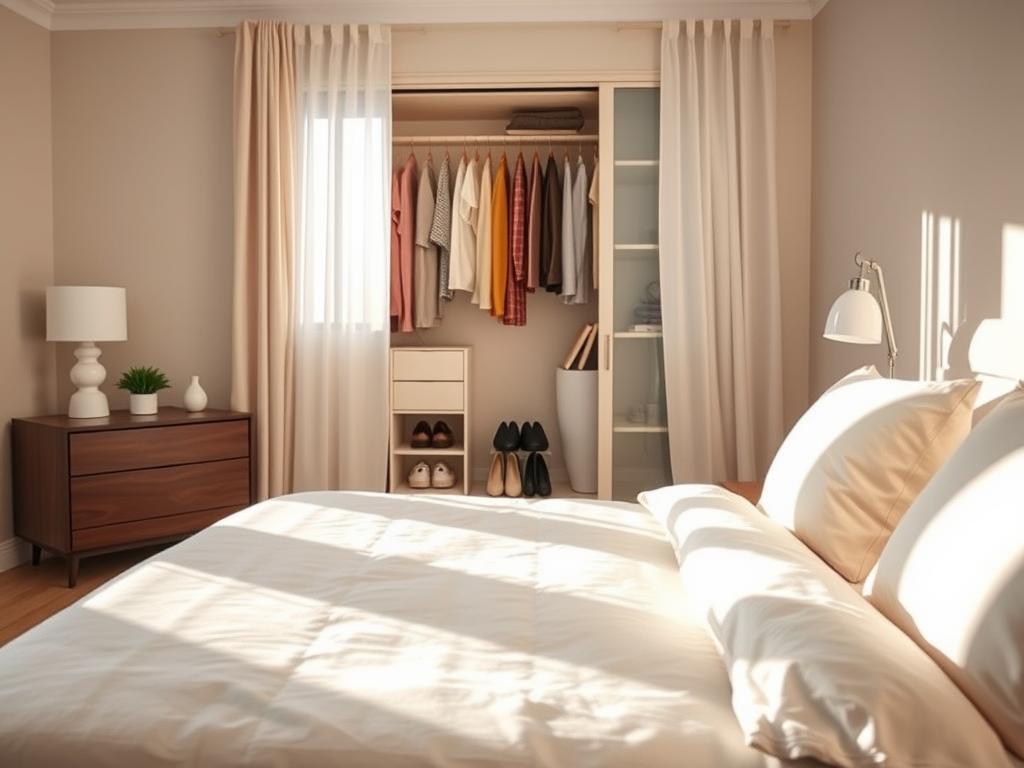
Decluttering Your Closet
Empty the closet and sort clothes by category: tops, bottoms, outerwear, and accessories. Try items on to check fit.
Use the four-box method—keep, donate, repair, trash—to decide quickly what to keep.
Choose slim velvet hangers to save space. Add double hanging rods and shelf dividers for stacked sweaters.
Clear shoe organizers help keep shoes visible and off the floor. Rotate seasonally using vacuum bags or under-bed bins.
Consider closet systems like Elfa or IKEA PAX for custom storage. These can grow with your needs.
Organizing Nightstands and Dressers
Limit nightstand items to essentials: a lamp, alarm, and a glass of water. Use bedside caddies for books and devices.
Small trays hold jewelry and change to keep surfaces neat.
In dressers, use drawer organizers for socks, underwear, and accessories. Fold shirts with KonMari or file-folding to save space.
Label under-bed drawers and storage boxes for linens and keepsakes. Add a mattress protector to guard stored items.
Creating a Zen Sleep Environment
Sleep experts say keep the bedroom cool, about 60–67°F, to improve rest. Install blackout curtains to block light.
Use a white noise machine or fan to reduce outside noise. Minimize electronics by charging them outside the bedroom.
Choose calming paint colors and soft linens to reduce visual stress. Add a low-maintenance plant like a snake plant to freshen air.
Keep surfaces clear to make the room restful and support a zen sleep space.
Storage and Shared Spaces
Use rolling drawers and labeled boxes under the bed for shoes and out-of-season items. Store belongings in breathable containers.
Check stored items regularly for care. For couples, define closet zones and create dual hanging sections.
Plan purge sessions together to keep shared spaces tidy. These tips help partners reduce clutter and maintain harmony.
Efficient Bathroom Organization
A tidy bathroom saves time and cuts stress. Efficient bathroom organization uses smart storage and easy routines to keep surfaces clear.
Small changes, like labeled bins or a shower caddy, make daily tasks smoother and protect items from moisture.
Use a plan that fits your room size and family habits. Group toiletries by use—daily, weekly, travel—and store daily items within easy reach.
These ideas reduce decision fatigue and keep counters clutter-free.
Storage Ideas for Toiletries
Tiered turntables under the sink use deep cabinets and stop items from getting lost. Clear acrylic drawers work well for cosmetics and small tools.
Over-the-medicine-cabinet organizers expand vertical space.
Wall-mounted dispensers for soap and shampoo cut down on bottle clutter. Label bins or drawer inserts so cotton swabs, razors, and lotions are easy to find.
Use waterproof containers where items get wet.
Maximizing Small Spaces
Vertical solutions help when floor space is tight. Ladder shelves and over-the-toilet units add storage without crowding the room.
Recessed shelving fits cleanly into walls if you renovate. Adhesive hooks hold towels and robes without drilling.
Corner shelves and narrow cabinets suit tiny baths. These tips free counters and keep essentials organized.
Keeping Essentials Accessible
Place often-used products at eye level or in easy-to-reach baskets. A small shower caddy holds shampoo, conditioner, and soap for quick access.
Store backups in labeled bins so replacements are simple to find. Use moisture-resistant materials like stainless steel or special plastics to prevent mold.
Keep a small supply of cleaners handy. Schedule quick weekly tidy-ups to maintain order.
| Problem | Simple Fix | Recommended Product |
|---|---|---|
| Cluttered under-sink cabinet | Install tiered turntable and labeled bins | Lazy Susan + plastic storage bins |
| Too many small items on counter | Use clear acrylic drawers and drawer inserts | Acrylic cosmetic organizer |
| Limited floor space | Add over-toilet shelving or ladder shelf | Compact over-the-toilet unit |
| Shower bottles causing mess | Switch to wall-mounted dispensers and mildew-resistant liners | Wall soap dispensers + mildew-resistant liner |
| Expired medications and safety | Dispose at pharmacy take-back programs and store meds out of reach | Locked medicine box; CVS or Walgreens take-back |
| Rugs slipping and tall furniture tipping | Use non-slip pads and anchor tall cabinets | Non-slip rug pad + furniture anchors |
Organizing Home Office Spaces
A well-planned home office boosts focus and cuts down on daily friction. This section gives practical steps for setting up a desk and handling clutter. It also helps keep digital files tidy, using expert tips for common home systems and work styles.
Desk Setup for Productivity
An ergonomic desk setup puts the monitor at eye level. The keyboard and mouse should be within easy reach. A chair with lumbar support, like one from Herman Miller, helps posture. IKEA and Autonomous have budget-friendly chairs and desks that support good form.
Keep the desk surface clear, leaving only daily essentials on top. Use task lighting to reduce eye strain. Consider a monitor stand with storage, pencil cups, and file trays for organization.
Managing cables is important. Use cable clips and zip ties. A surge protector with built-in USB ports reduces clutter and protects devices.
Decluttering Papers and Supplies
Start with an in-tray and out-tray system to sort incoming papers. For each, choose one action: act immediately, file, scan, recycle, or shred. A small Fellowes shredder fits most home offices.
Label accordion folders for bills, receipts, and taxes. Use a vertical file sorter or compact filing cabinet to keep active files handy. Switch to paperless billing and set up a mail-sorting station near the entry to limit new paper.
Keep a small drawer stocked with essentials. Regularly purge stationery and duplicates. This keeps your inventory simple and fits your home organization system.
Digital Organization Techniques
Create a folder structure that is consistent. Use clear file names for quick finding. Back up often to cloud services like Google Drive, OneDrive, or Dropbox. Use an external drive too, for extra safety.
Manage email with folders and labels. For team chats, use Slack or Microsoft Teams to reduce email volume. Use password managers like 1Password or LastPass. Always enable two-factor authentication for safety.
Plan regular digital cleaning sessions. Try time-blocking or the Pomodoro Technique to protect focused work times. End each day with a shutdown routine that closes tasks and tidies spaces.
| Area | Recommended Tools | Maintenance Tip |
|---|---|---|
| Ergonomics | Herman Miller chair, IKEA desk, monitor stand | Adjust monthly and log comfort changes |
| Paper Workflow | In-tray/out-tray, Fellowes shredder, accordion folders | Sort daily and archive monthly |
| Digital Files | Google Drive, OneDrive, Dropbox, external SSD | Back up weekly and check restores quarterly |
| Communication | Slack, Microsoft Teams, email folders | Review and delete irrelevant threads biweekly |
| Security | 1Password, LastPass, two-factor authentication | Rotate passwords annually and enable MFA |
| Disaster Preparedness | Fireproof safe, cloud backup, external drive | Store critical documents and test recovery yearly |
Outdoor Space Management
Managing an outdoor area turns chores into calm routines. Clear zones for dining, gardening, and relaxing. Use simple systems so upkeep stays quick.
These home organization ideas help homeowners make the most of yards, patios, and balconies.
Organizing Garden Tools
Store rakes, shovels, and hoses on wall-mounted racks or pegboards in a shed or garage. Brands such as Rubbermaid, Husky, and Gladiator offer sturdy shed organizers and hooks that keep tools off the floor.
Use labeled bins for gloves, seed packets, and hand tools to speed up tasks. A simple inventory list taped inside a cabinet saves time and prevents duplicate purchases.
Inspect tools yearly and sharpen or replace dull blades for safe use.
Creating Functional Outdoor Living Areas
Zone spaces into eating, lounging, and planting areas to avoid clutter. Choose weather-resistant furniture from Polywood or cushions with Sunbrella fabrics to cut maintenance.
Deck boxes and storage benches double as seating and hideaway storage. Vertical planters and railing pots free floor area on small patios.
Add solar or low-voltage lighting to extend evening use. Durable outdoor rugs define zones while keeping the space tidy and inviting.
Tips for Seasonal Storage
Prepare cushions and fabric items by cleaning and drying before storing in labeled, stackable containers. Drain hoses and winterize sprinkler systems.
Add fuel stabilizer to gas-powered lawn mowers before long storage. Store fertilizers, pesticides, and fuels in locked cabinets away from children and pets.
Keep a seasonal rotation plan and an inventory checklist to reduce buildup of unused gear.
| Task | Recommended Product | Storage Tip |
|---|---|---|
| Tool hanging | Gladiator GearWall | Install at eye level for easy access and label each hook |
| Small item bins | Rubbermaid totes | Use clear bins with labels and a contents list inside the lid |
| Outdoor seating | Polywood dining sets | Select storage benches to tuck away cushions and toys |
| Fabric protection | Sunbrella cushions | Clean, dry, then store in breathable bags for off-season |
| Fuel storage | Metal safety can | Keep in a ventilated shed and place on a spill tray |
For tiny yards and balconies, choose foldable furniture and vertical herb gardens. These home organization ideas make compact spaces feel larger.
They keep spaces functional. Follow seasonal storage tips to protect items year-round and simplify outdoor space management.
Maintaining Your Organized Home
Keeping a tidy house takes steady practice and simple systems. Small daily habits build good momentum. Clear plans make it easier to keep rooms in order.
These steps help keep progress steady and painless after an initial cleanup.
Schedule Regular Decluttering
Set routines that fit your household. A daily 10-minute tidy stops mess from growing. Weekly surface cleaning keeps counters and busy areas neat.
Monthly checks of closets catch mess early. Quarterly deep declutters remove items you no longer need.
Use calendar reminders or habit apps like Habitica and Todoist to prompt tasks. Shared chore charts help families divide work. These steps keep regular decluttering easy and fair.
Strategies for Seasonal Changes
Create a checklist for each season. Spring means purge and deep cleaning. Summer focuses on outdoor organization.
Fall prepares indoor living and holiday storage. Winter handles wardrobe rotation and cozy indoor spaces.
Swap wardrobe items and bedding each season. Check storage containers for pests or damage. These habits keep items safe and accessible through change.
Tools to Help Maintain Order
Use both physical tools and digital systems to reduce effort. Good items include label makers, clear bins, stackable shelves, drawer dividers, and Command hooks.
Labeling and clear storage make organizing repeatable and visible. Digital tools like calendar apps and inventory trackers such as Sortly help you track what is stored and when items were last checked.
Cloud storage for important documents frees up physical space and makes finding papers easy.
Involving Household Members
Assign clear roles and set expectations. Short, specific tasks work better than vague lists. Create rewards or gamified chores to boost participation.
Weekly family check-ins keep systems up to date and allow you to reassign zones. Document responsibilities and reward progress.
Sharing duties makes maintaining an organized home a team effort, not one person’s job.
Measuring Success and Adjusting Systems
Review your systems regularly to see what works. If a routine is ignored, simplify it or try a new method.
Keep photos and notes of good setups so you can copy them elsewhere. Use quick measures like time spent tidying, cleared zones, or fewer duplicates.
These signals help guide changes and keep your home organized for the long term.
| Task | Frequency | Recommended Tools | Success Tip |
|---|---|---|---|
| Quick tidy (daily) | Daily | Timer, basket | 10-minute sprint for high-traffic spots |
| Surface clean | Weekly | Microfiber cloths, multipurpose cleaner | Set a weekday evening as routine |
| Closet/zone check | Monthly | Clear bins, label maker | Sort into keep, donate, repair |
| Deep declutter | Quarterly | Boxed labels, Sortly app | Schedule in calendar and involve household |
| Seasonal swap | Every season | Storage bags, shelving | Inspect containers and rotate items |
Final Thoughts on Home Organization
After working through each room, it helps to pause and take stock. Reflect on your organization journey by comparing before-and-after photos. Note time saved and list stress reductions.
A short journal entry or checklist can capture wins, like quicker morning routines or fewer lost keys.
Next, focus on setting goals for your space with measurable steps. Use SMART targets, for example: declutter the garage over two weekends. Or create a meal-planning station in the kitchen within one month.
Prioritize projects that deliver daily benefits. Write them down so progress is easy to track.
Organization is ongoing, so continued encouragement is important. Remind your household to revisit systems each season. Adapt when life changes, such as a new baby or remote work.
Use expert advice from sources like Real Simple, Good Housekeeping, The Container Store blog, or certified organizers. These help when deeper support is needed.
Final checklist: pick one small zone to declutter today. Order basic supplies if needed. Then schedule the first maintenance reminder.
Following how to organize your home in small, consistent steps builds a calmer, more functional living space over time.