

Nearly 30% of Americans throw away food because they can’t find it or it expires. This shows the real cost of a messy pantry. Organizing your pantry saves money, speeds up meal prep, and keeps food safer.
This guide helps homeowners, renters, and busy families turn a cluttered shelf into a useful space. It offers practical tips and storage solutions for the pantry. Step‑by‑step instructions cover assessing space, decluttering, picking containers, and creating lasting systems.
Good pantry organization cuts food waste and makes grocery planning easier. It also speeds up cooking time. The guide recommends trusted brands like The Container Store, IKEA, and OXO for containers and labels.
Readers get short, easy steps for budget‑friendly pantry ideas. By the end, they will have clear zones and smart storage choices. Plus, a simple plan to keep their pantry working well over time.
Assessing Your Pantry Space and Needs
Before reorganizing, examine the pantry’s shape, size, and who uses it. This helps choose the best pantry organization ideas.
It also shows where pantry organization shelves will be most useful.
Measuring Your Pantry Dimensions
Use a tape measure to get height, width, and depth. Check door clearance and floor-to-ceiling height too.
Also, measure each shelf’s front-to-back depth and the space between shelves.
Know your pantry type. Reach-in pantries fit shallow baskets. Walk-in pantries suit pull-out drawers.
Built-in cabinets and freestanding units require different pantry organization shelves and tiered risers.
Leave space for bin handles and labels. Common shelf depths are 12″, 16″, and 24″.
Match container depth to shelf depth. This avoids wasting space.
Identifying Frequently Used Items
Track your pantry items for two weeks. Separate everyday staples from less-used goods.
Staples include flour, sugar, oils, cereals, coffee, canned tomatoes, and pasta.
Sort items by usage: hot (daily), warm (weekly), and cold (monthly or rare).
Put hot items at eye level. Warm items go above or below. Cold items store high or low.
Consider package shapes and serving sizes as well. Boxes, bags, and jars need different access setups.
Pick pantry organization ideas that make common shapes easy to reach.
Understanding Dietary Preferences
List household dietary needs like gluten-free, vegetarian, allergies, and low-sodium diets.
Use separate zones to avoid cross-contamination and keep special items visible.
Reserve labeled bins or shelves for gluten-free flours, keto snacks, pet food, and baby formula.
Clear separation improves safety and speeds meal prep.
Dietary habits affect the amount of stock needed.
Bulk buyers or large-batch cooks require more shelf space and sturdy pantry organization shelves.
Rotate items based on use to reduce waste.
| Measurement or Task | Why It Matters | Practical Tip |
|---|---|---|
| Height, Width, Depth | Determines usable storage volume and compatible organizers | Measure with a tape measure; record three measurements for each shelf |
| Door Clearance & Ceiling Height | Affects tall storage and door-mounted racks | Allow extra 2–3″ for door swing and bin handles |
| Shelf Depth (12″, 16″, 24″) | Influences container size and visibility | Match container depth to shelf; use 12″ for jars, 24″ for bulk bins |
| Usage Frequency (Hot/Warm/Cold) | Guides shelf placement for easy access | Place hot items at eye level; cold items on high or low shelves |
| Package Shape & Serving Size | Impacts reachability and storage orientation | Group like shapes together; use risers for boxes and stacked cans |
| Dietary Needs & Special Items | Requires dedicated zones to prevent cross-contact | Label bins; keep allergen-free products on separate shelves |
Decluttering the Pantry
A clear pantry starts with a plan. Begin by clearing a workspace and wearing gloves. Keep a trash bin ready along with boxes or clear bins for keep, toss, donate, and relocate.
This step helps you use pantry organization tips and sets the stage for lasting systems.
Empty shelves one at a time to make the task manageable. Check each item for expiration dates, damaged packaging, pests, or bad odors.
Remove rancid oils, stale snacks, bulging cans, and infested dried goods first. Knowing “best by,” “use by,” and “sell by” labels protects safety and cuts waste.
After clearing a shelf, clean surfaces with mild detergent and warm water. Wipe corners and let the area dry before putting items back.
This routine prevents cross-contamination and helps items last longer.
Removing Expired or Unwanted Items
Work step-by-step: take things off, check dates, and inspect packages. Avoid cans with dents, leaks, or bulging lids.
Throw away oils that smell sour or rancid. For confusing dates, follow food safety rules: “use by” is for safety, while “best by” shows quality.
Put unopened, undamaged, and in-date products in the donate pile. Use a trash bin for spoiled goods and a recycling bin for cans and jars.
After removing items, vacuum or sweep to clear crumbs that attract pests.
Sorting Items by Category
Sort broadly first, then narrow down categories. Make piles for baking, grains and pasta, canned goods, condiments, snacks, breakfast items, and spices.
Use clear bins or labeled boxes to see volume and space needs. This shows which pantry systems will fit best.
Keep a pile for items used often. Set aside a relocate pile for things that belong in the fridge or on the counter.
Use a toss pile for expired or damaged food. Donate sealed, nonperishable items with labels intact.
Donating Unused Food Products
Give only unopened, shelf-stable items with clear labels and in date. Groups like Feeding America accept many packaged foods.
Local food banks share lists of accepted items and drop-off times. Community fridges and neighborhood sharing platforms are other options.
Never donate opened, dented, leaking, or damaged cans. Always check organization rules to make sure donations help.
| Step | Action | Why it Matters |
|---|---|---|
| 1. Empty Shelves | Remove all items and group by pile: keep, toss, donate, relocate | Clears space and reveals hidden spoilage |
| 2. Inspect Dates & Packaging | Check “use by,” “best by,” dents, leaks, odors | Prevents foodborne illness and wasted space |
| 3. Clean Shelves | Wipe down shelves, dry thoroughly | Reduces pests and residual odors |
| 4. Sort by Category | Use clear bins for baking, grains, cans, snacks, spices | Makes planning pantry organization hacks easier |
| 5. Donate or Share | Send sealed, in-date items to Feeding America or local pantry | Supports community and reduces household waste |
| 6. Implement Systems | Choose shelving, baskets, or clear containers based on volume | Transforms piles into lasting pantry organization systems |
Choosing the Right Storage Solutions
A well-chosen mix of storage types makes a pantry easier to use and maintain. Practical choices reduce waste, speed meal prep, and keep everything visible.
This section covers containers, vertical strategies, and labeling ideas. These help homeowners pick pantry storage solutions that fit their space and habits.
Selecting Containers and Baskets
Start with airtight canisters for flour, sugar, and rice. Brands like OXO, Anchor Hocking, and Rubbermaid offer glass and BPA-free plastic options. These resist spills and pests.
Glass is nonporous and dishwasher-safe. BPA-free plastic is lightweight and shatterproof. Metal bins add durability for heavy bulk items.
Choose uniform sizes where possible to improve stackability. Wide-mouth jars work well for scoops. Rectangular containers use shelf depth better than round jars.
Use stackable bins for bulk goods. Mesh or woven baskets work well for produce and snack stashes.
Utilizing Vertical Space Effectively
Vertical solutions multiply storage without major renovations. Shelf risers and tiered organizers create extra levels on every shelf. Over-the-door racks free up floor and shelf space.
Consider adjustable shelf inserts or extra shelving to adapt to changing items. Lazy Susans make corner areas and deep shelves accessible.
Clear stacking bins and risers keep contents visible. Wall-mounted spice racks or magnetic strips work on metal surfaces to reclaim counter and shelf space.
Considering Labeling Options
Consistent labeling keeps an organized pantry from slipping back into clutter. Printed labels from Brother or Dymo label makers give a neat, uniform look. Chalkboard and writable sticker labels allow quick updates.
Some clear container lids include measurement marks for portion tracking. Include product name and date opened or best-by date on each label.
Use color-coding for dietary categories like gluten-free or vegan. Place labels in the same spot on every container for easy scanning.
Choose laminated or waterproof labels that resist humidity and cleaning to preserve readability.
Categorizing Pantry Items
A clear plan for categorizing pantry items makes it easier to use and maintain. Start by dividing items into groups based on their use. This helps everyone find what they need quickly.
This step guides choices for pantry organization containers and systems. It sets the stage for practical organization ideas.
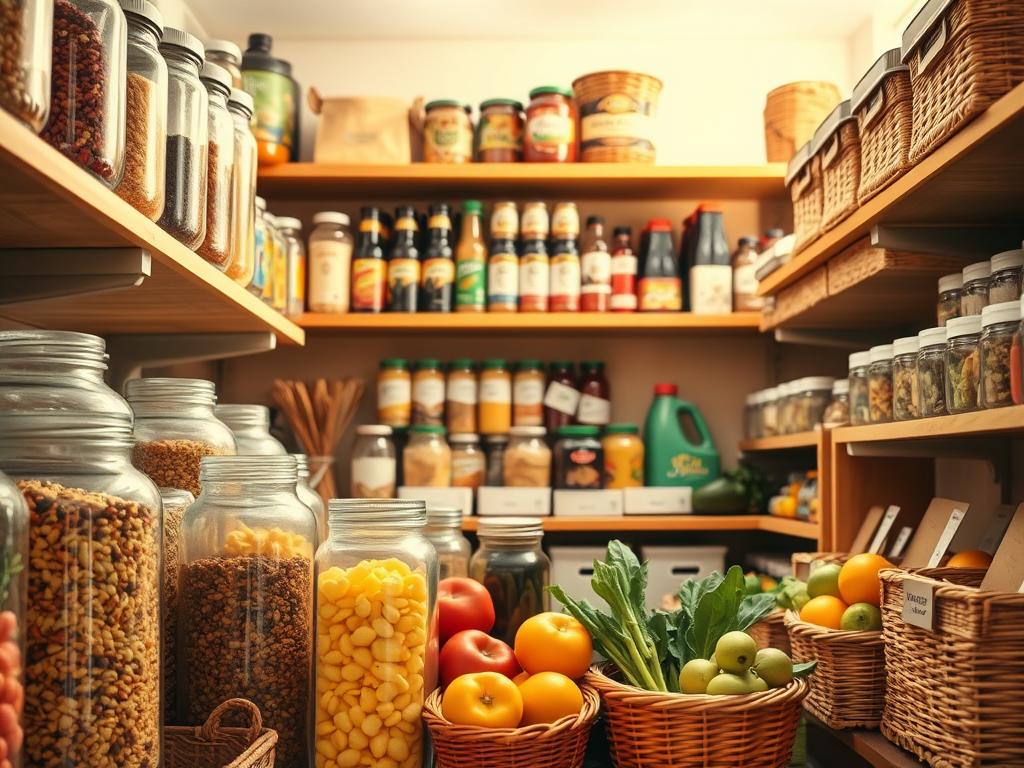
Group dry goods by type and how often you use them. Put flours, sugars, rice, grains, cereals, pasta, and legumes in airtight containers with oxygen absorbers if storing long-term.
Keep baking staples at eye level for quick access. Store heavy bags and bulk staples on lower shelves to prevent strain. Put lightweight cereals on higher shelves.
Portion bulk purchases into smaller labeled containers. Smaller containers keep food fresh longer and make rotating stock easier. Use clear labels with purchase or open dates to follow first-in, first-out rules.
Organize canned and jarred foods by category. Group vegetables, beans, soups, and tomato products together. Put newer cans behind older ones to reduce waste.
Consider stackable can organizers or wire front-facing racks to improve visibility and keep cans from toppling. This keeps your pantry tidy and safe.
Store sauces and condiments near prep areas for convenience. Keep glass jars on lower shelves to reduce the chance they break. Group similar jars together so meal prep flows smoothly.
Create separate zones for snacks and health foods. One area can hold family favorites, while another holds healthier options like nuts, dried fruit, and protein bars.
Use kid-friendly bins at reachable heights. This way, children can choose snacks without needing help. It encourages them to make their own choices.
Use clear pantry organization containers for portion control. Small clear bins help manage serving sizes and reduce overeating. Reserve a labeled shelf or basket for allergy-safe or specialty health foods to avoid cross-contact with allergens.
| Category | Best Storage | Placement Tip |
|---|---|---|
| Dry Goods (flour, rice, pasta) | Airtight containers with labels | Eye level for frequent items; bulk on lower shelves |
| Canned & Jarred Foods | Stackable can organizers, wire racks | FIFO: newer cans behind older ones; jars low for safety |
| Snacks (chips, cookies) | Opaque bins or baskets | Kid-accessible lower shelves for family favorites |
| Health Foods (nuts, dried fruit) | Clear pantry organization containers | Separate labeled shelf to avoid allergen contact |
| Bulk Staples | Portioned containers with dates | Lower shelves for weight; portion smaller containers for rotation |
Implementing an Effective Organization System
A clear plan turns a cluttered pantry into a calm, usable space. Start with a layout defining where baking items, breakfast foods, snacks, canned goods, and beverages will live.
Place zones near related work areas. For example, keep baking supplies close to the counter used for mixing. Put coffee and tea near the kettle.
High-use items should sit at eye level for quick reach. Heavy or bulky goods belong low to avoid strain. Seasonal or rarely used items go on high shelves.
For a small reach-in pantry, create narrower zones stacked vertically. For a walk-in, dedicate wider horizontal zones that allow multiple people to access items at once.
Creating zones cuts down on search time and supports meal prep. A breakfast zone might include cereals, oats, and nut butters. A snacks/kids zone holds grab-and-go items in clear bins.
A baking zone groups flours, sugars, and extracts together. Use pantry organization shelves to define each zone visually. Adjustable wire shelving or solid wood shelves make it easy to change heights as needs shift.
Stackable shelf inserts help separate items within a single shelf so small packages do not fall behind larger ones.
Utilizing shelf organizers improves visibility and access. Tiered risers work well for spices and canned goods. Pull-out drawers or slide-out baskets turn deep shelves into accessible storage.
Lazy susans keep jars and oil bottles within reach without moving other items.
For renters or retrofit projects, choose no-drill adjustable systems that clamp or hang. For permanent solutions, consider custom cabinetry or modify IKEA Sektion units for deep, pull-out performance.
These pantry organization systems save time spent searching for items and reduce accidental duplicates.
Incorporating clear storage options makes inventory checks fast. Use standardized, stackable clear containers from brands such as OXO or Rubbermaid for flours, grains, and snacks.
Label each container with the contents and the date opened to minimize waste.
Transparent stackable bins streamline snack organization. Shallow clear bins work well for individual meal kits or baking mixes. Clear storage blends function with a tidy look that encourages upkeep and simplifies restocking.
The following table compares common organizers, their best uses, and ideal pantry types to help choose the right mix of solutions.
| Organizer | Best Use | Ideal Pantry Type |
|---|---|---|
| Tiered Shelf Risers | Spices, canned goods, small bottles for visibility | Small reach-in, medium walk-in |
| Pull-Out Drawers | Deep shelves, bulky items, easy access to back items | Deep shelves, walk-in pantries |
| Lazy Susan | Oils, sauces, jars that need 360° access | Corner shelves, narrow closets |
| Slide-Out Baskets | Produce, snack bins, kids’ grab-and-go items | Family kitchens, accessible lower shelves |
| Clear Stackable Containers | Grains, flours, cereals with labeling | All pantry sizes |
| No-Drill Adjustable Systems | Temporary installs, renters, flexible layouts | Renters, quick retrofits |
| Custom Cabinetry / IKEA Sektion Mods | Permanent solutions, tailored storage heights | Walk-in and built-in pantries |
Maintaining a Clean Pantry
Keeping a pantry tidy needs simple routines and clear checklists. Regular care stops clutter and food waste. It also helps food stay fresh longer.
The steps below offer practical advice for busy households to keep their pantry organized and clean.
Regular Inventory Checks
Do quick scans weekly or biweekly to find items low in stock or past their use-by date. Larger families might check more often. Most homes find a full inventory every 1–3 months works well.
Use a checklist for this. Check expiration dates, list items to restock, and update grocery lists or apps. Mark when packages open and practice FIFO rotation. This means using older items before new ones.
Cleaning and Sanitizing Techniques
First, empty shelves before cleaning. Vacuum or sweep crumbs. Then wash shelves with mild soap and water.
Sanitize shelves using diluted bleach or food-safe disinfectants. Rinse and dry them well to avoid mold and moisture damage.
Clean containers and wipe jar rims to remove sticky spots. Check for bugs and quickly remove any infested products. Store grains and flours in airtight containers. Seal gaps and cracks near shelves to keep pests out.
Bay leaves or food-safe traps help prevent pests with low toxins. Regular cleaning removes things that attract pests and keeps pantry hacks working well.
Seasonal Assessment of Pantry Goods
Check pantry contents each season. Match what you have with meal plans and special events. Restock baking items before holidays and check barbecue needs in spring.
Look at emergency and shelf-stable foods in the fall. Add longer-lasting foods if you expect vacations or gatherings.
Unused seasonal items older than a year should be donated or repurposed. This frees space and keeps your pantry current.
| Task | Frequency | Key Actions |
|---|---|---|
| Quick Scan | Weekly or Biweekly | Spot-check expiration dates, note low-stock staples, update shopping list |
| Full Inventory | Every 1–3 Months | Count items, mark open dates, practice FIFO rotation, record perishables |
| Deep Clean | Every 3–6 Months | Empty shelves, vacuum, wash with mild soap, sanitize, dry thoroughly |
| Pest Check | Monthly | Inspect packages, store grains in airtight containers, seal gaps, use bay leaves or traps |
| Seasonal Review | Quarterly | Restock seasonal supplies, repurpose or donate unused items, adjust for meal plans |
Utilizing Technology for Organization
Technology can streamline pantry work and save time. Small tools and apps help track stock and stop duplicate buys.
They also make weekly shopping faster. Using pantry organization tech daily keeps shelves clear and meal prep smooth.
Apps for Inventory Management
Several apps work well across the United States. Pantry Check, Out of Milk, AnyList, and Sortly offer features like barcode scanning and expiration tracking.
These apps let family members share lists and link ingredients to recipes. This reduces duplicate purchases and creates automated shopping lists.
When setting up an app, categorize items to match physical zones. Enter expiration dates and note open dates for perishables.
Sync accounts so partners or roommates add items and get alerts about expiring products.
Smart Storage Solutions
Smart devices offer real-time visibility of pantry inventory. Smart scales and sensors measure supply quantities.
Connected containers pair with apps to report when supplies run low. Brands like Etekcity and NutriChef make scales that work with common apps.
Label printers such as DYMO mobile speed up labeling tasks. Voice assistants like Amazon Alexa and Google Assistant add items hands-free.
Many households find barcode apps offer a strong return before buying pricier gadgets.
Online Shopping List Tools
Linking inventory apps with grocery services makes orders easier. Instacart, Amazon Fresh, and Walmart Grocery accept lists from common apps, saving shopping time.
An updated pantry inventory helps avoid overbuying and waste. Shared lists on AnyList or Google Keep keep everyone aware of needs.
Saved templates for recurring orders refill staples based on pantry zones. Routines like these support consistent organization systems and pair well with clear storage containers.
Personalizing Your Pantry for Convenience
The layout should match daily routines and family tastes. Simple adjustments make meal prep faster and reduce waste.
Practical pantry organization ideas turn a crowded shelf into a system that fits the household well.
Adapting to Family Meal Plans
Group staples by cuisine. Plan zones around what the family cooks most often.
If tacos or burritos appear weekly, keep tortillas, canned beans, rice, and salsas together for quick access.
Prepare meal-prep kits in clear, labeled containers with suggested use-by dates. These kits save time on busy weeknights.
They also make grocery runs more focused. Adjust inventory to match household size and cooking frequency.
Small households benefit from fewer bulk buys. Larger families need higher stock levels to avoid midweek shortages.
Making Snacks Accessible for Kids
Place kid-friendly snacks on low shelves in clear bins or small baskets. Use portion-controlled bags to limit overeating.
Choose durable, easy-to-clean containers. Add pantry organization labels with pictures or color codes for non-readers.
Putting healthy options at the front nudges better choices. Teach children to return items to the same spot.
This habit preserves the system and reduces mess during snack time.
Creating a Cooking Essentials Zone
Designate a cooking essentials area near the main prep space for oils, vinegars, commonly used spices, salt, and pepper.
Quick-grab items should sit within arm’s reach. Keep measuring tools and frequently used utensils close by or in a drawer.
This small change speeds up mise en place and reduces interruptions while cooking. Encourage simple replenishment habits.
Place a notepad or a QR code linked to a pantry app in the zone. Someone can mark items that need restocking.
| Personalization Goal | Practical Tip | Best Container Type | Suggested Label Style |
|---|---|---|---|
| Family meal planning | Group by cuisine; prepare meal-prep kits | Clear BPA-free containers | Text labels with use-by dates |
| Kid-friendly access | Low bins with portioned snacks | Durable plastic bins or baskets | Picture labels and color codes |
| Cooking essentials | Zone near prep area; keep utensils nearby | Open trays for bottles; small jars for spices | Pantry organization labels with item names |
| Restocking habit | Notepad or QR code for quick tracking | Magnetic notepad or small clipboard | Simple checklist label |
Reviewing Your Pantry Organization Regularly
Keeping a pantry tidy takes ongoing effort. A simple plan helps families avoid waste and speeds meal preparation. Small checks and seasonal updates keep the system working well over time.
Set a schedule for pantry care: quick monthly checks, a quarterly reorganization, and an annual deep clean. Use calendar reminders or app alerts to prompt these actions. A checklist should cover inventory, expiration dates, container condition, and daily use zones.
If your life changes—like a new diet, more family members, or a move—adjust the system. Resize containers, shift zones, or add shelves to fit new shopping habits like bulk buying or online orders. Get feedback from family to improve access and function with small tweaks.
Track progress to support good habits: fewer expired items, faster meal prep, and less grocery waste. Celebrate success with a family meal using pantry staples or a small reward like a label maker. Keep labeling, returning items to their zones, and using FIFO (first in, first out) to maintain order.