

Nearly 40% of U.S. households say they buy food but never use it. This habit causes big waste and clutter.
This guide teaches how to create a functional minimalist pantry that saves time and money. It focuses on practical steps for simple pantry storage.
Readers will see clear results: shorter shopping lists, faster meal prep, less food waste, and a tidy space. All are based on core minimalist pantry design ideas.
The advice works well for busy families, apartment dwellers, and owners of all pantry types in the United States. It links directly to meal planning, sustainable storage, and kitchen design.
The next sections move logically from defining a minimalist pantry to checking what is on hand. It then covers decluttering, arranging essentials, and maintaining the system long term.
What is a Minimalist Pantry?
A minimalist pantry holds only what is needed for regular meals and quick access. It focuses on quality, clear categories, and a simple rotation. This keeps staples visible and ready to use.
The approach supports many diets, like vegetarian, gluten-free, or family-style meals. The pantry adapts to daily life easily.
Key principles guide the setup. Intentional selection means choosing items used in common recipes. Uniform containers and labeling create visual calm and save decision time.
A first-in, first-out rotation avoids waste. Limiting duplicates saves space but keeps cooking options open.
Many find inspiration from Marie Kondo and KonMari pantry ideas, focusing on joy and function. Brands like OXO and Anchor Hocking offer reliable containers with a simple, neat look.
These ideas help create a system that fits your lifestyle and eating habits well.
Adopting a minimalist pantry offers clear benefits. Meal planning gets easier when shelves hold only needed ingredients. Prep time shrinks because items are visible and grouped by use.
Families notice fewer expired goods and lower grocery bills when keeping a short list of essentials.
Small spaces feel larger with smart shelving and matching containers. Environmental benefits come from less food waste and lowering packaging use. The pantry feels calmer, reducing stress and decision fatigue in the kitchen.
Below is a compact comparison to guide setup choices and highlight practical outcomes.
| Focus | What to Keep | Expected Benefit |
|---|---|---|
| Intentional Staples | Grains, canned goods, oils, basic spices | Faster meal prep and simpler meal planning |
| Uniform Storage | Clear jars, labeled canisters, stackable bins | Visual calm and easier inventory checks |
| Rotation System | First-in, first-out for perishable and bulk items | Fewer expired items and lower food waste |
| Personalization | Adjust for dietary needs and family size | Better usability and less impulse buying |
Assessing Your Current Pantry
A clear assessment gives you a useful starting point for a minimalist pantry. First, create a simple plan. List your goals, set a timer, and gather boxes or bins for sorting.
This step makes following pantry organization tips much easier.
Inventorying items shows what you have and what is wasted. Remove everything from shelves to spot duplicates, expired goods, and items that don’t belong.
Sort items into categories like grains, canned goods, baking, snacks, condiments, spices, cooking oils, and beverages.
Use a checklist or spreadsheet to record item names, quantities, and expiration dates. Smartphone apps and templates from trusted food sites help track dates and amounts.
Take photos of shelves before and after to document progress and compare your pantry arrangements over time.
Mark how often you use each item with notes such as weekly, monthly, or rarely. This habit shifts choices from emotional to data-driven.
Items used rarely become good candidates for removal. This helps your pantry get closer to being decluttered.
Inventorying steps
- Empty shelves and group items by category.
- Record names, counts, and expiration dates in a checklist or spreadsheet.
- Note frequency of use and photograph the space for reference.
Next, find unnecessary products using clear rules. Remove expired items first. Also remove duplicates, specialty ingredients rarely used, orphaned items lacking pairs, and impulse buys not matching your diet.
These rules help keep your pantry functional and minimalist.
Offer safe disposal and donation options. Nonperishable items that are in date and packaging often qualify for local food banks in the Feeding America network.
Compost food scraps or use local yard waste programs. Dispose of empty aerosol or chemical containers at hazardous waste or recycling centers.
For borderline items, suggest quick salvage methods. Plan a meal using near-expiration goods or freeze portions like bread and berries to extend their life.
This reduces waste and saves money while improving your pantry’s order.
Summarize your choices with a short action list for your next organization phase.
Keep what you use often, donate or discard what you don’t, and track changes to improve storage and pantry organization over time.
Essential Items for a Minimalist Pantry
The right collection of staples and tools keeps a kitchen calm and functional. This guide outlines minimalistic pantry essentials and smart storage choices. It balances lasting ingredients with space-saving gear to ease meal prep and cut waste.
Core Staples to Include
Keep pantry staples that mix and match in many dishes. Long-grain rice, pasta, and all-purpose flour form a base for quick meals. Canned tomatoes and low-sodium broths add flavor without fuss.
Include shelf-stable proteins like canned tuna, salmon, and peanut butter. Dried or canned beans add fiber and versatility. Stock sugar, salt, pepper, olive oil, and neutral oil for cooking.
Add dried herbs and basic spices like cumin and paprika. For special diets, add gluten-free flours, alternative sweeteners, or keto-friendly options. Choose amounts that rotate within 1–3 months to avoid waste.
Tools for Easy Organization
Use airtight glass jars like Mason or Anchor Hocking for grains and flours. They keep items fresh and visible. BPA-free plastic bins work well for snacks. Stackable can dispensers save shelf space. Lazy Susans keep oils and sauces easy to reach.
Labeling brings clarity. Chalkboard labels work well for changing contents. A Brother P-touch label maker makes neat, lasting tags. Clear adhesive labels with names and open-by dates help track rotation.
Risers and turntables improve visibility for canned goods. Shelf liners protect surfaces. A small step stool keeps high shelves safe to reach. Repurpose glass jars from store-bought sauces to cut costs and keep a consistent look.
| Category | Recommended Items | Why It Helps |
|---|---|---|
| Grains & Flours | Long-grain rice, pasta, all-purpose flour | Versatile bases for meals; store easily in jars |
| Canned & Shelf-stable Proteins | Canned tuna, canned salmon, canned beans, peanut butter | Quick protein options with long shelf life |
| Cooking Essentials | Olive oil, neutral oil, low-sodium broth, canned tomatoes | Essential for sauces, soups, and frying |
| Seasonings | Salt, pepper, dried herbs, cumin, paprika | Build flavor without many fresh herbs |
| Storage Tools | Mason jars, Weck jars, OXO containers, BPA-free bins | Maintain freshness and create simple pantry storage |
| Organization Aids | Lazy Susans, can dispensers, risers, label maker | Improve access and make pantry organization tips actionable |
| Where to Buy | Target, Amazon, The Container Store, IKEA | Wide selection of affordable and durable options |
Decluttering Your Pantry
A clear plan makes decluttering manageable. This section guides you through a focused process to create a decluttered kitchen pantry.
It shares strategies to let go of excess without stress.
Step-by-Step Decluttering Process
Set aside uninterrupted time and gather bins labeled keep, donate, compost, and trash. Gloves help during cleaning.
Empty every shelf and wipe surfaces with an all-purpose cleaner or a vinegar-water solution for a non-toxic clean.
Work shelf by shelf to avoid overwhelm.
Sort items into pre-labeled categories from the assessment phase.
Check expiration dates and move expired or damaged goods to the trash or compost bin.
Review the keep pile for frequency of use and redundancy.
Keep only core staples that fit your meal plan and the minimalist pantry approach.
Return items in their new intentional order.
Place frequently used staples at eye level and lesser-used items higher or lower.
Strategies for Letting Go of Items
Apply the one-year rule cautiously: if an item hasn’t been used in a year, consider donating unless it is seasonal or specialty.
This keeps the pantry purposeful.
Set up regular donation routines.
Weekly or monthly drop-offs to local food banks, church outreach programs, or community fridges prevent clutter from returning.
Limit future purchases by creating a shopping list based on remaining inventory and the meal plan.
This reduces impulse buys and supports a lasting minimalist pantry.
Use emotional strategies to ease parting.
Focus on functionality and the benefits of simplicity.
Take before-and-after photos to reinforce progress and motivation.
| Step | Action | Outcome |
|---|---|---|
| Prepare | Set aside time; gather labeled bins | Work stays focused; sorting is efficient |
| Clean | Empty shelves; wipe with cleaner or vinegar mix | Sanitary base for reorganizing |
| Sort | Group by category; check expiration dates | Expired items removed; true inventory visible |
| Reassess | Evaluate keep pile for frequency and redundancy | Only necessary items remain for daily use |
| Return | Place staples intentionally; eye-level access for frequent items | Efficient use of space and a decluttered kitchen pantry |
| Maintain | Schedule donation drops and update shopping list | Clutter stays away; pantry organization tips support habits |
Organizing Your Minimalist Pantry
A clear plan makes pantry organization simple to achieve. Start by creating zones for breakfast, baking, canned goods, snacks, bulk staples, and appliances. Place everyday items at eye level and heavy or rare items on lower shelves.
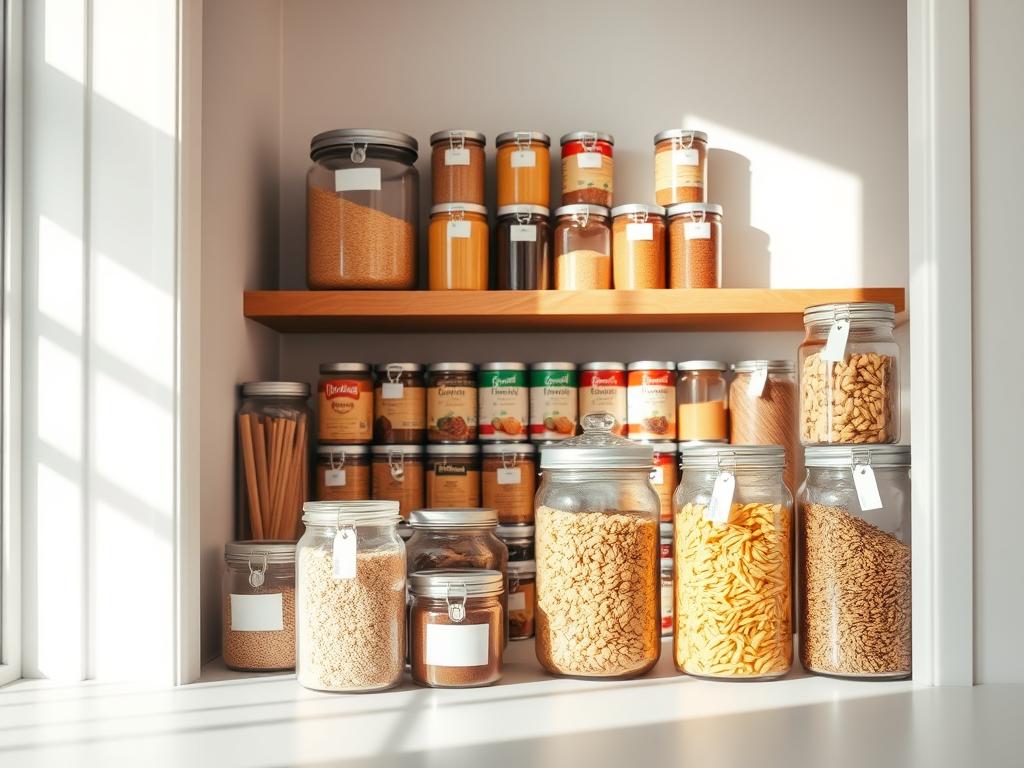
Use a first-in, first-out system to reduce waste. Move new purchases to the back and bring older items forward. Keep a small open shelf for items in current use, like baking flour or seasonal cereal.
Accessibility is important. Reserve a low shelf for children’s snacks and keep cleaners locked or out of reach. Transparent containers and consistent storage make inventory visible at a glance.
Best practices for arrangement
- Zone by function so meals come together faster.
- Group similar items to simplify restocking and meal prep.
- Store heavy jars and bulk items low to prevent accidents.
- Place frequently used spices and oils near the prep area.
Utilizing containers and labels
Match container size to contents to avoid wasted space. Use uniform jars for grains and flours to create a clean look. Label each container with its product name and purchase or open date.
Color-coded labels can mark categories or expiration risk. Add short usage notes, like “use for soups and stews,” to guide family members. Vacuum-seal bags or Mylar work well for bulk storage. Reusable Stasher silicone bags are great for daily snacks and reduce waste.
Clean containers regularly. Hand-wash glass, dry seals, and check lids for wear to stop pests. These steps keep your pantry organized and safe for long-term use.
Maintaining a Minimalist Pantry
Keeping a tidy pantry requires small, regular actions. Taking a few minutes weekly stops clutter from coming back.
These pantry tips help maintain a minimalist space. They protect a decluttered kitchen from slowly falling into chaos again.
Regular Maintenance Tips
Spend 5–10 minutes each week checking for expired items, spills, and low stock of basic essentials. A quick check prevents bigger problems.
Once a month, do a deeper review. Update your inventory app or spreadsheet, move older items forward, and fix any misplaced goods.
This habit makes your shopping list more accurate. Set calendar alerts or use a home-management app to prompt checks before big shopping trips. Follow a one-for-one rule: replace staples only when you use them.
Share pantry tasks among household members to keep maintenance simple and continuous.
Seasonal Reassessment
Review your pantry every three months. Match pantry contents with the season’s cooking needs.
Bring canning jars and preserves forward during harvest. Move summer grilling supplies up when warm weather arrives.
Keep seasonal items easy to reach. Store off-season goods in labeled bins elsewhere.
Increase staples a little around holidays like Thanksgiving or summer BBQs. Return to normal levels after events.
Use these reviews to donate extra items. Also, reconsider storage solutions to keep your kitchen efficient and clutter-free.
Choosing the Right Storage Solutions
Selecting storage that fits daily habits helps a minimalist pantry work smoothly. Thoughtful choices reduce waste and save time. The right containers and shelving keep items visible and create calm.
Container Types for Different Foods
Dry goods last longer in airtight glass jars like Mason or Weck jars. Plastic containers such as OXO POP are good for rice, pasta, and cereals when sealed well. Clear containers improve visibility and support a simple pantry style.
Stackable can organizers and dispensers help you rotate canned goods easily. Open bins and baskets are great for snacks that need quick access. Small jars with lids work well for baking powder, baking soda, and single-serve mixes.
Narrow bottles placed on a tray or lazy Susan keep oils and sauces tidy. This also protects shelves from drips. Bulk items do best in food-grade buckets with gamma-seal lids or Mylar bags with oxygen absorbers for long-term storage.
Perishable foods should be stored in the refrigerator when possible. Keeping only shelf-stable versions in the pantry saves space. This also supports a minimalist pantry approach.
Shelving Options to Maximize Space
Adjustable metal or wood shelving systems let you change shelf heights for different items. This feature keeps the pantry functional as needs change.
Pull-out shelves and drawers stop items from getting lost in deep areas. Door-mounted racks from stores like The Container Store and IKEA hold spices and small jars without using shelf space.
Corner solutions like lazy Susans or pull-out units make awkward spaces useful. Combining open shelving with closed cabinets balances display and hiding clutter to keep things neat.
Put heavy items on lower shelves to stop sagging. Heavy-duty hardware keeps loaded shelves safe and lasting longer. This ensures your pantry shelving works well and stays secure.
Creating a Meal Planning System
A clear meal planning system keeps the minimalist pantry useful and stocked with purposeful items. Planned meals cut impulse buys, make staples rotate faster, and prevent duplicate purchases.
Families save money and reduce food waste when shopping follows a defined plan. Time spent on evenings and weekday dinners drops because decisions come from a simple routine.
Why Meal Planning Matters
Meal planning links directly to an efficient pantry layout by showing what belongs on each shelf and in each container.
When meals are set for the week, the pantry shows what is needed and what is extra. This clarity helps shoppers avoid overspending and lowers food waste.
Common methods in the United States include weekly templates, batch cooking, and theme nights like Meatless Monday or Taco Tuesday.
These approaches simplify shopping habits and shorten weekday prep time. Predictable plans also make pantry organization tips easier to follow, like labeling, FIFO, and container-sizing rules.
Simple Meal Planning Strategies
Start with a master recipe list of 8–12 core meals that share ingredients. A short list increases overlap among staples and maximizes pantry utility.
This method supports an efficient pantry layout where similar items live together for quick assembly.
Adopt a weekly planning routine tied to inventory checks. Plan meals based on current supplies and write a shopping list that fills only missing items.
Sticking to the list and shopping after eating reduces impulse buys and keeps the minimalist pantry lean.
Use batch cooking and freezing for items like grains, sauces, or shredded chicken. Preparing basics in bulk saves nightly prep time.
It also makes it easy to mix and match meals from what is on hand. Keep a flexible substitution chart, such as swapping brown rice for quinoa.
Leverage tools like Paprika, Plan to Eat, or simple Google Sheets templates to link pantry inventory with meal plans. These apps help track quantities and create shopping lists matching available storage.
Set a shopping rule: buy only what fits allotted container space to keep the minimalist pantry organized as planned.
Incorporating Sustainable Practices
Small changes in a minimalist pantry can lead to big environmental benefits. This passage highlights smart choices for eco-friendly storage.
It also shares simple habits that keep your pantry neat and support sustainability.
Eco-friendly Storage Options
Choose durable, reusable containers instead of disposable plastics. Glass jars and stainless steel canisters reduce single-use waste.
Stasher silicone bags keep ingredients visible for easy use. Beeswax wraps are great for cheese and produce.
They reduce cling film use and add a breathable layer that slows spoilage.
Buy staples in bulk at stores like Whole Foods Market or Costco. Bring your own reusable containers.
Local food co-ops often sell loose grains and nuts with little packaging. Check labels for recyclable or compostable materials.
Always confirm local recycling rules to avoid contamination. Store pantry items away from heat and sunlight.
Cooler storage lowers spoilage risk and supports energy-efficient food preservation in a minimalist pantry.
Reducing Food Waste Effectively
Create a “use soon” shelf for items near expiration. This helps with meal planning and reduces waste from impulse purchases.
Buy smaller amounts of specialty items to control portions. Share bulk purchases with friends or family if needed.
Preserve extra produce through freezing, pickling, canning, or dehydrating. Use USDA guidelines and Ball canning resources for safety.
Set up composting to handle unavoidable scraps. Backyard bins and tumblers work well for many homes.
Urban residents can join municipal compost programs in cities like San Francisco and Seattle. Donate unopened, in-date goods to local food banks.
This supports the community and stops usable food from going to waste.
| Practice | Example Tools | Benefit |
|---|---|---|
| Reusable Storage | Glass jars, stainless steel canisters, Stasher bags, beeswax wraps | Cuts single-use plastic and keeps items organized |
| Bulk Buying | Whole Foods Market, Costco, local cooperatives, reusable containers | Reduces packaging waste and lowers per-unit cost |
| Preservation Methods | Freezer, pressure canner, Ball jars, dehydrator | Extends shelf life and reduces food loss |
| Waste Management | Backyard compost bin, municipal compost programs | Diverts organic waste from landfill |
| Use-First System | “Use soon” shelf, visible labeling | Prevents spoilage and supports reducing food waste effectively |
Adapting Minimalism to Kitchen Design
Adapting minimalist ideas to kitchen design mixes clean looks with everyday use. Thoughtful choices in materials, lighting, and storage create a calm, efficient space. This kitchen supports cooking and storage while showing minimalist pantry design ideas.
Harmonizing style and function follows simple rules. Use clean lines, a neutral palette, and matching containers for order. Choose strong materials like oak, stainless steel, and glass to last daily use.
Lighting improves usability. Add LED strips under shelves or inside a pantry for better visibility. Matte black or brushed nickel hardware looks refined and is easy to clean.
Harmonizing Style and Functionality
Start with layout. Put frequently used items within arm’s reach. Place rare items on higher or lower shelves. Use uniform jars and clear labels to cut visual clutter and find items fast.
Use pantry shelving blending open and closed storage. Open shelves show essentials and bring warmth. Opaque bins hide busy packaging and keep the look minimal. Balance display and concealment.
Integrating Minimalist Concepts in Decor
Keep decor purposeful. One potted herb, a woven basket, or a framed recipe adds personality without crowding shelves. Use matching containers and consistent labels for a calm, intentional look.
Find inspiration from magazines like Architectural Digest and Better Homes & Gardens. Stores like IKEA and Crate & Barrel sell affordable storage and furniture that support minimalist pantry design ideas.
| Element | Design Choice | Benefit |
|---|---|---|
| Color Palette | Neutral tones: white, gray, soft wood | Creates a serene backdrop that emphasizes organized storage |
| Materials | Wood, stainless steel, glass | Durable surfaces that blend with kitchen finishes |
| Lighting | LED under-shelf and interior pantry lights | Improves visibility and highlights organized zones |
| Storage Mix | Open shelves + opaque bins | Displays daily items, conceals visual clutter |
| Hardware | Matte black or brushed nickel | Modern look, low maintenance |
| Shelving Style | Adjustable racks, pull-out units | Functional pantry shelving that adapts to needs |
| Decor | Single plant, woven basket, framed art | Adds warmth without adding clutter |
Common Mistakes to Avoid
Many people aim for a minimalist pantry but struggle when systems become too complex or when they keep unused items. A practical, decluttered kitchen pantry thrives on simple routines that fit how a household shops and cooks. Small, testable changes often succeed better than elaborate makeovers.
Over-Complicating Organization
Over-labeling, many specialty containers, or complex zone maps make maintenance harder. Simplicity improves sustainability. Choose durable containers from brands like OXO or Ball when needed.
Avoid trend-driven gadgets that add cost without real benefit. Try a basic layout for 30 days before buying more gear. Adapt the system to usual meal prep patterns.
Holding onto Unnecessary Items
Emotional barriers cause excess bulk items that stay unused, specialty ingredients kept for nostalgia, or “just-in-case” supplies that no longer fit diets. A one-in-one-out rule for specialty products and a 12-month use limit (except seasonal staples) helps control stock. An up-to-date inventory and clear shopping list reduce impulse purchases and support pantry organization tips.
Ultimately, the goal is a functional, low-stress space. Treat minimalism as a tool for everyday efficiency, not just a look. That mindset keeps a minimalist pantry useful, affordable, and truly decluttered.