

Nearly 60% of U.S. renters and homeowners say limited kitchen storage forces clutter during daily cooking. They keep essentials in cupboards and on countertops. This article offers practical pantry organization ideas to reclaim space and streamline meal prep.
This guide helps renters, homeowners, apartment dwellers, and tiny‑home residents.
It focuses on affordable pantry storage solutions for tight spaces. You will learn how to plan smart zones, assess space, and pick containers and shelves that fit narrow or shallow areas.
Readers get tips on using vertical and door space, baskets, clear bins, and multi‑functional furniture.
The guide also shows how simple rotating systems reduce waste. Seasonal changes, routine maintenance, and DIY projects for pantry makeovers are included.
The results will be a tidier, more functional pantry with less food waste. Meal prep becomes faster, and kitchen organization improves.
Overall, the pantry tips are practical and budget-friendly. Efficient organization is possible in any small kitchen space.
Understanding the Importance of Small Pantry Organization
Small pantry organization changes how a kitchen works. A tidy pantry reduces stress and saves money. It also keeps ingredients fresh.
This brief overview explains why a focused pantry layout helps with cooking and storage every day.
Benefits of an Organized Pantry
Visible shelves cut food waste by making items easy to find. Using a FIFO method lowers expired goods and monthly waste rates.
Meal prep moves faster when snacks, canned goods, and staples are grouped. Time saved can be three to ten minutes per meal.
Organized storage helps household budgets. Fewer duplicate buys lower grocery bills. Clean shelves discourage pests and make spills easy to spot.
How Organization Impacts Cooking Efficiency
Efficient pantry organization supports batch cooking and meal planning. Labeling and clear zones help find spices, grains, and baking supplies fast.
Accessibility matters. Everyday items at eye level or on pull-out shelves reduce bending. This approach saves time and lowers fatigue.
Pantry systems linked to cabinet and fridge order improve workflow. When the pantry aligns with where tools live, kitchen tasks flow better.
- Time saved per meal: track minutes before and after organizing to measure gains.
- Expired items reduced: count thrown items over a month to see improvement.
- Pantry capacity utilization: measure shelf fill percentage to optimize storage.
Assessing Your Small Pantry Space
Before changing shelves or buying organizers, take a clear look at your pantry first. This step helps you measure pantry dimensions. It also helps spot storage challenges and quick fixes to maximize space.
A simple sketch and a few photos make the process faster and more accurate.
Measuring Your Pantry Dimensions
Measure width, depth, and height from wall to wall. Include alcoves, baseboard offsets, and door clearance. This makes sure pieces fit without blocking movement.
Measure shelf heights and depths individually when shelves are adjustable. Note clearances for doors and obstructions like molding or light switches.
Use graph paper or a free online planner to sketch a to-scale layout. Take photos from different angles to record hard-to-measure spots.
Identifying Storage Challenges
Look for deep rear pockets where items get lost. Check for irregular shelf heights that waste vertical space. Poor lighting and mixed loose items create clutter and slow you down.
Watch how items are stored to spot inefficiencies. Empty vertical pockets, piles of small items, and bulky goods blocking visibility show where change is needed.
Write down the most common trouble spots you find.
Recognizing Areas for Improvement
Divide the pantry into low-, mid-, and high-use zones. Match shelf heights to these zones. This helps keep daily items easy to reach in a small pantry.
Think about adding vertical organizers, door-mounted racks, pull-out shelves, lazy Susans, risers, or stackable containers. Make a checklist and snap an inventory picture.
Compare space used by baking supplies, canned goods, and bulk items. List constraints like budget or rental limits. This assessment guides smarter choices to maximize pantry space without overspending.
Planning Your Pantry Layout
Thoughtful pantry layout planning turns a cramped closet into a calm, functional space. A clear plan helps daily routines and reduces waste. It also supports small kitchen organization.
Start with a simple sketch of shelves, doors, and clearances. Do this before moving containers or hardware.
Creating Zones for Different Categories
Define zones by use and how often you use items. Place breakfast items, snacks, and lunch components on an accessible shelf. This way, everyone can reach them.
Baking supplies, mixing bowls, and measuring cups should be stored together. This allows for quick prep. Put heavy items like bulk staples and beverage bottles on low shelves. This ensures safety.
Store infrequently used gear and seasonal goods higher or toward the back. Group canned goods, grains, and condiments together. This makes checking your inventory faster.
Use color-coded or clear labels to mark each zone. A visible system helps family members return items to the right spot. It supports keeping the pantry organized across the household.
Using Vertical Space Effectively
Vertical pantry storage increases capacity without expanding the footprint. Install adjustable shelving so heights match container sizes. Stackable bins and risers keep sightlines clear and save space.
Tiered organizers work well for cans and spices. Slim wall-mounted shelves or a pegboard provide room for utensils and lightweight baskets. Tension rods create hanging storage for spray bottles or mesh produce bags.
Check load limits and anchor tall units to studs to avoid accidents. Consistent container heights and clear sightlines speed up finding items. This supports long-term small kitchen organization.
| Zone | Suggested Placement | Storage Tools |
|---|---|---|
| Everyday Breakfast & Snacks | Eye level, front and center | Clear bins, open baskets, labeled shelves |
| Baking & Prep | Mid-shelf near counter access | Stackable canisters, small bins for measuring tools |
| Canned Goods & Grains | Middle to lower shelves for stability | Tiered can organizers, airtight containers |
| Bulk Staples & Beverages | Lowest shelves for weight | Large bins, heavy-duty shelving |
| Infrequent Items & Seasonal | Top shelves or back corners | Clear labeled bins, vacuum-sealed bags |
| Cleaning Supplies & Pet Food | Lower shelf or a dedicated door area | Lockable bin for chemicals, scoop holder for pet food |
Choosing the Right Storage Containers
Smart storage container choices turn a cramped shelf into a neat and useful pantry space.
Picking airtight, clear, and stackable containers makes organizing a small pantry easier and cuts food waste.
Good brands to consider are OXO, Rubbermaid Brilliance, and IKEA for their quality and size consistency.
Material and weight are important when arranging upper shelves or countertop displays.
Lightweight BPA-free plastic fits well for high spots, while glass looks tidy on eye-level shelves.
Glass containers pair nicely with labeled lids for an orderly look.
Types of Containers for Small Pantries
Airtight canisters keep grains, flour, sugar, and cereal fresh and free from pests.
Choose those with silicone seals to protect against moisture effectively.
Cereal dispensers and stackable racks reduce clutter and speed up meal prep.
Clear pantry containers help family members find snacks and packets quickly by improving visibility.
Clear plastic or glass bins group items and help prevent spills.
Modular systems from The Container Store or IKEA stack evenly to save vertical space.
Turntables and tiered spice organizers keep small items easy to reach.
Store heavy items in sturdy bins placed low on shelves.
Light plastics are safer for high storage where glass might fall.
Labeling for Easy Access
Consistent, clear labels help anyone open the pantry and know what to take.
A label maker creates neat, repeatable tags, while chalkboard labels work for changing contents.
Printed adhesive labels last longer for long-term use.
Labels should show the item name, opening or purchase date, and an expiration or best-by date when needed.
This practice supports first-in, first-out routines and lowers expired food waste.
Color-coding zones for gluten-free, vegan, or kid-friendly foods speeds up recognition during busy times.
Use washable labels on containers that might be reused later.
Clear labels and proper containers make pantry organization easy and keep your system working well.
Utilizing Shelving Solutions
Smart shelving solutions turn cramped cupboards into usable storage. A mix of open and retractable options keeps items visible. This helps busy households and renters organize their pantries.
Open Shelves for Visibility
An open shelving pantry shows your supplies at once. Shoppers and cooks see items quickly, cutting duplicate purchases.
Shallow shelves of 10–12 inches keep sightlines clear. Vary shelf heights so jars and boxes fit neatly without space wastes. Matching bins create a neat look and keep items easy to find.
Add LED strip or battery puck lights under each shelf. Good lighting helps you read labels. Keep fronts tidy to prevent spills when doors open.
Pull-Out Shelves for Accessibility
Pull-out pantry shelves remove the need to reach behind stacked goods. Full-extension drawers and sliding pull-outs fit many kitchens. They make it easy to get heavy cans and appliances.
Check the depth and weight limits before buying. Renters might like freestanding or friction-fit pull-outs that don’t require drilling. Use pull-outs for daily items like snacks and breakfast food.
- Tip: Reserve deep pull-outs for bulk goods. This frees top shelves for lighter, visible items.
- Tip: Use clear labels on fronts. This helps combine easy access with good pantry organization.
Maximizing Door Space
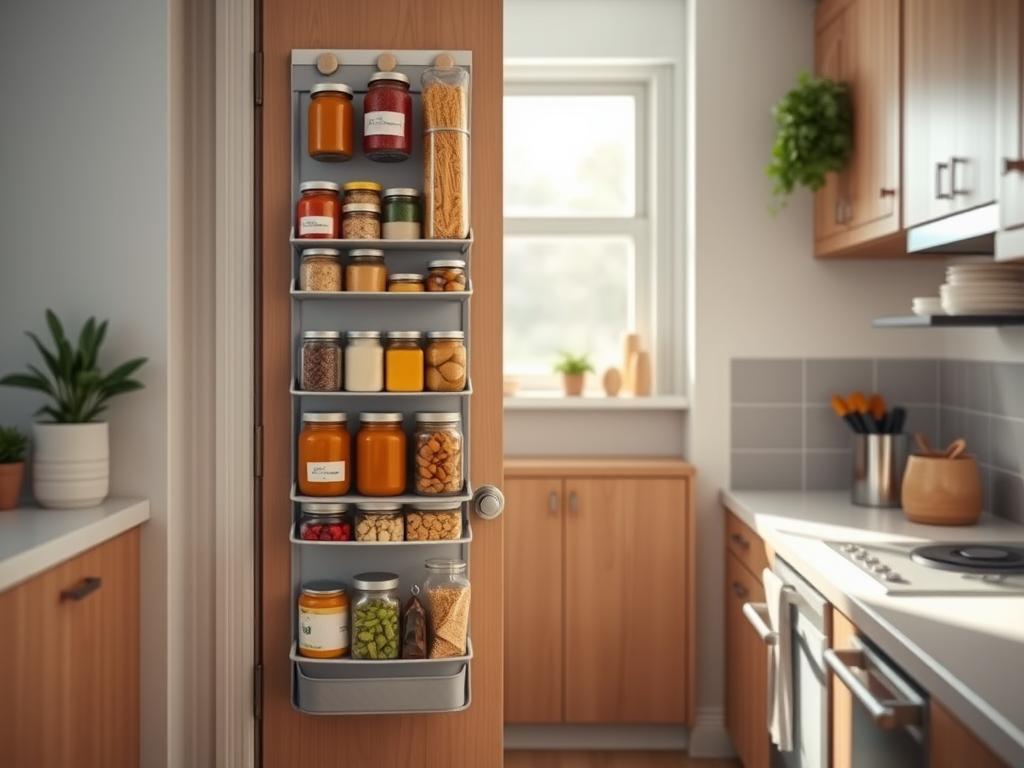
Making the most of the pantry door adds extra room without changing shelves. Creative door storage turns unused areas into organized zones. These tips help small pantry organization by adding capacity and quick access for daily items.
Over-the-Door Organizers
Full-width shoe-style pocket organizers hold spice packets, single-serve drink mixes, and flat snacks well. Rigid over-the-door racks secure cans, jars, and bottles. Tiered wire shelving keeps condiments and small boxes visible and easy to reach.
Before buying, measure door thickness and check clearance to avoid hinge or door swing issues. Slimline hangers fit narrow doors and help maximize space. Using over-the-door pantry organizers frees shelf space and creates zones for flat or small items.
Hooks and Racks for Small Items
Adhesive hooks, screw-in hooks, and small racks hold aprons, grocery totes, reusable bags, and light utensils. Magnetic knife racks on the inner door hold metal tools or spice tins with magnetic lids. Small pegboards and modular hook systems let users customize setups to fit needs.
Command brand hooks allow damage-free hanging in rentals. Keep load limits in mind by spreading heavy items across studs or shelves. These pantry storage solutions improve access while keeping door function intact.
Leveraging Baskets and Bins
Smart use of baskets and bins transforms tight shelving into an orderly system. A few well-chosen containers create sub-zones that make small pantry organization feel effortless.
This approach supports quicker meal prep, easier inventory checks, and neater shelves.
Grouping Similar Items
Group like goods into named clusters. For example, a breakfast basket for oats and granola, a baking box for flours and mixes, and a snack caddy for chips and bars.
Add a soup and canned goods bin, and a kid-friendly snack bin at kid height. These divisions reduce visual clutter and stop small packages from scattering.
Use wire baskets for breathability when storing produce or root vegetables. Woven seagrass adds a warm, finished look for open shelves.
Plastic bins work best in moisture-prone areas near the floor or under sinks.
Sizing matters. Narrow bins suit shallow shelves while deeper bins stack well on lower levels. Pick containers that slide out easily so restocking and making a shopping list become fast tasks tied to pantry organization tips.
Using Clear Bins for Visibility
Clear bins for pantry use let someone see contents at a glance. They work well for bulk staples like rice, beans, and single-ingredient bags.
Instant ID saves time during cooking and cuts down on duplicate purchases.
Match clear bins for uniform stacks and add front-facing label areas for quick reading. Keep a maximum fill line to avoid overstuffing.
For balance, mix clear bins with opaque baskets to hide cleaning supplies or pet food while keeping overall visual order.
Incorporating Multi-Functional Furniture
Smart furniture changes tight pantry corners into flexible work and storage zones. Choosing pieces that serve two purposes helps small kitchen organization. It also expands pantry storage without a full remodel.
Storage carts and ottomans give mobile overflow space for bulk goods, small appliances, and drink stations. A small, lockable caster cart from IKEA, Amazon, or Target moves easily. Use it for prep, then slide it back as a pantry storage unit.
Movable carts with drawers or wire baskets help separate baking supplies, canned foods, and soda. Check caster locks and weight limits before putting on heavy items. Don’t put large bags of flour or many appliances on furniture not made for that weight.
Storage ottomans or bench seating near a dining area offer hidden space for paper goods, bulk snacks, or seasonal items. They provide extra seating while hiding pantry items used less often.
Folding tables for extra workspace save floor space by folding down when not in use. Wall-mounted drop-leaf models and folding tables give quick prep surfaces for baking or holiday cooking. They help avoid permanent clutter.
Choose folding tables with shelves or cubbies to keep utensils and pantry goods nearby. Putting a fold-down surface near the pantry entry improves the flow from storage to prep. This helps small kitchen organization during busy meals.
Measure doorway clearance and mounting height before installing. This avoids interference with pantry doors. It also ensures the folding table is practical and safe as pantry storage.
Implementing a Rotating System
A simple pantry rotating system keeps food fresh and cuts down on waste. Regular rotation saves space in small kitchens. This guide shows why rotation helps and how to start it easily.
FIFO (First In, First Out) Method
The FIFO method means placing new purchases behind older items so older food gets used first. Front-facing shelves make it easy to see what to use next.
Some tips include a “new arrivals” shelf or bin and clear containers that move items forward. Tiered racks help cans roll forward, showing the oldest ones. Use FIFO for flour, sugar, oils, sauces, and opened packages that go bad over time.
Regularly Checking Expiry Dates
Set a routine for checking food dates. Monthly checks work for most families. Busy homes may want biweekly checks for popular items.
A fast way uses a laundry basket to scan shelves. Remove expired goods, then sort by zones like staples, snacks, and baking supplies. Keeping an inventory list with purchase or open dates makes tracking easy.
Paper lists or spreadsheets work well with phone alarms. Trusted sites like USDA and FDA give shelf-life tips. Storing food in airtight containers in cool, dark places helps food last longer and improves any FIFO system.
| Task | Frequency | Tools | Benefit |
|---|---|---|---|
| Full pantry sweep | Monthly | Laundry basket, checklist | Removes expired items and resets FIFO flow |
| New arrivals placement | With each shopping trip | Designated shelf/bin, labels | Keeps oldest items at the front for efficient pantry organization |
| Spot checks for opened items | Biweekly | Inventory app or spreadsheet | Prevents spoilage of partially used goods |
| Storage condition review | Quarterly | Airtight containers, temperature check | Extends shelf life and supports pantry organization tips |
Seasonal Pantry Adjustments
Seasonal pantry adjustments help kitchens stay functional as needs shift through the year. A short plan makes holiday pantry planning simpler and keeps everyday cooking smooth.
Small pantry makeover steps, like moving items and adding temporary storage, reduce stress when seasons change.
For holiday pantry planning, clear a few middle shelves temporarily for baking and special staples. Place canned pumpkin, cranberry sauce, and holiday spices within reach.
Reserve one bin for seasonal utensils and rare ingredients; bring it out only when needed.
Check equipment and ingredient stock one to two weeks before major gatherings. This quick check frees space, avoids last-minute clutter, and stops duplicate purchases.
Plan where bulky items like extra flour or sugar will sit during baking season.
When harvest arrives, set up an accessible zone for preserved goods and canning supplies. Use vacuum sealing or freezer storage for excess herbs and bulk produce.
Label containers with dates to make rotation easy.
Move summer condiments like grilling sauces to the front in warm months. Swap them for soups, broths, and long-cooking staples as weather cools.
Portable carts or sturdy plastic bins handle temporary overflow without crowding the main pantry.
Simple pantry organization ideas include a holiday rotation bin, clear labeling, and planned shelf swaps. These actions support seasonal ingredient needs.
Such steps create a streamlined small pantry makeover that adapts with the calendar.
Tips for Maintaining an Organized Pantry
Keeping a tidy pantry needs small, steady actions. The right tips make maintenance simple. A brief weekly habit preserves order in small spaces.
Routine Organization Reminders
Start with a 10-minute weekly tidy-up. Wipe shelves, re-shelf stray items, and spot-check for spills or pests during this time.
This habit stops clutter from piling up and saves you time later. Schedule a monthly inventory check to remove expired goods and assess stock.
Use calendar alerts or phone reminders to keep tasks on track. Children and adults sharing roles like returning items to bins helps a lot.
Follow a checklist each session: wipe shelves, rotate items using FIFO, restock staples, fix labels, and adjust zones as needed. Rotating this task among adults keeps things fair and active.
Creating a Pantry Inventory List
Create a pantry inventory list that tracks item, quantity, location, opened date, and expiration. This cuts impulse buys and aids meal planning.
Choose tools that fit your home. Paper binders work well for hands-on users. Simple spreadsheets offer quick sorting and filtering.
Apps like Cozi, Out of Milk, or AnyList sync grocery lists and inventory for households. Update the pantry list immediately when items are used or bought.
Do a full audit monthly to catch discrepancies. Using inventory data helps create focused shopping lists, reduces waste, and shows consumption patterns.
| Task | Frequency | Tool Options | Benefit |
|---|---|---|---|
| Quick tidy and wipe | Weekly | Printed checklist, phone alarm | Prevents buildup and keeps shelves hygienic |
| Full inventory audit | Monthly | Spreadsheet, AnyList, Out of Milk | Removes expired items and reveals shopping needs |
| Rotate stock (FIFO) | With each restock | Labels, clear bins | Reduces waste and extends shelf life |
| Assign household roles | Ongoing | Printed chore chart, family calendar | Distributes effort and keeps the organize pantry routine consistent |
| Update pantry inventory list | As items are used/purchased | Paper binder, app, spreadsheet | Keeps stock data current for better meal planning |
Exploring DIY Organization Projects
Small pantry organization can change with easy projects. These fit small spaces and limited budgets.
DIY pantry ideas include building adjustable wooden shelves and spice racks from old picture frames. Installing pegboard with hooks and baskets adds a custom look. These keep items visible and easy to reach.
Simple projects use basic tools and cheap materials. For a shelf riser, measure shelf depth and cut plywood or a board to size.
Sand and paint with a food-safe finish or use shelf liners. Place risers to double space for cans or mugs.
Turning a thrifted bookshelf into an open pantry can upgrade space quickly. Adding baskets to a bookcase is another easy option for small pantries.
Budget pantry solutions rely on repurposing and smart buys. Tension rods work well as dividers.
Shoeboxes or cereal boxes covered in contact paper become neat drawer bins. Plastic drawer organizers keep packets tidy.
Buyers in the U.S. can find bargains at Dollar Tree, IKEA, Target, The Container Store, thrift shops, and Amazon. These stores sell clear bins and can organizers.
Renter-friendly choices and safety are important. Use Command strips, freestanding shelves, and over-the-door organizers to avoid drilling.
Secure tall DIY units to studs. Pick food-safe finishes or keep paint behind containers.
Start with labels and clear bins. Later, add pull-out baskets or a small cart when the budget allows.
Evaluate space and budget. Try simple DIY projects. Then, build a custom pantry system over time.