

Surprisingly, the average American household throws away about 20% of its food. Much of this waste results from pantry mistakes.
These errors hide expired or duplicate items until they become unusable. This causes unnecessary food loss every day.
Common pantry mistakes include mis-sorting items and keeping expired foods. Using the wrong containers and skipping labels also cause problems.
Other errors are wasting vertical space and not keeping an inventory. These mistakes lead to food waste, higher grocery bills, pest risks, and slow meal prep.
This guide shows 11 specific errors and how to fix them. It covers categorizing shelves, checking expiration dates, and choosing airtight containers.
It also teaches effective labeling, using vertical space, and keeping an inventory. The guide suggests decluttering, improving lighting, scheduling cleanouts, optimizing layout, and personalizing the pantry for family use.
Applying these pantry tips brings many benefits. You will waste less food and prepare meals faster.
Your grocery lists will be clearer and dry goods will last longer. The guide gives product advice like airtight containers and label makers.
It also provides simple workflows, such as inventory routines and cleanout schedules. These steps make pantry management easy and family-friendly.
Not Sorting Items by Category
Grouping pantry items makes the space easier to use. When families follow simple organizing pantry shelves rules, they find what they need faster.
They avoid buying duplicates and cut down on expired products. Professional organizers and chefs recommend clear zones for smooth meal prep.
Importance of Categorization
Grouping similar items improves visibility and speeds cooking. It reduces double-buying because empty shelves are obvious.
It keeps older items in view, so expired-product surprises happen less often. These pantry organization tips come from real-world practices by The Container Store and busy chefs.
Common Categories to Consider
Use categories that match a typical U.S. household. Suggested lists include baking (flours, sugars, leaveners), canned goods (vegetables, beans, broths), grains and pasta, snacks, and breakfast items.
Other groups are condiments and sauces, spices and seasonings, baking mixes, beverages, pet food, and bulk items.
Subcategories help households with special needs. Add baby food for infants and a gluten-free section for dietary restrictions.
Clear bins for snacks and labeled jars for spices make these groups easier to manage.
How to Maintain Categories
Consistent systems keep categories intact. Use clear bin dividers, shelf risers, and consistent labeling to separate zones.
Rubbermaid and mDesign clear plastic bins work well for grouping. Adopt a first in, first out routine so older stock gets used before new arrivals.
Schedule quick weekly checks and create a simple map or cheat sheet. Store frequently used categories at eye level and place less-used items on top or bottom shelves.
| Task | Product Example | Benefit |
|---|---|---|
| Bin sorting | mDesign clear plastic bins | Improves visibility, keeps small items together |
| Shelf risers | Wire shelf organizers | Doubles usable space, separates layers |
| Labeling | Chalk labels or printed labels | Helps family follow categories, reduces pantry mistakes |
| Rotation system | FIFO method | Prevents expired items, reduces waste |
| Quick checks | Weekly 5-minute review | Maintains order, catches low-stock items |
Overlooking Expiration Dates
Ignoring dates on pantry goods causes waste and can risk food safety. Quality fades over time, and some perishables may cause illness if used late.
Simple habits help cut losses and protect health. They also support good pantry management practices.
Clear routines prevent common pantry mistakes. A quick monthly audit and checks when shelving groceries keep items fresh.
Small steps make a big difference. They form the backbone of tips for a well-stocked pantry.
Why Expiration Dates Matter
Date labels in the U.S. include use-by, best-by, and sell-by. Use-by shows peak safety for perishable refrigerated foods.
Best-by marks peak quality for shelf-stable items. Sell-by guides stores on display timing.
Knowing these labels helps shoppers decide what to eat, donate, or discard.
Expired goods lower meal quality and raise food costs. Some dairy, meats, and cheeses can cause illness past their safe window.
Treat date labels as tools, not strict rules. Prioritize items with shorter life spans.
Tips for Regular Checks
Adopt routines: inspect dates monthly and check items as you put them away. Writing purchase or opening dates with a marker helps tracking.
Use a rotating checklist or calendar alert to remind everyone of audits.
Remove items past their safe use for disposal. Plan meals to use near-expiry goods first.
These steps reduce pantry mistakes and follow best practices.
Organizing for Easy Access
Shelf placement supports first-in, first-out use. Put new purchases behind existing stock to keep older items at the front.
A “use soon” basket keeps items visible and encourages prompt consumption.
Transparent containers and labeled bins make dates easy to read. Place short-shelf-life items at eye level and long-lasting ones lower.
These strategies are proven tips for a well-stocked pantry.
| Action | Frequency | Benefit |
|---|---|---|
| Monthly expiry audit | Monthly | Reduces spoilage, lowers food costs |
| Check dates when shelving | Every shopping trip | Immediate identification of near-expiry items |
| Label purchase/opening date | As items are stored | Improves tracking of perishables |
| “Use soon” basket placement | Ongoing | Encourages FIFO, reduces waste |
| Transparent containers for visibility | One-time setup | Makes expiration dates easy to read |
Using Non-Airtight Containers
Choosing the right container affects freshness, pest control, and how easy it is to follow a pantry checklist.
Non-airtight jars and bags make food go stale faster. They let in humidity and invite pantry moths, ants, and other pests.
A few simple swaps can improve storage and help avoid common pantry mistakes.
Risks of Poor Container Choices
Dry goods like cereal, flour, rice, and nuts absorb moisture in non-airtight containers. This causes clumping and rancidity.
Strong-smelling items, such as coffee, may transfer odors to nearby foods causing cross-contamination.
Non-airtight lids let insects enter and make shelf life control harder. Small cracks or warped seals hide mold until it is too late.
Best Containers for Storage
Glass mason jars work well for many dry goods. They are reusable, inert, and clear for quick ID.
BPA-free plastic airtight containers like OXO Good Grips and Rubbermaid Brilliance have gasket seals and stack well.
Vacuum-seal canisters are good for long-term storage. Metal tins protect tea and coffee from light and preserve aroma.
Aim for 1- to 4-quart sizes for most staples. Use larger containers for bulk rice or flour.
Look for gasket seals, clamp lids, or screw tops to keep air and pests out.
Signs Containers Need Replacement
Check containers regularly. Replace any with warped lids, cracked seals, or loose tops.
Persistent odors, visible mold, or discoloration mean you should discard the container and contents.
Clouded or scratched surfaces hide contents and lower visibility. Replace flimsy shaker tops and torn bags with sturdy jars or airtight canisters during pantry checks.
Ignoring Labels
Clear labeling turns a messy pantry into an organized system. Small, consistent labels save search time and stop duplicate buys. They help family members quickly find items.
Labels can show contents, purchase or opened dates, and expiration details. These support meal planning and keep an accurate inventory.
Benefits of Clear Labeling
Labels cut down the time spent looking for ingredients while cooking. They prevent duplicate purchases by showing stock levels clearly. Family members and roommates find items without asking, keeping the pantry neat.
Labels also note dates and portions. This helps meal planning and reduces food waste by showing what to use first.
How to Create Effective Labels
Use a Brother P-touch label maker for clear, lasting tags. Printable adhesive labels give uniform looks on jars and containers. Chalkboard labels with chalk markers work well for changing contents.
For quick labels, masking tape with a permanent marker is handy. Include product name, date opened or bought, and portion notes for bulk bins. Place labels in the center front for easy reading.
Labeling Mistakes to Avoid
Avoid fancy fonts that are hard to read. Don’t mix label styles, languages, or inconsistent abbreviations. Not labeling opaque containers causes confusion and messes up organization.
Stop labels from peeling by sticking them on clean, dry surfaces and pressing firmly. Replace old or faded labels soon to keep the system reliable.
Failing to Utilize Vertical Space
Small pantries and apartment kitchens benefit most from smart vertical planning. One common mistake is not using vertical space. This wastes storage potential and makes organization harder.
Using height helps items stay visible. It creates zones for baking, snacks, and canned goods. This works without expanding your pantry’s footprint.
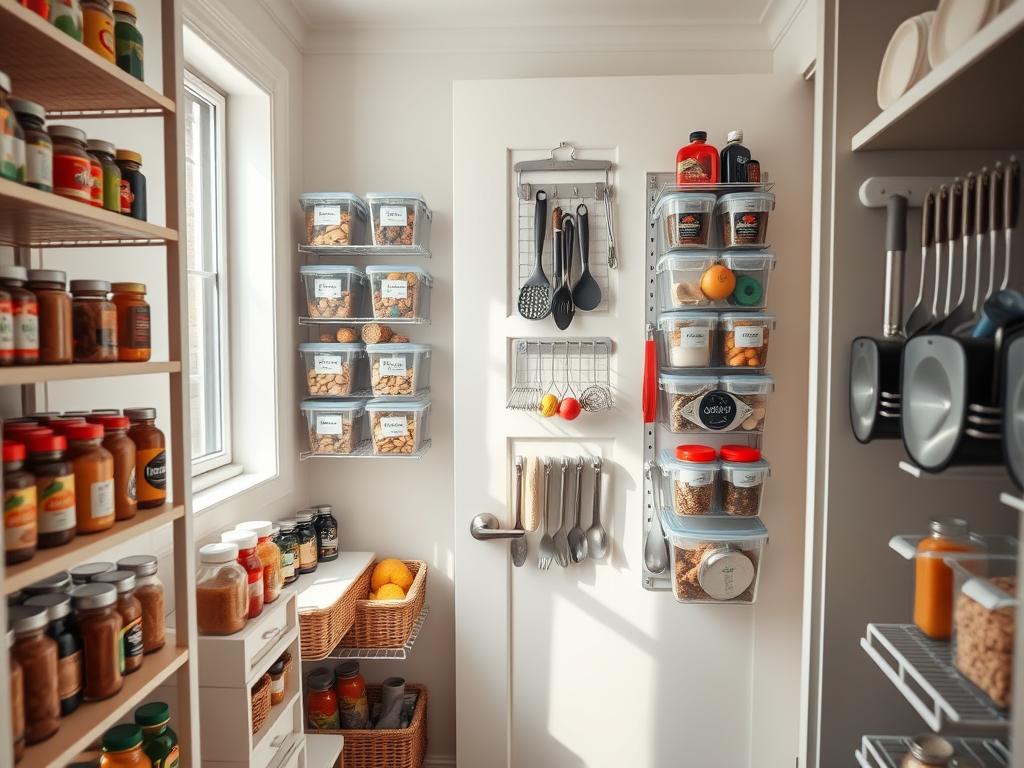
Adding vertical elements helps more than just capacity. Stacked shelves and risers make items easier to see. Vertical dividers keep pans upright and stop them from falling over.
This setup keeps countertops clear. It also speeds up meal prep. Organizing this way makes your kitchen work better.
Creative ideas for vertical space include adjustable shelves, stackable can organizers, and tiered risers. Over-the-door organizers from SimpleHouseware save shelf space. Pegboards offer a flexible spot for hooks and baskets.
Wall-mounted spice racks and sliding baskets turn narrow gaps into useful spots. These solutions help you use every inch.
Tall, narrow shelves fit bottles and baking sheets well. Sliding baskets let you pull out items on deep shelves easily. Secure dividers hold cutting boards, trays, and sheets to stop shifting.
Avoid stacking fragile glass items where they could fall. Store baking sheets, trays, cutting boards, and oil bottles vertically for easy access.
Tall cereal and pasta containers fit into narrow slots. Stackable vertical racks work well for canned goods. They allow quick access and easy rotation.
| Solution | Best Use | Space Benefit |
|---|---|---|
| Adjustable shelving | Accommodates jars, boxes, and tall items | High — custom tiers fit varying heights |
| Stackable can organizers | Organizes cans for visibility | Medium — stacks use height, save shelf area |
| Tiered risers | Displays spices and small jars | Low — improves sightlines, prevents clutter |
| Over-the-door racks (SimpleHouseware) | Saves shelf space for light items | High — converts door into usable storage |
| Pegboard systems | Hangs utensils, baskets, and tools | Medium — customizable vertical display |
| Vertical dividers | Stores baking sheets and cutting boards | High — prevents sliding and breakage |
Not Keeping a Pantry Inventory
Missing a simple inventory causes common pantry mistakes that cost time and money. An up-to-date list stops duplicate buys and supports meal planning. It also keeps staples on hand and cuts waste by showing what will expire soon.
Why an Inventory Is Essential
A clear inventory prevents overbuying and reduces impulse purchases at the store. Families save money when they know which items they own and which need replenishing. Accurate counts help plan meals and avoid last-minute trips for missing ingredients.
Tracking quantities lowers food waste by highlighting items near expiration. It keeps the pantry organized and ensures commonly used goods remain available. Good pantry management starts with this simple habit.
How to Track Pantry Inventory
Simple systems work best for most households. A paper list taped to the pantry door provides a quick visual. A dry-erase board with common items and quantities offers easy updates after cooking or shopping.
A spreadsheet with categories and minimum stock levels provides structure for larger homes. Update routines are essential: mark items used, adjust counts after shopping, and review the list weekly. These habits stop many pantry mistakes.
Tools for Inventory Management
Several apps make tracking faster. AnyList and Pantry Check let users scan barcodes for quick entries. Out of Milk syncs across devices and supports shared lists for families or roommates.
Digital notes via Google Keep or Apple Notes suit users who want simple syncing. Voice-entry through Amazon Alexa adds hands-free convenience. Printable pantry inventory templates and checklists work well for offline setups.
Cluttering with Unnecessary Items
Too many pantries suffer from cluttering with unnecessary items. These items hide staples and waste space. A quick review helps spot these mistakes and restore order.
Below are practical steps to identify what should stay and what should go.
Identifying Non-Essential Items
Question items like duplicate specialty products never used, expired samples, and single-use gadgets that take up shelf space. Also consider promotional freebies and off-season specialty foods unlikely to be eaten.
Assess how often you use an item. Check if it fits your household’s current diet.
Use this simple test: if you haven’t used an item in 6–12 months, it likely is non-essential. Keep items that support regular meal patterns. Toss or donate the rest.
Decluttering Strategies
Start by emptying shelves and sorting items by category. Create three piles: keep, donate, and throw away. Label each pile to keep decisions clear and consistent.
Apply a 6–12 month use-it-or-remove rule for specialty items. Adopt a one in, one out policy for bulky purchases to prevent buildup.
Unopened nonperishable items can be donated to Feeding America or local church pantries.
- Empty shelves and sort by category
- Make keep, donate, throw away piles
- Set a 6–12 month rule for specialty foods
- Use one in, one out for large items
When to Rethink Pantry Necessities
Re-evaluate pantry contents after diet changes, family size shifts, or seasonal cooking cycles. Use a pantry essentials checklist focused on flours, rice, canned tomatoes, oils, and core spices to stay focused.
Remove items that don’t fit your household’s cooking habits. Regular checks reduce pantry mistakes and keep the space efficient for daily use.
Poor Lighting Conditions
Dim or uneven light in a pantry makes simple tasks harder. People miss items on deep shelves and struggle to read labels and expiration dates. Poor lighting also increases the risk of knocking over jars or breaking glass when reaching for goods.
It can create safety hazards when lifting heavy containers in tight spaces.
Effects of Inadequate Lighting
Low light hides smaller items like spice jars or medicine bottles. This often leads to overlooked staples, duplicate purchases, and food waste. Dark corners boost the chance of spills and accidents when handling fragile or heavy packages.
Solutions for Better Visibility
Small upgrades yield big improvements. Stick-on LED puck lights and battery-powered motion-sensor lights provide bright, instant illumination without hardwiring. Adhesive LED strip lights and rechargeable under-shelf fixtures suit narrow shelves and can be installed using basic tools.
Rearranging items so frequently used goods sit in well-lit zones boosts efficiency. Combining affordable lighting with smart placement is a top pantry organization tip.
Choosing the Right Lighting
Pick daylight or warm-white LEDs based on personal preference for color and contrast. Confirm fixtures are rated for enclosed spaces and emit low heat to protect food quality. For built-in pantries, hardwired LED strips or recessed lighting installed by a licensed electrician offer a clean, permanent solution that meets electrical codes.
Neglecting Regular Cleanouts
Neglecting regular cleanouts is a common pantry mistake. It leads to pests, expired goods, and wasted space. A tidy pantry supports household health and keeps ingredients fresh.
It also makes meal prep easier. Small, routine efforts prevent big resets later.
Importance of Regular Cleanouts
Regular cleanouts stop infestations before they start. They remove expired items and reduce clutter that hides spills and crumbs. Good maintenance improves hygiene and cuts down on food waste.
Families practicing pantry management best practices report fewer surprises and lower grocery costs.
How Often to Clean the Pantry
Quarterly deep cleanouts suit most households. Monthly spot checks keep inventory accurate. They also catch small problems early.
Larger families or those who buy in bulk should check every four to six weeks. Watch for signs of spoilage or pest activity.
Steps for Effective Cleanouts
Follow a clear process for efficient results.
- Empty shelves one category at a time to stay organized.
- Vacuum corners to remove crumbs that attract pests.
- Wipe and disinfect surfaces with a mild cleaner and let dry.
- Inspect goods for spoilage or insects; discard or donate items as needed.
- Reseal dry goods in airtight containers and store pet food separately when possible.
- Reorganize using bins, labels, and placement that support pantry management best practices.
Addressing neglecting regular cleanouts removes one of the most avoidable pantry mistakes. Regular attention keeps the space healthy, efficient, and easy to use.
Failing to Optimize Space
Many pantries waste room because people place items without a clear plan. This failure reduces storage and makes daily tasks harder.
A quick check and a few simple changes unlock more space. They also improve pantry shelf organization in the kitchen.
Techniques for Space Optimization
Adjustable shelving fits tall bottles and short jars. Pull-out drawers let you reach back shelves without unloading everything.
Lazy Susans solve awkward corners and keep small jars in sight.
Stackable containers, shelf risers, and under-shelf baskets add horizontal space. Group items by how often you use them. Keep daily staples at eye level and move less-used goods higher or lower.
These solutions make items easier to reach and reduce clutter.
Assessing Pantry Layout
Start by measuring shelf height, depth, and door swing. Check door clearance and note obstructions that limit access.
Map zones: eye level for daily items, waist level for mid-use goods, and top or bottom for occasional items.
Rearrange shelves to match your measurements instead of guessing. Small height changes can allow two container layers where there was one before.
This saves vertical space and improves pantry shelf organization.
Tools to Maximize Storage
Pick tools that fit your measured space. Pull-out wire baskets from Rev-A-Shelf increase visibility for cans and snacks.
Clear modular canisters from OXO and Anchor Hocking protect dry goods and let you see contents easily.
Tension rods create custom dividers for baking sheets and wraps. Door-mounted racks from Spectrum Diversified add storage without changing shelves.
A label maker helps keep everything tidy and easy to maintain.
| Problem | Recommended Tool | Key Benefit |
|---|---|---|
| Hard-to-reach back shelves | Pull-out wire baskets (Rev-A-Shelf) | Full access to items, prevents lost goods |
| Awkward corners | Lazy Susans | Improves visibility and reach for jars |
| Uneven vertical space | Shelf risers and stackable containers (OXO) | Creates extra usable layers on each shelf |
| Breadth of bottles and pans | Tension rods | Keeps thin items upright and organized |
| Limited door space | Door-mounted racks (Spectrum Diversified) | Adds storage without changing shelving |
| Inconsistent labeling | Label maker | Quick identification, supports routine upkeep |
Not Personalizing the Pantry
Many households treat the pantry like a one-size-fits-all closet. That approach often leads to wasted time and food spoilage.
By tailoring the space to daily routines—meal types, cooking frequency, and children’s reach—families find the pantry easier to use.
This section covers practical pantry organization tips to make the space work for the people who use it most.
Benefits of a Personalized Approach
Customizing the pantry to match household habits reduces friction. For example, placing breakfast items near the coffee maker helps mornings run smoother.
Kid-friendly snacks on low shelves also encourage everyone to follow the system. This cuts down on clutter and expired items.
These changes make staples visible and easy to restock, supporting a well-stocked pantry.
Creating a Functional Layout
Start by mapping cooking flow: prep → cook → serve. Put everyday staples at eye level for easy access.
Create a baking zone with measuring cups and mixers near flour and sugar. Set up a meal-prep station with labeled bins for weeknight dinners.
Reserve low shelves for lunch items and kid snacks. Keep heavy or bulk goods on the bottom. Small zones make pantry organization easy to follow.
Involving Family in Organization
Get household buy-in with clear roles and visual cues. Assign tasks like checking inventory or restocking basics to each person.
Use color-coded labels for individual snacks. Schedule a short quarterly pantry review to update categories and preferences.
Shared rules—such as where to place new items—and tools like shared notes help keep everyone aligned.