

Nearly 40% of U.S. households lose food every year due to spoilage or misplacement. This shows how better pantry shelving can save time and money.
This guide shares practical pantry shelving ideas and storage solutions. It is designed for homeowners, renters, DIYers, and professional organizers.
It explains why good shelving is important for food safety, easy access, inventory control, and cutting down waste.
Industry best practices are simple. Store dry goods off the floor and keep heavy items on lower shelves.
Also, place items you use a lot at eye level. These rules shape every pantry shelving design shared here.
Readers will find ideas that range from cheap pantry shelving hacks to custom shelves for long-term use. There are tips for organizing small and large pantries.
This article covers assessing your needs, comparing materials, and exploring shelving styles. It also looks at maximizing vertical and corner spaces, container strategies, layout ideas, and seasonal rotation.
Maintenance tips are included, all aimed to help you organize your pantry effectively with DIY methods.
Understanding Pantry Shelving Needs
Planning smart shelving starts with clear measurements and a simple inventory. Measure width, depth, and height. Note door swing and common U.S. clearances such as 24–36 inches for walk-in aisles and 12–16 inches for reach-in depth.
Take photos or sketch a floor plan to map where tall cereal boxes, canned goods, and small appliances will sit. This approach makes selecting pantry shelving units easier to match space and function.
Assessing Available Space
Start by measuring surfaces and obstacles. Mark fixed utilities like vents and electrical panels that limit wall-mounted options. Check base molding and stud spacing to know if heavy-duty anchors or professional installation are needed.
Note ADA-friendly reach ranges; many users have a comfortable forward reach top near 48 inches. Account for clearance needs and door swing to avoid blocked aisles.
For rental properties, choose removable or freestanding pantry shelving systems that leave walls unaltered. Measure items to store so shelf spacing matches real needs, not guesswork.
Identifying Storage Requirements
Sort pantry contents into groups: dry goods, baking supplies, canned goods, bulk items, small appliances, cleaning products, and seasonal items. Designate heavy-item zones for appliances and canned goods.
Typical wood and metal shelves hold from 50 to 200+ lbs depending on build and supports. Match shelf material to load expectations when choosing pantry shelving units.
Place high-use items at eye level and within easy reach. Reserve top shelves for low-use or seasonal containers. Use airtight containers for bulk grains and humidity control for spices.
Consider modular or adjustable pantry shelving systems to adapt when household needs change. Balance fixed shelving with flexible baskets or clear bins for small pantry organization.
Popular Pantry Shelving Materials
Choosing the right material shapes how a pantry looks and performs. This brief guide compares common options. Readers can weigh durability, cost, and style here.
It touches on practical pantry shelving ideas. It also points to how custom pantry shelves or modular pantry shelving units can fit each material.
Wood Shelving
Solid pine, poplar, maple, plywood, and MDF with veneer are common wood shelving choices. A painted finish hides wear and moisture stains. A stained finish highlights grain and feels warmer.
Wood supports heavy loads well and can be cut for custom pantry shelves. It fits high-end pantries and open shelving for heavy items when properly supported.
Wood needs sealing to resist humidity. Without protection, it may warp. Installation can be complex and may require a professional for precise custom cuts.
Metal Shelving
Steel and stainless steel appear in homes and commercial settings. Powder-coated finishes add color and resist corrosion. Metal shelves come as solid panels or adjustable wire styles with an industrial look.
This material is great for heavy storage and long-term durability. It resists pests and warping. Metal fits well in modular pantry shelving systems for flexible layouts.
Stainless options cost more. Some finishes show fingerprints. The cold look can be softened with baskets or liners to blend with home décor.
Wire Shelving
Epoxy-coated wire, chrome, and stainless wire racks come from brands like Rubbermaid and ClosetMaid. Wire designs let air flow and reduce moisture buildup.
These units are lightweight, affordable, and often adjustable. They work well for budget-friendly DIY pantry organization and simple pantry shelving systems.
Small items can tip or fall through unless liners are used. Pantry shelf liners or thin MDF boards create a flat surface without losing airflow benefits.
Plastic Shelving
High-density polyethylene (HDPE) and polypropylene make durable plastic shelves. They resist water and clean easily, making them smart for utility pantries and rental homes.
Plastic is lightweight and inexpensive. It works well as extra shelving inside larger pantry units or temporary setups in garages.
Expect lower weight capacity and some sagging under heavy loads. Plastic lacks the upscale look of wood and metal. It fits functional more than decorative pantry shelving ideas.
Different Styles of Pantry Shelving
Choosing the right pantry shelving design shapes daily use and long-term care. A clear plan helps match pantry shelving units to family routines, kitchen style, and storage needs.
The following options highlight practical pantry shelving ideas and simple pantry shelving hacks. They boost function and appearance.
Open shelving options keep things visible and within reach. Exposed shelves suit modern farmhouse and contemporary kitchens.
They invite neat containers and labels that turn storage into display.
Open shelving advantages include easy access to frequently used items and a chance to show coordinated glass jars and labeled canisters.
Downsides are dust buildup and potential visual clutter. Regular upkeep is important to maintain neatness.
Styling tips for open shelves focus on uniform containers, tiered organizers, and matching baskets.
These touches transform open shelving into an organized focal point. They support pantry shelving hacks like grouping by frequency of use.
Closed storage solutions hide clutter and protect contents from light and dust. Options range from cabinets with doors to sliding panels and full-height pantry closets.
These choices create a cleaner visual line when kitchen activity calls for reduced visibility.
Closed storage works well in multi-use kitchens or tight spaces where a tidy look matters.
One trade-off is that closed doors can obscure inventory. Pairing cabinets with interior organizers improves visibility and prevents overbuying.
Pull-out shelves increase accessibility in deep shelving runs.
Full-extension drawers, pull-out wire baskets, and roll-out trays let users reach items at the back without strain.
Benefits of pull-out systems include better organization for heavy goods, ergonomic access, and efficient use of space.
Install slides rated for expected loads and choose soft-close or full-extension hardware for smoother operation.
| Style | Best For | Pros | Cons |
|---|---|---|---|
| Open Shelving | Showcase containers, quick access | Easy access, visually appealing, encourages tidiness | Dust collects, needs frequent upkeep |
| Closed Storage | Light-sensitive goods, hidden clutter | Protects items, clean visual line, reduces visual clutter | Inventory not visible at a glance, door swing needs space |
| Pull-out Shelves | Deep shelves, heavy items, baking supplies | Improves access, organizes heavy items, ergonomic | Requires quality slides, higher cost for full-extension |
Maximizing Vertical Space
Smart use of height changes cramped pantries into efficient storage areas. A thoughtful pantry shelving design uses wall and ceiling space. This creates clear pathways and quick access to items.
These pantry storage solutions keep floors free for bulky goods. They also make inventory easy to manage.
Stackable units fit renters and flexible plans. They are made of metal, plastic, or wood and lock together. Light assembly requires few tools and allows easy reconfiguration as needs change.
Weight and stability matter. Secure stacked sections to wall studs or use safety brackets. This prevents tipping and keeps stored goods safe.
Follow manufacturer weight limits to protect canned goods and small appliances. Proper anchoring ensures long-term safe use.
Track-and-bracket systems support heavy loads well. Brands like Elfa and ClosetMaid offer adjustable uprights. These let users space shelves for cereal boxes, mixing bowls, or cookie sheets.
Anchored to studs, these pantry shelving systems free floor space. They also allow heavier items to be stored higher.
Install wall-mounted options with planning. Locate studs, choose proper anchors, and measure item heights before fixing shelves.
Add vertical accessories like pegboards, magnetic strips, spice racks, and hanging baskets. This increases usable space without cluttering counters.
Combine stackable shelving units with wall-mounted systems for versatile design. This hybrid method offers scalable, durable pantry storage solutions. It supports a tidy, easy-to-navigate layout for daily routines.
Incorporating Baskets and Containers
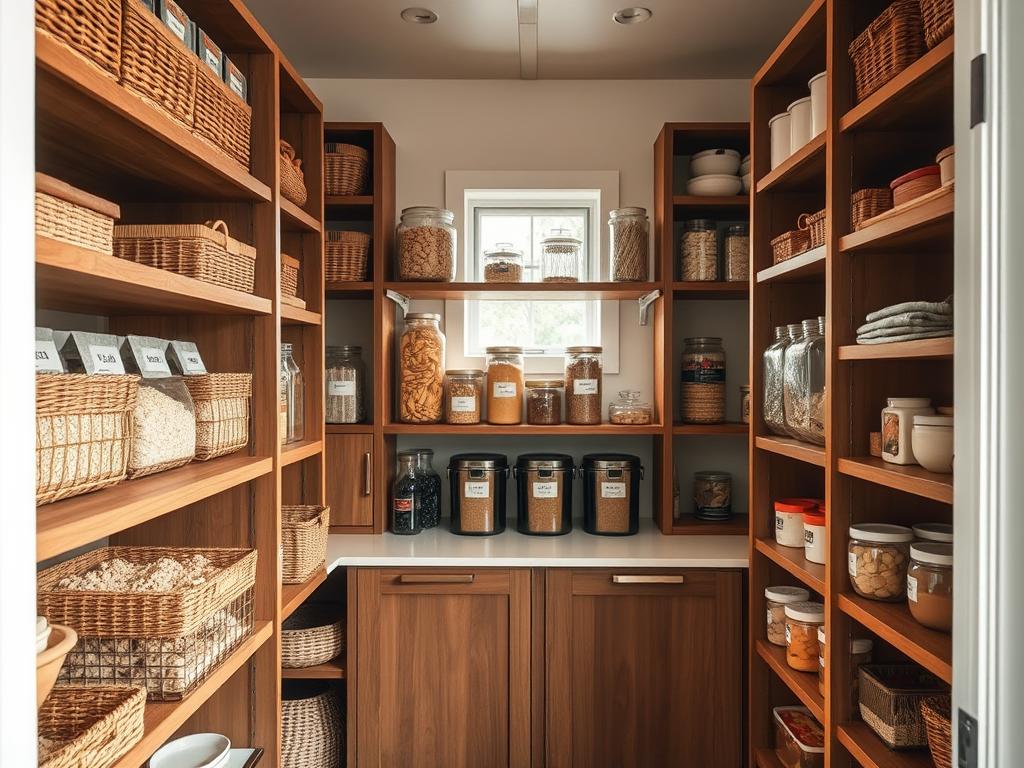
Small baskets and clear containers turn crowded shelves into neat, easy-to-use areas. They fit many pantry shelving types. Grouped bins cut down visual clutter and speed daily tasks.
Benefits of Using Baskets
Baskets help organize snacks, packets, and baking mixes together. Matching seagrass or rattan baskets add warmth to wood shelves. Wire bins work well on metal shelving for an industrial look. Fabric baskets soften open shelves’ style.
Removable baskets offer easy carrying to the counter for refilling. They also make cleaning and seasonal changes simpler. Stores like The Container Store, IKEA, Target, and Walmart sell many budget options.
Choosing the Right Containers
Use airtight jars and plastic canisters for dry goods to keep pests out and extend shelf life. Brands like OXO, Rubbermaid Brilliance, and Kilner offer clear, stackable containers that quickly show contents. Clear containers help identify items fast and cut waste.
Measure shelf depth and height before you buy. Square or rectangular containers use space better than round jars on narrow shelves. Stackable bins and dispensers save shelf space and support DIY pantry projects.
Label containers to keep your system clear. Chalkboard labels, printed stickers, or clear tags work well for names and dates. Specialty containers like cereal bins, grain dispensers, and vacuum-seal tubs support long storage and smart shelving tricks.
- Group similar items into labeled baskets for quick access.
- Choose airtight containers for flour, sugar, and dried goods.
- Match basket material to shelf finish for a polished look.
- Use stackable shapes to maximize vertical shelf space.
Creative Pantry Layout Ideas
A thoughtful pantry layout turns clutter into calm. Good pantry layout ideas help homeowners plan zones and choose pantry shelving options.
Decide where to add custom pantry shelves or ready-made pantry shelving systems. Small pantry organization starts with a clear plan.
Follow simple rules about reach, weight, and visibility to optimize space.
U-Shaped Design
The U-shaped layout places shelving on three walls and creates a central working aisle. This design maximizes storage and forms zones for prep, baking, and bulk storage.
It also leaves room for a countertop or a small appliance station.
Designers recommend an aisle width of at least 36 inches for comfortable movement. Tighter spaces can work with 24–30 inches while remaining functional.
Place breakfast and snacks on the left, dry goods in the center back, and cookware plus appliances on the right.
Lighting above the back wall and a foldable step stool make high custom pantry shelves easier to use.
Choose pantry shelving systems that support heavy loads near the floor for safety and balance.
L-Shaped Configuration
The L-shaped plan fits two adjacent walls and adapts well to small walk-in or reach-in pantries.
It makes efficient use of a corner and leaves one side open for a door or extra storage.
Use taller shelving on one leg to store bulky items, and pull-out drawers on the other leg for everyday goods.
Keep heavy items low and frequently used items near the entrance to improve small pantry organization.
Custom pantry shelves or adjustable pantry shelving systems help tailor the space.
Pick clear bins and labeled containers to keep the layout tidy and functional.
| Feature | U-Shaped Design | L-Shaped Configuration |
|---|---|---|
| Best for | Walk-in pantries with depth | Small walk-ins and reach-ins |
| Storage capacity | High; uses three walls | Moderate; efficient corner use |
| Aisle width | 36 inches recommended; 24–30 inches possible | 24–36 inches depending on entry |
| Zone planning | Clear zones: prep, baking, bulk | Divide by shelf height and usage |
| Use of custom pantry shelves | Ideal for high shelves and appliance nooks | Great for mix of tall shelves and pull-outs |
| Small pantry organization tips | Label shelves; add lighting and step stool | Place heavy items low; use clear bins |
| Recommended pantry shelving systems | Adjustable wall-mounted systems with deep shelves | Combination of fixed tall units and sliding drawers |
Utilizing Corner Spaces Efficiently
Corners often become dead space in pantries. Thoughtful corner pantry solutions turn awkward areas into practical storage.
Small changes open up room for bulk items, appliances, and daily essentials in your pantry.
Built-in Corner Shelves
Pie-cut corner shelves, triangular shelving, and built-ins create smooth storage along adjacent walls. This keeps a visual flow.
Baskets or tall containers fit neatly without wasted gaps. Measure diagonal depth carefully before installing shelving.
Choose brackets and supports rated for heavy loads. Adding LED strip lighting brightens corners and helps you find items quickly.
Use built-ins for mixers, bulk bags, and decorative canisters. This creates a functional corner blending with the rest of the pantry shelving.
Lazy Susan Organizers
Round rotating trays and pull-out corner carousels give full 360-degree access to items stored deep in a corner.
These pantry shelving hacks prevent bottles and jars from getting lost in the back of the pantry.
Rotating units can limit vertical space. Choose adjustable or tiered Lazy Susans to keep visibility and capacity high.
For deep corners, a two-tier or pull-out carousel is often the best choice.
Check bearings and hardware ratings to match expected loads. Proper installation makes tight corners some of the most useful pantry storage solutions.
Organizing Small Items
Small items can clutter shelves and hide essentials. A few pantry shelving ideas turn chaos into order.
Start by clearing a shelf and grouping like items together. This step speeds up small pantry organization. It also shows which pantry shelving units work best.
Spice racks bring order to tiny containers. Wall-mounted racks free up counter space. Door-mounted racks use space behind pantry doors.
Countertop magnetic strips hold metal tins for quick access. Drawer inserts keep packets and spoons tidy. Brands like Kamenstein, YouCopia, and IKEA offer practical organizers.
Best practices include using uniform containers and labeling lids. Group spices by cuisine or type. Alphabetize if possible.
Keep spices away from heat and direct light. This helps preserve their flavor. When installing door racks, check the door closes smoothly.
Tiered shelf organizers raise cans, jars, and bottles so labels face forward. Plastic risers and metal tiers work on open shelves.
Adjustable step organizers from SimpleHouseware and OXO fit different heights. Shallow tiers fit narrow shelves and keep items reachable.
Clear risers and angled inserts display products at an incline for instant visibility. Use tiered organizers for cereal boxes, snack packs, and sauces.
These pantry shelving hacks make it easier to spot what you need and reduce repeated purchases.
Mix tiered solutions with slim door racks to maximize space in compact pantries. Choosing the right combination supports long-term organization.
Regularly reassess the layout to keep the system efficient and clutter-free.
Seasonal Pantry Organization Tips
Seasonal pantry organization keeps a kitchen ready for holiday baking, thawed-out meals, and summer preserves. A few simple habits reduce waste and make mealtimes smoother.
These pantry shelving ideas fit small pantries and walk-ins alike.
Rotating Shelves for Freshness
Adopt a FIFO system: place newer purchases behind older items so older goods get used first. This practice cuts spoilage and helps with meal planning.
Label and date containers for quick rotation. Use erasable labels on jars or a permanent marker on boxes to note dates.
Place high-turnover staples at eye level for easy access. Store backup or bulk items on higher or lower shelves to free prime space.
Perform inventory checks quarterly or each season. A short audit removes expired goods and updates shopping lists before holidays.
Storing Seasonal Items
Identify seasonal goods like holiday baking supplies, canning jars, bulk syrup, and occasional decor. Group these items to find and return them easily after use.
Use labeled bins for infrequently used items. Moving bulky seasonal goods to top shelves or a basement frees shelf space for daily storage.
Protect dry goods from moisture and pests with airtight containers. For long-term storage, pick cool, stable spots away from heat and sunlight.
Create a dedicated holiday bin for baking: spices, sprinkles, specialty flours, and cookie cutters. Pull out the bin for short-term use, then return it when the season ends.
| Tip | Action | Best For |
|---|---|---|
| FIFO rotation | Place new items behind older ones; label dates | Perishables, canned goods |
| Labeled seasonal bins | Group holiday baking supplies and decorations | Holiday prep, occasional use |
| Airtight storage | Move dry goods into sealed containers | Flours, cereals, bulk spices |
| High/low shelf strategy | Keep daily staples at eye level; store backups up high or low | Small pantries, crowded shelves |
| Quarterly audits | Check expirations; update shopping lists | All pantry types |
Maintaining Your Pantry Shelving
Routine care keeps pantry shelves working well and looking fresh. A quick monthly tidy removes crumbs and expired items.
A deep clean every three to six months helps prevent pests and mold. Remove everything, wipe surfaces with mild detergent and water or a vinegar solution safe for wood.
Dry surfaces thoroughly before returning items.
Regular Cleaning and Reorganizing
Set simple habits: clear spills right away, store dry goods in airtight containers, and check for signs of infestation.
Reorganize by zones, discard expired products, consolidate partly used containers, and relabel as needed. Use pantry hacks like rotating labels and placing frequent items at eye level to reduce clutter.
Tips for Longevity of Shelves
Protect shelves by avoiding overload. Place heavy items on lower shelves and near wall studs.
Use shelf liners on wire or painted surfaces and coaster pads under appliances to prevent scratches and moisture damage.
Check and tighten brackets, screws, and drawer slides. Reinforce sagging shelves with extra supports or metal reinforcements.
Control humidity with a dehumidifier if needed. Limit direct sunlight to prevent fading.
Replace worn shelf boards or upgrade to adjustable pantry units to meet changing needs. These steps keep shelves durable and effective for daily use.