

Nearly 70% of Americans own seasonal clothes they rarely wear. This wastes time and space. Tidy seasonal closet organization can fix this problem.
This guide explains how to organize your closet by season. It covers preparing, sorting, storing, and rotating clothes and accessories for all four seasons.
You will find practical steps to cut morning stress. These tips also help extend garment life and make outfit choices clearer.
Advice fits U.S. climates—from the humid Southeast to the four-season Northeast and mild West Coast. It works for apartments and large bedrooms alike.
The article covers why seasonal wardrobe organization matters. It also shares tips on color coordination, storage solutions, shoe and accessory systems, product picks, outerwear care, and maintenance routines.
This guide suits busy professionals, parents, renters, and anyone wanting easy ways to switch clothes quickly. Readers learn a simple workflow to save time and keep closets efficient.
Understanding the Importance of Seasonal Closet Organization
A clear seasonal system saves time and keeps daily routines calm. Simple closet organization tips help reduce decision fatigue. They also speed up mornings. Visible, accessible clothing cuts impulse purchases. This makes the wardrobe easier to manage.
Benefits of a Well-Organized Closet
When items are grouped logically, people choose outfits faster and feel less stressed. Studies on clutter and decision fatigue show tidy spaces lower mental load. They also raise satisfaction with daily choices.
Good storage lengthens garment life by preventing overcrowding, crushing, and pest exposure. Breathable boxes and proper hanging protect wool, silk, and cashmere. Clear visibility cuts duplicate buys. This saves money and supports sustainable wardrobe use.
Seasonal Clothing Considerations
Different fabrics need different care. Cotton and linen suit warm months while wool, cashmere, and insulated synthetics serve cold months best. Fragile or structured pieces need padded hangers or flat storage to keep shape.
Rotate frequently worn seasonal items to easy-to-reach areas. In variable climates, keep transitional pieces like light jackets and cardigans near the front. Treat stains and mend seams before packing away special-care garments.
Maintaining an Organized Closet Year-Round
Routines help make organization stick. Quarterly checklists, pre-season purges, and brief mid-season spot-checks stop clutter from creeping in. Small daily habits—returning items to zones and hanging properly—keep the system working.
Use simple tracking: a photo inventory or a short list helps recall what’s in bins without opening them. These best practices make switching wardrobes smoother. They also extend the usefulness of each piece.
Tips for Effective Seasonal Closet Organization
A clear plan makes a seasonal closet purge quick and easy. Set aside a full day or weekend for the swap. Break the work into short timed blocks for sorting, packing, and labeling.
Gather supplies first: sturdy hangers, clear storage bins, vacuum-seal bags, garment bags, cedar blocks or lavender sachets, labels, and a donation bag.
Start with a Plan
Designate zones before you move any clothes. Create areas for the current season, off-season storage, repair, donation, and accessories. Use a checklist to stay on track and reduce decision fatigue.
Decluttering Before Switching Seasons
Sort items into clear groups: keep, donate or sell, repair, store, and recycle. Use simple rules like last worn date, fit, condition, and lifestyle fit. If you haven’t worn an item for 12 to 18 months, consider letting it go.
For donations and resale, choose trusted places like Goodwill, The Salvation Army, local consignment shops, Poshmark, and ThredUp. For worn textiles, use municipal recycling or retailer take-back programs like H&M Garment Collecting.
Creating a Visual Inventory
Take photos of pieces before packing to create a visual inventory. Use simple spreadsheets or wardrobe apps like Stylebook or Cladwell. These tools help you catalog seasonal clothes and plan outfits.
Number storage bins and keep an indexed list of contents for easy retrieval. A visual inventory saves time when you search later. It also helps guide smarter future purchases. These tips make closet swaps smoother and reduce clutter over time.
Seasonal Color Palettes and Wardrobe Coordination
A clear seasonal color plan makes switching wardrobes faster. It keeps daily dressing simple and supports seasonal closet organization. This method narrows choices and boosts outfit confidence.
A focused palette helps with shopping decisions. It also limits impulse buys, saving time and money.
Choosing colors for each season
Spring favors light, airy hues and pastels. Fabrics like cotton and linen look fresh in mint, blush, and soft blue.
A capsule mindset works well in spring. Pick two neutrals and three accent colors to maximize mix-and-match potential.
Summer leans toward bright, saturated colors and crisp whites. White shirts, bold corals, and turquoise work well with denim and sandals.
Select pieces that pair with core neutrals. This keeps outfits versatile for both daytime and evening plans.
Fall shifts to warm, earthy tones with jewel shades. Think rust, olive, and deep mustard paired with navy or camel.
Choosing a compact color family eases transitions. It supports seasonal closet organization with fewer items that do more work.
Winter uses neutrals, deep tones, and cool shades. Charcoal, forest green, and icy blue layer well under coats.
Keep a base of timeless neutrals. This balances trend colors and extends wearability across seasons.
Mixing and matching seasonal pieces
Build outfits around reliable basics like neutral tees, jeans, and tailored trousers. Add seasonal accents such as lightweight scarves or statement shoes.
These accents refresh looks without overhauling the closet.
Use transitional layering for spring and fall. Lightweight cardigans, vests, and thin knits allow pieces to move between seasons.
A long-sleeve tee under a sundress stretches summer favorites into cooler days.
Visual tools speed decision-making. Create simple outfit grids or take photos of successful combinations.
These visual inventories turn into quick references when packing, donating, or planning purchases.
Practical examples clarify pairing choices. Pair linen trousers with a lightweight knit for early fall.
Layer a denim jacket over a slip dress in late summer. These small strategies support closet organization and smooth wardrobe rotation.
Storage Solutions for Seasonal Clothing
The right storage keeps your closet usable all year. This guide shares practical ideas for storing seasonal clothing. It also offers easy organization tips for quick seasonal swaps.
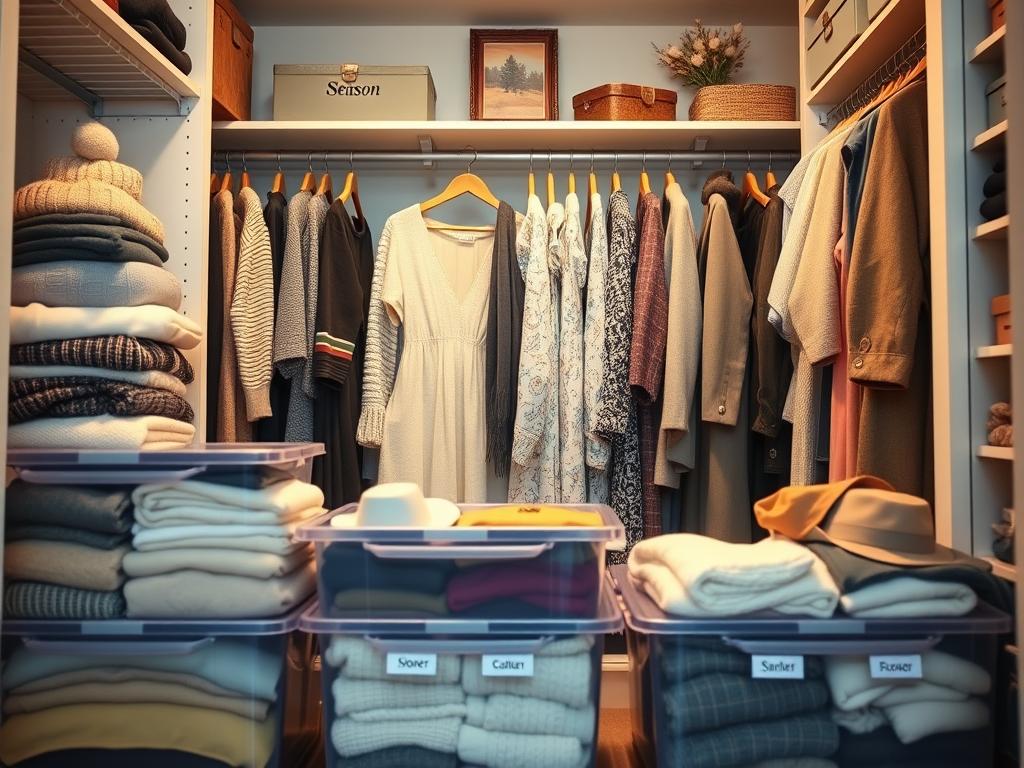
Utilizing Bins and Baskets
Clear plastic bins let you see contents easily. Fabric bins breathe and work well for wool or knitwear. Vacuum-seal bags save space but can harm delicate wool and cashmere.
Wicker baskets look nice on open shelves and allow air flow. Store out-of-season items on high shelves or under beds. Use labeled boxes or underbed storage for items you rarely use.
Protect clothes from pests and moisture with cedar blocks or silica gel packets. Don’t seal delicate fabrics in tight plastic without breathable garment bags made for them.
Hanging vs. Folding: Best Practices
Strong, shaped hangers are good for coats, dresses, and blazers. Velvet slimline hangers save space and stop clothes from slipping. Use suit carriers and breathable bags for formal and delicate clothes.
Fold sweaters and heavy knits to avoid stretching. Shelf dividers or clear stacking bins keep folded piles neat and stable. Store shoes in boxes or clear organizers to keep their shape and avoid scuffs.
Labeling for Quick Access
Labels speed up seasonal closet changes. Printed labels on bins can be read from far away. Masking tape and markers work for short-term tags. Number bins and link them to a digital or paper inventory for easy searching.
Include season, garment type, and key items on each label, such as “Winter: Sweaters & Thermals.” Place labels on the short side of bins for easy reading. Adding a small photo helps identify contents quickly.
| Storage Type | Best For | Pros | Cons |
|---|---|---|---|
| Clear Plastic Bins | Seasonal outfits, accessories | Visibility, stackable, moisture resistant | May trap humidity with delicate fabrics |
| Fabric Bins | Knits, sweaters, breathable items | Breathable, stylish on shelves, lightweight | Less moisture protection, not transparent |
| Vacuum-Seal Bags | Comforters, bulky outerwear | Space-saving, compact storage | Can damage wool or structured garments if over-compressed |
| Wicker Baskets | Open shelving, casual items | Airflow, aesthetic, easy access | Not stack-friendly, less dust protection |
| Suit Carriers & Garment Bags | Formal wear, delicate fabrics | Protects shape and fabric, breathable options exist | Requires hanging space, bulkier than bins |
| Underbed Storage | Off-season shoes, extra bedding | Utilizes wasted space, out of sight | May be less accessible for frequent swaps |
The tips above show the best ways to organize seasonal closets. Readers can mix these ideas to suit their space and wardrobe needs.
Organizing Shoes Seasonally
A tidy shoe collection makes morning routines easier and extends the life of footwear. This short guide offers practical closet organization tips for keeping shoes ready by season. The focus is on simple steps anyone can follow when rotating footwear between warm and cold months.
Keeping Footwear in Order
Clean shoes before storing to remove dirt and salt. This helps prevent stains and fabric breakdown. Use a soft brush for suede and a damp cloth for canvas.
Leather benefits from a gentle cleaner and conditioner to stay soft. Apply waterproofing to winter boots to block moisture. Use shoe trees for dress shoes to keep their shape.
For soft or fabric shoes, stuff with acid-free tissue paper. This preserves structure without stretching seams. Adopt a rotation strategy to reduce wear.
Place frequently worn seasonal shoes at eye level for quick access. Move off-season pairs to higher shelves or under-bed storage. This keeps active items visible and easy to reach.
Seasonal Shoe Storage Ideas
Choose storage that suits the shoe type. Clear plastic shoe boxes protect shoes and let you see the contents. Stackable cubbies keep sneakers sorted.
Over-the-door organizers work well for flats and sandals. For tall boots, use standing boot shapers or a boot rack. This prevents folding and creasing.
Place silica gel packets in boot boxes to absorb moisture that causes mildew. Vacuum-seal bags save space for fabric sneakers when fully clean and dry.
Labeling speeds retrieval. Add a small photo or short text label to each box. Keep a simple inventory sheet listing seasonal footwear by location.
This ties into broader seasonal closet organization and makes shoe swaps smoother.
| Storage Type | Best For | Space Impact | Maintenance Tip |
|---|---|---|---|
| Clear Plastic Shoe Boxes | Sneakers, casual shoes | Low to medium | Wipe clean before storing; label with photo |
| Stackable Cubbies | Everyday shoes, kids’ pairs | Medium | Rotate seasonally to keep front rows current |
| Over-the-Door Organizer | Flats, sandals, lightweight shoes | Low | Use breathable pockets to avoid trapped moisture |
| Boot Rack & Shapers | Tall boots, rain boots | Medium | Store upright; add silica packets for winter gear |
| Vacuum-Seal Bags | Fabric sneakers, seasonal sandals | High space savings | Only use when shoes are completely dry and cleaned |
Seasonal Accessories: Hats, Scarves, and More
Accessories complete a wardrobe. Organizing seasonal items like hats and scarves keeps them easy to find. A clear system helps reduce decision fatigue on rushed mornings.
How to Organize Accessories
Categorize accessories by type: hats, scarves, belts, gloves, jewelry, and sunglasses. Grouping similar items speeds up seasonal closet cleaning.
Use specific organizers to keep items visible and untangled. Scarf hooks, belt racks, or drawer dividers help prevent jumbling. This also speeds daily choices.
Keep current-season accessories near your main wardrobe. Store off-season pieces in labeled bins or drawers. This saves space and keeps your closet tidy.
Clean and air accessories before storing them. Leather belts need conditioner. Wash or dry-clean delicate scarves to avoid stains during storage.
Storage Solutions for Bulkier Items
Fold heavy scarves, padded hats, and blankets into breathable fabric bins. Store bins under beds or on high shelves with cedar sachets to prevent pests.
Use compression cubes only for synthetic or washable items. Avoid compressing wool, silk, or structured hats. They lose shape if crushed.
Vertical hanging organizers and stacked shelf baskets make bulky items easy to reach. This keeps your closet organized and supports seasonal cleaning.
| Accessory Type | Recommended Storage | Care Tip |
|---|---|---|
| Scarves | Scarf hooks or breathable fabric bins | Wash or dry-clean; air before storing |
| Hats | Boxed shelves or vertical hat organizers | Keep structured hats uncompressed; use hat forms if possible |
| Belts | Belt racks or drawer dividers | Condition leather; roll loosely to avoid creases |
| Gloves | Small bins or labeled drawers | Clean fabric gloves; treat leather gloves with leather care |
| Blankets & heavy wraps | Breathable bins with cedar or sealed containers for moth-prone items | Fold gently; air and clean before storage |
Tools and Products for Closet Organization
Choosing the right tools makes seasonal closet organization easy and repeatable. Smart purchases help speed swaps. They also protect garments and keep items visible.
Focus on flexible systems. Use a mix of budget and premium products to fit different spaces and wardrobes.
Best organizers for seasonal changes
Adjustable shelving and modular systems let a closet change with the year. Ikea PAX and The Container Store Elfa work well. They help rearrange shelves, rods, and drawers for seasonal organization.
Portable storage is helpful when staging a swap. A rolling garment rack offers temporary hanging space for out-of-season pieces.
Hooks, cascading hangers, and shelf dividers create zones that cut clutter and speed dressing.
Product recommendations: bins, hangers, and more
Hangers and bins form the backbone of a neat wardrobe. Velvet slim hangers save space for shirts and blouses. Wooden hangers support heavy coats.
Padded hangers protect silk and lace. Sterilite clear bins give visibility for folded layers. The Container Store fabric bins provide breathability for knits.
Ziploc vacuum bags compress bulky bedding. They are not ideal for fine wool or delicate knits.
Specialty items extend garment life. Cedar shoe trees keep leather in shape. Moth-repellent cedar blocks or Woolite cedar products protect stored items.
Silica gel desiccants reduce moisture in closed containers. Garment bags from Whitmor or heavy-duty Ziploc options shield seasonal pieces during transit.
| Item | Use | Budget Option | Premium Option |
|---|---|---|---|
| Adjustable shelving | Reconfigures shelving heights for boots, sweaters, or shirts | Ikea PAX components | The Container Store Elfa |
| Rolling garment rack | Temporary staging during seasonal swaps | Amazon steel rack | Whitmor commercial rack |
| Hangers | Space saving and garment support | Velvet slim hangers (Target) | Solid wood coat hangers (Pottery Barn) |
| Clear storage bins | Visibility for folded items | Sterilite clear bins | Fabric bins from The Container Store |
| Vacuum bags | Compress bulky seasonal bedding | Ziploc vacuum bags | Premium compression bags with hand pump |
| Pest and moisture control | Protects stored garments | Cedar blocks, silica gel (Amazon) | Cedar shoe trees and branded wool care kits |
Where to buy these products depends on your needs. Retailers serving U.S. customers include Amazon, The Container Store, Ikea, Target, and Walmart. Each offers tools and specialty items for seasonal closet organization.
Managing Outerwear and Cold Weather Gear
The cold months require clear steps to manage outerwear and cold weather gear. A simple plan keeps coats, jackets, and winter accessories ready. Organizing your seasonal closet helps transitions and stops damage to valued items.
Organizing jackets and coats
Use sturdy hangers for heavy coats. Wood or thick plastic hangers help keep shape and stop shoulder dimples. Leave some space between items so they breathe.
Heavier coats need special care. Dry-clean if labels say so. Spot-clean small stains and re-waterproof raincoats before storing.
This care lengthens life and keeps insulation. Sort coats yearly and keep only what fits and works. Check insulation, waterproofing, and style.
Donate duplicates or damaged coats that you no longer use. Keep current-season coats near entry points to grab easily. Store off-season coats in garment bags on high shelves or a secondary closet to save main closet space.
Storing winter accessories
Clean and dry gloves, hats, scarves, and thermal layers before packing. Moisture can cause mildew and bad smells that hurt fibers.
Use clear labeled bins for easy viewing or cedar chests to keep pests away and add fresh scent. Vacuum bags suit bulky coats but don’t squash delicate knits.
Keep mid-season items like light gloves and beanies in an easy-access bin in late fall and early spring. This helps avoid digging during shifting weather.
Have a small basket near the entryway with warm hat, gloves, and scarf for sudden cold snaps. This set helps quick trips and lowers stress.
| Task | Recommended Method | Why It Helps |
|---|---|---|
| Hanging heavy coats | Use wooden or thick plastic hangers | Preserves shoulder shape and prevents stretching |
| Cleaning before storage | Dry-clean or spot-clean; fully dry items | Removes stains and moisture that cause damage |
| Off-season placement | Garment bags on high shelves or secondary closet | Frees main closet space for current wardrobe |
| Accessory storage | Clear labeled bins, cedar chests, or gentle vacuum bags | Improves visibility, protects fibers, deters pests |
| Mid-season access | Keep a small accessible bin near the door | Makes transitions smoother during unpredictable weather |
Maintaining Your Seasonal Closet Throughout the Year
An organized closet stays neat with small, regular actions. A simple routine of quarterly reviews—pre-spring, pre-summer, pre-fall, and pre-winter—keeps garments ready. It also reduces frantic swaps.
During each check, spot-clean stains, refold sweaters, rotate footwear, and look for pests or moisture. This keeps everything in good shape.
Mini-maintenance tasks make a big difference. Tighten shelving hardware, replace broken hangers, and refresh cedar blocks or desiccants to protect fabrics.
In shared closets, families can coordinate schedules and assign clear responsibilities. This helps keep seasonal closet organization consistent for everyone.
To keep your wardrobe fresh, rotate and remix outfit combinations to find forgotten pieces. Follow garment care labels and air out items after use.
Store only freshly laundered clothes to cut odors and pests. Use the visual inventory to guide shopping and avoid buying duplicates.
Long-term habits sustain results. Adopt a one-in-one-out rule for new purchases. Keep donation and repair bins accessible for easy use.
Schedule an annual deep clean and purge. These tips help keep your closet practical and tidy all year long.