

Nearly 40% of American renters live in homes smaller than 600 square feet. Many bedrooms leave a full foot of usable space under the bed unused. This unused space is an easy win for anyone who wants smart storage solutions in small spaces.
Under-bed storage means using the space beneath a bed to store clothing, shoes, linens, seasonal items, or boxes neatly. It’s a hidden storage solution that turns ignored space into daily usefulness.
This guide shows why under-bed storage is a great option for studio apartments, small bedrooms, dorms, and compact family homes. It explains options like plastic bins, vacuum-sealed bags, and bed frames with built-in drawers. It also offers simple steps for better bedroom organization.
The article covers benefits, best product types, how to select the right system, and organization tips. It also shares maintenance, safety advice, and creative ideas tested in U.S. homes. This guide is for renters, homeowners, students, and families wanting to save floor space while keeping belongings safe and easy to reach.
Understanding the Benefits of Under-Bed Storage
Under-bed storage turns unused space into practical square footage for small apartments and family homes. It offers hidden storage solutions that keep surfaces clear. This helps rooms feel larger.
Simple changes unlock this often-overlooked area for daily use or long-term stashing.
Maximizing space efficiency
Rooms with low closets or limited wall space gain real value from the cubic feet under a standard bed frame. Typical clearances range from 6 to 14 inches depending on the frame or mattress base.
That gap can create dozens of usable cubic feet that rival a small dresser when fitted with slim bins or drawers.
Raised platform beds and affordable bed risers increase clearance and expand under-bed capacity.
In studio apartments or micro-units, this approach often beats tall shelving by using dead space. It helps avoid crowding vertical lines.
Reducing clutter
Designating an under-bed zone helps reduce visual clutter and makes the bedroom easier to relax in. Off-season clothing, extra bedding, shoes, and flat storage boxes work well below the bed.
Items sensitive to moisture, valuable jewelry, and daily essentials should remain elsewhere to avoid wear or misplacement.
Pairing under-bed storage with closet purging and a capsule wardrobe reduces the need for extra furniture.
The result supports tidy bedroom organization and creates a calmer atmosphere.
Enhancing accessibility
Pull-out drawers, roll-out carts, and wheeled containers make retrieval faster than stacked boxes. Transparent bins and clear labeling speed identification.
This is helpful for busy households and students who need quick access. Vacuum-sealed bags compress bulky textiles, saving space.
They also keep items visible and reachable.
Under-bed setups can serve dual roles: long-term storage for seasonal goods and staging areas for nightly gear like gym bags.
Thoughtful layout turns hidden storage solutions into daily helpers for small space needs.
Best Types of Under-Bed Storage Solutions
Choosing the right under-bed storage can make tight rooms neat and useful. This section reviews options that balance style and function. Each choice helps solve small space storage problems by balancing access, protection, and cost.
Storage Bins and Containers
Clear plastic tote bins let you see inside without opening lids. Brands like Sterilite and Iris resist moisture and stack easily. Fabric boxes add breathability and look softer in your room.
Shallow containers under 6 inches work best for narrow spaces. Shops like Target, Walmart, and The Container Store offer affordable choices. Pick stackable bins to save space and keep items visible.
Drawers and Roll-Out Carts
Under-bed drawers and roll-out carts give easy access to heavy items like books and shoes. IKEA’s SKUBB and BRIMNES line offer modular solutions for many bed frames.
Metal or wood carts with casters hold more weight and keep things tidy. When buying furniture, consider bed frames with built-in storage for a clean look. Always measure clearance and weight limits before purchasing to avoid fit problems between slats and floor.
Vacuum-Sealed Bags
Vacuum storage bags like SpaceSaver or Ziploc Space Bags compress bulky items, saving space. They are perfect for seasonal bedding and bulky sweaters in apartments or dorms.
Be careful with delicate fabrics as they can wrinkle. Make sure bags seal tightly to block moisture. For long storage, add a desiccant packet to reduce humidity.
DIY Under-Bed Storage Ideas
Use old shallow dresser drawers on casters for cheap, strong storage. A plywood rolling platform with 2–3 inch casters can fit odd clearances.
Use simple materials like 1/2-inch plywood or MDF, good casters, and felt pads to protect floors. Finish with stain or fabric to match furniture. DIY saves money and fits tricky spaces.
Choosing the Right Storage Solution
Picking the best under-bed option begins with a clear look at the room and what goes beneath the mattress.
The right choice balances space limits, daily habits, and the room’s style so bedroom furniture looks tidy.
Assessing Your Space Constraints
Measure clearance under the bed for height, width, and usable length.
Note mattress thickness, frame rails, and include any bed skirt or platform lip in measurements.
Leave at least 1/2–1 inch clearance for rolling containers.
Check for vents, cords, or baseboard heaters that can block access.
Calculate volume by multiplying usable height, width, and length to estimate capacity.
Considering Your Storage Needs
List items to store: seasonal clothing, extra bedding, shoes, hobby gear, and important documents.
These items guide you to choose between sealed bins, fabric bags, and reinforced drawers.
Decide how often items need access.
For daily use, pick pull-out drawers or roll-out carts.
For seasonal storage, vacuum-sealed bags or lidded bins work well.
Match load-bearing needs; heavy gear calls for sturdy drawers or a strong bed frame.
Material and Aesthetic Factors
Compare materials for function and form.
Plastic bins resist moisture and offer transparency.
Fabric boxes breathe and soften the look.
Wood and metal provide durability and match higher-end bedroom furniture.
Consider how visible containers will be.
If the bed skirt is short, choose neutral tones or patterned fabric bins that complement decor.
For eco-friendly choices, seek recycled plastic or sustainably sourced wood and look for brands with warranties.
Organizing Under-Bed Storage Effectively
A tidy under-bed area transforms a cramped bedroom into an efficient, calm space. This short guide shows practical steps to sort items, label containers, and manage seasonal swaps.
These tips help under-bed storage work as a durable, space-saving solution.
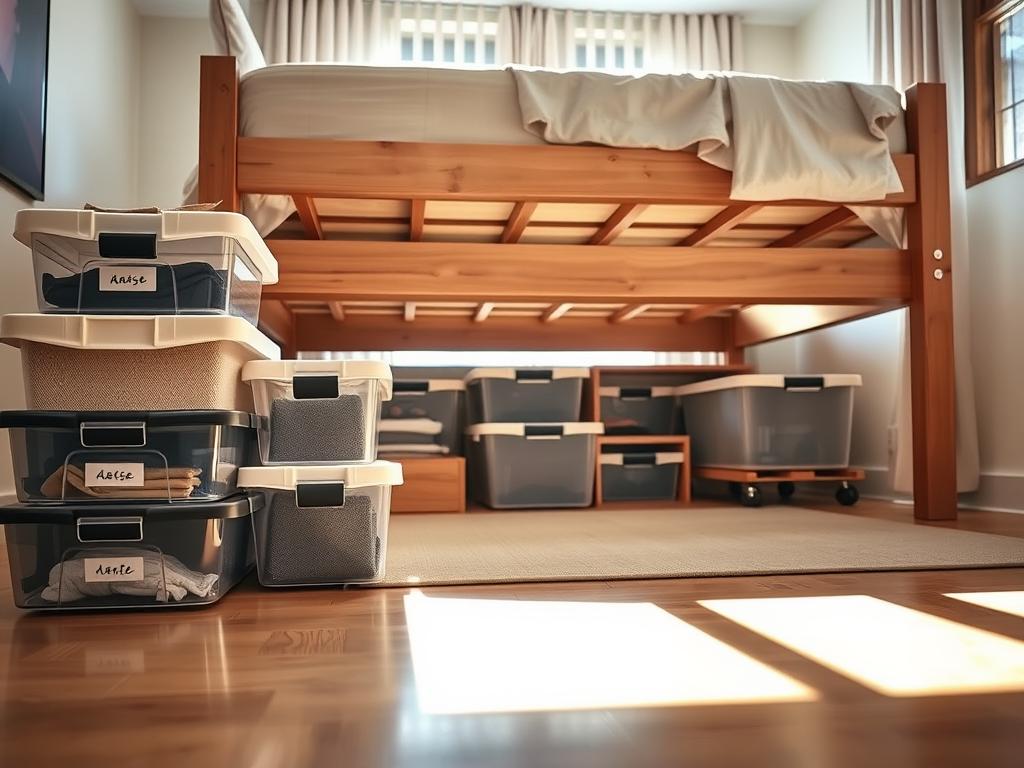
Sorting and Categorizing Items
Begin by pulling everything out from under the bed. Create four piles: keep, donate, recycle, and toss.
This full declutter reduces excess and makes later choices easier.
Group items into clear categories like bedding, shoes, clothing, paperwork, hobby supplies, and bulky gear such as ski jackets.
Use uniform-size storage containers to maximize space and stackability.
Place similar items into one or two containers so retrieval stays simple. Keep frequently used items in the front and long-term items deeper under the bed.
Labeling for Easy Access
Use a label maker, printable labels, or fabric bins with tag windows for clear labeling. Labels save time and keep bedroom organization consistent.
Label both the short and long sides of storage containers so items read easily from any approach.
Transparent bins give instant visual checks while color-coding speeds recognition; for example, blue for cold-weather apparel and green for linens.
Seasonal Storage Tips
Rotate seasonal items twice a year in spring and fall to reassess needs and refresh stored goods. Keep frequently used seasonal items near the bed edge for quick access.
Store out-of-season clothing with silica gel packets to reduce moisture. Fold delicate items with acid-free tissue paper before placing them in storage containers.
Put heavy items in central bins to avoid crushing lighter pieces.
| Task | Recommended Tools | Why It Works |
|---|---|---|
| Declutter | Boxes for keep/donate/recycle/toss | Removes unnecessary items and simplifies choices |
| Categorize | Uniform storage containers, clear bins | Improves stackability and retrieval in small space storage |
| Label | Label maker, printable labels, colored stickers | Speeds up access and maintains bedroom organization |
| Seasonal swap | Silica gel packets, acid-free tissue paper | Protects fabrics and reduces moisture damage |
| Placement | Low-profile bins, rolling drawers | Creates a practical under bed storage layout and a space saving storage solution |
Case Studies: Successful Under-Bed Storage
This section shows real examples of how smart under-bed storage improves living spaces. Each case focuses on practical results like freed floor space and easier cleanups. Readers will find retailer examples, brand recommendations, and solutions for common problems.
Small urban apartment layouts often lack space for both a dresser and work area. In one example, a renter swapped a bulky dresser for a platform bed with drawers like the IKEA MALM and a Wayfair storage bed. This change freed about 10 to 15 square feet, making room for a desk and seating nook.
The fewer furniture pieces made cleaning easier. The renter also gained simple access to seasonal clothing stored under the mattress.
Family bedrooms use under-bed storage to manage daily clutter. Parents combined large Sterilite and Rubbermaid tubs for toy rotation with rolling carts for board games. Vacuum-sealed bags kept extra bedding tidy and out of sight.
These tools sped up nightly cleanups and gave each child a clear storage spot. They also cut down the need for extra shelves or chests. The containers’ durability helped them withstand frequent use.
Student dorms need compact, move-ready solutions. Many students use slim rolling carts for textbooks, shoe organizers, and clear bins for clothes. These help keep storage simple and packing easy.
Low-clearance bunk beds and fire rules limit storage options. Students loft beds when allowed or use low-profile vacuum bags for bulky items. Budget-friendly picks like Amazon Basics and Target’s dorm collections meet needs for portability and price.
Each case shows clear gains in bedroom organization. Bed frames with storage and simple bins transform cramped spaces into neat rooms. These examples prove that the right products make living areas more usable and less cluttered.
Creative Under-Bed Storage Ideas
Under-bed solutions can turn a small room into a neat and organized space. This section shows smart options that mix style with function. It focuses on furniture and hidden compartments fit for modern bedrooms.
Space-Saving Furniture Options
Platform beds with gas-lift mechanisms offer plenty of storage by lifting the mattress to reveal a space. IKEA and Wayfair offer models that balance cost and size. These beds need space for the lift.
Captain’s beds have built-in drawers for easy access without lifting the mattress. West Elm and others sell styles that fit modern rooms. Storage ottomans at the foot of the bed hold linens and double as seats.
Multi-Functional Items
Trundle storage beds turn into guest beds and save floor space. They are great for small apartments and rentals where space is tight. Bed benches with hidden slots store shoes and seasonal items while providing a spot to place clothes.
Folding storage cubes change into seats and fit dorms and tiny homes well. Using fewer items with dual uses cuts clutter and improves flow. These pieces help make the most of small spaces.
Hidden Compartment Solutions
Slim safes and lockable drawers under the bed keep documents and valuables safe. For more security, a fireproof box or certified home safe is better. Sliding trays that look like floorboards hide storage almost completely.
Built-in drawers that match headboards or frames blend with bedroom furniture and keep things out of view. When choosing hidden storage, think about airflow, easy access, and if a pro should install it for better safety.
Maintaining Your Under-Bed Storage
Keeping under bed storage functional takes some planning and steady habits. A short routine keeps bedroom organization tidy and protects belongings. It also saves time when seasons change.
Below are practical steps to make maintaining under bed storage easy and reliable.
Regular decluttering strategies
Set a schedule: quick checks every quarter and deeper reviews twice a year. Keep a donate box near the bedroom to remove items not used in 12 months. Before sliding anything under the bed, scan to avoid repeating clutter.
Use a digital inventory on your phone or a simple app to track what is in each bin. This list speeds up retrieval and reduces duplicate purchases.
Best practices for item preservation
Store items clean and dry. Launder bedding and dry-clean delicate garments before packing. Use storage containers that seal well and are clean and moisture-free to prevent mold.
Avoid storing electronics long-term under the bed without climate control. For wool and cashmere, place cedar blocks or scented sachets in boxes as a natural moth deterrent. Do not use mothballs because fumes can damage fabrics and harm health.
Use moisture absorbers for textiles in humid climates. Rotate textiles periodically so fibers breathe and stay fresh.
When to reassess storage needs
Review storage choices after life events like moving, adding a roommate, or having a new baby. Seasonal wardrobe shifts are a natural trigger for change. If access frequency rises, swap vacuum bags for pull-out drawers or wheeled storage containers for easier reach.
Budget to replace storage containers every few years. Plastic can get brittle, and fabric boxes may stretch. Upgrading worn materials extends the life of contents and keeps bedroom organization effective.
Safety Tips for Under-Bed Storage
Under bed storage can save space in small rooms. It is important to use it carefully. Simple safety tips help keep belongings fresh and protect the bed frame.
Ensuring Proper Ventilation
Boxes that are sealed trap moisture over time. Leave small gaps or use fabric bins that allow air flow. Air out blankets and clothes every few months to avoid stale smells and mildew.
Silica gel packets help control humidity in sealed containers. Avoid sealing fabrics long-term in plastic unless moisture is managed.
Weight Limit Considerations
Many platform beds and slatted frames have weight limits. Always check manufacturer rules before storing heavy items. Too much weight can bend slats or break the frame.
Put heavy items like books near the bed’s supports. Use strong storage or a plywood base with casters for heavy loads. Move very heavy items to a dresser or closet if unsure.
Avoiding Pests and Moisture
Clean items before storing to lower the risk of pests. In humid places, sealed plastic containers protect fabrics. Use natural repellents like cedar blocks to keep moths away.
Check under-bed storage often for signs of pests or moisture like droppings, chew marks, smells, or stains. Act quickly if you find any. Renters should not store flammable items or block vents or exits.
Conclusion: Transforming Small Spaces with Under-Bed Storage
Under bed storage is a practical way to save space in bedrooms and studio apartments. It improves bedroom organization and reduces clutter. This frees up visible surfaces, making the room calmer and more inviting.
Simple steps like measuring clearance and choosing clear bins or rolling drawers make using under bed storage easy and effective.
Recap of Key Points
Measure the space under your bed before choosing storage containers. Match container types to your needs and pick materials that look good with your room.
Keep items you use often within easy reach. Follow safety tips like weight limits and moisture control to protect your belongings and bed.
Regularly declutter and swap items seasonally to keep your hidden storage useful and organized over time.
Encouraging Action and Creativity
Try checking your bedroom and measuring under bed space. Start one small project like buying clear bins, building rolling drawers, or getting a bed frame with storage.
Experiment with furniture that has more than one use. Customize storage solutions to fit your room while keeping it stylish and practical.
Begin with a 30-minute under bed cleanout to see quick results. This simple effort can make your room feel better and work smarter.